DD
MM
YYYY

PAGES

DD
MM
YYYY

spot_img

PAGES

Home Blog Page 545

Gemini IPO Will Debut On Nasdaq on September 12th With GEMI Ticker

0

Gemini Space Station, Inc., the cryptocurrency exchange founded by Cameron and Tyler Winklevoss, is preparing to go public on the Nasdaq this week under the ticker symbol GEMI.

The IPO is targeted for trading to begin on Friday, September 12, 2025, with pricing expected the evening of Thursday, September 11, though the timeline remains subject to final SEC approval and market conditions. Gemini plans to sell 16.67 million shares of Class A common stock.

The initial price range was set at $17–$19 per share (targeting up to $317 million in proceeds and a $2.22 billion valuation), but it was recently raised to $24–$26 per share amid strong demand, potentially raising up to $433 million and valuing the company at around $3.08 billion.

Nasdaq is investing $50 million in a private placement alongside the IPO, marking a significant partnership. This includes integration between Gemini’s custody and staking services for Nasdaq clients and access to Nasdaq’s Calypso platform for Gemini’s institutional users.

The deal is led by Goldman Sachs, Citigroup, Morgan Stanley, and Cantor Fitzgerald. Underwriters have a 30-day option to purchase an additional ~2.5 million shares. Gemini qualifies as an “emerging growth company,” which reduces certain reporting requirements.

For the first half of 2025, Gemini reported revenue of $68.6 million (down from $74.3 million in H1 2024) and a net loss of $282.5 million (up from $41.4 million). Full-year 2025 projections show a net loss of ~$400 million on $137 million in revenue.

The company manages over $18 billion in assets, serves ~523,000 monthly transacting users and 10,000 institutions across 60+ countries, and has processed $800 billion+ in transfers lifetime.

This would make Gemini the third U.S.-listed crypto exchange after Coinbase and Bullish. The IPO wave reflects a rebound in U.S. equity markets, bolstered by crypto-friendly policies like the GENIUS Act signed in July 2025, which regulates stablecoins and boosts institutional adoption.

The listing signals growing mainstream acceptance of crypto platforms, especially with Nasdaq’s direct involvement as both exchange and investor. However, Gemini faces challenges like ongoing losses, past SEC scrutiny (e.g., 2023 charges over its Gemini Earn program, later dropped), and competition in a maturing market.

Recent crypto IPOs like Circle (up 168% on debut) and Bullish have shown strong investor appetite, but performance will hinge on broader market sentiment, including Bitcoin’s price (currently near $111,000) and Fed rate decisions.

Gemini’s listing on Nasdaq, alongside Coinbase and Bullish, signals growing acceptance of cryptocurrency exchanges in traditional finance. Nasdaq’s $50 million investment and partnership further validate crypto as a credible asset class.

The collaboration with Nasdaq (e.g., custody/staking services and access to Calypso) could accelerate institutional adoption, bridging crypto and traditional markets. This aligns with the GENIUS Act (July 2025), which regulates stablecoins and encourages institutional participation.

Despite enthusiasm, Gemini’s financials (e.g., $400 million projected 2025 loss) and past regulatory issues (e.g., SEC charges in 2023) highlight risks. Market sentiment, tied to crypto prices and macroeconomic factors like Fed rate cuts, will influence performance.

With 10% of shares allocated to retail via platforms like Robinhood and Webull, the IPO could democratize access but also amplify volatility if speculative trading spikes. Gemini’s history with the SEC (e.g., Gemini Earn issues) suggests ongoing oversight. A successful IPO could set a precedent for compliance, but missteps could invite stricter rules.

Gemini’s public status intensifies competition with Coinbase, Kraken, and others. Its Nasdaq partnership and focus on custody/staking could differentiate it, but sustained losses and market saturation pose challenges. To justify its $3.08 billion valuation, Gemini may need to innovate.

Economic and Market Ripple Effects

A strong Gemini IPO could boost confidence in U.S. equity markets, already buoyed by 2025’s rebound. It may encourage other tech and fintech firms to go public. Gemini’s performance will be tied to broader economic factors, including inflation, Fed policy, and crypto market trends.

A downturn in Bitcoin or risk-off sentiment could dampen gains. Gemini’s focus on custody and institutional services could strengthen crypto infrastructure, making it easier for traditional firms to enter the space. A successful IPO could create wealth for early investors and employees but also expose retail investors to crypto’s volatility if expectations are overhyped.

Gemini’s IPO is a pivotal moment for crypto’s integration into mainstream finance, with Nasdaq’s backing and favorable policies amplifying its potential. However, financial losses, regulatory risks, and market volatility pose challenges. Investors should weigh the speculative upside against Gemini’s fundamentals and consult financial advisors before participating.


Tekedia Mini-MBA Begins Sept 15, AI Technical Lab Oct 4, Blucera AI Consulting Launches

0

Hello,

Greetings. Tekedia is happy to share the following updates in our community:

1. The next edition of Tekedia Mini-MBA will begin on Monday, Sept 15, 2025. The price remains $170 or N120,000 Naira. Go here and registerif you plan to join us.

2. Registration for Tekedia AI Technical Lab continues. This hands-on and practical program will begin on Oct 4, 2025.  The cost is $500 or N350,000 Naira. Go here and register if you want to join us over the planned Saturdays. Our goal in this program is to help you build AI agents which can support your commercial and personal mission with no coding skill required. Bonus: free access to Tekedia AI in Business Masterclass

In the early 2000s, companies were encouraged to unveil websites, and many did, ushering a huge era where many Nigerian companies went online. Many spent hugely on that redesign. But over time, making websites became easier as blog ecosystems like WordPress improved.

Today, we are at another inflection point, and you need an AI agent for your business to get extensive productivity boost. But you must not break your bank account for that.

Join us at Tekedia AI Technical Lab, and over four Saturdays, we will get AI agents that can support your customer service, recruitment, planning, web search, and more, on your portal. No coding skills required, and no understanding of machine learning needed. You are already qualified; just come.

>> Then, it was website. Now, it is AI agent <<

We introduce course on new business and technology domains faster than any university in Africa. We will begin on Oct 4, 2025. Pick your seat at Tekedia AI Lab

3. We have launched Blucera Enterprise AI Consulting, combining the knowledge and technical capabilities of our companies, Tekedia Institute and Blucera. The goal here is to help firms move from AI road mapping to AI execution with practitioners of AI. To learn more about how we turn artificial intelligence into enterprise intelligence, visit here.

Regards,

Tekedia Institute Team

Cryptocurrency is Primed To Benefit From $7.4T MMFs and FED Easing

0

Global investors have parked a record-breaking $7.4 trillion in money market funds (MMFs) as of mid-2025, according to data from the Investment Company Institute and analyses from firms like JPMorgan.

This hoard represents “sideline cash”—highly liquid, low-risk holdings that yield around 4-5% in the current environment but signal caution amid economic uncertainties like softening job growth and tariff-induced inflation pressures.

As the Federal Reserve gears up for its September 16-17, 2025, Federal Open Market Committee (FOMC) meeting, markets are pricing in a near-certain rate cut, with probabilities exceeding 90% for at least a 25-basis-point (0.25%) reduction from the current 4.25%-4.50% federal funds rate range.

Some analysts, like those at Standard Chartered, even see a 10% chance of a more aggressive 50-basis-point cut following August’s weak jobs report (only 22,000 nonfarm payrolls added, far below expectations).

This setup—massive sidelined capital combined with easier monetary policy—has sparked widespread speculation about a potential boon for risk assets, including cryptocurrencies. MMFs surged from about $6 trillion in early 2024 to $7.4 trillion by Q3 2025, driven by high yields from the Fed’s post-pandemic rate hikes.

Investors, including institutions and retail savers, flocked here for safety amid volatile stocks, geopolitical tensions, and U.S. tariffs under President Trump that have nudged inflation higher (core CPI at ~3.1% in August).

Lower rates will erode MMF yields (potentially dropping to 3.5-4% post-cut), making them less attractive. Historically, cash rotations follow Fed easing: After the 2008 Global Financial Crisis (GFC) and 2020 COVID cuts, trillions shifted from safe havens to equities and alternatives.

Analysts estimate even a 10-20% reallocation ($740 billion-$1.5 trillion) could flood markets. Chair Jerome Powell’s Jackson Hole speech in late August signaled a pivot, citing labor market risks (unemployment at 4.2%, with downward revisions to prior months’ data). Inflation remains sticky but is viewed as tariff-driven and temporary by ~80% of economists in recent Reuters polls.

Expect 2-3 cuts total in 2025, bringing rates to 3.00%-3.25% by year-end. Crypto stands to gain significantly, as lower rates historically amplify liquidity and risk appetite—key drivers for Bitcoin (BTC), Ethereum (ETH), and altcoins. Cheaper borrowing encourages spending and investment.

In 2020-2021, Fed cuts to near-zero rates coincided with BTC surging from ~$7,000 to $69,000 (nearly 900%), fueled by institutional inflows and retail FOMO. Analysts like Crypto Raven project that if just $1 trillion from MMFs rotates into crypto (a conservative 13% of the pile), BTC could hit $150,000-$160,000.

Broader market cap could swell as stablecoins (e.g., USDT reserves) build up, signaling fresh capital entry. Fed’s QE flooded markets; early crypto (Bitcoin’s launch) benefited from loose policy. 2019 Easing: BTC rose ~90% as rates fell.

2024 Cuts—crypto market cap jumped 57% in four months post-initial reductions, with BTC hitting $64,000. Spot BTC/ETH ETFs have since attracted $12B+ in inflows, positioning crypto as a “strategic reserve” for corporates like MicroStrategy.

In 2025, with BTC at ~$116,500 and ETH at ~$4,300 (as of early Sept), a cut could spark a 15-20% rally in majors, per AInvest estimates, as yields on bonds/cash lag crypto’s potential upside. Lower opportunity costs make non-yielding assets like BTC more appealing vs. Treasuries.

Sovereign and corporate treasuries (e.g., via ETFs) could allocate more, especially with regulatory clarity. As in 2021 (altcoin market cap +109% post-cuts), liquidity chases high-beta plays. X discussions highlight 5x-10x pumps for alts like SOL, XRP, and low-caps.

Rate cuts often devalue the USD, boosting dollar-denominated assets like crypto. Stablecoin inflows are already spiking, per on-chain data. Not all roads lead to a crypto utopia. A rate cut could signal deeper economic weakness (e.g., recession fears from job data), triggering risk-off moves.

Arthur Hayes (BitMEX co-founder) warned in 2024 that cuts might strengthen the yen and inflate costs, crashing risk assets short-term. Volatility is high: Leverage in derivatives is peaking, and if inflation surprises higher (e.g., via tariffs), the Fed could pause cuts, as in 2022’s hike cycle that tanked crypto 70%+.

Overbought signals (e.g., RSI on BTC) suggest chop before upside. Crypto is primed to benefit from this $7.4T powder keg and Fed easing, potentially igniting a Q4 bull run with BTC targeting $140K+ and alts rotating higher.

Historical data shows lower rates correlate with 100-1,000% crypto gains over 6-12 months, amplified by ETFs and institutional adoption. However, the impact won’t be instant—expect initial volatility as markets digest the cut.

September’s Bullish Coins: Ethereum Nears ATH, DOGE Eyes Breakout, and BlockDAG Dominates With $403M Presale!

0

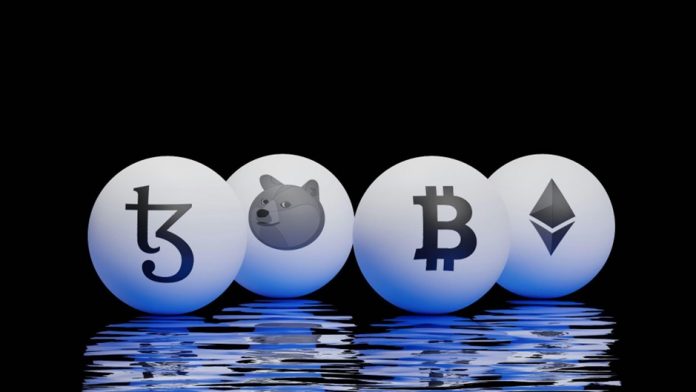
September’s market energy is unmistakable. Ethereum is approaching peak levels again, and Dogecoin is flashing signs of another upward breakout. Ethereum (ETH) continues to benefit from institutional momentum and ETF-related demand, while traders are eyeing Dogecoin (DOGE) for a possible breakout if its triangle pattern holds.

Yet despite these narratives, BlockDAG has emerged as the most action-packed story. The project has raked in over $403 million, with a current offer of $0.0013 per coin, despite Batch 30 pricing being officially set at $0.03. With a confirmed launch price of $0.05, early buyers from Batch 1 have already locked in 2,900% returns.

Backed by 3 million mobile miners using the X1 app, a major event lined up in Singapore, and 19,700 miners already in distribution, BlockDAG is scaling in both presence and impact, making it a top contender for anyone tracking breakout crypto opportunities.

Ethereum Nears All-Time High

Ethereum is hovering just under its all-time high of $4,950, and the Ethereum Foundation (EF) has announced plans to liquidate 10,000 ETH to support development, grants, and operational funding. This step aligns with EF’s ongoing treasury policy, where ETH sales fund long-term ecosystem initiatives.

To avoid sudden market shifts, the sale will be broken into smaller chunks rather than one large dump. EF aims to maintain a stable fiat reserve buffer, used to manage payroll and operations efficiently.

Historically, these moves are part of the Foundation’s strategy. Back in 2022, EF offloaded 150,000 ETH, while 2024 saw just over 4,400 ETH sold. Only 300 ETH had been liquidated so far this year, until now. Once this current round finishes, the annual total will cross 10,000 ETH, signaling EF’s ongoing financial discipline and continued support for Ethereum’s growth story.

Dogecoin Forms Bullish Pattern

Dogecoin is moving sideways inside a two-month-long ascending triangle, consistently finding support near the $0.20–$0.21 zone. Recent data shows weekly volume jumping to $13.49B in late August, pushing its market cap past $31.7B.

Technical indicators are warming up. RSI is climbing toward neutral territory and MACD is flattening, conditions that often hint at a shift in momentum. A breakout above $0.245 could send DOGE flying toward $0.38, marking a 75% surge from current prices.

Despite the upside, DOGE still rides on retail sentiment, making its moves more unpredictable. While the pattern is promising, it remains speculative, especially when compared to the real-world traction and infrastructure rollouts that are actively fueling BlockDAG’s rise.

BlockDAG Scales Fast With $403M Presale & Solid Community Power!

BlockDAG is gaining serious ground as the top crypto to watch. The presale has now crossed $403 million, and coin availability in Batch 30 sits at $0.03. However, a limited-time offer allows buyers to grab coins at just $0.0013, while the confirmed launch price stays at $0.05. That’s a potential 38x gain at launch. Early holders of the coin have already seen a 2,900% ROI.

What sets BlockDAG apart is its active user base. Over 3 million people are mining BDAG daily through the X1 mobile app, leveraging a Proof-of-Engagement system that rewards participation. The scale of adoption here isn’t theoretical; it’s already playing out globally.

All eyes are on the upcoming Deployment Event in Singapore, held in partnership with Coinstore. This event is expected to showcase BlockDAG’s full infrastructure, kickstart global scaling efforts, and prepare the project for major exchange listings. For many, it marks a key proof-of-delivery moment.

Meanwhile, 19,700 ASIC miners are being shipped, bridging digital demand with physical deployment. This combination of community, crypto mining hardware, and momentum cements BlockDAG’s status as the top crypto pick right now.

Looking Ahead

Ethereum continues to attract capital thanks to its solid fundamentals, and bullish ETH analysis supports the idea of a sustained rally. Dogecoin has technical setups pointing toward a breakout, but retail hype is still the biggest variable.

By contrast, BlockDAG is delivering results in real-time. A $403M+ presale, 3 million X1 app miners, ongoing hardware shipments, and the major Singapore deployment aren’t just roadmaps; they’re live moves that show execution at scale.

So when it comes to choosing the top crypto to follow right now, the answer isn’t found in chart patterns or speculative setups. BlockDAG is combining mass participation, ongoing progress, and huge upside potential, all while offering coins at just $0.0013. In a market full of promises, it’s one of the few projects already delivering.

Presale: https://purchase.blockdag.network

Website: https://blockdag.network

Telegram: https://t.me/blockDAGnetworkOfficial

Discord: https://discord.gg/Q7BxghMVyu

Amazon Zoox Launches Free Robo Taxi Rides in Las Vegas Strip, Seeking Edge Over Waymo and Tesla

0

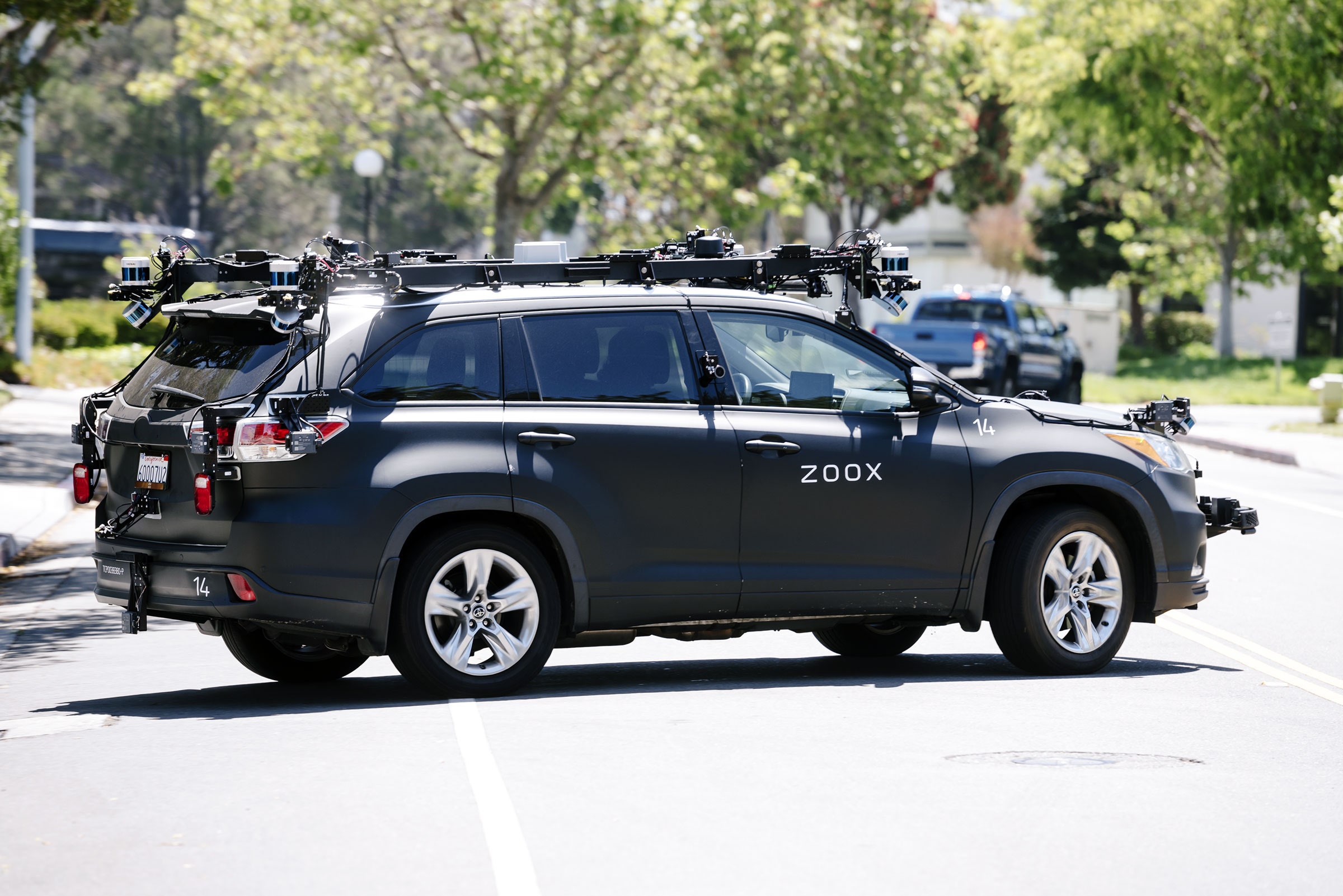
Amazon-owned Zoox has begun offering free robotaxi rides to the public on and around the Las Vegas Strip, marking its most ambitious step yet in the push toward commercializing fully autonomous ride-hailing.

The service, which started on Wednesday, comes as Zoox awaits state approval to collect fares and formally compete with Alphabet’s Waymo and Tesla.

Unlike its rivals, Zoox’s vehicles stand out: purpose-built, carriage-style pods with no steering wheels, pedals, or driver seats. Passengers instead sit facing each other in a cabin that Zoox executives admit looks more like a “toaster oven on wheels” than a traditional car.

“This is a very differentiating experience that you want people to sort of get to understand and know the robotaxi, get used to it, and give us feedback too,” Zoox CEO Aicha Evans told Reuters. “That’s good for the community, that’s good for the riders, and that’s good for Zoox.”

Robotaxi Race and Rivalry

Zoox’s rollout underscores the increasingly crowded fight over robotaxi dominance. Waymo, with a fleet of roughly 2,000 vehicles, already runs fare-collecting services in parts of Phoenix, Los Angeles, San Francisco, Austin, and Atlanta.

Tesla, meanwhile, has begun offering rides in Austin, Texas, and has launched a small ride-hailing program in the San Francisco Bay Area using its driver-assistance technology — though with a safety driver still behind the wheel.

Traditional ride-hailing giant Uber is also fast emerging as a competitor, striking multiple deals to integrate autonomous vehicles into its network rather than building its own cars.

Why Zoox Looks Different

The design difference is Zoox’s biggest gamble. While Tesla retrofits its existing vehicles with self-driving systems and Waymo adapts Chrysler and Jaguar models, Zoox has pursued a ground-up redesign of the car itself. The all-electric pods are symmetrical, able to drive in either direction, and rely entirely on sensors and AI for navigation.

The absence of manual controls highlights Zoox’s commitment to a future where passengers won’t need to think of “drivers” at all. But it also makes the company more dependent on regulatory approval, as safety standards for such unconventional vehicles are still evolving.

Testing, Expansion, and Rider Feedback

Over the past month, Zoox has been quietly testing its vehicles on a loop from a Las Vegas casino, attracting thousands of weekly riders.

“We’ve actually been getting thousands of riders every week just from this one location, which actually quite exceeded our expectations,” Chief Technology Officer Jesse Levinson said.

Zoox currently operates about 50 vehicles, the majority in Las Vegas, and plans to “very soon” expand public rides to San Francisco, where testing has been underway for months. A rider wait list is already open. Further expansions are mapped out for Miami, Austin, Atlanta, and Los Angeles over the coming year.

The company envisions fleets running mostly on their own, with remote human assistance only stepping in when vehicles request help.

The High-Stakes Backstory

Commercializing robotaxis has proven far more difficult than promised. Across the U.S., rollout efforts have faced tight regulations, safety investigations, and public protests from communities wary of autonomous cars sharing the road. Several well-funded ventures — including Ford and Volkswagen-backed Argo AI — have already collapsed under the weight of high costs and slow regulatory progress.

Amazon’s 2020 $1.3 billion acquisition of Zoox signaled its long-term commitment to the space, giving the project deep-pocketed backing that many rivals lacked. For Amazon, the bet is about more than transportation: successful robotaxi fleets could generate huge returns by reshaping logistics, delivery, and mobility at scale.

Still, even with Amazon’s backing, Zoox faces stiff competition from Waymo’s head start, Tesla’s aggressive rollout strategy, and Uber’s vast ride-hailing network.

However, Zoox is pushing for regulatory clearance to begin charging fares in Las Vegas in the coming months. If approvals come through, the company will directly compete with Waymo in key U.S. cities while Tesla attempts to scale its own vision of robotaxis.

Currently, Zoox is betting that offering free rides will help the public grow comfortable with a very different kind of car — one where the driver’s seat no longer exists.