DD
MM
YYYY

PAGES

DD
MM
YYYY

spot_img

PAGES

Home Blog Page 5455

Young Nigerian Entrepreneurs and Career Developers may consider: What is my end-game strategy for online metaverses?

0

This post came about from two completely different trains of thought. The first was a post Ndubuisi Ekekwe did in 2018. ‘The Best Possible Business Idea in Nigerian Telecom for Entrepreneurs’

These were the posts I liked from Prof. the most, where he wrote very detailed business analysis of multifaceted circumstances and issues, from a position of impartiality and no personal interest.

I reflected on how things have changed since then… firstly in the extent to which business affairs issues have moved on, and secondly the noticeable reduction in Prof’s fielding of this kind of content on LinkedIn.

These days, his time on the platform seems more limited, and his plate seems full with covering the standard announcements for Tekedia Institute, and doing the needful for the promotion of Tekedia Capital Start-ups.

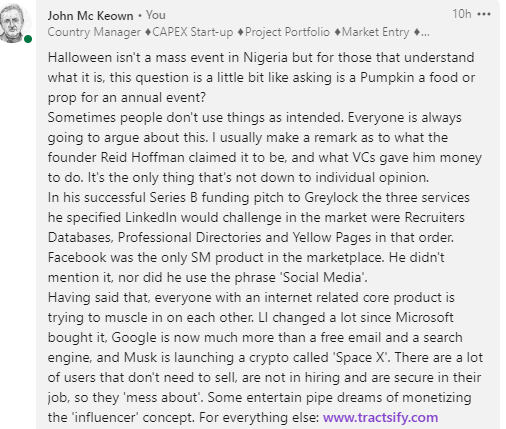
The second train of thought concerns a poll post from one Clare Caroll who posed a question about what LinkedIn is.
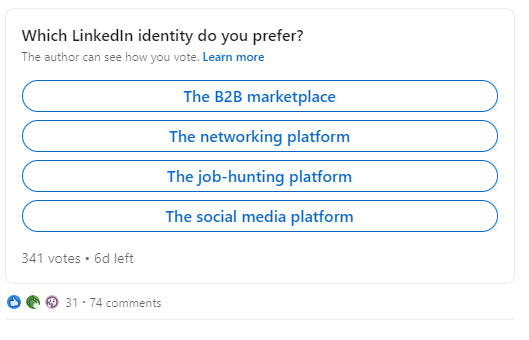
Which I answered like this:
 

Ultimately it doesn’t really matter how you identify with any product in the ‘Universal Metaverse’

The important thing is that people have a strategy.

While it is important for everyone, it is probably even more important for the young and ‘yet-to-achieve’ because there is so much life ahead, and that is a life that needs a concious effort to self-manage.

This means time spent online should have strategic objectives.

Gaining traction online in itself isn’t an objective. It does not project you forward. It needs to be part of an ‘aggregation strategy’

Aggregation is about consistently doing something which in itself doesn’t generate value, but which then makes something else possible, which is the one that finally delivers the value.

Trying to build huge numbers of connections, and then get loads of followers with the aim of becoming an ‘influencer’ with no ‘aggregation strategy’ plan in place may be a fools errand.
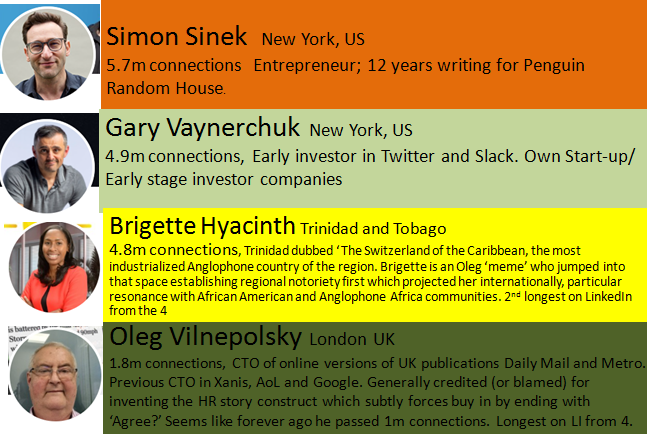
Generic ‘influencing’ is now a ‘Red Ocean’ pursuit. I’ve picked four people to make an illustration. I’ve deliberately avoided celebrities of such profile that their achievements would completely eclipse any additional benefit they could get from online media exposure, such as Bill Gates, Elon Musk, Mark Zukerberg, Richard Branson, Michael Dell, Alan Sugar etc.

The featured folk have all invested somewhere between six and twelve years to get their networks to where they are.

There is a great example from Ndubuisi Ekekwe on how Tiktok entered the market and found a USP over existing players in the segment. If your ‘aggregation plan’ has a dependency on weight of numbers then you may equally need to find a USP to outflank competition. On numbers alone, there are so many that are light years ahead, and they are accelerating away from us at exponential rates. Relative relevance on numbers alone, a 5000 LinkedIn network now will have lost 90% of its relative relevance by the time it is at the invitation threshold of 30k, and a 50k network will see a comparable collapse by the time it is 100k

‘Influence’ is rapidly translating from a sellers market to a buyers one UNLESS a very unique USP set can be applied just like Tiktok.

You will also need to build in some flexibility. Keep abreast of new developments in different parts of the Metaverses. Clare Caroll mentions the new ‘Creator Mode’ coming to LinkedIn

Career coach Martin Buckland often warns of behavioral changes that can suggest people have become desperate for a job. Employers often chase what they can’t get, and run a mile from anybody that has an odour of desperation. He says we need to be consistent.

But we also need to define what consistent means.

Returning to the earlier part of this piece, I bring a reprise on the change in Ndubuisi Ekekwe’s contribution behaviour. I may notice these changes but I am not privy to his ‘endgame strategy for your participation in the online metaverses’ The contribution behaviour may not be the endgame strategy itself but just symptoms of it. Sticking to the plan and being consistent may involve an evolution of contribution behaviour.

We also have SMO (Social Media Office) Regimes in global companies that we may serve or work with from time to time. An endgame strategy will need to be sufficiently robust to absorb changes in contribution behaviour dictated by different SMO regimes that we may flow though.

Summary:

  1. Have an endgame strategy for our participation in the online metaverses
  2. Develop, know and understand our aggregation plan
  3. Be flexible enough to absorb technical changes in metaverse elements and contribution behaviour modifications as a result of changing SMO regimes we flow though.
  4. Do not get caught up in a humdrum like chasing of metrics.
  5. Set  achievable goals that support continuity – be an eternal flame, not a firework.

Ref:

linkedin.com/posts/ndubuisi-ekekwe-36068210_the-lesson-from-tiktok-on-facebook-and-mr-activity-6830583984037117952-CHNv

linkedin.com/posts/clare-carroll-digitalmarketing_contentangel-digitalbyclare-ugcPost-6866363578375528448-M8Ie

www.tekedia.com/the-best-possible-business-idea-in-nigerian-telecom-for-entrepreneurs/
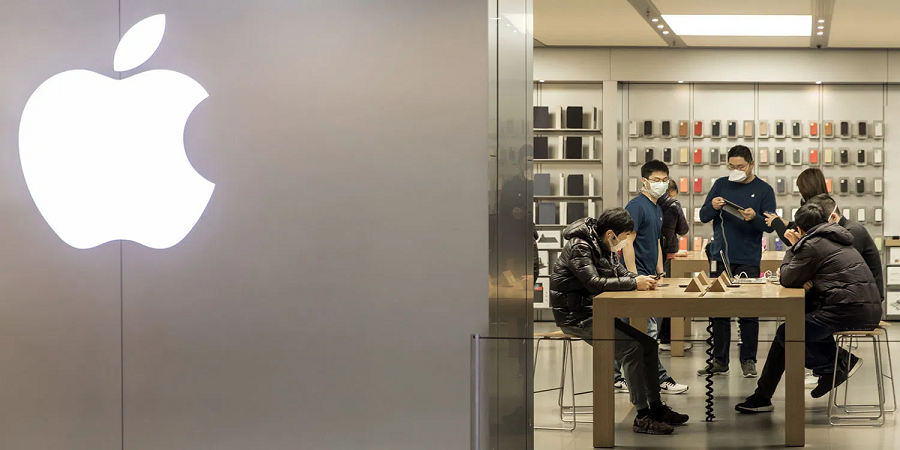
Apple Introduces Self Service Repair

0

Apple on Wednesday announced Self Service Repair, which will allow customers who are comfortable with completing their own repairs access to Apple genuine parts and tools, for the first time.

Right-to-repair has been a controversial topic, for years, with repair shops and lobbyists advocating reforms that will enable individual iPhone or Mac owners to fix their devices while Apple kicked against it, citing concerns about the safety of third-party parts.

Succumbing to users’ demand, Apple is making available repair parts for customers. The service will be available first for the iPhone 12 and iPhone 13 lineups, and soon to be followed by Mac computers featuring M1 chips, Self Service Repair will be available early next year in the US and expand to additional countries throughout 2022, the company said.

Apple has more than 5,000 Apple Authorized Service Providers (AASPs) and 2,800 Independent Repair Providers, who have now been joined by customers to access repair parts, tools, and manuals.

Apple said the initial phase of the program will focus on the most commonly serviced modules, such as the iPhone display, battery, and camera. The ability for additional repairs will be available later next year.

“Creating greater access to Apple genuine parts gives our customers even more choice if a repair is needed,” said Jeff Williams, Apple’s chief operating officer. “In the past three years, Apple has nearly doubled the number of service locations with access to Apple genuine parts, tools, and training, and now we’re providing an option for those who wish to complete their own repairs.”

Biden’s administration and the watchdog, Federal Trade Commission (FTC) have upped the anti-monopoly ante, a signal Apple seems to have caught to bend its rigid repair rules.

Apple builds durable products designed to endure the rigors of everyday use. When an Apple product requires repair, it can be serviced by trained technicians using Apple genuine parts at thousands of locations, including Apple (in-store or by mail), AASPs, Independent Repair Providers.

Self Service Repair

However, the self-service repair poses a challenge for individual users without repair certification, who may want to fix their devices at home without contact with Apple. To address this challenge, Apple provides the guidelines below.

To ensure a customer can safely perform a repair, it’s important they first review the Repair Manual. Then a customer will place an order for the Apple genuine parts and tools using the Apple Self Service Repair Online Store. Following the repair, customers who return their used part for recycling will receive credit toward their purchase.

The new store will offer more than 200 individual parts and tools, enabling customers to complete the most common repairs on iPhone 12 and iPhone 13.

Self Service Repair is intended for individual technicians with the knowledge and experience to repair electronic devices. For the vast majority of customers, visiting a professional repair provider with certified technicians who use genuine Apple parts is the safest and most reliable way to get a repair.

Apple did not say how much the repair parts will cost. However, the move is suggesting that the smartphone maker is increasingly compromising its rigid rules to avoid a penalty from the FTC.

I challenge you to give that IDEA  its First Day!

0

Every great project was at a time an IDEA. And every great company had a launch date – the very day it began. 

I challenge you to give that IDEA  its First Day!

Yes, it takes the First Day – just the first day for that promise to become a reality. Open that shop, that website, etc and put that signpost “we’re open for business”, and let it fly.

Happy First Day – welcome to markets!


When Will Britain, Others Return Nigeria’s Artefacts?

0

As countries across the global community, particularly those on the African continent, are making frantic efforts to redeem and revive their respective technically-oriented heritage as regards culture and history, Nigeria shouldn’t be an exception.

Three years back, the Benin Republic seemingly wore a cheering physiognomy in respect of the struggle. This assertion wasn’t unconnected with the approval cum pronouncement made by the young and vibrant French President, Mr. Emmanuel Macron in the aforesaid period.

On Friday, 23rd November 2018, Mr. Macron who apparently has enormous passion in issues pertaining to culture and tourism, reportedly indicated his government’s willingness to return all the ‘stolen’ cultural artefacts to Benin Republic, the original home of the ornaments.

The decision, which Mr. Macron said should not be seen as an “isolated or symbolic case”, was informed on the receipt of the findings of a study he commissioned on repatriating African treasures held by French museums.

He therefore agreed to return 26 works, mainly royal statues from the palaces of Abomey – formerly the capital of the Kingdom of Dahomey – taken by the French army during a war in 1892 and now in Paris’ Quai Branly museum.

The president, who hoped that all possible circulation of these works are duly considered and returned, additionally proposed gathering African and European partners in Paris the following year to define a framework for an “exchange policy” for African artworks.

It’s noteworthy that in recent times, calls have been growing in Africa for restitution of artworks to the continent, but it’s also worthy of note that the French law strictly forbids the government from ceding state property to any nation or entity even in well-documented cases of pillaging. Notwithstanding, it seems Macron had broken that jinx.

In 2016, the Benin Republic demanded that France return her items including statues, artworks, carving, sceptres and sacred doors. While that request was initially denied, in November same year, President Macron raised hopes in a speech he delivered in Burkina Faso, pledging to repatriate African heritage to the continent.

Following the speech, he asked the French art historian, Mr. Benedicte Savoy and the Senegalese writer, Mr. Felwine Sarr to painstakingly study the matter. Their report, thereafter, was welcomed by advocates of restitution of works that were bought, bartered, looted, or in some cases stolen.

The said report proposes that legislation should be developed to return thousands of African artefacts taken during the colonial period to the nations that requested them. There are conditions, however, including a proper request from the relevant country, precise information about the origin of the demanded works, as well as the proof of the existence of adequate facilities such as museums to house them back in their home country when eventually returned.

In his further speech, Macron stated that museums would be invited to identify African belongings and organize possible returns and ought to quickly establish an “online inventory of their African collections”. He also called for in-depth work with other European states that still retain collections of the same nature “acquired in comparable circumstances”.

It could be recalled that the United Nations Educational, Scientific and Cultural Organization (UNESCO) convention against the export of illicit cultural goods adopted in 1970 called for the return of cultural property taken from a country but it didn’t address historic cases.

Nevertheless, with museums fearing they could be compelled to return artefacts, some former colonial powers had sluggishly ratified the resolution as made by UNESCO. France only did so in 1997, followed by Britain, Germany and Belgium in 2002, 2007 and 2009, respectively.

The aforementioned report, as was commissioned by Macron, opined that such collections were severely depriving Africans of their artistic and cultural heritage. It said “On a continent where 60 percent of the population is under the age of 20 years old, what is first and foremost of a great importance is for young people to have access to their own culture, creativity, and spirituality from other eras.”

As countries across the African continent are currently filled with the desire to see that their technically-oriented heritage are duly returned by their respective colonial masters, Nigeria shouldn’t place herself in abeyance.

Since Nigeria gained her independence in 1960, successive governments have sought from Britain the return of the country’s looted artefacts but such a quest had ostensibly failed on deaf ears.

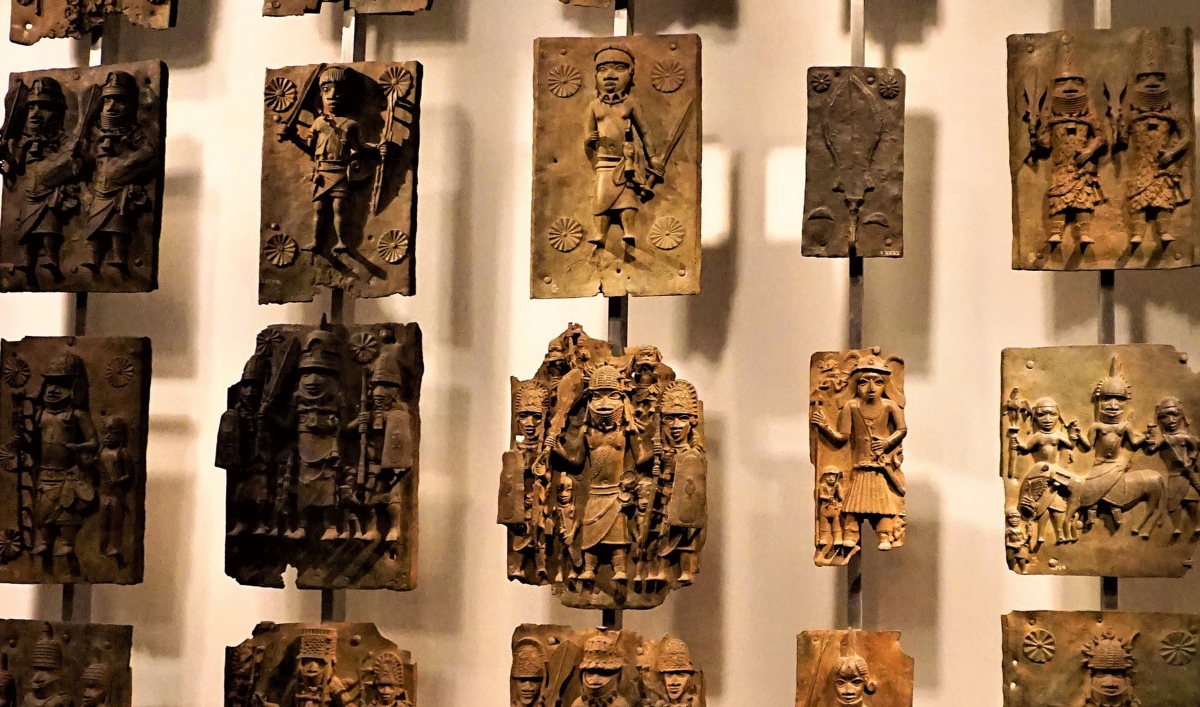
Just recently, more than a century after the British soldiers ‘stole’ a collection of priceless artefacts from the Benin Kingdom in Edo State, a deal was struck between the Benin Dialogue Group (BDG) and the Britain towards ensuring that some of the most iconic pieces such as the Benin bronzes are returned on a “temporary basis” to form an exhibition at the new Benin Royal Museum “within three years”.

However, the troubling follow-up question thereof was, ‘why must Nigeria’s looted treasures be loaned to her?’ How could a country receive her assets or heritage in the form of a loan?

Aside from the bronzes, there are many other precious works like the Benin ivory mask that are equally yearning for repatriation. It’s noteworthy that Britain’s soldiers seized thousands of metal castings and sculptures from the Kingdom of Benin in 1897.

A few months back, precisely in March 2021, the University of Aberdeen in the United Kingdom (UK) disclosed it would return the Benin Bronze to Nigeria ‘within weeks’. It was one of the first public institutions to do so more than a century after Britain looted the sculptures and auctioned them to Western museums and collectors.

The University said in its press release that the sculpture of an Oba, or ruler, of the Kingdom of Benin, had left Nigeria in an “extremely immoral” fashion, thereby making the institution to reach out to the concerned authorities in 2019 to negotiate its return.

The University’s Head of Museums and Special Collections, Mr. Neil Curtis stated that the Bronzes, which were purportedly purchased in 1957, had been “blatantly looted 124 years ago by British soldiers, hence it became clear we had to do something.”

In the same vein, penultimate month, the Jesus College, part of Cambridge University in the UK handed over to Nigeria via her delegation an artefact known as Okukor, the sculpture of a cockerel, that was looted by the British troops in the aforementioned year. The college described the handover as “the first institutional return of its kind”, signifying that the move made the college the first institution to carry out such a rare gesture.

On its part, Germany was recently reportedly in talks to return 440 Benin Bronzes as early as the autumn, while the University of Cambridge’s Jesus College said it had finalized approvals in December 2020 to return one Bronze to Nigeria.

Hence, as the present Nigerian government led by President Muhammadu Buhari is ostensibly concerned to diversify the country’s economy, it must expedite action to see that the tourism industry is fully resuscitated and boosted by ensuring all the looted artefacts are wholly returned to the country by the various nations that stole them.

Similarly, as was stated by the French President, Mr. Macron in regard to creating an online inventory, the governments at all levels ought to acknowledge that it’s high time they fully embraced the Information Technology (IT) concerning tourism, therefore should ensure their respective tourist centres cum possessions could henceforth be assessed online to enable outsiders or foreigners appreciate their worth. The features of the digital age mustn’t be overlooked.

As countries across the African continent and beyond are currently making waves towards regaining their respective artefacts, Nigeria must follow suit headlong without much ado. 

CBN Grants Airtel Super Agent License to Offer Financial Services

0

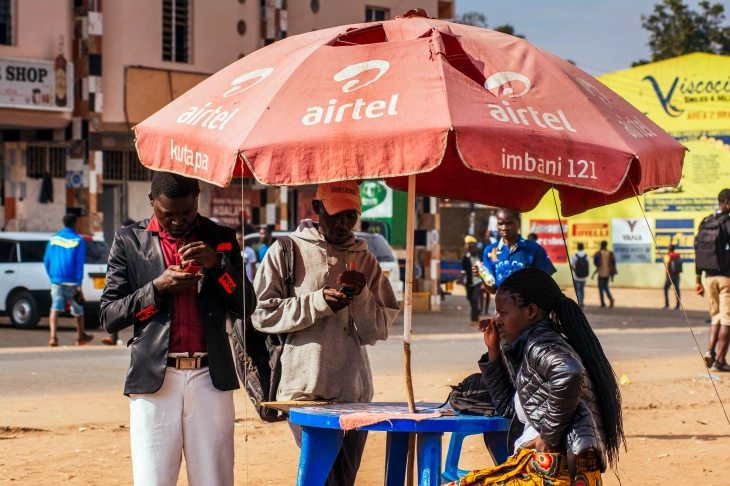
A week after both Airtel and MTN were granted approval by the Central Bank of Nigeria (CBN), to operate a payment service bank (PSB) via Smartcash Payment Service Bank Limited, Airtel Africa Plc has announced that it has been granted approval-in-principle by the CBN to operate as a super-agent in Nigeria.

The telecom company announced this on Monday, explaining in a statement on the Nigeria Exchange Limited (NGX), that Airtel Mobile Commerce Nigeria, its subsidiary will operate the agent banking license.

Super agents are companies approved by CBN to recruit agents for agency banking, such as financial services within communities on behalf of banks to deepen financial inclusion.

Airtel explained in a statement that super agent license, which is different from the PSB, gives it the opportunity to carry out financial services on behalf Nigerian banks.

“The super agent licence is distinct from the Payment Service Bank (PSB) licence for which it received approval in principle on 4 November 2021.

“The PSB licence is required for Airtel to be able to provide financial services in Nigeria such as accepting cash deposits and carrying out payments and remittances, issuing debit and prepaid cards, operating electronic wallets, and rendering other financial services.

“Under the super agent licence, we would be able to create an agent network that can service the customers of licensed Nigerian banks, Payment service banks and licenced mobile money operators in Nigeria.

“Final approval of the super agent licence is subject to the Group satisfying certain standard conditions,” it said.

The federal government of Nigeria, through the CBN, has been working on policies that will facilitate financial inclusion in the country. Among them is the issuance of financial service licenses to qualified telecom operators.

Despite Nigeria’s fintech boom, the African largest economy still has a wide gap of about 40 million people who lack access to financial services. With this gap, telcos, with their huge customer-base that covers even the rural dwellers, are being selected to offer financial services to the underserved.

The Chief Executive Officer, Airtel Africa, Segun Ogunsanya said Airtel is working to meet all the requirements for the license.

“I am very pleased that Smartcash has been granted an approval in principle to operate a service bank business in Nigeria. We will now work closely with the Central Bank to meet all its conditions to receive the operating licence and commence operations.

“The final operating licence will enable us to expand our digital financial products and reach the millions of Nigerians that do not have access to traditional financial services.

“I am looking forward to working closely with the Government, the Central Bank and traditional financial institutions to expand financial inclusion and meet the evolving needs of our customers and the economy.“

Depending much on the success of Airtel and MTN, It is expected that more companies in the telecom industry will be approved to offer financial services soon.