DD
MM
YYYY

PAGES

DD
MM
YYYY

spot_img

PAGES

Home Blog Page 5492

Company Directors, Pay Attention to This Central Bank of Nigeria Playbook

2

The Central Bank of Nigeria (CBN) noted: “the Global Standing Instruction (GSI) started with personal accounts but we are expanding to corporate accounts and microfinance banks. We understand that an individual can take a loan with commercial banks and choose not to fund his account and take his money to OFI [Other Financial Institutions]. Microfinance banks are going to be part of the Global Standing Instruction (GSI) policy but that phase would come gradually”.

Simply, the apex bank of Nigeria will expand GSI to corporate accounts and microfinance banks in the country: “Standing Instruction (GSI) policy is meant to facilitate improved credit repayment culture in the country; reduce non-performing loans (NPLs), and promote watch-listing of chronic loan defaulters in the Nigerian Banking System”.

In other words, your company cannot borrow from Bank A and intentionally refuses to fund the account therein while doing banking with Bank B. With this new playbook, Bank A can go after your balance in Bank B. This is good policy in a trust-challenged ecosystem.

But it opens risks to company directors. In Nigeria, corporate accounts are largely tracked in banks by the BVNs of the directors, and not necessarily by the Corporate Affairs registration (CAC) numbers. So, if you are a director in any company with your BVN in the bank account, this is the time to ask questions even if you are not actively running that business!

  • The Financial Policy and Regulation Department of the Central Bank of Nigeria (CBN) announced the operational guidelines for the new policy for individual bank customers in the country in circular No. FPRD/DIR/GEN/CIR/07/056 to all banks and other financial institutions on July 13, 2020.

  • The CBN released recommendations for all banks and other financial institutions on August 28, 2019, to ensure successful implementation of the GSI process, including eligible loans given by banks.

  • Under the GSI, a bank client will no longer be able to accept a loan or credit from one bank and refuse to pay it back while maintaining many other bank accounts with sufficient credit balances to pay off the amount owed to the first bank.


The Lessons from Zillow And The Limits of Algorithm

3
Real estate theme with person using a smartphone

Automation works VERY well under a controlled environment. Every other place is yoyo. Yes, you can automate a car assembly line because you can control nearly all the variables. But building an autonomous vehicle with infinite ways weather can perform or other drivers can behave, you have a real challenge at hand. Then add events like valuing houses which theoretically have unbounded variables to consider! I mean, a small bill in Washington can change the prices of homes.

A small sneeze from the US Federal Reserve can have huge impacts on interest rates. Then local politics and many elements including gangs on streets, construction rate growth, etc.

Zillow, a leading real estate company with technology DNA has learned hard lessons: algorithms have limits. The company’s AI for buying homes messed up and it has shut it down with 2,000 people losing their jobs: “a painful move that will result in 2,000 employees losing their jobs, a $304 million third quarter write-down, a spiraling stock price (shares are down more than 18%…)” in hours”.

Yet, the destination is that more things will become more automated including buying homes, over time. It may not be right now but over time, humans will get there. The rule remains: do not be too early and do not be too late as patterns emerge.

But optimizing that timing separates the legends from the commoners. Humans continue to WIN – and we need to respect them in companies.

Just because a business process can be automated, doesn’t necessarily mean it should be automated. And maybe — just maybe — there are components of business that are not better served with AI algorithms doing the job.

That’s a key takeaway after Zillow Group made the unexpected decision on Tuesday to shutter its home buying business — a painful move that will result in 2,000 employees losing their jobs, a $304 million third quarter write-down, a spiraling stock price (shares are down more than 18% today), and egg on the face of co-founder and CEO Rich Barton.

Zillow’s move also represents a big loss for the algorithms that powered its nascent iBuying business, and it is a warning sign to other businesses — both in real estate and other industries — that rely heavily on the almighty algorithm.

Your ears are not there to hear everything!

1

Your ears are not there to hear everything. Learn how to shut down and disconnect from those who sap your energy. When I was in university, I avoided anyone who ever said: “Ndubuisi, you read too much. Always going back to classrooms”. Yes, I was a bookworm but it was not an offence. I knew that I was not the smartest but I knew if I worked harder, I would always come out fine.

Define your purpose and filter the noise – and stay focused on the mission. Every great thing requires a sacrifice, including being the #best.

Good People, master when to disconnect from that noise to stay focused!

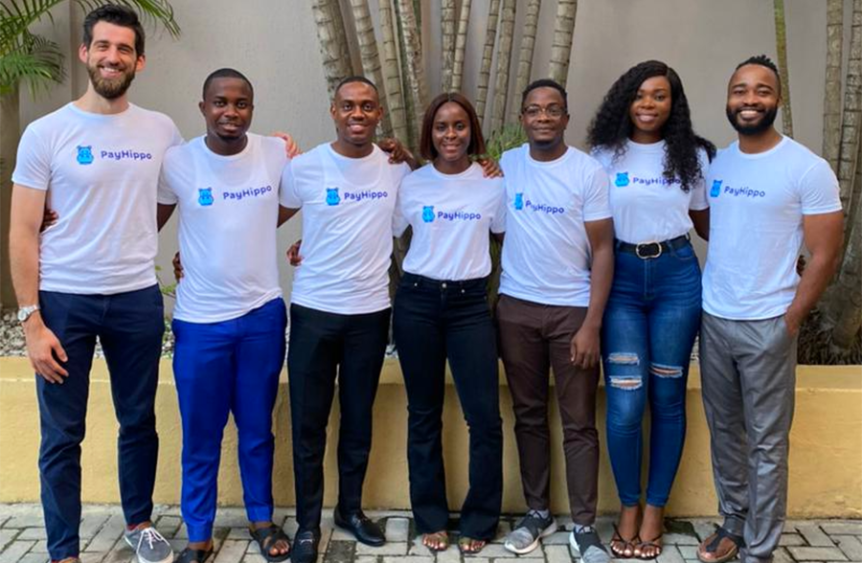
Payhippo, Nigerian Lending Startup Raises $3m in A Seed Round

0

Payhippo, a Nigerian lending startup, has raised $3 million in a seed round to expand its talent base and network across more West African countries.

The startup focuses on credit delivery for small and medium-sized enterprises (SMEs), and needs to optimize its technology to accommodate its fast-paced growth.

The company’s co-founder and chief operations officer, Chioma Okotcha, said they are looking to hire more engineers and data scientists.

“We capture our data from the loans we issue, and more talent in the team would allow us to optimize our technology to serve our customers better,” she said.

The round was led by an array of angel investors, including Ham Serunjogi and Maijid Moujaled, the co-founders of the African cross-border payments company Chipper Cash; Olugbenga Agboola of the San-Francisco based payments firm Flutterwave; Bolaji Balogun, the CEO of investment banking firm Chapel Hill Denham; and Hakeem Belo-Osagie, the founder of Metis Capital Partners.

Payhippo has become a force in the Nigerian loan space in such a short time by being fast at it, eliminating the bottlenecks that have characterized banks’ loan process.

“We really focus on keeping this under three hours, and making sure that businesses can get the money they need when they need it. Ours is also a product that works for the SMEs in terms of a flexible repayment structure,” Okotcha said.

This is the largest amount Payhippo has raised to date after receiving $1 million in pre-seed funding earlier this year, according to TechCrunch.

The startup has focused on SMEs due to the size of its market. SMEs account for 96% of businesses and 84% of employment in Nigeria, and it’s seen as the backbone of the economy. However, it has come with a huge credit vacuum that has stalled the growth potential of the micro businesses.

Founded in 2019 by Okotcha, Zach Bijesse, now the chief executive officer, and Uche Nnadi, the chief technical officer, Payhippo was part of the 2021 Y Combinator summer cohort, and has shown its capability in filling the credit vacuum for SMEs.

“We had seen that traditional banks and lenders wouldn’t loan small businesses mainly because there were no credit scores, or the collateral requirements were too high. We decided to come into the market and create an instant financing option, where we create a credit score that allows small businesses to get the liquidity they need to buy inventory for business continuity,” Okotcha told TechCrunch.

“We use data from historical records that borrowers have built with us, but we also check their banking history to see the actual performance of their businesses,” said Okotcha.

But Payhippo is not the only digital lender in Nigeria offering short-term loans to SMEs. The startup is competing with others, including Carbon and FairMoney. Per TechCrunch, FairMoney disbursed a total loan volume of $93 million last year, representing a 128 percentage point increase from 2019, while Carbon said it had hit 659,000 customers last year and had disbursed $63 million in loans, an increase of 9.1 percentage points from the 2019 financial year.

Putting up a challenge to these rivals, Payhippo says it made $64,000 in revenue from around 5,000 it has so far disbursed. The startup says the repayment rate is 97% and that the total transaction is valued at $1 million. It added that the demand for credit is high, fueling its current 25% month-on-month growth.

Payhippo applies its own credit scoring formula that uses different SME data to determine the value of loans to give out. The loans are disbursed through mobile phones. The average loan disbursed by Payhippo is about $1,300, with the minimum loan being about $200.

The company says it is counting on its swift turnover in loan applications to grow its customer base within Nigeria before expanding to other countries.

Okotcha said going forward, Payhippo will ride on the untapped credit needs of the nearly 40 million SMEs in Nigeria to grow its business.

“We know that just 1% of the Nigerian market is about 40,000 businesses, and we want to be in a position where we disburse 40,000 loans in a day,” she said.

Chinese Digital Currency Records $9.7bn in Transaction As 140m People Create Wallets

0

China is nearing the launch of its Central Bank Digital Currency (CBDC) as more people sign up to it and create digital wallets.

About 140 million people had opened “wallets” for the digital yuan as of October and used it for transactions totaling around 62 billion yuan ($9.7 billion), Mu Changchun, head of the PBOC’s Digital Currency Institute, said at the Hong Kong Fintech Week conference on Wednesday.

The e-CNY has undergone a series of trials and appears to be in the final phase before it is rolled out, although Mu Changchun told Hong Kong’s “Fintech Week” conference there was no official launch date yet, but he disclosed how the digital currency will work.

“Digital yuan operators can open four types of e-wallets for customers. The least privileged only requires a phone number, so would be anonymous even to the PBOC. Daily transaction values for this type of e-wallet holder would be capped at 5,000 yuan, with an annual cap of 50,000 yuan.

“The highest privileged e-wallet would need to be opened at a bank counter with personal identification, with no transaction cap,” he said.

He reiterated that these e-wallets would collect less transaction information than traditional digital payment services. The PBOC would not provide the information to any third-party or other government agencies unless stipulated by the law

By the end of June, China had more than 24 million individual and enterprise users with e-CNY wallets, with transactions worth about 34.5 billion yuan, the central bank said at the time

Central banks around the world are looking at developing CBDCs to modernize their financial systems, ward off competition from cryptocurrencies like bitcoin and speed up domestic and international payments.

China’s efforts are among the most advanced globally, and the country has been running various trials and pilot schemes of different payment scenarios since last year.

Mu said so far 1.55 million merchants could accept payments using eCNY wallets, including utilities, catering services, transportation, retail and government services.

China intensified its crackdown on cryptocurrency earlier this year, and totally declared it illegal in September, paving the way for its CBDC.

“The surge in usage of cryptocurrencies has disrupted economic and financial order and prompted a proliferation of money laundering, illegal fund-raising, fraud, pyramid schemes and other illegal and criminal activities,” the PBoC said then.

Although Mu said it is not yet certain when the eCNY will be launched, the growing number of people using it so far suggests that it wouldn’t be long.