DD
MM
YYYY

PAGES

DD
MM
YYYY

spot_img

PAGES

Home Blog Page 5496

Alarming Pace Of Domestic Violence Among Couples

0

The last time I checked, domestic violence among married couples – otherwise known as matrimonial battering – was indeed on the increase, that only a drastic measure is currently required towards addressing it.

Battering is a pattern of behavior used to establish power and control over another person through fear and intimidation, which usually include the use of violence. In the same vein, matrimonial battering is a situation whereby a man or woman is battered by his/her legitimate spouse.

However, it’s noteworthy that it is the womenfolk that usually fall victim to the menace. This is to assert that in most cultures, the perpetrators are commonly the men of the family.

Battering, which is indeed a criminal act, takes place when a person believes he/she is entitled to control another. In recent times, the most worrisome form of battering is the one that happens between married couples, which has degenerated into an alarming state.

Battering of a family member can take many forms. It may include emotional, economic and sexual abuses as well as isolation, use of male privilege, employment of threats and a variety of other behaviours used to maintain fear, intimidation and power.

Among all forms of battering, it could be classified into two major types namely, physical battering and psychological battering. Physical battering is a situation where the abuser employs physical attacks or aggression, while psychological battering involves verbal abuse/harassment, excessive possessiveness, segregation of the woman from friends and family, deprivation of physical and economic resources, and destruction of the woman’s personal property.

It is worth noting that physical battering, which is prevalent in most African homes, particularly Nigeria, can also lead to psychological trauma.IN other words, the latter is not unusually necessitated by the former.

Battering, which has taken a different dimension in several families in Nigeria, and Africa at large, can be attributed to immaturity, alcoholism, temperament, infidelity, and/or lack of love. Other local causes include lack of male children, alleged barrenness, selfishness, influence and ignorance.

Among these, the most prevalent factor that leads to battering is lack of love because if one truly loves his wife/partner, he can never make any attempt to hurt her even when he is under the influence of alcohol.

Survey shows that battering remains the major cause of the ongoing high rate of divorce or estrangement among married persons in Nigeria. Needless to say that if an adequate and drastic measure is not taken towards curbing the anomaly, it is likely to render millions of our children vulnerable in near future, thereby affecting their upbringing.

Acknowledging that marriage is the most intimate relationship two human beings can experience, second only to a relationship with God, and that it is the only intimacy that brings out the best in someone, there is no gain saying everyone has a responsibility toward preventing or eradicating battering or any form of domestic violence against the womenfolk.

We can individually or collectively join in the crusade aimed at ending domestic violence or abuse, which has brought a colossal upheaval in various homes, by challenging any thought or attitude that allows such acts to prevail in our respective societies.

Let’s be conscious of the fact that a woman who is suffering from matrimonial battering can do anything to protect herself or the marriage, with a view that such aberration would continue to repeat itself.

In one of her books titled ‘Trauma and Recovery’, Judith Lewis Herman – an author and psychiatrist stated, “The guarantee of safety in a battering relationship can never be based upon a promise from the perpetrator no matter how heartfelt. Rather, it must be based upon the self-protective capability of the victim…” She went further to state that “Until the victim has developed a detailed and realistic contingency plan and has demonstrated her ability to carry it out, she will remain in fear and danger of repeated abuse.”

The above quote signifies that a woman who suffers domestic violence is liable to resort to any approach in a bid to saving herself or averting the repetition of such ungodly act, especially in a situation whereby the victim is surrounded by friends who aren’t God-fearing.

Considering the aforementioned primary attributes of matrimonial battering, it is obvious that anyone irrespective of status or age is liable to patronize the monster. Thus, no one is exempted while discussing the unending societal menace.

To this end, parents or guardians must ensure their children or wards, as the case may be, have attained a reasonable maturity stage before they would be encouraged to settle down or get married. In view of this, we ought to acknowledge that maturity is not only based on the age of the parties involved but their level of exposure or experience.

As regards child bearing, acknowledging the tradition or desire of most men, particularly on the African continent, that a marriage yet to boast of a male child or a child at all, is useless, our men must be meant to understand that a child is a gift from God and not by the making of their wives as they presume. In other words, anyone who is yet to have a male child should remain steadfast in his faith, and must note at all times that a woman cannot be confirmed or proven to be barren unless as stated by her creator.

Inter alia, we ought to always have it at the back of our minds that marriage is “For better, for worse” as written in the Holy writ. The religious organizations have a very vital role to play in this regard.

Above all, there is an urgent need for the law makers to enact a law that would assign a capital punishment to anyone found guilty of matrimonial battering or any form of domestic violence/abuse. A stitch in time, they say, saves nigh. 

The Collapsed 21-Storey Ikoyi Building; What Went Wrong.

0

A 21 storey building collapsed yesterday been the 1st day of November, 2021 at about 14:00. What a sad way to start the new month.

The awful cite of a 21 storey high building site crumbling and turning into a heap of gravel, trapping an estimate of about 50 persons including the owner of the building, the contractors, the site supervisors, the Engineers, the bricklayers, the workers and other persons who were unfortunate to be at the building at that point.

Some have been rescued while some have been dragged out dead out of the building and more people are still trapped in the building 18 hours later.

This is not the first time a building is collapsing in Lagos state and unfortunately won’t be the last for this reason what went wrong and what is the spiritual forces or the supernatural forces pushing down buildings, trapping people inside and killing people in Nigeria, Lagos state in particular.

The General Manager, Lagos State Building Control Agency (LASBCA), Mr Gbolahan Oki, who has it as a statutory duty to regulate buildings in Lagos state and his agency is tasked with the simple duty to make sure that buildings erected in Lagos state conform to laid down standard.

The General manager stated that the owner of the collapsed 21-storey building, under construction in Ikoyi, was given approval to build only 15 floors but went ahead to erect 21 storey mansion and that the materials used in building the mansion are inferior materials. 

This statement by Mr. Gbolahan Oki while he was obviously trying to shift blames clearly begs the questions; when the Lagos State Building Control Agency (LASBCA) found out that the builders of the house have flaunted the approval given to them by adding five more floors  on top of the fifteen floors approved did they arrest the builders and mandate them to stop work unless they stick to the 15 floors storey they got approval for or did the Nigeria factor happen and the builders bribed their ways from 15th floor to the 21st floor till it came crashing?

While we blame Nigerians for always finding ways to cut corners even at the detriment of lives, Nigerian agencies must stick to doing their jobs and enforcing what they have been mandated to do and shun greed, bribes and corruptions if not more buildings will keep collapsing and we will keep losing more innocent lives.

Chipper Cash Raises $150M at Valuation of $2 Billion; Expect 15 Unicorns in Africa by 2023

0

My prediction is that Africa-focused startups will give us 15 unicorns (companies at valuation of at least $1 billion) by 2023 and at least one startup in Tekedia Capital portfolio will be among them; we have two on the path. Currently, Africa has about (public) 5 unicorns: Interswitch, Andela,  Flutterwave, OPay, and Wave. (I do think Paga and Twiga Foods are possibly unicorns now.)

Today, Chipper Cash, Chipper Cash, an African cross-border payments company, which just raised $150 million, at a valuation of $2 billion has extended the number. This investment comes barely six months after Chipper Cash closed its first Series C round of $100 million.

Africa, this is our time. A great season of entrepreneurial capitalism. I woke up speaking with one this morning and the news was great. Half-way to $100 million. If you ever want to support these startups, consider Tekedia Capital Syndicate – we are actively investing in a new batch of seven.


Might Nigeria’s Sustainable Development Goal Grant Apps be penalized for its Fintech and Digital Challenger Bank Success?

2

I learn today that the IMF have an indicator as part of its 2030 Sustainable Development Goals (SDGs) program.  The program came into force in September 2015.

The world economic forum, one month before the launch said:  ‘SDGs are likely to fail unless far more attention is given to addressing governance challenges crucial to their implementation.

In the broadest sense, governance refers to how societies make decisions and take action. It is about the mechanisms we use to work together in society to solve shared problems. For the SDGs, this involves considering how government, business, non-governmental organizations, civil society and researchers will work together’

Economies and socio-political landscapes with challenges, such as Nigeria,  can end up chasing their tails bewildered by conflicting requirements.

World Economic Forum goes on to describe potential conflicts: ‘ Biodiversity could be threatened if forests are cut down to expand agricultural production for food security. Food security could be threatened if food crops are switched to biofuel production for energy security. Water security could be threatened by decisions to intensify or expand agriculture, or to build hydropower for energy security and greenhouse gas mitigation’

The newly reported decline in Nigeria’s Sustainable Development Goal (SDG)  credentials relates to banking.

According to a News Express Nigeria breaking report, the ‘IMF, yesterday, said that Nigerian banks closed 234 branches and 649 Automated Teller Machines, ATMs, in 2020 leading to a decline in the country’s Financial Access Score (FAS) to 4.44 in the year against 4.78 in 2019…

Target 8.10 of the 2030 SDGs  is to improve domestic, i.e. personal/consumer institutions capacity to expand access to banking and financial services.

Now the SDG Fund describes itself as a set of  ‘results-oriented and people-centred UN programmes’

‘This is how the SDG Fund brings together UN agencies, governments, businesses and civil society to advance the 2030 Agenda for Sustainable Development. We work on the ground with local partners to maximize our impact…..

We work to improve the lives of people and fight poverty’

A key word here is results-oriented.

This author may not have experience of SDG applications or know how they work, however, any reasonable interpretation of ‘results-orientated’ means that the more a country achieves in SDG, the more it is likely to be favoured for future funding.

Regressing in Target 8.10 metrics is the complete opposite to results.

In many of his articles, for Tekedia Institute and further on LinkedIn, Prof. Ndubuisi Ekekwe monitors, tracks and reports on Nigeria’s Fintechs And Digital Challenger Banks

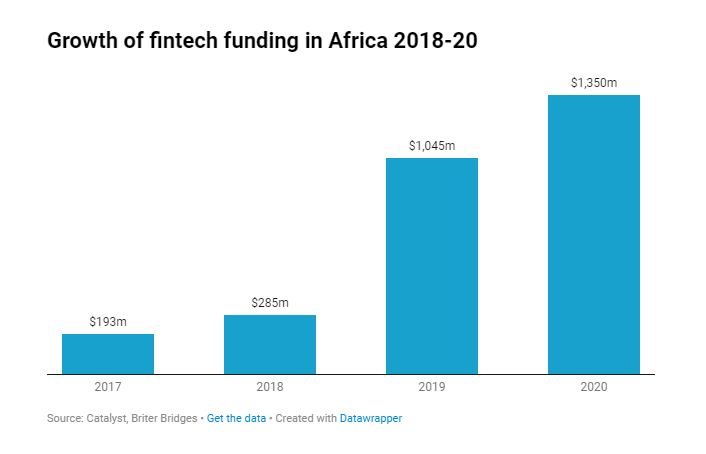
A report published by data research company Briter Bridges and the tech accelerator Catalyst Fund in May concluded that Fintech funding in Africa increased from $1bn in 2019 to $1.35bn last year, with Nigeria leading the way.

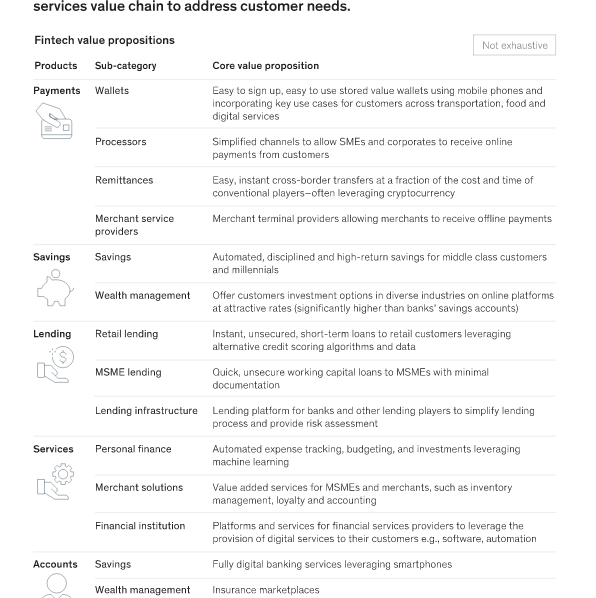
Mc Kinsey makes an effort to capture the spectrum of the Nigerian Fintech and Challenger Bank space

Clearly they have carved out their place in the consumer and personal banking market in Nigeria and the ‘shop front’ and ATM related banking services have had to reduce footprint consistent with transaction contraction.

This mostly impact on Lagos, Abuja, and the GRA and connectivity centric areas of other state capitals where 4G signal is good.

So the over-riding question… Is it fair to Nigeria that Target 8.10 of the 2030 SDGs  does not acknowledge and embrace the existence of Fintech and Digital Challenger Banks?

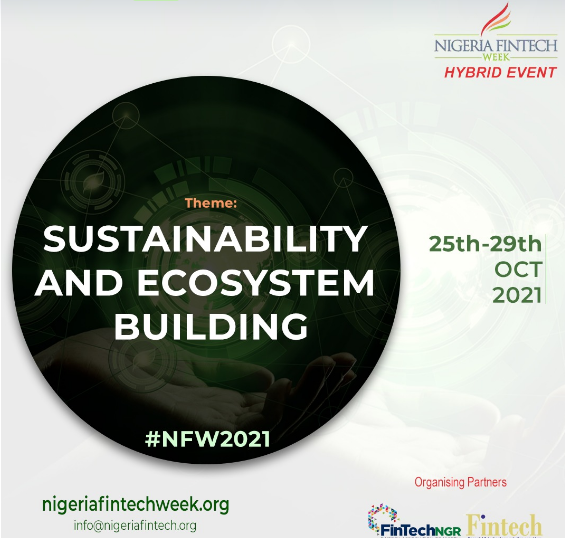
Ironically, as target 8.10 of the 2030 SDGs  does not acknowledge and embrace the existence of Fintech and Digital Challenger Banks, nigeriafintechweek.org’s fintech event has the theme ‘Sustainability and Ecosystem Building’


Acknowledgements/References/Further reading:

www.tekedia.com/ways-nigerias-fintechs-and-digital-challenger-banks-can-comply-with-cbn-latest-directive-on-microfinance-banks/

www.weforum.org/agenda/2015/08/3-challenges-facing-the-uns-sustainable-development-goals/

//newsexpressngr.com/news/136691-Nigerian-banks-closed-234-branches-649-ATM-IMF-

www.sdgfund.org/

www.fintechdirect.net/2020/06/04/new-challenger-bank-sparkle-s-in-nigeria/

nigeriafintechweek.org/

www.mckinsey.com/featured-insights/middle-east-and-africa/harnessing-nigerias-fintech-potential

african.business/dossiers/fintech-africa/

Lead illustration is from ‘Capital Monitor’ site featuring Eric Odhiambo, Ecobank’s CRO – Ecobank raised $350m with the first sustainable bond to be issued by an African bank, which was some four times oversubscribed.


Fortnite Game is Shutting Down in China

1

It looks like Fortnite has found a place for itself in the bad books of China, following recent government’s reforms geared toward protecting kids from games.

Fortnite China, known as Fortress Night in the Chinese translation, will no longer be available according to the game’s official website, The Gamer reports.

The version of Fortnite in China, which is quite different from what the rest of the world plays, and was only available via an authorized Chinese internet provider, had a notice on its website indicating it would soon be shut down.

“The test of ‘Fortress Night’ has come to an end. We will shut down the server in the near future,” reads a Google translation of the website, the report said. Thus indicating that registration of new players and the download portal will be unavailable as of November 1 and the game will become inaccessible to existing players on November 15.

The Gamer said the news was shared by a reliable Fortnite source, iFireMonkey, who credited arkheops for spotting it. No other information about this has come to light as of yet and it’s unclear whether this has to do with China’s new restrictions against online gaming.

Since August, China has intensified the regulation of its game industry, allowing only under 18s to play games three hours a week, as concern over games impact on the society heightens. The new rule changes the previous rule which allows under 18 gamers to play 90 minutes a day. The National Press and Publication Administration (NPPA) said in a notice that children are allowed to play games between 8 p.m. and 9 P.m. on Fridays and during the weekends under the new rule.

Game companies have been at the receiving end of the reforms, with more than $60 billion in losses, led by Tencent, incurred so far. The regulations have thus narrowed game companies’ chances of surviving in China with restricted rules.

The Gamer reported on the differences between Fortnite China and the version the rest of the world plays, quoting information from Fortnite Wiki. There are no in-game transactions and several gameplay features have been incorporated in order to make it easier for less skilled players. You stop receiving XP after 90 minutes and cannot compete in challenges; a notification then prompts you to go and study. There are also many cosmetic changes, for instance, no skulls are depicted due to a regulation prohibiting it.

As part of the reforms, service providers like Tencent, Netease, and Mihoyo have been instructed to enforce real name registry, login information, and even facial recognition for young users to guarantee compliance with gaming curfews.

China’s gaming community has come under the weight of these restrictions, heightening concern over the future of the industry. Some have gone as far as saying that “PUBG esports may be over in China”.

To compound their woes, the Xi Jinping administration has put a halt on approvals for all online games after a meeting with Tencent Holdings and NetEase under the guise of curbing video game addiction, the Game reported, adding that they were told that their “solitary focus” on profit must cease and that all approvals for online games would be frozen until further notice. However, it’s almost been three months and China has approved a grand total of zero games since then.

Shutting down in China also means that Fortnite has a fresh issue to worry about, besides its fight with Apple. The iPhone maker had restricted Epic Games, Fortnite’s parent company, from using the Apple Store over Epic’s attempt to implement an alternative payment system in the Fortnite app, breaching its contract agreement with Apple.