My prediction is that Africa-focused startups will give us 15 unicorns (companies at valuation of at least $1 billion) by 2023 and at least one startup in Tekedia Capital portfolio will be among them; we have two on the path. Currently, Africa has about (public) 5 unicorns: Interswitch, Andela, Flutterwave, OPay, and Wave. (I do think Paga and Twiga Foods are possibly unicorns now.)
Today, Chipper Cash, Chipper Cash, an African cross-border payments company, which just raised $150 million, at a valuation of $2 billion has extended the number. This investment comes barely six months after Chipper Cash closed its first Series C round of $100 million.
Africa, this is our time. A great season of entrepreneurial capitalism. I woke up speaking with one this morning and the news was great. Half-way to $100 million. If you ever want to support these startups, consider Tekedia Capital Syndicate – we are actively investing in a new batch of seven.
I learn today that the IMF have an indicator as part of its 2030 Sustainable Development Goals (SDGs) program. The program came into force in September 2015.
The world economic forum, one month before the launch said: ‘SDGs are likely to fail unless far more attention is given to addressing governance challenges crucial to their implementation.
In the broadest sense, governance refers to how societies make decisions and take action. It is about the mechanisms we use to work together in society to solve shared problems. For the SDGs, this involves considering how government, business, non-governmental organizations, civil society and researchers will work together’
Economies and socio-political landscapes with challenges, such as Nigeria, can end up chasing their tails bewildered by conflicting requirements.
World Economic Forum goes on to describe potential conflicts: ‘ Biodiversity could be threatened if forests are cut down to expand agricultural production for food security. Food security could be threatened if food crops are switched to biofuel production for energy security. Water security could be threatened by decisions to intensify or expand agriculture, or to build hydropower for energy security and greenhouse gas mitigation’
The newly reported decline in Nigeria’s Sustainable Development Goal (SDG) credentials relates to banking.
According to a News Express Nigeria breaking report, the ‘IMF, yesterday, said that Nigerian banks closed 234 branches and 649 Automated Teller Machines, ATMs, in 2020 leading to a decline in the country’s Financial Access Score (FAS) to 4.44 in the year against 4.78 in 2019…
Target 8.10 of the 2030 SDGs is to improve domestic, i.e. personal/consumer institutions capacity to expand access to banking and financial services.
Now the SDG Fund describes itself as a set of ‘results-oriented and people-centred UN programmes’
‘This is how the SDG Fund brings together UN agencies, governments, businesses and civil society to advance the 2030 Agenda for Sustainable Development. We work on the ground with local partners to maximize our impact…..
We work to improve the lives of people and fight poverty’
A key word here is results-oriented.
This author may not have experience of SDG applications or know how they work, however, any reasonable interpretation of ‘results-orientated’ means that the more a country achieves in SDG, the more it is likely to be favoured for future funding.
Regressing in Target 8.10 metrics is the complete opposite to results.
In many of his articles, for Tekedia Institute and further on LinkedIn, Prof. Ndubuisi Ekekwe monitors, tracks and reports on Nigeria’s Fintechs And Digital Challenger Banks
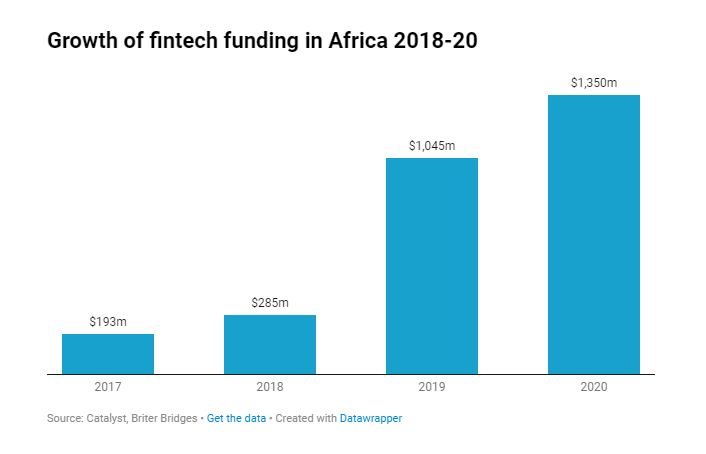
A report published by data research company Briter Bridges and the tech accelerator Catalyst Fund in May concluded that Fintech funding in Africa increased from $1bn in 2019 to $1.35bn last year, with Nigeria leading the way.
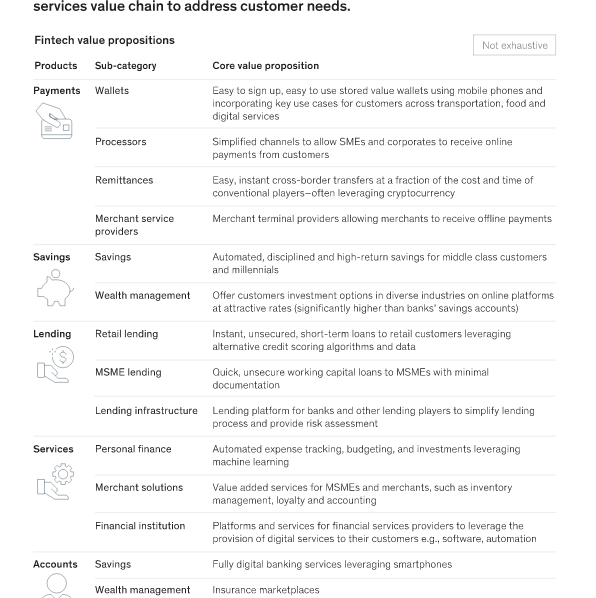
Mc Kinsey makes an effort to capture the spectrum of the Nigerian Fintech and Challenger Bank space
Clearly they have carved out their place in the consumer and personal banking market in Nigeria and the ‘shop front’ and ATM related banking services have had to reduce footprint consistent with transaction contraction.
This mostly impact on Lagos, Abuja, and the GRA and connectivity centric areas of other state capitals where 4G signal is good.
So the over-riding question… Is it fair to Nigeria that Target 8.10 of the 2030 SDGs does not acknowledge and embrace the existence of Fintech and Digital Challenger Banks?
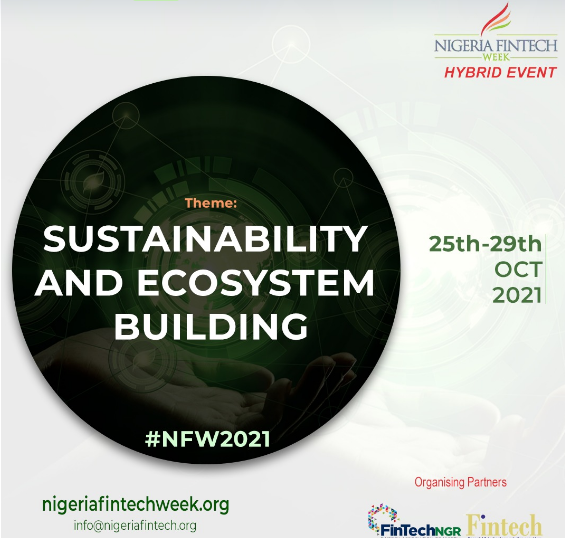
Ironically, as target 8.10 of the 2030 SDGs does not acknowledge and embrace the existence of Fintech and Digital Challenger Banks, nigeriafintechweek.org’s fintech event has the theme ‘Sustainability and Ecosystem Building’
Lead illustration is from ‘Capital Monitor’ site featuring Eric Odhiambo, Ecobank’s CRO – Ecobank raised $350m with the first sustainable bond to be issued by an African bank, which was some four times oversubscribed.
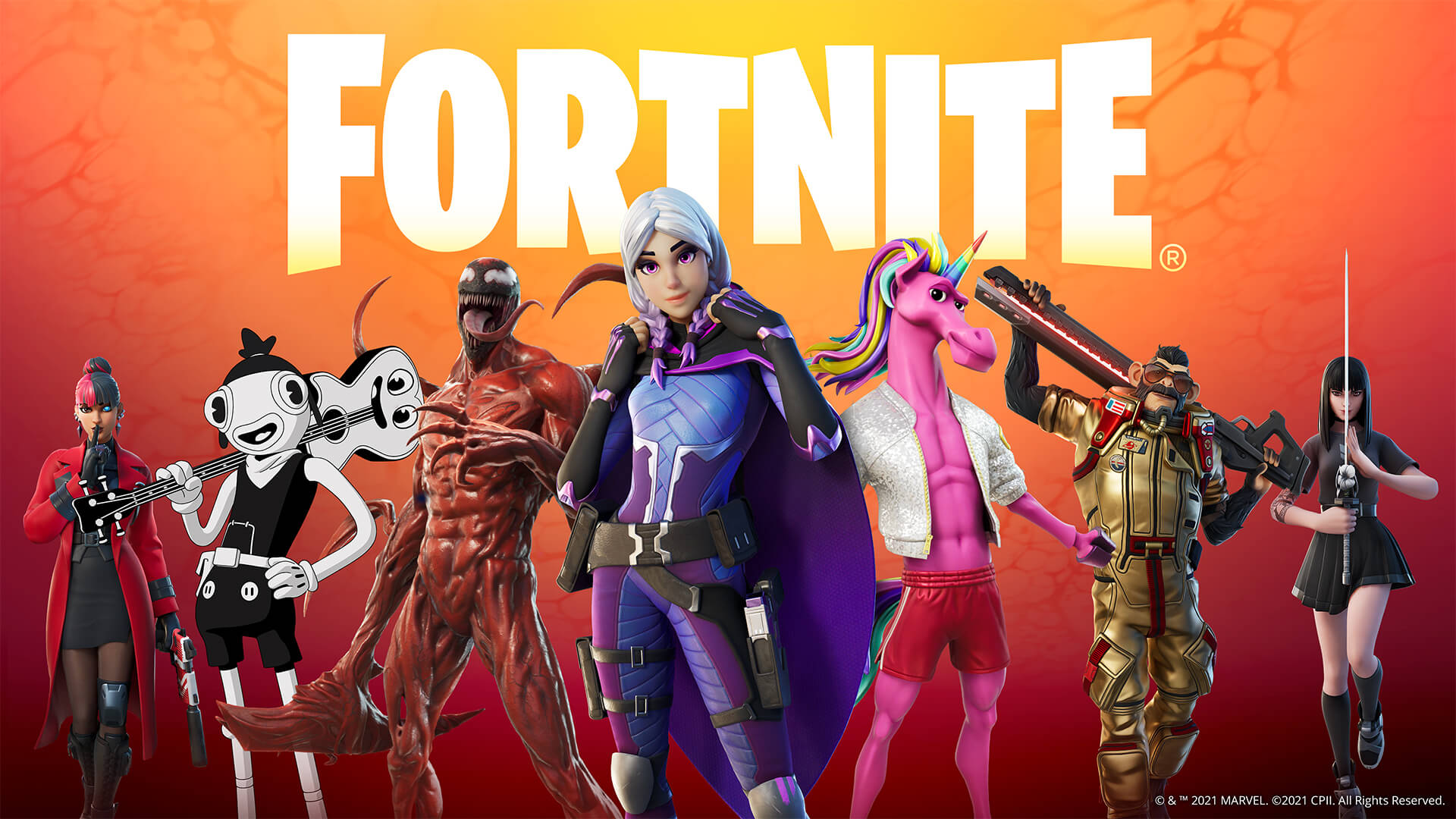
It looks like Fortnite has found a place for itself in the bad books of China, following recent government’s reforms geared toward protecting kids from games.
Fortnite China, known as Fortress Night in the Chinese translation, will no longer be available according to the game’s official website, The Gamer reports.
The version of Fortnite in China, which is quite different from what the rest of the world plays, and was only available via an authorized Chinese internet provider, had a notice on its website indicating it would soon be shut down.
“The test of ‘Fortress Night’ has come to an end. We will shut down the server in the near future,” reads a Google translation of the website, the report said. Thus indicating that registration of new players and the download portal will be unavailable as of November 1 and the game will become inaccessible to existing players on November 15.
The Gamer said the news was shared by a reliable Fortnite source, iFireMonkey, who credited arkheops for spotting it. No other information about this has come to light as of yet and it’s unclear whether this has to do with China’s new restrictions against online gaming.
Since August, China has intensified the regulation of its game industry, allowing only under 18s to play games three hours a week, as concern over games impact on the society heightens. The new rule changes the previous rule which allows under 18 gamers to play 90 minutes a day. The National Press and Publication Administration (NPPA) said in a notice that children are allowed to play games between 8 p.m. and 9 P.m. on Fridays and during the weekends under the new rule.
Game companies have been at the receiving end of the reforms, with more than $60 billion in losses, led by Tencent, incurred so far. The regulations have thus narrowed game companies’ chances of surviving in China with restricted rules.
The Gamer reported on the differences between Fortnite China and the version the rest of the world plays, quoting information from Fortnite Wiki. There are no in-game transactions and several gameplay features have been incorporated in order to make it easier for less skilled players. You stop receiving XP after 90 minutes and cannot compete in challenges; a notification then prompts you to go and study. There are also many cosmetic changes, for instance, no skulls are depicted due to a regulation prohibiting it.
As part of the reforms, service providers like Tencent, Netease, and Mihoyo have been instructed to enforce real name registry, login information, and even facial recognition for young users to guarantee compliance with gaming curfews.
China’s gaming community has come under the weight of these restrictions, heightening concern over the future of the industry. Some have gone as far as saying that “PUBG esports may be over in China”.
To compound their woes, the Xi Jinping administration has put a halt on approvals for all online games after a meeting with Tencent Holdings and NetEase under the guise of curbing video game addiction, the Game reported, adding that they were told that their “solitary focus” on profit must cease and that all approvals for online games would be frozen until further notice. However, it’s almost been three months and China has approved a grand total of zero games since then.
Shutting down in China also means that Fortnite has a fresh issue to worry about, besidesits fight with Apple. The iPhone maker had restricted Epic Games, Fortnite’s parent company, from using the Apple Store over Epic’s attempt to implement an alternative payment system in the Fortnite app, breaching its contract agreement with Apple.
Tesla is evolving as the operating system for the world’s emerging electric vehicle era. With charging stations that can support other brands, expect “Tesla” to become a verb soon. Yes, what happened to elevator (lifts), to google (search), to indomie (noodles), etc will happen to Tesla (charging for EVs). I have classified Tesla as a software company which sells cars because all the inherent accelerating factors which are typical in software companies are compounding in Tesla.
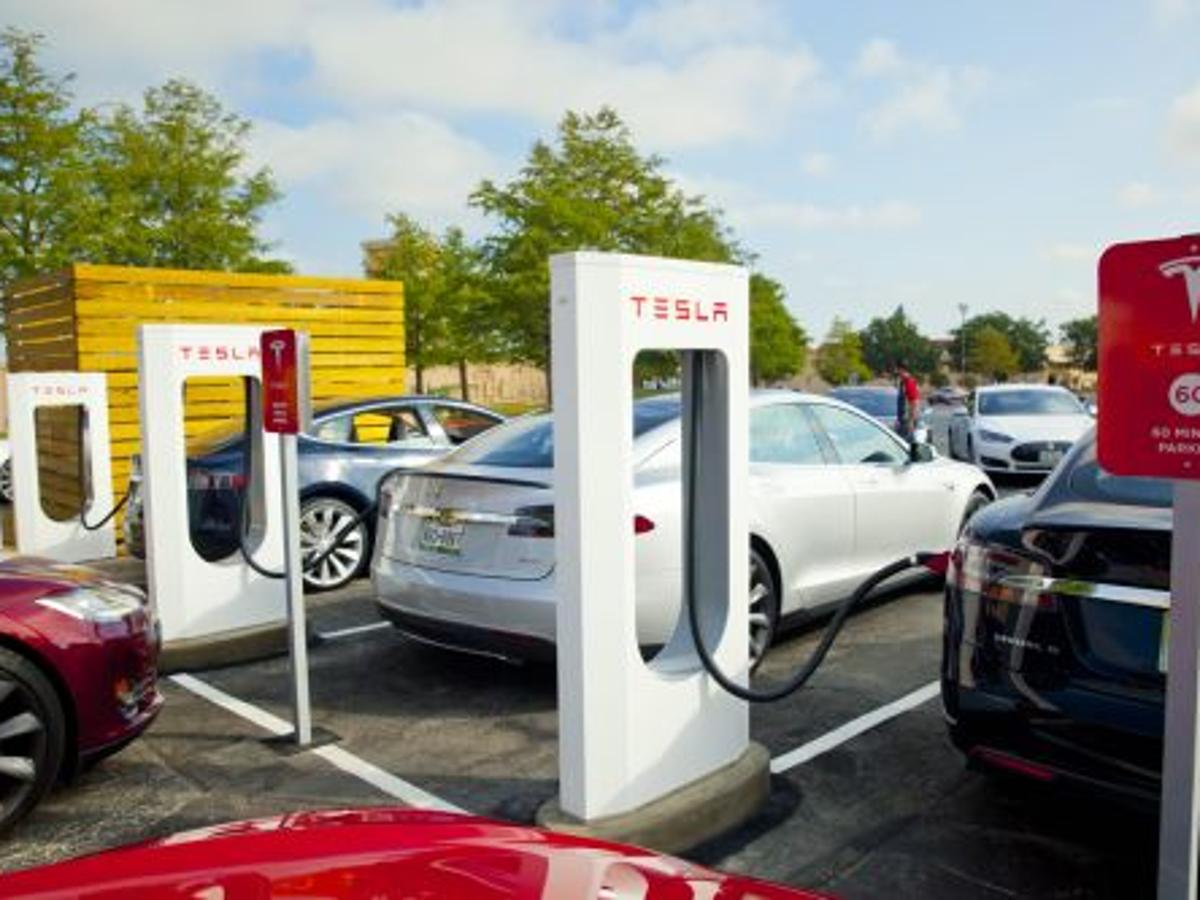
Tesla Inc is opening its charging network to other electric cars for the first time with a pilot program in the Netherlands, in what seems like a new playbook for the high-flying electric vehicle maker.
The world’s most valuable carmaker is leading burgeoning electric vehicle markets around the world, and now it is carving out another revenue vehicle by providing charging infrastructure for all electric vehicle users.
The company said on Monday that the program will be tested at 10 locations in the Netherlands, adding that Dutch non-Tesla EV drivers can access the Tesla stations, or Superchargers, through the Tesla app.
Current owner cannot transfer license – checked. New owner needs a new license – checked. Pay more fees post vehicle purchase to unlock more capacity – checked. Yes, with Tesla, depending on your ability to pay, you can unlock new capacities (think Pro, Premium or Enterprise plans which are used in software companies). That explains why depending on your plan, your car can do things which it could not do before.
Today, it has made it clear that it wants to be the operating system, and unify the world of EV. Of course, if it does that, it simply means that Tesla is running a double play strategy. Simply, with its charging stations, it can make money irrespective of the EV vehicle brand you are driving. That is why the ascension is just beginning. That is why the ascension is just beginning.
Comment: Prof, ASDA and almost all major gas forecourt in the UK have got EV charging station or points. City Councils have various charging EV charging points around their Council area. Some firms provide EV charging points for their employees etc.
Thus, EV charging points or stations is not going to Tesla or any other brand the “operating system” for EV u mentioned. Anyone with the capital here can build and operate EV charging stations and they are springing up everyday and everywhere.
The Tesla EV hype will reach its crescendo soon and it will be forced to compete on pure aesthetics, reliability, safety, performance and cost effectiveness. This is where the likes of Toyota,Mercedes, BMW, Ferrari etc will give Tesla a run for her money as they are superior to Tesla vehicles on the above indices and at the end of the day, most folks buy cars for the aesthetics, luxury , reliability and cost depending on class in the society.
My Response: “This is where the likes of Toyota,Mercedes, BMW, Ferrari…” you may not be comparing apple and apple or orange and orange. I will suggest you compare Tesla with Microsoft instead of these companies you noted. Tesla is not a car company; it is a software company which sells cars. If you buy a Tesla today, you will keep sending money to Tesla until the day you sell it, and the new owner will restart with a new license and will be paying until the car goes to landfill.
That is how Microsoft sells its products. The biggest innovation in Tesla is its pricing model. That is why one Tesla compounds better than 20 Toyota cars. Tesla is worth more than $1trillion for selling 500k while Toyota is less than $300b though selling 10.5 million cars.
Tesla Inc is opening its charging network to other electric cars for the first time with a pilot program in the Netherlands, in what seems like a new playbook for the high-flying electric vehicle maker.
The world’s most valuable carmaker is leading burgeoning electric vehicle markets around the world, and now it is carving out another revenue vehicle by providing charging infrastructure for all electric vehicle users.
The company said on Monday that the program will be tested at 10 locations in the Netherlands, adding that Dutch non-Tesla EV drivers can access the Tesla stations, or Superchargers, through the Tesla app.
Tesla drivers can continue to use these stations and the company will closely monitor each site for congestion.
While there is a rush by carmakers, motivated by climate concerns, to build enough non-combustible vehicles, battery and charging infrastructure has remained a huge concern.
Tesla, who last week,crossed the $1 trillion market capitalization, has been dominating the market not only with vehicles but also charging stations, operating more than 25,000 Superchargers worldwide. Despite the increasing number of Tesla’s charging stations, the gap remains wide, leaving other carmakers to form alliances or invest in startups for networks as competition heats up.
Per Reuters, the Superchargers are open to cars with the Combined Charging System (CCS) favored by BMW, Mercedes-Benz maker Daimler, Ford and Volkswagen, which includes Audi and Porsche.
Tesla uses the CCS standard in Europe, allowing a wide range of cars to charge in stations without an adapter that uses a similar connector.
Charging prices for non-Tesla drivers will include extra costs to support a broad range of vehicles and site adjustments to accommodate these vehicles, Tesla said. The price to charge can be lowered with a charging membership, it added.
“This move directly supports our mission to accelerate the world’s transition to sustainable energy,” the company said.
Europe has intensified calls for environmentally friendly vehicles as part of efforts to reduce carbon footprint. With many European countries adopting short-term and long-term climate goals, focused on eliminating fossil fuel, electric vehicles have become the preferred choice and the market is increasingly getting every support from the governments.
Electric vehicle charging stations market is expected to grow at a CAGR of 39.8 percent from 2020 to reach $29.7 billion by 2027, according to research work published by Bloomberg.
With this roll out, Tesla is aiming to sit at the helm of the charging stations market as well. The electric vehicle charging infrastructure defied global chip shortage and supply chain bottlenecks unlike other markets, pointing at a huge growth potential despite market shortfalls.