DD
MM
YYYY

PAGES

DD
MM
YYYY

spot_img

PAGES

Home Blog Page 5497

Tesla Is Emerging As The Operating System for the EV Era

1

Tesla is evolving as the operating system for the world’s emerging electric vehicle era. With charging stations that can support other brands, expect “Tesla” to become a verb soon. Yes, what happened to elevator (lifts), to google (search), to indomie (noodles), etc will happen to Tesla (charging for EVs). I have classified Tesla as a software company which sells cars because all the inherent accelerating factors which are typical in software companies are compounding in Tesla. 

Tesla Inc is opening its charging network to other electric cars for the first time with a pilot program in the Netherlands, in what seems like a new playbook for the high-flying electric vehicle maker.

The world’s most valuable carmaker is leading burgeoning electric vehicle markets around the world, and now it is carving out another revenue vehicle by providing charging infrastructure for all electric vehicle users.

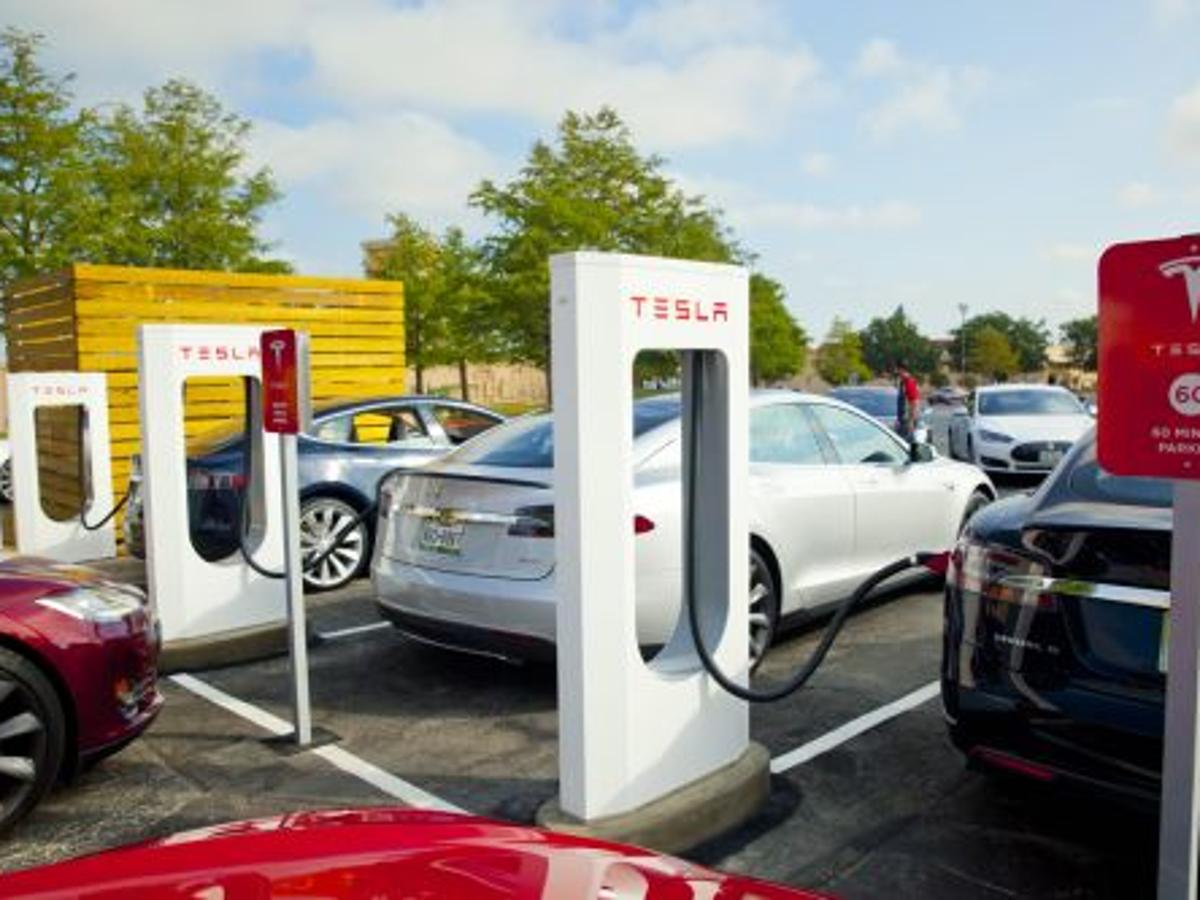
The company said on Monday that the program will be tested at 10 locations in the Netherlands, adding that Dutch non-Tesla EV drivers can access the Tesla stations, or Superchargers, through the Tesla app.

Current owner cannot transfer license – checked.  New owner needs a new license – checked. Pay more fees post vehicle purchase to unlock more capacity – checked. Yes, with Tesla, depending on your ability to pay, you can unlock new capacities (think Pro, Premium or Enterprise plans which are used in software companies). That explains why depending on your plan, your car can do things which it could not do before.

 Today, it has made it clear that it wants to be the operating system, and unify the world of EV. Of course, if it does that, it simply means that Tesla is running a double play strategy. Simply, with its charging stations, it can make money irrespective of the EV vehicle brand you are driving. That is why the ascension is just beginning. That is why the ascension is just beginning.

Comment on LinkedIn Feed

Comment: Prof, ASDA and almost all major gas forecourt in the UK have got EV charging station or points. City Councils have various charging EV charging points around their Council area. Some firms provide EV charging points for their employees etc.

Thus, EV charging points or stations is not going to Tesla or any other brand the “operating system” for EV u mentioned. Anyone with the capital here can build and operate EV charging stations and they are springing up everyday and everywhere.

The Tesla EV hype will reach its crescendo soon and it will be forced to compete on pure aesthetics, reliability, safety, performance and cost effectiveness. This is where the likes of Toyota,Mercedes, BMW, Ferrari etc will give Tesla a run for her money as they are superior to Tesla vehicles on the above indices and at the end of the day, most folks buy cars for the aesthetics, luxury , reliability and cost depending on class in the society.

My Response: “This is where the likes of Toyota,Mercedes, BMW, Ferrari…” you may not be comparing apple and apple or orange and orange. I will suggest you compare Tesla with Microsoft instead of these companies you noted. Tesla is not a car company; it is a software company which sells cars. If you buy a Tesla today, you will keep sending money to Tesla until the day you sell it, and the new owner will restart with a new license and will be paying until the car goes to landfill.

That is how Microsoft sells its products. The biggest innovation in Tesla is its pricing model. That is why one Tesla compounds better than 20 Toyota cars. Tesla is worth more than $1trillion for selling 500k while Toyota is less than $300b though selling 10.5 million cars.

Tesla Opens Charging Stations for Other Vehicles in A New Playbook

Tesla Opens Charging Stations for Other Vehicles in A New Playbook
0

Tesla Inc is opening its charging network to other electric cars for the first time with a pilot program in the Netherlands, in what seems like a new playbook for the high-flying electric vehicle maker.

The world’s most valuable carmaker is leading burgeoning electric vehicle markets around the world, and now it is carving out another revenue vehicle by providing charging infrastructure for all electric vehicle users.

The company said on Monday that the program will be tested at 10 locations in the Netherlands, adding that Dutch non-Tesla EV drivers can access the Tesla stations, or Superchargers, through the Tesla app.

Tesla drivers can continue to use these stations and the company will closely monitor each site for congestion.

Early last month, Tesla launched supercharger stations in Morocco, signaling intent to provide charging infrastructure for other electric vehicle models in MENA.

While there is a rush by carmakers, motivated by climate concerns, to build enough non-combustible vehicles, battery and charging infrastructure has remained a huge concern.

Tesla, who last week, crossed the $1 trillion market capitalization, has been dominating the market not only with vehicles but also charging stations, operating more than 25,000 Superchargers worldwide. Despite the increasing number of Tesla’s charging stations, the gap remains wide, leaving other carmakers to form alliances or invest in startups for networks as competition heats up.

Per Reuters, the Superchargers are open to cars with the Combined Charging System (CCS) favored by BMW, Mercedes-Benz maker Daimler, Ford and Volkswagen, which includes Audi and Porsche.

Tesla uses the CCS standard in Europe, allowing a wide range of cars to charge in stations without an adapter that uses a similar connector.

Charging prices for non-Tesla drivers will include extra costs to support a broad range of vehicles and site adjustments to accommodate these vehicles, Tesla said. The price to charge can be lowered with a charging membership, it added.

“This move directly supports our mission to accelerate the world’s transition to sustainable energy,” the company said.

Europe has intensified calls for environmentally friendly vehicles as part of efforts to reduce carbon footprint. With many European countries adopting short-term and long-term climate goals, focused on eliminating fossil fuel, electric vehicles have become the preferred choice and the market is increasingly getting every support from the governments.

Electric vehicle charging stations market is expected to grow at a CAGR of 39.8 percent from 2020 to reach $29.7 billion by 2027, according to research work published by Bloomberg.

With this roll out, Tesla is aiming to sit at the helm of the charging stations market as well. The electric vehicle charging infrastructure defied global chip shortage and supply chain bottlenecks unlike other markets, pointing at a huge growth potential despite market shortfalls.

Another Building Collapses in Lagos

0

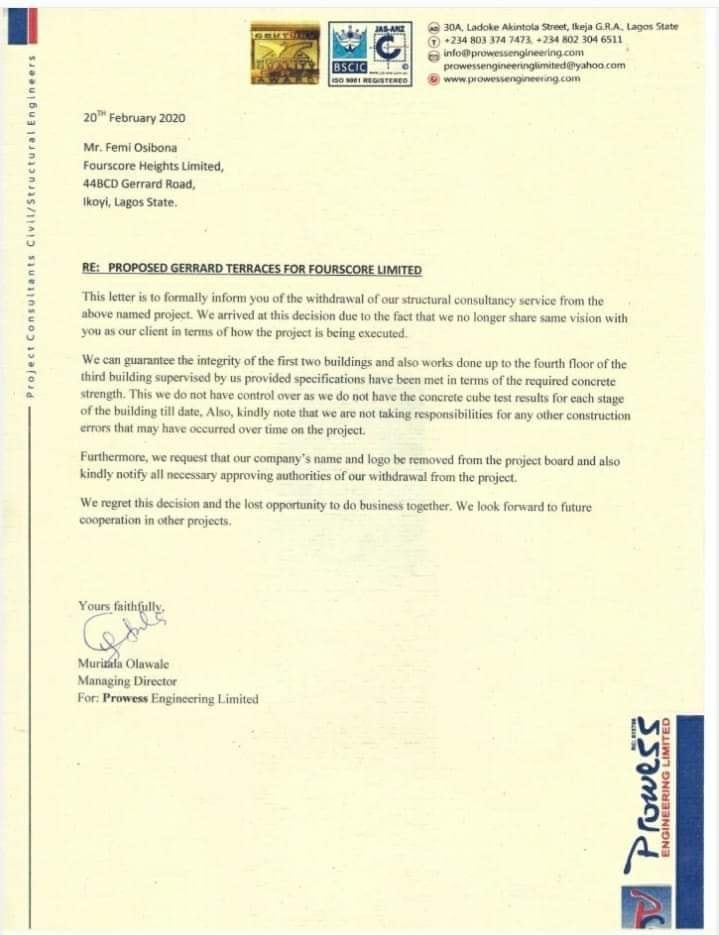
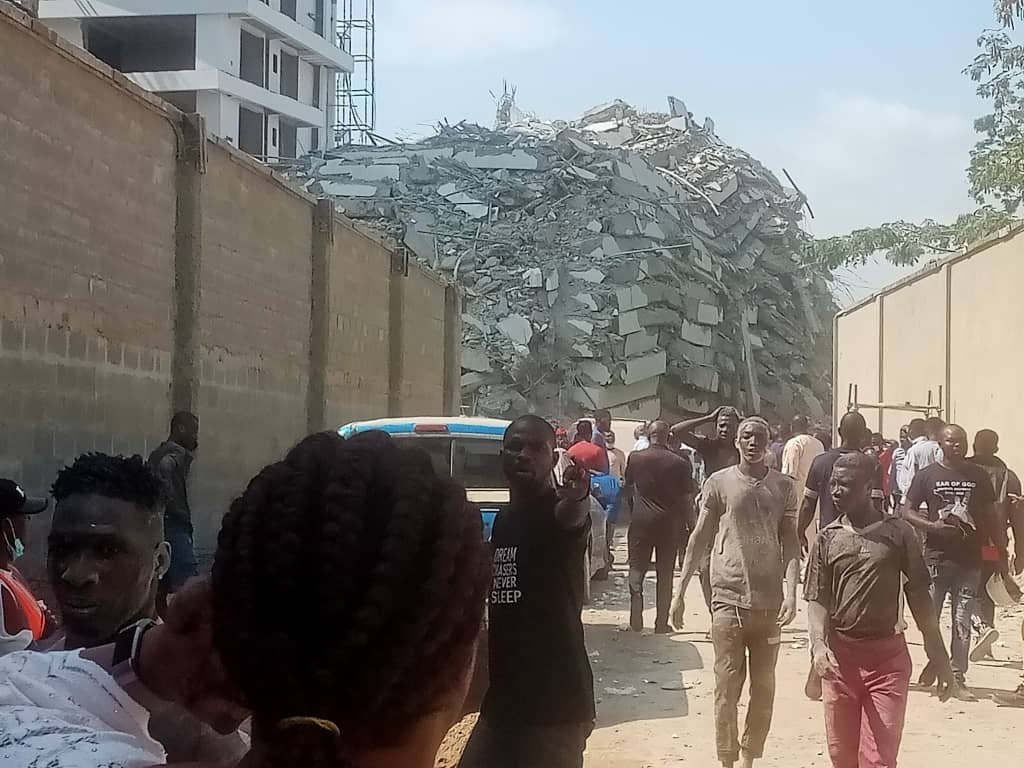
Our prayers to the victims of another Lagos collapsed building. Nigerian Society of Engineers, the society of Architects, the Surveyors and the regulators, this is very embarrassing. People need to do their jobs and stop this descent into the pit. Visit Broad Street, we have tall buildings there. I do not understand why that tradition of safe buildings cannot be sustained in this era.


Act and Deny; an infamous means of governance in Nigeria today

0

It is no news that the governments of the world claim to do no wrong even when they are caught in the act. Governments have the Public Relation department where their jobs are to create propagandas, paint the image of the government to be perfect before the masses and counter every bad publicity or any publicity against the government.

The Nigerian government have taken this Public Relations game to another level; the make sure that the prove that the government does no wrong and whatever decision (wether good or bad) taken by the government is for the good of the masses. So, when the government is caught pants down the strategy employed is the denial, dissociate, pass the blame and push buck ‘system of governance’.

The government is not aware…, the government disassociate itself from…, etc’. These are some of the starting phrases of the denial statements issued by the government whenever they have messed up.

When the government denies or disassociates from the act, the subordinates that carried out the act that the government has already denied will claim that they acted from the instructions and directives from the top or that they mistook the instruction. They will all keep passing blame and pushing the buck around till everyone forgets and move on.

Recent instance; on 29th of October, 2021, it was in the News that the members of the Economic and Financial Crimes Commission (EFCC), State Security Service (SSS) and the members of the Nigerian police force all working from the instructions of the Attorney General and Minister for Justice of the Federation obtained a search warrant from the Magistrate court to search the house of Her Lordship, Mrs. Mary Odili, the second most senior justice of the Supreme Court of Nigeria and the wife of the former governor of Rivers state, Mr. Peter Odili.

The search warrant carries no name and bears the wrong address of the house to be conducted search on which makes the warrant void abnitio (but let’s leave this for another day). They claimed to have coincidental found themselves in the house of the of the honorable justice of the Supreme Court of Nigeria to execute the search warrant.

The purpose of the search was and is still unknown; whether it was politically motivated or they are just doing their jobs or it was a honest mistake, which ever it is, everybody associated with the failed search has denied it or claimed ignorance of it which is pointing to the fact that something is wrong somewhere and the purported search conducted was way out of line.

The Magistrate court revoked the search warrant claiming the court was misled (the court denied being aware of the purpose of the warrant), the Economic and Financial Crimes Commission (EFCC) released an official statement to that effect denying Knowledge and disassociating themselves from the failed raid, the State Security Services (SSS) also denied participating in the raid when contacted, the Ministry of Justice where the purported instruction came from also release an official statement denying the knowledge of the Attorney General and Minister for Justice of raid and disassociating themselves from it, the police agency are also cutting themselves loose.

It now seems that just like divide and rule is a system of governance employed by the colonial masters during colonial era and recorded a huge success, act and deny, shrug your shoulders and claim you are not aware, issue a statement disassociating yourself from the actions and deny every knowledge of it and propaganda is also a system of governance in Nigeria at the moment which have also recorded a huge success starting from the presidency down to the least member of the government.

Dissecting Nigeria’s Mining Sector Amid Diversification Mantra

1

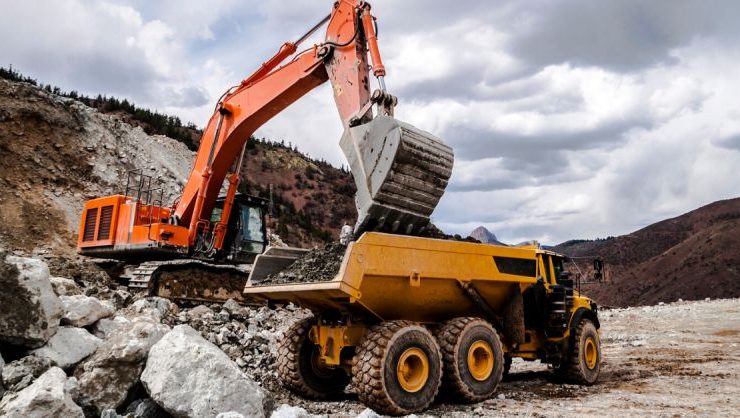
It’s obvious and unarguable that the mining sector of the acclaimed Africa’s giant is currently lying fallow, yet the present government is deeply parading the diversification mantra.

Mining is simply the extraction of valuable minerals cum other geological materials from the earth crust, usually from lode, vein, ore-body, seam, reef, placer or deposits.

These deposits constitute a mineralized package that is of economic interest to the prospective miner. Ores obtained via mining activity are gemstones, limestone, coal, oil shale, metals, dimension stone, clay, gravel, potash, and rock salt, among others.

Mining is required to obtain essential commodities that cannot be possibly grown via agricultural processes, or created artificially in a factory or laboratory. Mining of stones and metals has been a well-recognized human occupation since the prehistoric era.

Modern days mining processes involve prospecting for ore bodies, analyzing the profit potential of the proposed mine, extraction of the desired materials, and final reclamation of the affected land after the mine is closed.

The economic importance of mining cannot be overemphasized. In Ghana, for instance, the country’s mining sector is a very vital segment of its economy, and has played a significant role in its socio-economic development since the colonial period. Historically, the Ghanaian mining sector’s contribution to the country’s gross foreign exchange – particularly gold – has only been paralleled by its cocoa sector.

Not only do the products power the family car as well as heat the family home, the manufacturing sector, high tech industries, and even the better known resource industries, are all dependent – in one way or the other – on the mining industry.

The mining industry will continue to be an important support to the economy of any country that embraces it. Aside from boosting Gross Domestic Product (GDP), it encourages a high rate of employment opportunities and equally thrives to ensure that the number of entrepreneurs in the country is increased tremendously.

In spite of the ongoing boom in the sector, Nigeria still lags behind. It’s shocking to note that notwithstanding the unquantifiable solid minerals the country is blessed with, mining presently accounts for barely 0.3 per cent of the country’s GDP, due to the influence of its vast petroleum resources.

The country’s domestic mining industry is conspicuously underdeveloped, leading to importation of minerals such as, but not limited to, iron-ore and salt, that could be domestically produced with ease. It’s a shame that the only material that’s overtime mined across the country is sand.

Rights to ownership of mineral resources is held by the Federal Government (FG) who grants titles to interested organizations to explore, mine, and sell mineral resources, but the business has hitherto been relatively unpopular.

The Chief Olusegun Obasanjo’s administration began a process of selling off government-owned mining corporations to private investors in 1999. It’s pathetic and disheartening to acknowledge that till date, those firms are ostensibly lying moribund.

On assumption of duty, perhaps piqued by the ongoing devastating physiognomy of Nigeria’s mining sector, the President Mohammadu Buhari-led government strongly assured the teeming Nigerians that the administration would rejuvenate the industry.

Little wonder the government recently approved a sum of N12.7 billion solid minerals exploration contract. Yet at the moment, pathetically no serious and practical impact has been recorded, probably owing to lack of policy direction.

It’s therefore high time Nigeria started mining the available solid mineral deposits abound in the country – to include tale, gypsum, lead, zinc, bentonite, gold, uranium, bitumen, coal, rock salt, gemstones, kaolin and barite – all which are highly lucrative and of great economic value. This can only be actualized by deploring the required techniques tactically as well as imbibing viable policies into the system.

Surface mining and subsurface (underground) mining are the available two major forms of mining. The target minerals are generally divided into two categories of materials namely, placer deposits and lode deposits. The former comprises valuable minerals contained within river, gravels, beach sands, and other unconsolidated materials, whilst the latter are those found in veins, layers, or in mineral grains widely distributed throughout a mass of actual rock.

Both classes of deposits could be mined by either of the aforesaid mining types. Moreover, in-situ leaching is another technique mainly used in mining rare earth elements cum soluble minerals like uranium, potash, potassium chloride, sodium chloride, and sodium sulfate. Of all, surface mining is at the moment much more common and viable.

However, it’s pertinent to comprehend that mining, likewise petroleum drilling, is associated with various environmental factors. These include erosion, formation of sinkholes, and loss of biodiversity, coupled with contamination of soil, ground cum surface water by chemicals from mining processes.

In some cases, additional forest logging is done in the vicinity of mines to create space for the storage of the created debris and soil. Basic examples of pollution from mining activities include coal fires, which can last for years, producing severe amounts of environmental damage.

These menaces, as outlined above, can be properly controlled through the effort of the concerned law enforcement agency by implementing stringent environmental and rehabilitation Acts as well as functional policies.

Now that diversification is apparently the only way to revive Nigeria’s troubled and epileptic economy, the governments at all levels ought to endeavour to take the bull by the horn towards ensuring that the mining industry is accorded a well-deserved attention.

Taking into cognizance the impact the said sector stands to create on the country’s economy at large, it’s needless to state that its exploration is long overdue, thus feasible policies and actions are seriously needed.

It’s more interesting to realize that exploring the industry apparently remains one of the prime agenda of the present administration. But for such an agenda to be holistically actualized, hands of fellowship must be duly and sincerely extended to the cognoscenti who can spur the sector to do more even when challenges are enormous.

The Indian spiritual leader Sri Sathya Baba said, “A pure thought from a pure heart is better than a mantra” meaning literally that a mantra is great, but really, pure intentions cum genuine interest matters more.