DD
MM
YYYY

PAGES

DD
MM
YYYY

spot_img

PAGES

Home Blog Page 55

UBS Plans to Offer Cryptocurrency Investment and Trading Services to Select Private Banking Clients

0

UBS, the world’s largest wealth manager with approximately $4.7 trillion in client assets, is planning to offer cryptocurrency investment and trading services to select private banking clients.

UBS is currently in the process of selecting partners for the offering, with discussions ongoing for several months. No final decisions have been made on the exact rollout, timeline, or full scope.

The service would initially allow select clients in Switzerland via the private bank to buy and sell Bitcoin (BTC) and Ethereum (ETH). It could later expand to other regions, including Asia-Pacific and the United States. The move responds to growing demand from wealthy clients for direct exposure to digital assets.

This builds on UBS’s prior blockchain initiatives like tokenized funds and exploring crypto-linked products, but represents a step toward more direct crypto access compared to indirect exposure like ETFs. This aligns with a broader trend among major financial institutions—such as JPMorgan, Morgan Stanley, and others—accelerating their involvement in crypto amid increasing regulatory clarity and client interest.

UBS has not issued an official confirmation yet, and the plans remain under evaluation. This could mark a significant milestone in institutional adoption if implemented, potentially channeling substantial capital into Bitcoin and Ethereum from high-net-worth individuals.

The reported plans by UBS to offer direct cryptocurrency trading and investment services to select private banking clients carry several significant implications across markets, institutions, and the broader crypto ecosystem.

This move represents another major step in the convergence of traditional finance (TradFi) and crypto. UBS joins peers like JPMorgan, Morgan Stanley, and others that have expanded crypto access via ETFs, custody, or direct trading for high-net-worth individuals (HNWIs) and institutions.

It signals growing acceptance among conservative wealth managers that crypto—particularly Bitcoin and Ethereum—is maturing beyond speculation into a legitimate asset class for portfolio diversification. Wealthy clients have increasingly demanded direct exposure beyond just spot ETFs or indirect products, driven by performance, inflation hedging, and digital asset trends.

UBS’s response could unlock substantial new capital flows from ultra-high-net-worth individuals (UHNWI) who previously lacked seamless, regulated on-ramps through trusted banks. If rolled out starting in Switzerland’s private bank, with possible expansion to Asia-Pacific and the US, this could channel billions from conservative portfolios into BTC and ETH. HNWIs often allocate smaller portions (1–5%) to alternatives like crypto for upside potential with limited downside risk in diversified portfolios.

Even modest adoption from UBS’s client base could create meaningful buying pressure. It reinforces the narrative of crypto as “digital gold” or a store-of-value/tech play, especially amid clearer regulations in key jurisdictions (e.g., Switzerland’s progressive stance and improving US clarity).

This follows institutional pilots like UBS’s tokenized funds, cross-border blockchain payments on Ethereum with partners like Sygnum. It could accelerate tokenized real-world assets (RWAs) and stablecoin integration in wealth management.

Client retention and growth — Offering crypto helps UBS compete with digital-native platforms and other banks already providing such services, preventing asset outflows to crypto-specialist firms. The phased, select-client approach with robust controls allows UBS to test demand while minimizing exposure to volatility, custody risks, or regulatory pitfalls.

Trading fees, custody, advisory, and potential tokenized product expansions could add new streams in a low-margin wealth management landscape. Direct access from a $multi-trillion institution validates them as “blue-chip” digital assets, potentially boosting liquidity and legitimacy.

Switzerland’s crypto-friendly environment enables this pilot; expansions to the US/Asia would depend on evolving rules e.g., clearer classifications and custody standards. It aligns with global trends where banks explore stablecoins and blockchain to stay relevant.

Volatility remains a concern; any major crypto downturn could lead to client losses and reputational risks. It also highlights crypto’s maturation but doesn’t eliminate systemic questions e.g., integration with traditional settlement.

Overall, this isn’t a full retail pivot but a targeted, high-touch offering for sophisticated clients—yet it underscores 2026’s accelerating institutional embrace of digital assets. Plans remain in evaluation no final decisions or timeline confirmed, so watch for official updates from UBS.

Adani Stocks Slide as U.S. Regulators Push to Serve Summons in High-Stakes Bribery Case

0

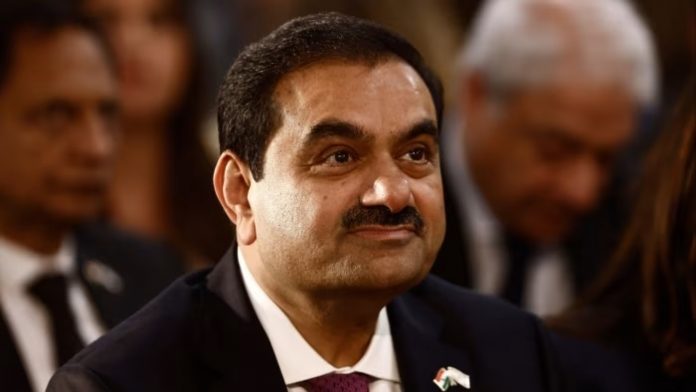
Shares of several Adani Group companies tumbled sharply on Friday after fresh U.S. court filings revealed that the Securities and Exchange Commission is seeking to formally serve legal summons on group founder Gautam Adani and his nephew, Sagar Adani, escalating a case that has weighed heavily on investor confidence in the Indian conglomerate.

Adani Group stocks fell between 5% and 13% in Mumbai trading, with the sharpest losses seen in Adani Green Energy, which closed nearly 14% lower. The group’s flagship firm, Adani Enterprises, slid 10.7%, while Adani Power ended the session down 5.7%, underscoring how developments in the U.S. legal process are quickly feeding through to market sentiment at home.

According to the filings, the SEC has approached U.S. District Judge Nicholas Garaufis in Brooklyn to seek permission to issue a summons to Gautam Adani, chairman of the Adani Group, and Sagar Adani, executive director of Adani Green Energy. The regulator is attempting to advance its civil case after India’s Ministry of Law and Justice declined on two occasions last year to deliver the summons under the Hague Convention, a key international framework for serving legal documents across borders.

In its submission to the court, the SEC said Indian authorities appeared to argue that the U.S. regulator lacked the authority to invoke the Hague Convention or to seek service of the summons in this manner. That refusal has slowed the progress of the case and highlights the legal and diplomatic complexities that arise when U.S. enforcement actions intersect with powerful business figures operating primarily outside American jurisdiction.

The civil case runs alongside criminal charges filed in November 2024, when Gautam Adani and seven other individuals were indicted in New York federal court over what prosecutors described as a wide-ranging bribery and fraud scheme. U.S. authorities allege that Adani and other executives paid more than $250 million in bribes to Indian government officials to secure solar power supply contracts that ultimately generated more than $2 billion in profits.

Regulators say Adani Group executives misled U.S. and international investors about the company’s adherence to anti-bribery and anti-corruption standards while raising more than $3 billion in capital to finance those energy projects. The alleged misconduct strikes at the heart of investor disclosures, a core concern for the SEC, particularly when foreign companies tap global capital markets that include U.S.-based funds and institutions.

The sharp selloff on Friday reflects renewed anxiety among investors that the legal overhang facing the group is far from resolved. While Adani companies have spent the past year trying to stabilize their balance sheets, reassure lenders, and rebuild trust after earlier controversies, the latest court filings signal that U.S. regulators remain intent on pursuing accountability, even in the face of jurisdictional resistance.

The episode also illustrates a broader tension in cross-border enforcement. From Washington’s perspective, access to U.S. capital markets brings with it obligations to comply with American securities laws, regardless of where a company is headquartered. From New Delhi’s standpoint, repeated refusals to serve summons suggest unease about the extraterritorial reach of U.S. regulators, particularly when cases involve prominent Indian nationals and companies central to domestic infrastructure and energy policy.

The immediate impact has been financial and reputational for the Adani Group. The steep drop in share prices adds pressure on market capitalization and could complicate future fundraising, especially for capital-intensive businesses such as renewable energy and power generation. Longer term, the outcome of the U.S. proceedings could shape how global investors price governance risk across Indian conglomerates with international exposure.

Investors are likely to remain sensitive to any sign of progress or pushback as the legal process unfolds, aware that its implications extend beyond a single group to questions of regulatory reach, investor protection, and the rules governing global capital flows.

Farcaster Remains Operational Despite Acquisition by Neynar 

0

Farcaster co-founder Dan Romero has directly clarified that the protocol and app are not shutting down following its acquisition by Neynar.

This came amid rumors and speculation after the announcement that Neynar, a decentralized social infrastructure firm backed by Haun Ventures is acquiring Farcaster from Merkle Manufactory; the company behind it, founded by Romero and Varun Srinivasan.

Key Points from Romero’s Clarification

In a post on X, Romero addressed the rumors head-on: Farcaster is not shutting down: The protocol continues to function normally and will keep running. User stats remain solid: It had ~250,000 monthly active users (MAU) in December and over 100,000 funded wallets.

New direction under Neynar: The acquirer plans to shift focus toward a more developer-oriented approach, maintaining the core infrastructure, Farcaster app, and related tools like Clanker (an AI token launchpad).

Investor capital return: Merkle plans to fully repay the ~$180 million raised from venture backers over the years, emphasizing responsible stewardship of funds.

Romero addressed side speculation about his recent home purchase in LA, stating it was funded by proceeds from Coinbase’s IPO where he previously worked, not project funds.

This move is seen as a rare “responsible” transition in crypto: founders stepping back after building the protocol, returning VC money, and handing stewardship to a aligned player in the ecosystem (Neynar, which has long built on Farcaster).

The acquisition was first announced around January 21, 2026, and has sparked both positive views (decentralization in action, clean exit) and some criticism/debate in crypto circles about past growth challenges or expectations.

Farcaster remains operational as a decentralized social protocol on Ethereum and Base, with no immediate changes for users. The focus now shifts to Neynar’s developer-first vision for its future evolution.

Neynar’s developer vision for Farcaster, following the acquisition from Merkle Manufactory, centers on transforming the protocol into a builder-first network that empowers developers and creators to efficiently turn ideas into sustainable, revenue-generating products.

This shift emphasizes infrastructure, tools, and an ecosystem designed specifically for builders, rather than prioritizing mass consumer growth or competing directly as a centralized social app like X or Threads.

Core Elements of the Vision

According to Neynar’s official announcement and related coverage: Enable builders to go from idea to recurring revenue: Neynar aims to create a streamlined path where developers can ideate, build, launch, and monetize applications on Farcaster.

This includes leveraging AI-assisted software generation, crypto-native payment rails for global transactions, asset issuance, and onchain interactions from day one, and a supportive community ecosystem.

Builder-focused ecosystem: Farcaster’s true strength lies in its long-cultivated community of builders often called the “scenius”. Neynar plans to accelerate this by making building easier—through better APIs, tooling, analytics, push notifications, and simplified processes for creating mini apps formerly known as Frames, AI agents, and other experiences.

The vision integrates: Advanced software generation (e.g., AI tools to speed up development). Crypto-native features (seamless onchain payments, tokens, and ecosystems). A deliberate focus on developers over broad user acquisition.

Products usable anywhere: Applications built on Farcaster will remain interoperable and composable, extending beyond any single client or app. Neynar will maintain the core Farcaster protocol, run the main client app, and operate tools like Clanker (the AI token launchpad).

They plan to keep existing services and pricing unchanged while improving developer experience—potentially including open-sourcing more components, reducing node operation complexity, and enhancing the overall stack.

This approach is seen as a stabilization move: Neynar, a long-time infrastructure provider in the Farcaster ecosystem, backed by firms like Haun Ventures has deep expertise in developer tools and has powered much of the current activity.

The pivot moves away from earlier consumer-growth pressures toward sustainable, utility-driven development in decentralized social.

In short, Neynar views Farcaster not primarily as a social media platform, but as open social infrastructure where builders thrive, experiment quickly as seen with past hits like Frames, Degen, and Warplets, and build real economic value—fixing incentive issues that plague centralized social media at scale.

The First Lecture

0

In my first year at Federal University of Technology Owerri (FUTO), our Logic and Philosophy lecturer, Rev. Fr. Ashiegbu, took us on a profound intellectual journey through the minds of the ancient Greek philosophers. From Thales who argued that all is water, to Heraclitus who insisted that all is fire and everything flows, men labored to decode the material essence of the universe. Each proposition was bold, poetic, and incomplete. But it was Pythagoras who seized my imagination.

Yes, the same Pythagoras who gave us that elegant truth in geometry, that in a right-angled triangle, the square of the hypotenuse equals the sum of the squares of the other two sides. He also proclaimed something far more consequential: The universe is numbers.

If the universe is numbers, then the central business of humanity is to make sense of numbers. And how do we do that? We manipulate them, process them, transform them, because when we understand numbers, we understand the world.

A farmer who understands the numbers of yield, rainfall and soil will outperform peers.
A doctor who understands the numbers around blood flow, drug reaction, and pathology becomes a better healer. A banker, an engineer, a trader, each rises by mastering the numbers in their domain.

But the quest did not stop with human cognition. Humans began to build machines to help them interpret numbers. From the abacus to the slide rule, from ENIAC to the transistor, and from the transistor to the integrated circuit, we have been on a relentless journey to understand our universe by constructing better computational systems.

Tomorrow, at Tekedia AI Lab program, I will open the session by explaining why Artificial Intelligence (AI) is the next chapter in that ancient quest. AI is not an alien concept, it is simply humanity extending Pythagoras’ revelation.

Our world is numbers. AI helps us make better sense of those numbers. But what are numbers?

Let me bring it home. In my secondary school years, my Math teachers – Mr. Bukar, & Mr. Alaohuru (junior secondary), Mr. Aham & Mr Ukene (senior secondary), and my Further Mathematics teacher Mr. Onyezewe -taught me, in different ways, that mathematics is the science of numbers, and the foundational staircase into natural philosophy. Those lessons shaped my foundational appreciation of science.

To all Tekedia co-learners: the FIRST LECTURE comes tomorrow. We will explore why understanding AI is not optional but essential in the AI era and why mastering this new computational philosophy will unlock new vistas in careers, businesses, and nations. If we do it right, we will decode the numbers of the future and unlock abundance.  Once that is done, we go technical. Be ready!

Kansas Joins Race for State-level Bitcoin Reserve Legislation 

0

Kansas has recently proposed legislation to establish a state-level Bitcoin and digital assets reserve. On January 22, 2026, Republican State Senator Craig Bowser introduced Senate Bill 352 (SB 352) in the Kansas Legislature.

The bill aims to create a “Bitcoin and digital assets reserve fund” within the state treasury, administered by the Kansas State Treasurer. It amends Kansas’ unclaimed property laws to formally recognize digital assets including cryptocurrencies like Bitcoin and other virtual currencies.

Unclaimed digital assets would be transferred to the state after a period of inactivity typically after 3 years following undeliverable attempts to contact the owner. The state would hold Bitcoin and similar assets long-term in the reserve rather than selling them immediately.

Staking rewards, airdrops, or interest generated from these held digital assets would flow into the reserve fund. For non-Bitcoin digital assets, up to 10% of deposits could be credited to the state’s general fund.

Importantly, the fund relies solely on abandoned and unclaimed digital property already in state hands—no direct purchases of Bitcoin using taxpayer funds or new allocations are involved. This approach mirrors some federal-level ideas for a strategic Bitcoin reserve using forfeited assets.

THE BILL WAS WITHDRAWN FROM THE COMMITTEE ON FEDERAL AND STATE AFFAIRS AND REFERRED TO THE SENATE COMMITTEE ON FINANCIAL INSTITUTIONS AND INSURANCE FOR REVIEW, WHERE IT IS CURRENTLY UNDER CONSIDERATION.

This move positions Kansas among several U.S. states exploring ways to integrate Bitcoin and crypto into public finance, often inspired by broader discussions around strategic reserves including at the federal level.

It’s seen as a low-risk, opportunistic way to build exposure to digital assets without direct spending. The proposal is still early-stage and would need to pass both chambers and be signed by the governor to become law.

As the bill remains in early stages—introduced January 22, 2026, by Sen. Craig Bowser (R), withdrawn from one committee, and now referred to the Senate Committee on Financial Institutions and Insurance for review—it’s not yet law, but its framework signals emerging trends.

Financial and Fiscal Implications for Kansas

Low-risk, “free” accumulation of digital assets: The fund would build exclusively from unclaimed/abandoned digital property after ~3 years of inactivity under updated unclaimed property laws, plus generated yield like staking rewards, airdrops, and interest.

No taxpayer funds or direct purchases are required, minimizing political risk and budget exposure while potentially capturing upside if Bitcoin or other assets appreciate long-term. 100% of Bitcoin-related yield stays in the reserve with Bitcoin explicitly barred from transfer to the general fund, treating it as a permanent “hold” asset.

For non-Bitcoin digital assets, up to 10% of deposits can flow to the state’s general fund, providing modest new revenue without selling core holdings. By mandating long-term holding especially Bitcoin rather than immediate liquidation, the state positions itself against inflation or fiat devaluation.

If Bitcoin continues its historical growth trajectory, this could strengthen Kansas’ balance sheet over decades—similar to sovereign wealth funds or the proposed federal strategic reserve—but on a much smaller, opportunistic scale.

Kansas joins a growing wave, over 30 states reportedly exploring similar ideas, with New Hampshire already enacting crypto-friendly reserve laws. This decentralizes adoption from federal action, creating a “race” among states to legitimize Bitcoin as a treasury asset.

It reinforces Bitcoin’s narrative as a strategic reserve like gold, potentially boosting institutional confidence and long-term demand. No immediate price catalyst: The mechanism relies on passive inflows from unclaimed assets likely modest initially, so it won’t drive major short-term buying pressure.

However, it adds to cumulative “sovereign” demand signals that could contribute to a structural floor for Bitcoin’s price over time. The state would need secure custody solutions potentially involving regulated custodians, staking infrastructure, and protocols for handling airdrops/forks.

This could set best practices—or expose risks—if volatility, hacks, or regulatory shifts occur. Sponsored by a Republican senator, it aligns with broader GOP/federal discussions post-Bitcoin ETF approvals and executive signals.

It could encourage other red/purple states to follow, pressuring federal policy or creating a patchwork of state-level frameworks. Critics may argue that holding volatile assets like Bitcoin exposes the state to downside though the bill avoids direct spending.

Some might question prioritizing crypto yield over traditional investments or immediate general fund use. Questions around state management of digital assets e.g., transparency, security could arise, especially if yields grow significantly.

Original owners retain reclamation rights indefinitely for the principal asset; only excess yield flows to the reserve after extended dormancy. SB 352 represents a pragmatic, conservative entry into digital asset integration—leveraging existing escheatment laws rather than aggressive spending.

If passed, it could position Kansas as an early mover in state sovereign adoption, contributing to Bitcoin’s mainstream financial legitimacy without major fiscal commitment. Progress depends on committee review and broader legislative support in the 2025-2026 session.