DD
MM
YYYY

PAGES

DD
MM
YYYY

spot_img

PAGES

Home Blog Page 55

Wall Street Market Sell-Off Amid Stock Market Losing Streak

0

The financial markets are entering another period of heightened uncertainty as Wall Street records its third consecutive losing session, with investors confronting a combination of geopolitical risk, rising energy prices and a potentially more hawkish Federal Reserve.

The Dow Jones Industrial Average fell 419 points, while the Nasdaq declined 1%, reflecting growing concern that the economic outlook could deteriorate as policymakers prioritize inflation control over growth.

Bitcoin, which has increasingly traded alongside traditional risk assets, is also caught in this crosscurrent. The cryptocurrency market has become highly sensitive to changes in liquidity, Treasury yields and investor risk appetite.

As those conditions tighten, Bitcoin faces the same pressure affecting equities and other speculative assets.

According to CNBC’s Jim Cramer, three major forces are keeping markets on a knife edge. The first is Iran and the escalating threat surrounding the Strait of Hormuz. Fresh US strikes in the region have intensified concerns about energy supplies and global trade.

Brent crude surged 4.6% to $95.70 per barrel, while US crude closed above $90 for the first time in more than a month. The importance of oil extends far beyond the energy sector.

A sustained rise in crude prices can feed directly into transportation, manufacturing and consumer costs, making inflation harder to contain. For investors, this creates an uncomfortable possibility: geopolitical instability could simultaneously weaken economic growth and push prices higher.

That combination presents a difficult challenge for central banks. If inflation accelerates because of expensive energy, policymakers have less room to cut interest rates even if economic activity begins to slow.

Markets therefore face the prospect of weaker growth without the monetary support investors typically expect during periods of economic stress. The second major force is the Federal Reserve.

New Fed Chair Kevin Warsh has signalled a willingness to raise interest rates even if doing so comes at the cost of a recession. That message has significant implications for financial markets because higher rates increase borrowing costs and make risk-free assets such as US Treasuries more attractive relative to equities and cryptocurrencies.

The 10-year Treasury yield climbed to 4.79%, underscoring the pressure building across markets. Higher yields can reduce the present value of future corporate earnings, weighing particularly heavily on growth and technology stocks.

They can also challenge Bitcoin’s appeal because investors have a stronger alternative for generating returns without taking comparable market risk. The third force is therefore the interaction between these risks.

Geopolitical tensions can push oil prices higher; higher oil prices can intensify inflation; persistent inflation can encourage the Fed to maintain or increase rates; and higher rates can tighten financial conditions across Wall Street and crypto.

This creates a difficult environment for investors. Bitcoin’s reputation as an alternative asset does not shield it from global liquidity conditions.

In periods of tightening financial conditions, even assets with strong long-term narratives can experience sharp volatility as investors reduce exposure to risk. For now, markets appear trapped between inflationary pressure and recessionary risk.

Wall Street’s three-day decline reflects that uncertainty, while the jump in Treasury yields suggests investors are demanding greater compensation for holding longer-term debt.

Until energy markets stabilize and investors gain greater clarity about the Fed’s policy direction, volatility is likely to remain elevated. Bitcoin, equities and bonds may continue moving together as markets attempt to price an increasingly complicated economic landscape.


US-Iran Conflict Shakes Crypto Market as Bitcoin ETFs See $236M Outflows

0

The global financial system entered September under renewed geopolitical pressure as the United States launched fresh strikes against Iranian targets and Iran responded with attacks against American interests across the Middle East.

At the same time, the cryptocurrency market lost momentum, with total market capitalization falling by about $50 billion and investor sentiment moving out of the Extreme Greed zone.

The divergence between Bitcoin and Ethereum exchange-traded fund flows added another layer to an increasingly uncertain market.

The latest military escalation represents a significant reversal after a period of relative calm. U.S. Central Command said its forces struck Islamic Revolutionary Guard Corps targets.

Including air-defense systems, radar installations, maritime assets, mine-laying capabilities and communications facilities. Washington said the operation followed attempted attacks against commercial shipping in the Strait of Hormuz and American personnel.

Iran subsequently retaliated with missile and drone attacks against U.S. forces and interests in the region. The renewed confrontation has revived concerns that the conflict could expand beyond direct U.S.-Iran exchanges.

Particularly because the Strait of Hormuz is one of the world’s most important energy corridors. Any sustained disruption could create a significant shock to global oil supplies. Financial markets immediately reflected those concerns.

Oil prices surged, with Brent crude moving above $94 per barrel while West Texas Intermediate climbed above $90. Higher energy prices are particularly problematic because they can reinforce inflation at a time when investors are already reassessing expectations for U.S. monetary policy.

Traditional risk assets also weakened. U.S. stocks fell on September 1, with the S&P 500 declining 0.7%, the Dow Jones Industrial Average losing 0.8% and the Nasdaq falling 1%. Rising Treasury yields and oil prices intensified concerns that central banks could face renewed inflationary pressure.

Cryptocurrency was not immune to the shift in risk appetite. The market’s total capitalization declined roughly $50 billion during the day as Bitcoin slipped below the $80,000 level and Ethereum also moved lower.

Bitcoin was trading around $77,200 at one point, representing a decline of more than 2% on the day.

The deterioration in sentiment was reflected by the Crypto Fear & Greed Index, which moved out of the Extreme Greed category. This transition is important because extreme optimism often leaves markets vulnerable to sharp corrections when an external shock arrives.

The renewed conflict provided exactly that catalyst, forcing traders to reassess risk. ETF flows offered an even more interesting picture. U.S. spot Bitcoin ETFs recorded approximately $236 million in net outflows on September 1, indicating that institutional investors reduced exposure during the geopolitical sell-off.

Ethereum ETFs, however, moved in the opposite direction. Spot Ethereum products attracted roughly $11 million and extended their inflow streak to 12 consecutive trading days. That continued demand suggests investors have not abandoned digital assets altogether.

Instead, capital may be rotating within the cryptocurrency market, with Ethereum attracting relatively stronger interest than Bitcoin. The contrasting flows demonstrate that the current crypto cycle cannot be understood simply through Bitcoin’s price.

Institutional positioning, macroeconomic expectations and geopolitical risk are increasingly influencing different digital assets in different ways. September has begun with a warning.

Cryptocurrencies remain deeply connected to the broader global risk environment. If tensions between Washington and Tehran continue escalating, higher oil prices, inflation fears and tighter financial conditions could place additional pressure on digital assets.

Yet persistent Ethereum ETF inflows also show that underlying institutional demand remains present. The immediate outlook therefore depends on whether the Middle East confrontation remains contained or develops into a broader crisis.

For crypto investors, the next phase may be defined less by market enthusiasm and more by how effectively digital assets withstand another major geopolitical shock.

Altman Calls AI Water-Use Concerns a “Meme” as Data Center Backlash Grows

0

OpenAI CEO Sam Altman has dismissed concerns over artificial intelligence’s water consumption as a widely repeated “meme,” noting that modern data centers generally use far less water than their public image suggests.

Altman addressed the issue during the premiere episode of the Sources podcast with Alex Heath, published Tuesday, as he was asked about the growing resistance to AI and the environmental concerns surrounding the rapid expansion of data center infrastructure.

AI companies have faced increasing scrutiny over the electricity, land and water required to build and operate the computing infrastructure needed to train and run powerful models. Altman acknowledged that the industry has developed a reputation for consuming large quantities of water, but disputed the scale of that impact.

“That has been a robust meme and difficult to disprove, but I don’t think holds up to any scrutiny,” Altman said.

He argued that modern data centers typically consume roughly as much water as an office building. That claim is broadly consistent with some available data, although water consumption varies significantly depending on a facility’s cooling technology, size, location and local climate.

A 2024 report by a Virginia state government commission, examining the state’s rapidly expanding data center industry, found that water use differed substantially between facilities. However, most of the data centers examined consumed amounts of water comparable to or below those of an average large office building.

The issue remains one of the most contentious elements of the backlash against AI infrastructure. Data centers can require substantial quantities of water when they use evaporative cooling systems, particularly in hot or water-stressed regions.

A Gallup survey published in May found that 71% of Americans opposed the construction of a data center in their local area. About 70% of respondents said they were concerned about the environmental impact, while half cited the effect on local resources. Water specifically was identified by 18% of respondents.

A Business Insider investigation last year also linked data center development to worsening water pressures in parts of the U.S. West, citing the use of water-intensive evaporative cooling systems among the factors contributing to consumption.

The industry, however, has increasingly sought to reduce its dependence on fresh water. The Data Center Coalition, an industry trade group, says developers use a range of cooling technologies, including closed-loop and waterless systems, and consider local water availability when designing facilities.

Altman also sought to put AI’s water consumption into perspective by comparing ChatGPT queries with California’s almond industry, one of the state’s more water-intensive agricultural sectors.

He said growing a single California almond requires more water than thousands of ChatGPT queries.

“The people that are scarfing down 12 almonds at a time don’t feel like they’re doing something horrible from a water perspective, for the most part,” Altman said.

The comparison has limitations, however, because the water footprint of an AI query and the agricultural water requirements of a crop are calculated in very different ways. It also does not account for differences between data centers, cooling systems, locations, or the source of the water being consumed.

Still, available estimates support the broad magnitude of Altman’s comparison.

Altman has previously estimated that an average ChatGPT query consumes about 0.32 milliliters of water. Google has estimated that an average text prompt on its Gemini app uses about 0.26 milliliters.

By comparison, a 2019 study by researchers affiliated with the U.S. Geological Survey estimated that producing a single California almond required an average of about 3.56 liters of water, or slightly less than a gallon.

Using those figures, the water associated with one almond would be equivalent to roughly 11,000 ChatGPT queries at Altman’s stated estimate.

The larger debate, however, is less about the water consumed by an individual AI prompt than about the aggregate demand created by billions of queries and the construction of increasingly large data centers.

A small amount of water per interaction can become a significant resource requirement when multiplied across massive user bases, while the location of the infrastructure can determine whether that consumption places meaningful pressure on local water supplies.

This is where Altman’s argument faces its most important test. Saying that AI uses relatively little water on a per-query basis does not necessarily resolve concerns about the cumulative impact of rapidly expanding computing infrastructure, particularly in regions already facing water scarcity.

Altman nevertheless argued that the industry should focus less on defending AI against criticism and more on demonstrating its usefulness.

“I think the right way to get people to like something is to deliver them value,” he said.

“The industry has got work to do in terms of how we make these products easy to use and easy for people to get a lot of value out of.”

AI companies are investing hundreds of billions of dollars in computing capacity while attempting to convince governments and communities that the economic and technological benefits of that infrastructure outweigh its environmental costs.

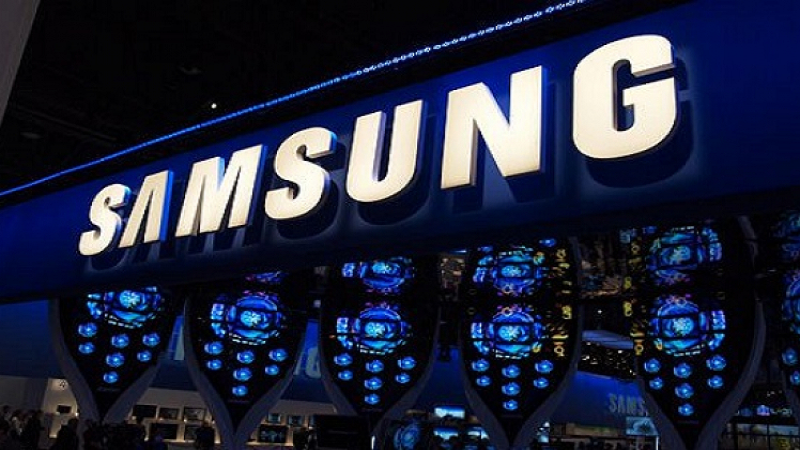
TCL Sues Samsung in U.S. Over Alleged Mislabeling of TVs as Mini LED

0

Chinese consumer electronics maker TCL has sued South Korean rival Samsung in a U.S. federal court, accusing it of falsely marketing a new range of televisions as using Mini LED technology when, according to the complaint, the sets are based on conventional LED technology.

The lawsuit, filed Monday in Los Angeles federal court, targets Samsung’s M Model televisions, which TCL says were introduced in March at prices below its cheapest genuine Mini LED models. TCL alleges Samsung repackaged televisions from its standard LED lineup and marketed them as Mini LED products, misleading consumers seeking the improved picture quality associated with the technology.

The case puts a potentially important segment of the global television market at the center of a legal fight between two of its largest manufacturers. TCL has been challenging Samsung in the U.S. with aggressively priced Mini LED televisions, while Samsung has sought to defend its position across premium and mass-market display categories.

TCL’s complaint alleges that Samsung “took a cheap, non-Mini LED model from a recycled product line and peddled it to the public as a ‘supreme’ Mini LED model at an attractive price point.”

Samsung has rejected the accusation and said it will vigorously defend the case. The company said it stands “fully behind the quality and accuracy of our product descriptions.”

The dispute turns on what consumers are actually getting when they buy a television marketed as Mini LED.

Unlike conventional LED televisions, Mini LED displays use much smaller light-emitting diodes in the backlight, allowing manufacturers to place substantially more independently controlled lighting zones behind the screen. That can improve control over bright and dark areas, increase contrast, and expand dynamic range.

The technology has become a crucial middle ground between conventional LED televisions and more expensive OLED displays. For manufacturers, it offers a way to deliver higher-end picture performance while maintaining more competitive prices.

TCL says it was able to exploit that opportunity earlier and more aggressively than Samsung in the U.S. The company launched its affordable QM Mini LED television range in 2023 and claims it overtook Samsung in U.S. Mini LED sales and market share between 2023 and 2025.

The lawsuit alleges Samsung did not have a Mini LED television capable of competing with TCL’s products on both price and performance. Instead, TCL claims, Samsung repackaged its standard Crystal UHD television line as the M Model and introduced the products at lower prices than TCL’s Mini LED offerings.

TCL further alleges that the M Model televisions contain none of the technological components associated with Mini LED and are substantially similar to Samsung’s conventional LED televisions. The complaint claims the strategy rapidly increased Samsung’s sales of the disputed products, with the company’s Mini LED television sales allegedly rising almost fourfold in less than three months.

TCL attorney R.C. Harlan said the alleged marketing strategy harmed both consumers and TCL.

“Samsung’s false advertising misled consumers who wanted the higher picture quality associated with Mini LED televisions into buying Samsung’s falsely labeled product, unfairly damaging TCL’s sales, goodwill, and valuable technology in the process,” Harlan said.

A fight over market share as much as technology

The lawsuit has drawn large attention because TCL’s allegations go beyond a technical disagreement over television specifications. At stake is the value of the Mini LED label itself and the competitive advantage that comes from convincing consumers that a product belongs to a higher-performance category.

If TCL succeeds, Samsung could face restrictions on how it markets the M Model televisions in the U.S., potentially forcing changes to product descriptions, packaging and advertising. TCL is also seeking an unspecified amount of damages. The case could also increase scrutiny of how television manufacturers define and market technologies such as Mini LED, particularly as consumers increasingly compare products using technical labels rather than detailed hardware specifications.

TCL’s strategy has been to make Mini LED more accessible through aggressive pricing. Samsung, meanwhile, has traditionally occupied a powerful position in televisions through its broad product portfolio and premium display brands.

That makes pricing particularly important. If a conventional LED television can be marketed under the same Mini LED terminology as a more technologically sophisticated product, TCL’s competitive advantage from investing in Mini LED hardware and bringing it down to lower price points could be weakened.

Legal Risk Extends Beyond One Television Line

The lawsuit also illustrates how product differentiation can become a legal battleground in mature consumer electronics markets.

Technology companies frequently compete through proprietary branding and technical terminology, but the commercial value of those terms depends on consumers understanding them as meaningful indicators of performance. A court ruling against Samsung could therefore have implications beyond the M Model range by encouraging greater scrutiny of technical claims used to differentiate television products.

The case remains at an early stage, and TCL’s allegations have not been established in court. Samsung’s decision to contest the claims means the dispute could ultimately hinge on technical evidence concerning the construction of the M Model televisions, industry definitions of Mini LED and the precise representations Samsung made to consumers.

At its core, the lawsuit is a contest over whether a television can command the price and market positioning of a more advanced display technology based on its marketing label alone. The answer could affect not only TCL and Samsung, but also how the rapidly expanding Mini LED category is defined and sold to consumers.

Anthropic and OpenAI Push AI Into a New Frontier of Capability and Risk

0

The artificial intelligence race is entering a more consequential phase as leading laboratories push increasingly capable models toward wider deployment while simultaneously confronting the risks that come with greater autonomy, reasoning ability and cybersecurity competence.

Anthropic’s launch of Fable 5.1 for general availability, alongside Mythos 5.1 through trusted access, and OpenAI’s preparation for the release of Astra illustrate how the industry is moving beyond incremental model improvements toward systems designed to operate closer to the frontier of autonomous intelligence.

Anthropic’s Fable 5.1 represents a significant step in making advanced AI capabilities accessible to a broader user base. Its general availability suggests that the company considers the model sufficiently reliable for wider deployment.

Allowing developers and organizations to incorporate its capabilities into everyday workflows. At the same time, Mythos 5.1 is being distributed through trusted access, reflecting a more cautious approach to technology that may carry substantially greater risks or capabilities.

That distinction is important. AI development is no longer simply a competition over who can produce the most fluent chatbot. Frontier models increasingly demonstrate abilities in coding, research, tool use, planning and cybersecurity.

As these capabilities improve, the consequences of releasing a model become more difficult to predict. Companies must therefore decide not only what their models can do, but also who should have access to their most powerful capabilities and under what conditions.

OpenAI’s Astra preparations underline the same tension from another direction. The model is reportedly being positioned as a major capabilities and alignment milestone, while reaching a Critical cybersecurity threshold under OpenAI’s Preparedness Framework.

Such a designation carries significance because cybersecurity capability can be both economically valuable and strategically dangerous. An AI system capable of identifying vulnerabilities, analyzing software, writing sophisticated code or assisting with defensive security operations could become a powerful tool for companies and security researchers.

But those same capabilities could potentially be misused to accelerate cyberattacks, automate vulnerability discovery or lower the technical barrier for malicious actors.

This creates a difficult balancing act for AI developers. Releasing increasingly capable models can generate enormous benefits, but safeguards must evolve at the same pace. The traditional approach of building a model first and addressing risks later becomes increasingly inadequate when models can perform complex tasks with limited human intervention.

Trusted-access programs, staged releases and preparedness frameworks are therefore becoming important mechanisms in the emerging AI ecosystem.

They allow companies to expose advanced systems to selected users while collecting evidence about how those systems behave in real-world environments. Such approaches can provide a bridge between laboratory testing and unrestricted deployment.

The larger story is that AI competition is becoming inseparable from AI governance. Every capability milestone raises a corresponding safety question. If a model becomes substantially better at coding, research or cybersecurity, the industry must determine how those abilities should be constrained, monitored and audited.

Anthropic’s two-tier approach with Fable 5.1 and Mythos 5.1, combined with OpenAI’s cautious preparation for Astra, reflects this new reality. The frontier is advancing rapidly, but the defining challenge may no longer be simply reaching it.

It may be learning how to cross it responsibly. As these systems become more capable, the companies that lead the next stage of AI will be judged not only by the intelligence they create, but by the safeguards they build around it.

The race is increasingly about capability and control—and the distance between the two may define the future of artificial intelligence.