DD
MM
YYYY

PAGES

DD
MM
YYYY

spot_img

PAGES

Home Blog Page 5522

Nigeria Spends 40% of Forex on Petroleum Import, Now It Waits for Dangote Refinery for its Future!

2

It is a big revelation: the Central Bank of Nigeria Governor blames Nigeria’s foreign exchange crisis on petroleum import. The nation spends 40% of its forex on import of the crude oil products after it has exported the crude oil for largely nothing. You sell for cents and buy back in dollars, primarily because you cannot have a working local refinery.

“On the Dangote Refinery, by the time it begins production latest July next year, it is going to be a major source to save forex for Nigeria. Right now, the overall forex we spend on imported items, the importation of petroleum products consumes close to 30 per cent.

“By the time you add diesel, aviation fuel, petrol and the rest of that which makes up the 30 per cent, the Dangote Refinery has the capacity to produce 650,000 barrels per day. There is a domestic component that is about 455,000 barrels. Even if the 455,000 is what is sold to Dangote in naira alone, it is going to be a major forex savings for Nigeria,

“What does that mean? It is going to save five percent of our imports. If you save five per cent of your imports and another 30 per cent in petroleum products and then in fertliser where we would save about two per cent of our imports, we are moving close to saving 40 percent of the country’s imports.

“By that time, you will see what we would be doing when people talk about floating the naira, and then let’s see how the currency will depreciate,” Central Bank of Nigeria Governor

Yes,  Nigeria is spending 40% of its foreign exchange on the importation of petroleum products and that is crippling the Naira. If Dangote Refinery fixes that 40% FX paralysis, Nigeria has a promise. That is essentially what the Central Bank of Nigeria is saying.


CBN Governor Blames Nigeria’s FX Crisis on Petroleum Import, Says It Gulps 40%


CBN Governor Blames Nigeria’s FX Crisis on Petroleum Import, Says It Gulps 40%

1

As Nigeria’s foreign exchange crisis lingers, the Central Bank of Nigeria (CBN) governor has advertently revealed where the bulk of the FX, which exacerbates dollar scarcity, goes.

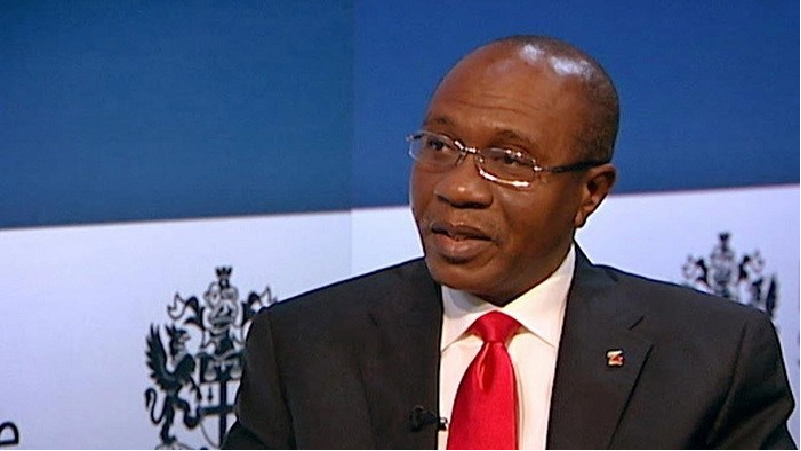
The CBN Governor, Mr. Godwin Emefiele, revealed this on Thursday while speaking during a media briefing on the sidelines of the ongoing International Monetary Fund (IMF)/World Bank annual meetings in Washington DC.

He lamented that the country spends almost 40 per cent of its scarce foreign exchange on the importation of petroleum products as well as petrochemicals, which continues to put pressure on the naira exchange rate.

As pressure mounts on the naira due to insufficient dollar liquidity in the country, resulting in naira’s free fall, the CBN has been helplessly trying to contain the pressure. With every effort made by the central bank so far futile, Emefiele is counting on Dangote Refinery and Petrochemical Plant to save Nigeria from the FX crisis.

He was optimistic that when the refinery and petrochemical plant commence operations around July next year, the country would be in a position to be able to save 40 percent of the FX it spends on the importation of petroleum products as well as petrochemicals.

“On the Dangote Refinery, by the time it begins production latest July next year, it is going to be a major source to save forex for Nigeria. Right now, the overall forex we spend on imported items, the importation of petroleum products consumes close to 30 per cent.

“By the time you add diesel, aviation fuel, petrol and the rest of that which makes up the 30 per cent, the Dangote Refinery has the capacity to produce 650,000 barrels per day. There is a domestic component that is about 455,000 barrels. Even if the 455,000 is what is sold to Dangote in naira alone, it is going to be a major forex savings for Nigeria,” he explained.

The apex bank governor explained that both the CBN local, and foreign banks have a stake of about $9 billion in the $17.5 billion Dangote Refinery project. He said the completion of the project will put the central bank in a better position to float the naira.

“So, you are looking at a transaction where the leverage is almost one-to-one. We think that is going to be a major FX saver for our country and we would export those refined products.

“If you look at the cost of freight alone, it is a major saving for Nigeria. That is because if we have to go to Europe or other parts of the world to bring in petroleum products where we pay heavily in freight and in stocking those products in the high sea before we offload them, Nigerians would benefit a lot from the Dangote Refinery,” he added.

Emefiele pointed out that the project was one of Nigeria’s backward integration programmes, saying the country was proud that it was coming to light.

“Indeed, we know that refineries abroad are already scared because they know the market they would lose because Nigeria will prefer to patronize Dangote Refinery instead of foreign refined petroleum products.

“On the petrochemical, it is also expected to commence about same period next. That petrochemical plant will be producing 900,000 tonnnes of polyethylene and polypropylene granules. Nigeria’s annual consumption here is less than 200,000.

“What does that mean? It is going to save five percent of our imports. If you save five per cent of your imports and another 30 per cent in petroleum products and then in fertliser where we would save about two per cent of our imports, we are moving close to saving 40 percent of the country’s imports.

“By that time, you will see what we would be doing when people talk about floating the naira, and then let’s see how the currency will depreciate,” he added.

Emefiele thus, by this statement, upholds what experts have been saying all along. Economists have fingered insufficient dollar liquidity, resulting from low export of goods and services, as the reason for naira’s continuous depreciation.

Recently, the governor has been pointing fingers at Bureau de Change operators and other non-state actors, accusing them of manipulating the FX market. A typical example was AbokiFX, an online FX rates aggregator, who was accused by Emefiele of fixing parallel market rates to sabotage Nigeria’s economy. AbokiFX was forced to shut down its FX rates services in the hope that it will help the naira bounce back.

It has been weeks now and nothing has changed for the good of the naira. Experts said that the CBN is concentrating on the symptoms instead of treating the ailment, by scapegoating an online foreign exchange rates aggregator that is only publishing parallel market rates.

Tekedia Institute Launches Live Online Corporate Training – Seminars and Workshops

0

Startups, SMEs, NGOs, companies and public sector entities, we are happy to share that Tekedia Institute now offers virtual (online) corporate training to organizations. We cover many domains including strategy, innovation, pricing, collaboration, project management, etc. On engagement, we design, develop and deliver live seminars and workshops specifically structured around your sector and business.

We begin by sending you our Discovery Questionnaire which we use to understand your business frictions, and using those will design the seminar/workshop with absolute quality for your mission. You can learn more here and sign-up.

Areas Covered

These are sample areas we cover; if your area is not included, please we will work to serve you as we have deep capabilities on most domains. Just let us know your area, and we will work to prepare for it.

  • Logistics & Supply Chain Management
  • Business Innovation, Growth & Sustainability
  • Business Transformation & Project Management
  • Risk Management
  • Business Administration
  • Innovation & Design Thinking
  • Accounting, Auditing, Forensics & Taxation
  • Workplace, Teams, Communication and Collaboration
  • Media, Advertising & Branding
  • Startup and Small Business Management
  • Exponential Technologies and Singularity
  • Marketing and Sales Management
  • Digital Business Growth
  • Agribusiness Management
  • Human Resources Management
  • Personal Finance & Wealth Management

The Greatest Value from Education is the Liberation of the Mind, Not Paycheck

1

The value of education is not just determined by how much you make in money. The greatest value from education is the liberation of the mind. Do not measure the value of your education, formal or otherwise, by paycheck. Rather, try to ascertain how that program has liberated you from dogmas and norms which hitherto could have affected your ability to advance.

The same applies when people write “those fighting for As, where has it taken them?” The argument is that possibly Dangote, Elumelu, Zuckerberg, etc were not the top of their respective classes. Making that argument misses the point: that you made As in school does not mean that you will make “As” as an entrepreneur, doctor, engineer, etc. 

This is the point: it is statistically possible that a student who pursued As in school will be a better candidate to be a better doctor, engineer, lawyer, etc largely because of universality of the principles of aiming high, pursuing visions, and working to become the best possible one that be. Applying those principles in anything  will deliver better results. But that is not a probability of “1” (i.e. certainty).

But if I may ask those who throw digital flames to the As makers: does making Es help? I think they cannot provide better data. Yes, making Es does not improve chances either!

When you earn a PhD degree (doctor of philosophy), the school has essentially ascertained that you have mastered logic and philosophy in that field (say Mathematics, Economics, Chemical Engineering, etc). That “philosophy” there goes back to how “education” was structured before the end of the 18th century where all core sciences were studied under natural philosophy. 

You get it? Education does one thing: it liberates your mind by helping you to master logic. Do not equate your degree with paycheck. See beyond money as you go to school. Of course, if you master logic of your field, big paycheck follows.

Comment on LinkedIn Feed

Comment: If “Es” doesn’t help beause of its Face Value, then “As” don’t equally help due to the hidden inadequacies of its Intrinsic Value.

Elon Musk’s classmates said he never showed signs of exceptional intelligence in school, he didn’t fail at school albeit, but Richard Branson was an academic fiasco, yet their companies make case studies here. Their types make up most of the top successful entrepreneurs.

Michael Faraday who propounded the famous Laws of Electromagnetism that is widely studied in schools and applied world over was completely self-taught, he never set foot in college. Nikola Tesla who capitalised on that theory to invent the AC Motor and many great inventions that power our Post Modern lives had No Degrees.

Meanwhile, Dr. Samuel Langley, a DECORATED PROFESSOR of PHYSICS and MATHEMATICS and president of the Simthsonian Institute who was HEAVILY FUNDED by the government to build the first aeroplane failed, but Wright Brothers, who were bicycle mechanics, did it.

When we make these arguments, it’s not to negate the fact that multitudes of A Students also achieve great success, it’s simply to prove that Education is NOT EQUAL TO Academics whose Promise is now dated, that Education can be Informal too, and adequately so.

My Response: note this – Elon Musk broke records on computer related subjects that the Board requested that he be re-tested. See here . Steve Jobs went to school and largely studied one thing many times. He did not care for other things. In Carnegie Mellon University, we had a student who came, took courses on autonomous vehicles and said he was done. George Hotz went to create Comma AI which turns cars into autonomous vehicles. 

You may not believe, it would be hard to find any successful person who did VERY poorly in school in the area he later became successful even though his CGPA may be poor. In other words, Musk made As in computer related courses but possibly struggled in the distractions and that could make his CPGA low. But he was brilliant in his interests. Same for Steve Jobs. Same for Elumelu. Same for Holz.  What the press does is not the full story: Mr A made 3.0/4.0 in college without noting that he was above average in one area he cared about!

Musk made all A+ (see link) but he possibly was low on History of South Africa, Afrikaner, etc.

On Tesla, etc, I already wrote “education, formal or otherwise,”

Sparkle, Nigerian Fintech Startup, Raises $3.1 Million Seed Round from Nigerian Investors

0

The Nigerian fintech space is recording proliferation of high-flying startups, securing investments from local and international investors who have unwavering faith in the market’s growth potential.

The proliferation of fintech startups and the flurry of investors betting money on them shows that the market is huge, and there is unlimited room for growth for everyone.

This week, Sparkle, a mobile-first digital bank that provides financial, lifestyle and business support services to Nigerians across the globe, joined a stream of fintech startups that announced new investments.

The company said it has raised an oversubscribed seed round of $3.1 million from an all-Nigerian group of investors that included Leadway Assurance, Trium Networks and a number of Nigerian High Networth Investors.

The new round took Sparkle’s tally to $5.1 million, having raised $2 million in a previous pre-seed round graced by family and friends.

Sparkle said the new round will be used “to scale the platform’s talent teams across engineering, financial risk and marketing departments and investing in its automated back end processes and digital infrastructure.”

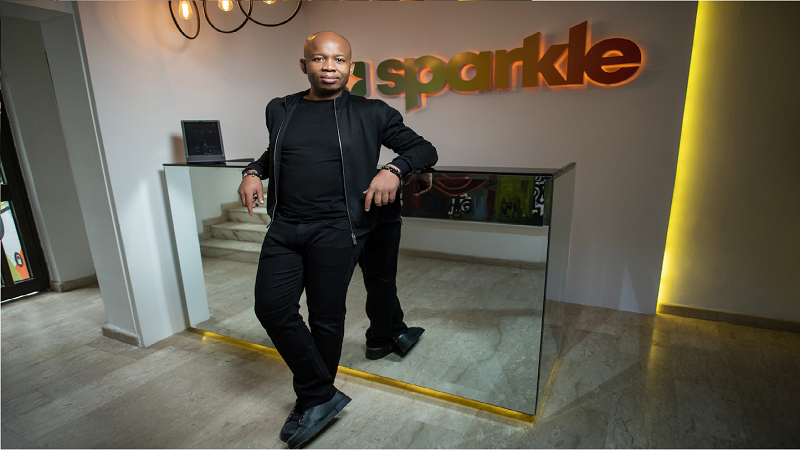
Founded in 2019 by its CEO Uzoma Dozie, Sparkle has built its customer-base offering different categories of payment services, including cross-border payments.

“Since launching in 2019, Sparkle has developed a digital-first tribe of users who have access to features such as savings, bill payments, airtime/cable/utility/transport top-ups, the ability to request or send funds, split bills, review spending breakdowns and more, all via the Sparkle app,” a statement from the company said.

The platform also has a Visa card function for users to make in-person or digital payments. The platform has also secured partnerships with Visa, Network International, PriceWaterHouse Cooper Nigeria and secured a Microfinance Bank licence from the Central Bank of Nigeria (CBN).

Defying the pandemic, the startup said its transactions has tripled between 2020 and 2021, yielding tremendous growth. Sparkle said given the result, that it would now continue its focus of connecting Nigerians and the global Nigerian Diaspora by building a different type of financial services platform that is more than just banking, but a means of improving the financial lifestyle of its users, allowing for borderless transactions.

“In April 2021, Sparkle launched its business platform, Sparkle Business, targeted at the new generation of digital first MSMEs and SMEs in Nigeria, with features such as Inventory and Invoice Management, a Payment Gateway Service, Tax Advisory/Calculations and Payroll/Employee Management.

“Sparkle Business is the only Nigerian business account where no documentation is required to open an account – to register individuals require a personal Sparkle account, Tax Identification Number [TIN], and an email address connected to their TIN,” the statement added.

Sparkle’s seed round stands out as all-Nigerians led investment, changing the narrative of low interest in fintech startups by Nigerian investors that appears to have characterized Nigeria’s fintech space.

“I’m delighted to be collaborating with a group of highly respected Nigerian businesses, investment firms and captains of industry – all of whom understand the real need for a digital-first platform such as Sparkle, to bring better access to financial services and, importantly, financial inclusion, to millions more people – for business, for personal means or both.

“Collectively, as a group of investors and business builders, we are Nigerians who are bullish about Nigeria and the opportunity the country presents in terms of building global networks and communities, all via one app. I am excited to welcome our new investors into the Sparkle tribe and will be leaning on their sector expertise and insight to build long-lasting partnerships as we scale,” Dozie said.

He explained the features of Sparkle that have made it a top choice for users looking for a fast and reliable payment platform, including users’ ability to open an account in less than five minutes via a smartphone, without the need for documentation or in-person / banking hall verification.

“The future is about platforms, and connected platforms, to create seamless customer experience and, as we say, helping our users do what they want to do. Sparkle’s mission is to help Nigerians fulfil their potential by democratizing access to valuable solutions for their business and personal needs.

“Nigeria has a massive youth population who increasingly live, work and play beyond physical borders – we build with them in mind; Whether we are building services for individuals or businesses, we’re fully focused on creating a connected tribe of Sparklers,” Uzoma said.