DD
MM
YYYY

PAGES

DD
MM
YYYY

spot_img

PAGES

Home Blog Page 5523

Uplifting Nigeria’s Agric Sector Amid Food Day Commemoration

0

October 16 each year remains World Food Day. It suffices to say that today, the world over is celebrating the 2021 edition of the worthwhile event.

It is a day of action dedicated to tackling global hunger. The focus of the day is that food is a basic and fundamental human right. Yet, in a world of billions, over 800 million people worldwide live with chronic hunger, 60% women and almost five million children under the age of five die of malnutrition-related causes every day.

Due to the inevitable impact of food on mankind, the World Food Day (WFD) was established during the 20th General Conference of the Food and Agriculture Organization (FAO) of the United Nations (UN) in November 1945.

During the conference, all the Member States of FAO resolved that October 16 each year should be commemorated as World Food Day. The day was meant to coincide with the anniversary of the founding date of the organization – FAO.

In the history of mankind, no one has ever boasted of living a healthy life without adequate food on his/her table. This implies that a healthy living is not unconnected with consumption of the required dietary.

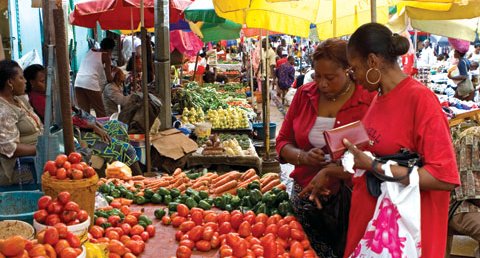
Food, which remains one of the three basic needs of man on earth, can only be acquired or guaranteed via thorough participation in agricultural practices. No doubt, agriculture is an integral part of human existence considering that it is the only means that can guarantee the three paramount needs of man, which are: food, clothing and shelter.

Obviously, several societies in the world depend solely on agriculture as regards Internally-Generated Revenue (IGR), and creation of employment opportunities. Such societies jealously safeguard it because they acknowledge it is the most affordable and accessible source of revenue within the reach of man.

This is a clear indication that agriculture can function as a revenue source as well as means of survival. Needless to assert that sustenance of agriculture remains one of the prime desires of any rational and vision-oriented society in existence, and Imo wouldn’t be an exception.

Owing to its challenges, including lack of access to mechanized farming, undesirable topography, poor climatic condition, unavailability of land, poor soil texture, and insufficient funds, et cetera, many prospective farmers in most developing nations, like Nigeria, have over the years lost interest in agriculture, thereby endangering the socio-economic status of the affected nations.

It’s not anymore news that lack of participation in either subsistence or commercial farming among the populace of a certain country invariably leads to malnutrition and tremendous decline in the Gross Domestic Product (GDP) of the country.

The most devastating aspect of apathy in agriculture is the one observed amongst the youth as a result of their eager and unending quest for non-existing white-collar jobs. To say the least, the ongoing lack of enthusiasm among the young ones, in the area of farming, contributed immensely to the current scarcity of food in Nigeria.

History indicates that between 2011 and 2013, a total of eight hundred and forty-two (842) million individuals, or about one in every eight persons in the world, were estimated to be suffering from chronic hunger. This signifies that the said set of people was not regularly getting enough food for themselves to carry out their active life activities.

It’s not anymore news that in recent times, climate change has remained one of the greatest challenges in this part of the world. One of the biggest issues related to climate change is food security. The world’s poorest – many of whom are farmers, fishers, and hunters – are being hit hardest by higher temperatures and an increasing frequency in weather-related disasters.

At the same time, the global population is skyrocketing and is expected to reach about 9.6 billion by 2050. To meet such a heavy demand, agriculture and food systems will need to adapt to the adverse effects of climate change and become more resilient, productive, and sustainable. This is the only way we can ensure the general wellbeing of ecosystems and rural settlements, as well as reduce emissions.

Growing food in a sustainable way means adopting practices that produce more with less input, in the same area of land, and use natural resources wisely. It also means reducing food losses before the final product or retail stage through a number of initiatives, including better harvesting, storage, packaging, transport, infrastructure, and market mechanisms, coupled with institutional and legal frameworks.

The FAO is using this period to call on countries to address food and agriculture in their climate action plans and invest meaningfully in rural development in their respective jurisdictions.

So, as Nigeria joins the global community to celebrate the 2021 annual World Food Day, I urge the government to be more proactive than being reactive with a view to ensuring that the bane of the country’s agricultural institution is thoroughly addressed.

It’s appalling that presently the acclaimed Africa’s giant can no longer boast of crops like cocoa, rubber and oil palms that used to be the pride of the country during the post-colonial era, owing to lack of maintenance culture and relegation of the existing healthy policies to the background occasioned by overdependence on mono-source of economy, the oil and gas sector.

There is indeed a compelling need for the governments at all levels to provide the needed support for any genuine prospective farmer in their respective jurisdictions, such as soft loan with zero interest rates, arable land, enabling environment, and wholesome policies, as the case may be.

The government should equally subsidize the prices of farming machinery/equipment to enable every commercial farmer in the country to purchase them without much ado. In the same vein, the ongoing restriction of importation of goods and services into the country must be duly strengthened and intensified by the apt authorities such as the Customs Service, among others, toward increasing the level of demand on locally-made commodities.

There ought to also be an increased awareness among the populace in various quarters on the need to patronize indigenous commodities at all times. This can be actualized by working thoroughly on their mentality.

On their part, the farmers ought to, from time to time, validate the membership of all their members, and also encourage the upcoming ones to register, to enable the government or any concerned corporate body to easily assess them as well as ascertain the genuineness of anyone who claims to be a practising farmer.

They should also sensitize their members on the need for specialization towards boosting production. Farmers need to concentrate on a particular crop or livestock farming, as the case might be, to enable them to obtain a desirable outcome during harvest. After creating a sound foundation, any farmer can in the future consider practising mixed farming.

Governments at all levels ought to as well endeavour to own and manage various mechanized farms with a view to supplementing the privately owned ones. They mustn’t leave everything for the private sector, in order to ensure adequate price regulation on the goods and services. Such measures would also intensify the ongoing diversification mantra, thereby boosting massive employment opportunities for our teeming youths.

In view of this, every agriculture ministry is expected to boast of staff that are qualified in various agricultural disciplines, rather than professionals from other areas. And, every staff member must be prepared to go to the field.

Above all, there’s a compelling need for Agricultural Science to be studied by every high school student in Nigeria as a core subject, and equally sit for it during their School Certificate examinations. There’s also a need for all the tertiary institutions in the country to introduce Agric Science in their schools’ curricula as a general course for every first year student; there would be a need for a formidable legal backing towards ensuring the effectiveness of this very measure.

Inter alia, the government and non-governmental organizations, among other stakeholders, should endeavour to continually grant bursary to the undergraduates studying Agric Science or any agric-related discipline towards encouraging prospective ones. Hence, the various relevant civil society groups operating in the country are required to solicit for this on behalf of the students.

All in all, viable and formidable policies need to be formulated and consequently kept alive to ensure apt implementation of the outlined measures. A policy is like a tyre that facilitates the needed wholesome movement of a vehicle.

Every relevant authority or stakeholder in the country must henceforth be ready and determined to sacrifice now in a bid to enjoy forever. 

Nigeria Spends 40% of Forex on Petroleum Import, Now It Waits for Dangote Refinery for its Future!

2

It is a big revelation: the Central Bank of Nigeria Governor blames Nigeria’s foreign exchange crisis on petroleum import. The nation spends 40% of its forex on import of the crude oil products after it has exported the crude oil for largely nothing. You sell for cents and buy back in dollars, primarily because you cannot have a working local refinery.

“On the Dangote Refinery, by the time it begins production latest July next year, it is going to be a major source to save forex for Nigeria. Right now, the overall forex we spend on imported items, the importation of petroleum products consumes close to 30 per cent.

“By the time you add diesel, aviation fuel, petrol and the rest of that which makes up the 30 per cent, the Dangote Refinery has the capacity to produce 650,000 barrels per day. There is a domestic component that is about 455,000 barrels. Even if the 455,000 is what is sold to Dangote in naira alone, it is going to be a major forex savings for Nigeria,

“What does that mean? It is going to save five percent of our imports. If you save five per cent of your imports and another 30 per cent in petroleum products and then in fertliser where we would save about two per cent of our imports, we are moving close to saving 40 percent of the country’s imports.

“By that time, you will see what we would be doing when people talk about floating the naira, and then let’s see how the currency will depreciate,” Central Bank of Nigeria Governor

Yes,  Nigeria is spending 40% of its foreign exchange on the importation of petroleum products and that is crippling the Naira. If Dangote Refinery fixes that 40% FX paralysis, Nigeria has a promise. That is essentially what the Central Bank of Nigeria is saying.


CBN Governor Blames Nigeria’s FX Crisis on Petroleum Import, Says It Gulps 40%


CBN Governor Blames Nigeria’s FX Crisis on Petroleum Import, Says It Gulps 40%

1

As Nigeria’s foreign exchange crisis lingers, the Central Bank of Nigeria (CBN) governor has advertently revealed where the bulk of the FX, which exacerbates dollar scarcity, goes.

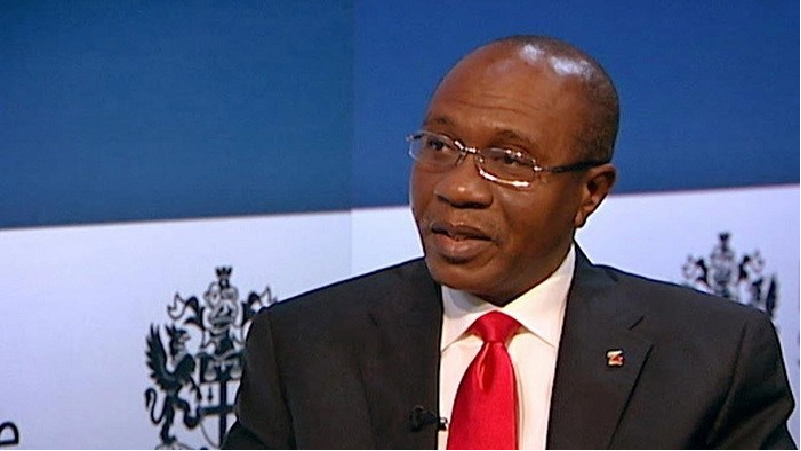
The CBN Governor, Mr. Godwin Emefiele, revealed this on Thursday while speaking during a media briefing on the sidelines of the ongoing International Monetary Fund (IMF)/World Bank annual meetings in Washington DC.

He lamented that the country spends almost 40 per cent of its scarce foreign exchange on the importation of petroleum products as well as petrochemicals, which continues to put pressure on the naira exchange rate.

As pressure mounts on the naira due to insufficient dollar liquidity in the country, resulting in naira’s free fall, the CBN has been helplessly trying to contain the pressure. With every effort made by the central bank so far futile, Emefiele is counting on Dangote Refinery and Petrochemical Plant to save Nigeria from the FX crisis.

He was optimistic that when the refinery and petrochemical plant commence operations around July next year, the country would be in a position to be able to save 40 percent of the FX it spends on the importation of petroleum products as well as petrochemicals.

“On the Dangote Refinery, by the time it begins production latest July next year, it is going to be a major source to save forex for Nigeria. Right now, the overall forex we spend on imported items, the importation of petroleum products consumes close to 30 per cent.

“By the time you add diesel, aviation fuel, petrol and the rest of that which makes up the 30 per cent, the Dangote Refinery has the capacity to produce 650,000 barrels per day. There is a domestic component that is about 455,000 barrels. Even if the 455,000 is what is sold to Dangote in naira alone, it is going to be a major forex savings for Nigeria,” he explained.

The apex bank governor explained that both the CBN local, and foreign banks have a stake of about $9 billion in the $17.5 billion Dangote Refinery project. He said the completion of the project will put the central bank in a better position to float the naira.

“So, you are looking at a transaction where the leverage is almost one-to-one. We think that is going to be a major FX saver for our country and we would export those refined products.

“If you look at the cost of freight alone, it is a major saving for Nigeria. That is because if we have to go to Europe or other parts of the world to bring in petroleum products where we pay heavily in freight and in stocking those products in the high sea before we offload them, Nigerians would benefit a lot from the Dangote Refinery,” he added.

Emefiele pointed out that the project was one of Nigeria’s backward integration programmes, saying the country was proud that it was coming to light.

“Indeed, we know that refineries abroad are already scared because they know the market they would lose because Nigeria will prefer to patronize Dangote Refinery instead of foreign refined petroleum products.

“On the petrochemical, it is also expected to commence about same period next. That petrochemical plant will be producing 900,000 tonnnes of polyethylene and polypropylene granules. Nigeria’s annual consumption here is less than 200,000.

“What does that mean? It is going to save five percent of our imports. If you save five per cent of your imports and another 30 per cent in petroleum products and then in fertliser where we would save about two per cent of our imports, we are moving close to saving 40 percent of the country’s imports.

“By that time, you will see what we would be doing when people talk about floating the naira, and then let’s see how the currency will depreciate,” he added.

Emefiele thus, by this statement, upholds what experts have been saying all along. Economists have fingered insufficient dollar liquidity, resulting from low export of goods and services, as the reason for naira’s continuous depreciation.

Recently, the governor has been pointing fingers at Bureau de Change operators and other non-state actors, accusing them of manipulating the FX market. A typical example was AbokiFX, an online FX rates aggregator, who was accused by Emefiele of fixing parallel market rates to sabotage Nigeria’s economy. AbokiFX was forced to shut down its FX rates services in the hope that it will help the naira bounce back.

It has been weeks now and nothing has changed for the good of the naira. Experts said that the CBN is concentrating on the symptoms instead of treating the ailment, by scapegoating an online foreign exchange rates aggregator that is only publishing parallel market rates.

Tekedia Institute Launches Live Online Corporate Training – Seminars and Workshops

0

Startups, SMEs, NGOs, companies and public sector entities, we are happy to share that Tekedia Institute now offers virtual (online) corporate training to organizations. We cover many domains including strategy, innovation, pricing, collaboration, project management, etc. On engagement, we design, develop and deliver live seminars and workshops specifically structured around your sector and business.

We begin by sending you our Discovery Questionnaire which we use to understand your business frictions, and using those will design the seminar/workshop with absolute quality for your mission. You can learn more here and sign-up.

Areas Covered

These are sample areas we cover; if your area is not included, please we will work to serve you as we have deep capabilities on most domains. Just let us know your area, and we will work to prepare for it.

  • Logistics & Supply Chain Management
  • Business Innovation, Growth & Sustainability
  • Business Transformation & Project Management
  • Risk Management
  • Business Administration
  • Innovation & Design Thinking
  • Accounting, Auditing, Forensics & Taxation
  • Workplace, Teams, Communication and Collaboration
  • Media, Advertising & Branding
  • Startup and Small Business Management
  • Exponential Technologies and Singularity
  • Marketing and Sales Management
  • Digital Business Growth
  • Agribusiness Management
  • Human Resources Management
  • Personal Finance & Wealth Management

The Greatest Value from Education is the Liberation of the Mind, Not Paycheck

1

The value of education is not just determined by how much you make in money. The greatest value from education is the liberation of the mind. Do not measure the value of your education, formal or otherwise, by paycheck. Rather, try to ascertain how that program has liberated you from dogmas and norms which hitherto could have affected your ability to advance.

The same applies when people write “those fighting for As, where has it taken them?” The argument is that possibly Dangote, Elumelu, Zuckerberg, etc were not the top of their respective classes. Making that argument misses the point: that you made As in school does not mean that you will make “As” as an entrepreneur, doctor, engineer, etc. 

This is the point: it is statistically possible that a student who pursued As in school will be a better candidate to be a better doctor, engineer, lawyer, etc largely because of universality of the principles of aiming high, pursuing visions, and working to become the best possible one that be. Applying those principles in anything  will deliver better results. But that is not a probability of “1” (i.e. certainty).

But if I may ask those who throw digital flames to the As makers: does making Es help? I think they cannot provide better data. Yes, making Es does not improve chances either!

When you earn a PhD degree (doctor of philosophy), the school has essentially ascertained that you have mastered logic and philosophy in that field (say Mathematics, Economics, Chemical Engineering, etc). That “philosophy” there goes back to how “education” was structured before the end of the 18th century where all core sciences were studied under natural philosophy. 

You get it? Education does one thing: it liberates your mind by helping you to master logic. Do not equate your degree with paycheck. See beyond money as you go to school. Of course, if you master logic of your field, big paycheck follows.

Comment on LinkedIn Feed

Comment: If “Es” doesn’t help beause of its Face Value, then “As” don’t equally help due to the hidden inadequacies of its Intrinsic Value.

Elon Musk’s classmates said he never showed signs of exceptional intelligence in school, he didn’t fail at school albeit, but Richard Branson was an academic fiasco, yet their companies make case studies here. Their types make up most of the top successful entrepreneurs.

Michael Faraday who propounded the famous Laws of Electromagnetism that is widely studied in schools and applied world over was completely self-taught, he never set foot in college. Nikola Tesla who capitalised on that theory to invent the AC Motor and many great inventions that power our Post Modern lives had No Degrees.

Meanwhile, Dr. Samuel Langley, a DECORATED PROFESSOR of PHYSICS and MATHEMATICS and president of the Simthsonian Institute who was HEAVILY FUNDED by the government to build the first aeroplane failed, but Wright Brothers, who were bicycle mechanics, did it.

When we make these arguments, it’s not to negate the fact that multitudes of A Students also achieve great success, it’s simply to prove that Education is NOT EQUAL TO Academics whose Promise is now dated, that Education can be Informal too, and adequately so.

My Response: note this – Elon Musk broke records on computer related subjects that the Board requested that he be re-tested. See here . Steve Jobs went to school and largely studied one thing many times. He did not care for other things. In Carnegie Mellon University, we had a student who came, took courses on autonomous vehicles and said he was done. George Hotz went to create Comma AI which turns cars into autonomous vehicles. 

You may not believe, it would be hard to find any successful person who did VERY poorly in school in the area he later became successful even though his CGPA may be poor. In other words, Musk made As in computer related courses but possibly struggled in the distractions and that could make his CPGA low. But he was brilliant in his interests. Same for Steve Jobs. Same for Elumelu. Same for Holz.  What the press does is not the full story: Mr A made 3.0/4.0 in college without noting that he was above average in one area he cared about!

Musk made all A+ (see link) but he possibly was low on History of South Africa, Afrikaner, etc.

On Tesla, etc, I already wrote “education, formal or otherwise,”