DD
MM
YYYY

PAGES

DD
MM
YYYY

spot_img

PAGES

Home Blog Page 5527

The President’s Observation On Nigeria’s Export And Why We Must Improve [Video]

1

“According to the sector operators, the cost of exporting 100 tons of cargo in Nigeria is $35,000, compared to $4,000 in Ghana. Today, the leading ports for West Africa are in Cote d’Ivoire, Ghana, Togo, and Benin Republic. All these countries have modernized their port management systems, leaving Nigeria far behind.

“Nigeria can learn from Morocco’s world-class Tangier-Med port. The port is unique in that it is an industrial port complex, and a platform that has over 1,100 companies. They collectively exported over € 8 billion worth of goods in 2020.

“Companies located at the Tangier-Med port have allowed Morocco to move up the global value chains, including automobiles, automotive parts, aeronautics, agriculture and food manufacturing, textiles, and logistics. Annually, over 460,000 cars are manufactured in the zone for exports. And more interesting is that the bulk of the human resources to do these are Moroccans.”

Nigeria scores many own-goals. If not, these port issues would have been fixed. You make certain things in Onitsha, Aba, Kebbi, Lokoja, etc, yet you have to haul them to Lagos to export when you have water bodies to build new ports in Akwa Ibom and Cross River to help Lagos!

As Nigeria Plans To Make Weapons Locally

1

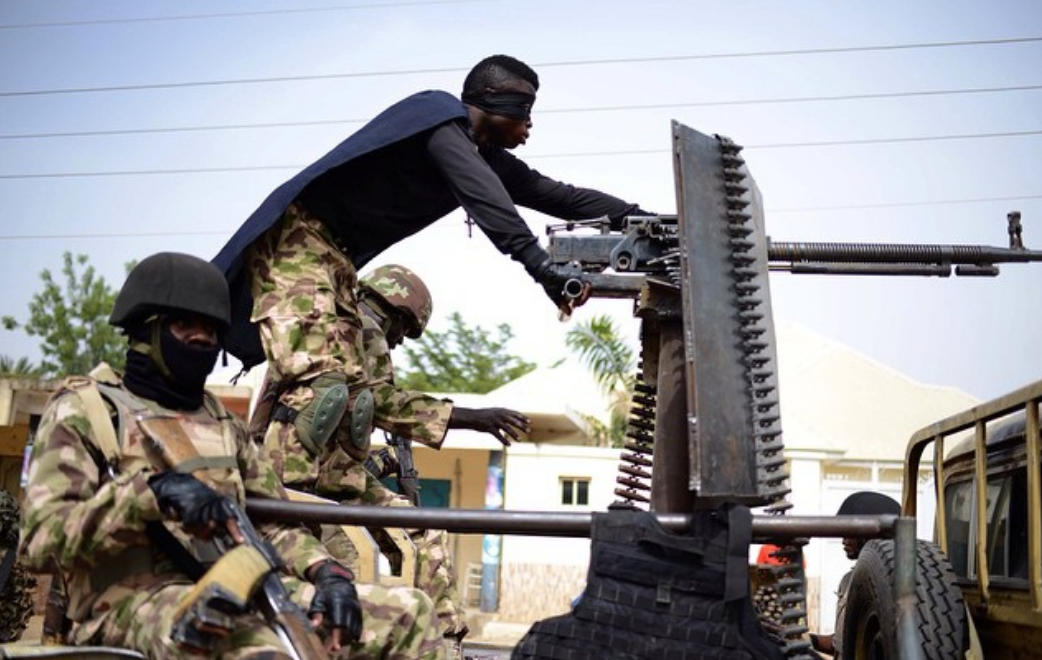
Nigeria has a major double whammy: accelerating insecurity which is distorting its national budget, and constant need to purchase firearms even when it does not have a favourable balance of trade, pushing its currency into deeper valleys. To fix that problem, the nation’s president wants to have an import substitution: yes, make firearms locally. People, “On Monday, President Muhammadu Buhari said it’s time Nigeria starts building its own weapons to curtail dependence on foreign supply.”

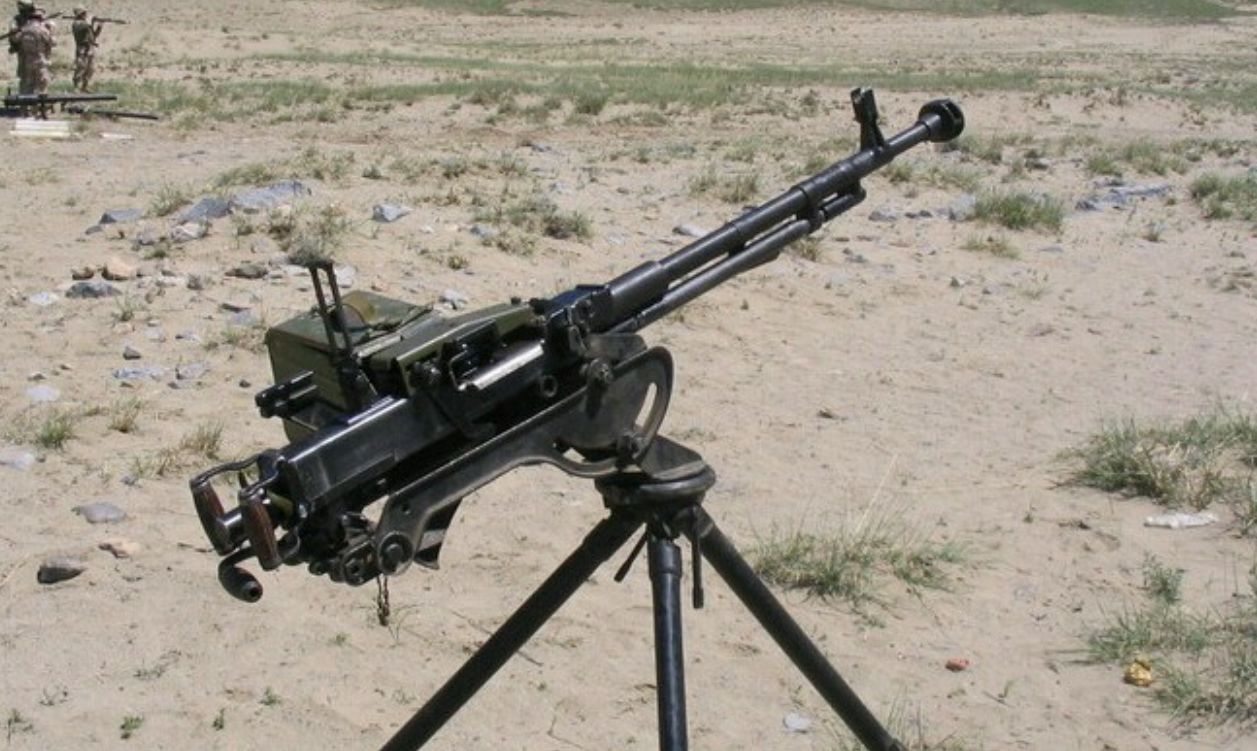
“To address our over-dependence on other countries for military equipment and logistics, I have instructed the Defence Ministry to create a modest military industrial complex for the local production of weapons to meet some of the requirements of the country’s armed forces. This is being implemented under the Defence Industries Corporation of Nigeria (DICON), a military department responsible for arms manufacture”.

I have written consistently that the insurgency in Nigeria provides a huge opportunity for the nation to develop a defense industry which if managed well could serve the world. Yes, unfortunately, the world will always have problems – and weapons will always be goods.

Yet, I am concerned because with corruption they can produce 100 for the government and 1000 for politicians ahead of elections. At least with import, you make the process harder but with local production, leakages will bound. This needs to be well managed!

Nigeria to Begin Local Firearms Production

Nigeria to Begin Local Firearms Production

0

The Nigerian government has depended on foreign arms supply in combating insurgency in the country. But as Nigeria’s insecurity situation escalates with new features such as banditry and Unknown Gun Men (UGM), the government is seeking a reprieve from dependence on foreign arms supply through local production of arms.

On Monday, President Muhammadu Buhari said it’s time Nigeria starts building its own weapons to curtail dependence on foreign supply.

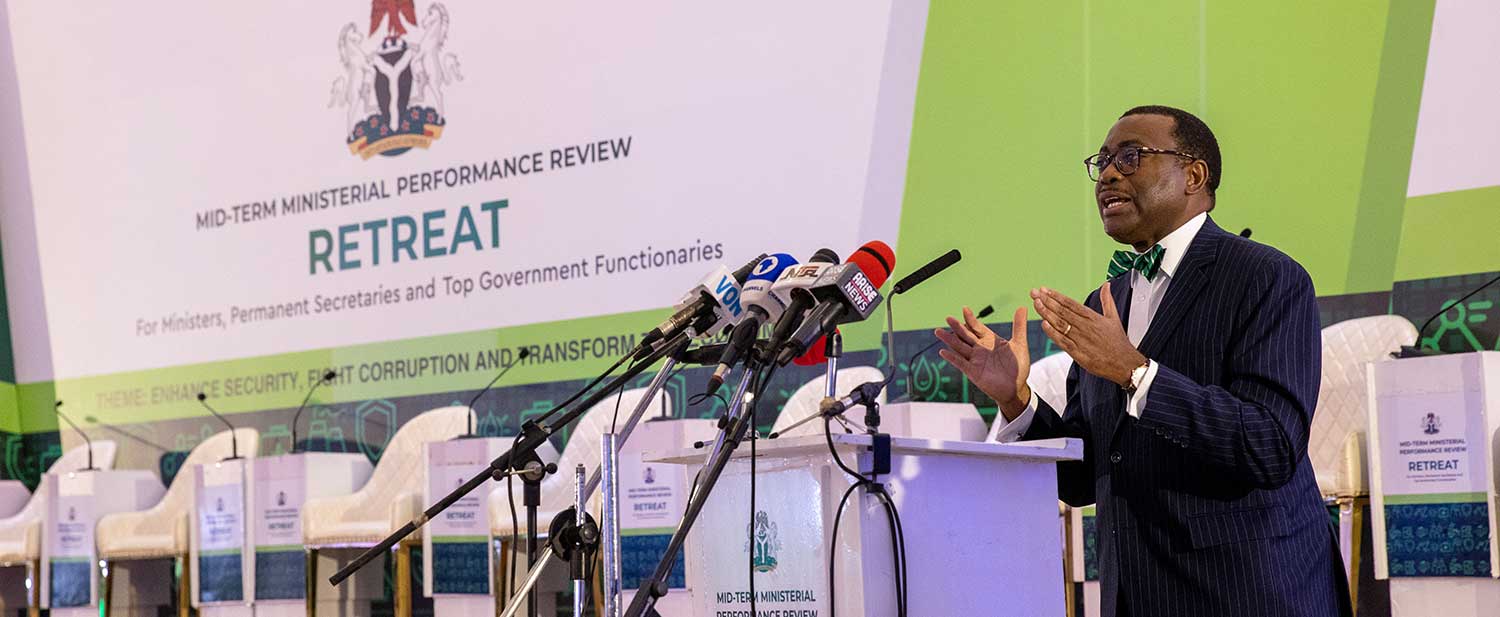
He made this known during his opening remarks at a two-day Mid-Term Ministerial Performance Review Retreat, organized to assess progress made towards the achievement of the nine key priorities of his Administration.

Buhari said he has instructed the Ministry of Defense to create a modest military industrial complex for the local production of weapons to meet some of the requirements of the country’s armed forces. He explained that the establishment of the industrial complex would address Nigeria’s over-dependence on other countries for military equipment and logistics.

The project, he explained, was being implemented under the Defense Industries Corporation of Nigeria (DICON), a military department responsible for arms manufacture.

“To address our over-dependence on other countries for military equipment and logistics, I have instructed the Defence Ministry to create a modest military industrial complex for the local production of weapons to meet some of the requirements of the country’s armed forces. This is being implemented under the Defence Industries Corporation of Nigeria (DICON), a military department responsible for arms manufacture”.

In the past, the federal government’s attempt to purchase arms from the United States, under President Goodluck Jonathan, was reportedly rejected by the US government, at the heat of Boko Haram insurgency. Recently, Nigeria received six A-29 Super Tucano propeller-driven aircraft from the United States, which are currently being used for training, surveillance and attack by the military.

“It is gratifying to note that only recently, we received six A-29 Super Tucano aircrafts as part of our efforts to boost the nation’s campaign against insecurity. The propeller-driven aircrafts are being used for training, surveillance and attack by the Military. President Buhari said it is part of efforts to strengthen national security.

“As part of the efforts towards strengthening our national security, we have increased investments in arms, weapons and other necessary equipment; expanded the National Command and Control Centre to nineteen states of the federation; and established a Nigerian Police Trust Fund, which will significantly improve funding for the Nigeria Police Force,” he said.

The newly acquired Super Tucano aircrafts highlight how much Nigeria depends on foreign nations for arms, and it is believed to lend credence to the move by the federal government to establish local arms production. However, there is a major concern.

The proliferation of arms in Nigeria has become a national crisis that the federal government is grappling with. President Buhari mentioned arms smuggling as one of the reasons Nigerian land borders were shut in 2019.

Last year, SBM Intelligence’s report estimated the number of small arms in circulation in Nigeria at 6,145,000, with armed forces and security agents accounting for 586,600 firearms.

The proliferation of illicit firearms, which has unprecedentedly fueled crimes and terrorism in the country, has been attributed largely to locally made weapons. The National Small Arms and Light Weapons Survey said locally manufactured arms contribute to a large percentage of arms in circulation in Northern Nigeria especially in North Central, a point SBM Intelligence supported.

“In Benue and Plateau states, both in the North Central region, locally made weapons are estimated to be used in over 50% of crimes committed – 62% for Benue State, and 69% for Plateau State. In Adamawa State in the North East, it is 32%,” it said.

Against this backdrop, Nigeria’s government’s move to begin local arms production raises further concern about public safety since there has been a huge vacuum in efforts to control arms circulation. Although in May, President Buhari set up an arms control unit dubbed National Center for the Control of Small Arms and Light Weapons (NCCSALW), which is domiciled in the office of the National Security Adviser, there is skepticism about how much it can do.

Nigerian security forces have been accused of complicity in the smuggling of arms into the country, and helping local manufacturers of arms to distribute them across Nigeria. This loophole has fuelled doubts about the ability of the newly inaugurated NCCSALW to contain the circulation of illicit firearms in Nigeria, it also questions the government’s capacity to protect locally manufactured arms from getting into the wrong hands.

Congratulations McPherson University Champions for Graduating from Tekedia Institute

0

Good People, join me to congratulate some McPherson University final year students for graduating from Tekedia Institute CollegeBoost. I want to wish all of you an amazing future ahead. We thank MCU leadership for this partnership which makes it possible for us to co-learn with the workforce of the future. McPherson #Champions, the future is full of abundance; good luck and congratulations.

.

On Nigeria’s Moribund Textile Industry

0

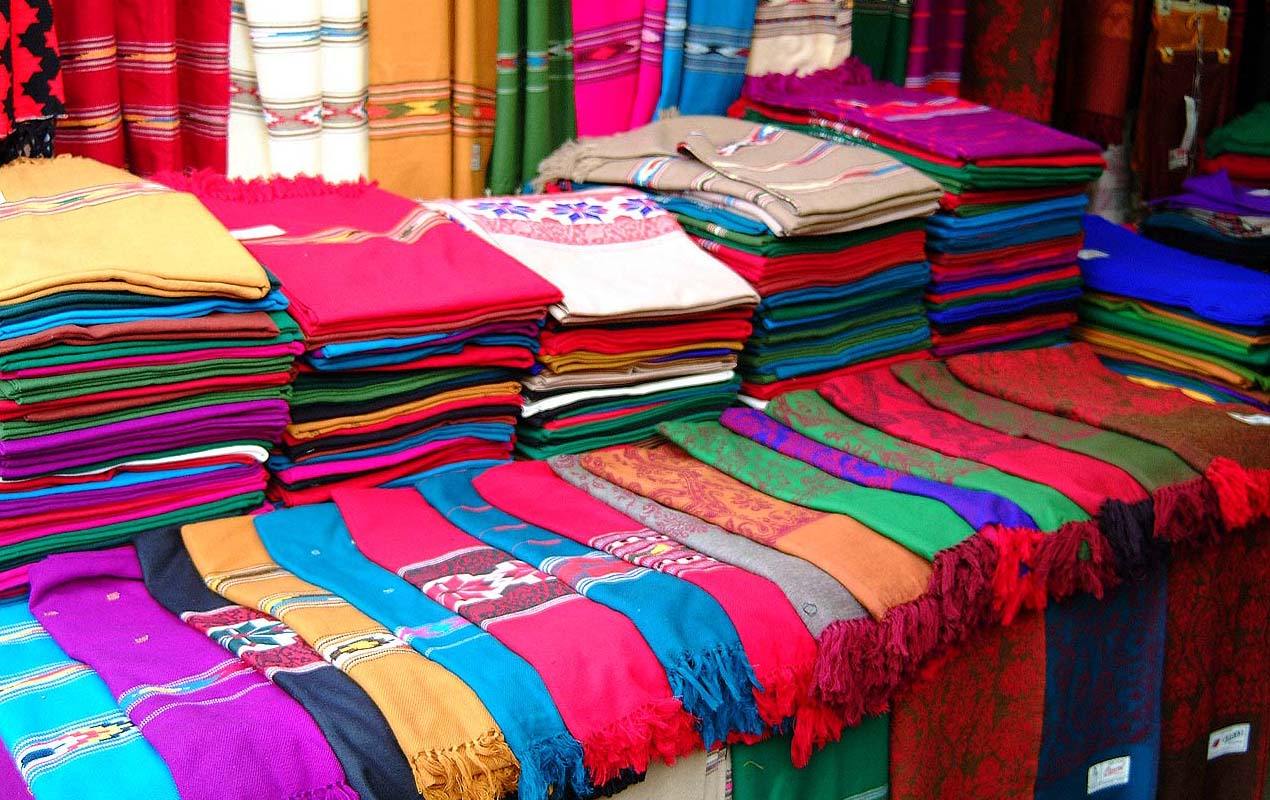
A few decades ago, Nigeria as a nation could boldly and proudly boast of a globally-recognized textile industry, which was then conspicuously the pride of the citizenry, economic wise.

Nigeria’s textile industry, which was the third largest on the African continent – following Egypt and South Africa, used to employ over 350,000 individuals when all the textile mills were functional.

The aforementioned figure as regards workforce was about 25% of the overall workers in Nigeria’s manufacturing sector. It was of an indisputable note that the said industry was then the second highest employer of labour, following the country’s civil service.

Between 1985 and 1991, record has it that the sector had an annual growth rate of 67%. Survey showed that the number of mills in operation as at then was about 180 and they were all reportedly doing very well, especially the Kaduna Textile Limited (KTL) and Nigerian Textile Mills (NTM) in Lagos, which were the oldest having been established as at 1957.

It’s therefore needless to assert that the now comatose textile industry was one of the booming subsectors of the nation’s economy during the post-independent era. The current pathetic state of the industry could not be unrelated to the level of neglect experienced by it in recent times owing to the overwhelming dependence on oil revenue.

The obvious decline in, or depreciating effect of, the textile industry could be aptly traced to influx of cheaper textile fabrics from China and India, among others, sold at prices the local mills can’t compete with. This ugly trend has resulted in a drastic downfall of the industry.

It would be recalled that in 2010, the Goodluck Jonathan-led Federal Government (FG) placed a ban on importation of textile fabrics. This approach – like other restrictive trade policies as at then – failed to yield the needed result.

Rather than bringing relief in the industry as expected, the above measure regrettably ended up causing the ‘smuggling industry’ to grow more wings. This unfortunate resultant effect made it possible for continued influx of textile materials into the country. It’s noteworthy that at the moment these materials have virtually zero revenue for the government’s coffer.

In a bid to alleviate the excruciating effects of the present realities, in early March 2019, the Central Bank of Nigeria (CBN) led by Mr. Godwin Emefiele made a frantic move on the moribund textile industry by adding textile materials to the list of the currently restricted items regarding foreign exchange (forex).

It would be recalled that 41 items were initially on the list, not until late 2018 – precisely December 10 – when the apex bank announced to the public that it had yielded to recommendations to add fertilizer to the existing list, and the item was consequently added making the total number as at then to be 42. This implies that by subsequently including textile materials to the list, the items barred from direct access to forex increased to 43.

In his words while disclosing the plan to the textile industry stakeholders during a meeting, Mr. Emefiele informed that the restriction would awaken the sleepy industry and ensure the required growth was actualized.

The CBN’s boss, however, disclosed that – as part of the apex bank’s intervention for the industry – it would currently support the importation of cotton lint for use in textile factories with a view that the concerned importers shall start sourcing all the needed cottons locally, commencing from 2020.

He further stated that as part of the CBN’s Anchor Borrowers’ Programme, the bank would also assist local growers of cotton towards enabling them meet the entire need of the textile industry domiciled in the Nigerian State. Additionally, he notified that the apex bank would support Nigeria’s cotton farmers to source high yield cotton seedlings with a view to meeting global benchmarks.

It’s worthy of note that the Nigeria Employers’ Consultative Association (NECA), alongside the Senior Staff Association of Textile (SSAT), applauded the Emefiele-led CBN over its restriction of forex to textile importers, saying it would go a long way in rejuvenating the moribund industry.

In a related reaction, the Lagos Chamber of Commerce and Industry (LCCI) however cautioned the FG over the strong move. In his statement, the Director-General of the body Mr. Musa Yusuf opined that there was need for a strategic approach before such policy pronouncement was made.

Mr. Yusuf argued that given the position of Nigeria in Africa as a leader in fashion, the range of fabrics being produced by the Nigerian textile industry could not favourably support the industry in terms of the quantity and quality required by the consumers. He therefore urged the government to reconsider the CBN’s move, which he described as ‘harsh’.

In his swift response to the argument, Mr. Emefiele clarified that the measures as announced by the apex bank were targeted to revive the Cotton, Garment and Textile sector. According to the boss, “the measures were well thought out to reposition the sector for job creation and economic growth”.

To assert the least, the inclusion of the textile materials into the list of the restricted items regarding forex couldn’t have come at a better time than now. The textile industry is almost going into extinction and the era when the FG is apparently intensifying its diversification mantra.

It suffices to enthuse that the frantic move was, without equivocation, a welcome development and a round peg in a round hole. I’m even of the candid view that the austerity measure ought to have been implemented long before it came on board.

Meanwhile, it’s appalling that two years down the line, absolutely nothing is being felt as regards improvement of the said sector, perhaps owing to lack of policy direction and insincerity on the part of the concerned authorities.

Knowing full well that epileptic power supply has hitherto been an overwhelming plight in the manufacturing sector at large, it’s preposterous to remind the FG that efforts need to be thoroughly intensified towards boosting the said source of energy. This will help tremendously to encourage the prospective cotton millers.

Similarly, towards encouraging the cotton growers, the farmers ought to be made to easily assess funds or low-interest loans to enable each of them purchase the needed machinery. It’s not anymore news that the continual deployment of crude pattern of cultivation and harvest has overtime bedevilled Nigeria’s agricultural sector.

In the same vein, the governments at all levels should equally assist in providing adequate irrigation systems for the farmers domiciled in their respective jurisdictions. The enabling environment must holistically be provided by the governments for business to strive.

Inter alia, acknowledging that policies of this kind are often, in the long run, frustrated by the forex black markets littered all over the country as well as importation smugglers, the FG must seriously implement measures to tactically checkmate these markets and our various borders, respectively.

The CBN’s move to resuscitate Nigeria’s moribund textile industry is a lofty one, but the relevant authorities mustn’t hesitate to do the needful towards making the policy yield a concrete result in the nearest future.