Gas flaring has over past decades remained an environmental phenomenon of tremendous concern and worry within the shores of the oil-producing areas in Nigeria.
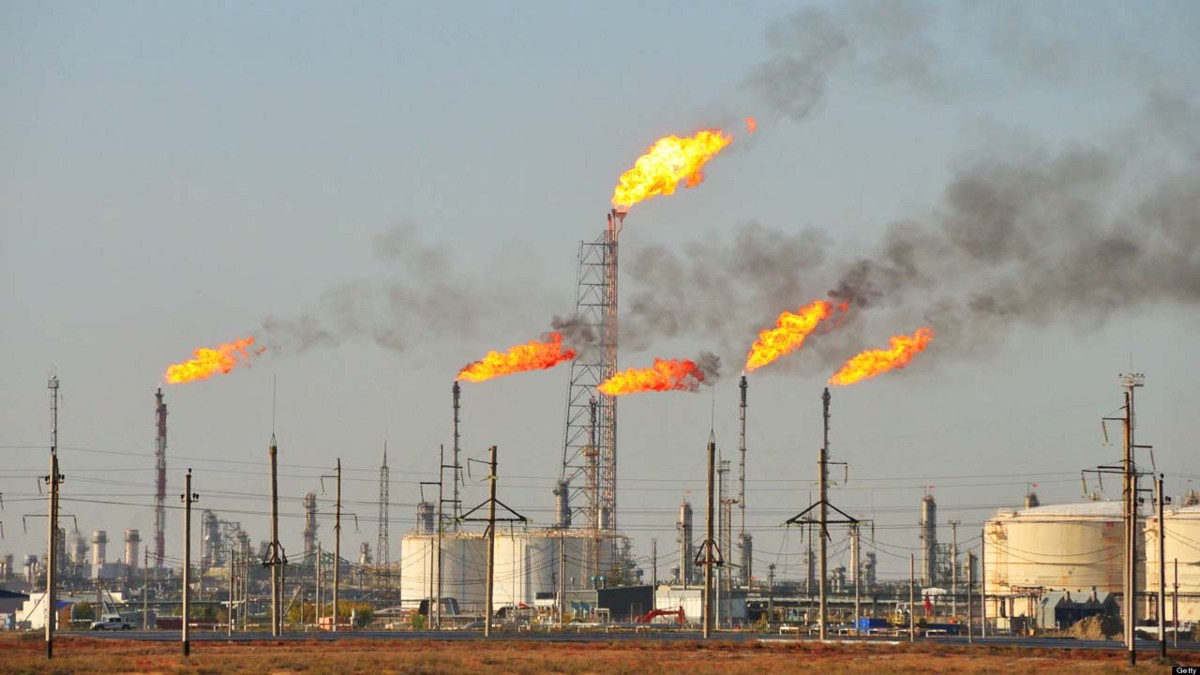
A gas flare, alternatively known as a flare stack, is a gas combustion device used in industrial plants such as petroleum refineries, chemical plants, natural gas processing plants as well as at oil/gas production.
Gas flaring is the burning of natural gas that is associated with crude oil when it is pumped up from the ground. In petroleum-producing areas where insufficient investment was made in infrastructure to utilize natural gas, flaring is employed to dispose of this associated gas.
Flares are important safety devices used in refineries and petrochemical facilities. They safely burn excess hydrocarbon gases which cannot be recovered or recycled. During flaring, excess gases are combined with steam and/or air, and burnt off in the flare system to produce water vapour and carbon dioxide.
A flare system comprises a flare stack and pipes that feed gas to the stack. Because natural gas is valuable, companies would rather capture than flare it. However, there are several reasons it may be necessary to flare gas during drilling, production or processing.
In industrial plants, flare stacks are primarily used for burning off flammable gas released by pressure relief valves unplanned over-pressuring of plant equipment. However, during plant or partial plant startups and shutdowns, flare stacks are equally utilized for the planned combustion of gases over relatively short periods.
The fact is that gas flaring at several oil and gas production sites protects against the dangers inherent in over-pressuring industrial plant equipment. This is the reason the practice has seemingly become inevitable to the various oil firms operating within the shores of countries like Nigeria.
A good example of the consequences of failure to flare escaping gas was evident in the Bhopal disaster on 3rd December 1984 in India when a flare tower was broken and couldn’t flare escaping Methyl isocyanate gas. The gas in question had reportedly been in an over-pressurized tank and released by a safety valve, which resulted in its release into the surrounding area.
When petroleum crude oil is extracted and produced from oil wells, raw natural gas associated with the oil is brought to the surface, especially in areas of the world that are lacking pipelines and other gas transportation infrastructure. Vast amounts of such associated gas are commonly flared as waste or unusable gas.
It’s noteworthy that the flaring of associated gas may occur at the top of a vertical flare stack or it might occur in a ground-level flare in an earthen pit. Preferably, associated gas is often re-injected into the reservoir, which saves it for future use while maintaining higher well pressure and crude oil production.
When industrial plant equipment items are over-pressured, the pressure relief valve is invariably an essential safety device that automatically releases gases and sometimes liquids. These pressure relief valves are usually needed by industrial design codes and standards as well as by law.
The released gases and liquids are then routed through large piping systems known as flare headers to a vertical elevated flare. They are thereby burned as they exit the flare stacks. The size and brightness of the resulting flame depends solely upon the flammable materials’ flow rate.
To keep the flare system functional, a small amount of gas is continuously burnt, like a pilot light, so that the system is ceaselessly ready for its basic purpose as an overpressure safety system.
It’s worth noting that flaring can affect wildlife – likewise other living creatures – by attracting them such as birds and insects, among others to the flare. Survey indicated that about 7,500 migrating songbirds were attracted to and killed by the flare at the liquefied natural gas terminal in Saint John, New Brunswick, Canada on September 13, 2013. Similar incidents have taken place at flares on offshore oil and gas installations in some other countries.
Two years back, the then Nigeria’s Minister of State for Petroleum Resources, Dr. Ibe Kachikwu informed the general public that some pertinent committees had been set up by the Federal Government (FG) led by President Muhammadu Buhari towards tactically addressing the scourge of gas flaring currently experienced in the country’s Niger-Delta region.
This development, according to the honourable minister, was necessitated by the FG’s bid to fully implement the National Gas Policy as approved by the Federal Executive Council (FEC) in June, 2017. He posited that gas flaring was unacceptable and condemnable, hence must be completely phased out.
Dr. Kachikwu made this known at an International Press Briefing held on 11th April 2019 at the Petroleum Trust Development Fund (PTDF) Tower, Abuja, which focused on the theme “The journey so far and the next line of action for the Nigerian Gas Flare Commercialization Programme (NGFCP)”.
He further described the recent enactment and approval of the Flare Gas Regulations, 2008 and its endorsement by the president on 5th July 2018, as “key accomplishment, historic and record breaking”.
The boss stated that two of the bodies inaugurated, namely the NGFCP Ministerial Steering Committee and the Programme Management Office (PMO), were directed to activate the NGFCP Community, Awareness and Sensitization/Participation Plan (CASP) to ensure widespread awareness and full participation of key stakeholders in the Niger Delta areas.
The minister, who assured that docility and apathy wouldn’t be tolerated from anyone involved, equally notified the gathering that a Proposal Evaluation Committee (PEC) was also set up by the Buhari-led government to receive applications and aptly consider applicants who are ably qualified to handle the contracts by painstakingly scrutinizing their respective qualifications. He therefore used the occasion to declare the submission of qualifications open.
It’s indeed appalling and saddening that over two years of initiating the said lofty policy, the Nigeria’s government is yet to make any tangible move towards considering the clauses enshrined therein, let alone implementing them.
The bitter truth is that the ongoing practice of gas flaring, in which the natural gas associated with petroleum extraction is burned off in the atmosphere rather than being removed by alternative means such as subterranean re-injection or confinement to storage tanks for eventual sale, is particularly controversial to assert the least.
Gas flaring immensely contributes to climate change by emitting carbon dioxide – the main greenhouse gas – which has serious implications for both Nigeria’s environment and the rest of the world.
More so, the unending industrial practice causes the surrounding communities to suffer from increased severe health risks to include respiratory illnesses and other related diseases, thereby leading to premature deaths.
Gas flares have potentially-harmful effects on the health and livelihood of the people in the affected areas, as they release poisonous chemicals. This is why it is high time the governments at all levels expedited action with a view to bringing the societal menace to a full stop.
Apart from the dwellers who died owing to hardship occasioned by gas flaring, it’s worth noting that several environmental activists had lost their precious lives – or been reportedly killed – while fighting for a better life for the people of the Niger Delta. A good example of members of this group is the Late Ken Saro-Wiwa who fought doggedly till he was executed by the military regime.
In spite of all the countless bad omens and ordeals that transpired in the past as a result of gas flaring, the government is ostensibly yet to learn a lesson, or be moved by the untold sufferings of the Nigerian people whose lands have hitherto been the major – if not sole – surviving point of the entire country.
Aside from the health and environmental effects of gas flaring, reports show that Nigeria invariably loses about N197bn to the practice in just nine months. It was reliably revealed that oil and gas firms operating in the country flared approximately a total of 215.9 billion standard cubic feet of natural gas in the first nine months of 2018 alone, amounting to a potential loss of the aforementioned sum of money.
For Nigeria to get it right, a strict and genuine tech-driven measure is earnestly required from the concerned authorities. Hence, the constituted committees, which apparently went into moribund on arrival, must endeavour to embrace all the needed technicalities towards aptly delivering on the mandate given to them.
Most importantly, for all the regulations and extant laws forbidding gas flaring to be fully adhered to, the government is expected to wear the required political will like clothing. This is a step we must see as a priority and inevitable.
We can’t continue to dwell on a retrogressive approach at a time we are yearning for progressive one.