DD
MM
YYYY

PAGES

DD
MM
YYYY

spot_img

PAGES

Home Blog Page 5539

US Dollar Scarcity Is Disconnecting Nigeria From The World

1

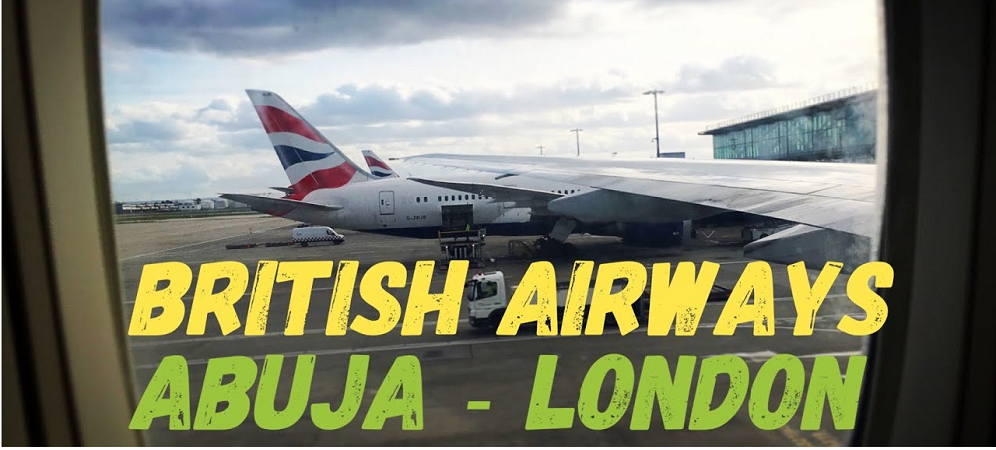
British Airways issues notice to travel agents: “I wish to inform you of British Airways intention to control their Global Distribution System inventory by removing all the lower classes from the GDS, leaving only the below classes to be sold and issued and we all know the cost implications to this: Economy Y, Premium Economy W; Business Class J; First Class F. This became necessary due to fluctuating and unstable exchange rate in Nigeria.” 

Simply, BA and other foreign airlines plan to reduce the “total number of tickets they sell on Nigerian routes amid worsening dollar scarcity that has made it difficult for them to repatriate billions of naira in ticket sale proceeds to their head offices abroad”.

If the world cuts off Nigeria, that would be fearful because what that means is that we may not even have the airlines to fly to go and borrow more money. There is also rumour that some airlines now want to be paid in US dollars or pounds sterling; the Central Bank of Nigeria promised to investigate  this planned “dollarization”.  According to IATA, an industry association in the airline sector, Nigeria holds $143.8m which foreign airlines are struggling to repatriate due to dollar scarcity.

“It is worrisome that airlines in Nigeria can’t repatriate about $144m. Imagine if this situation is applicable to other countries, the industry will be in jeopardy. The government should know that without this repatriation, the airlines won’t be able to fund maintenance, operations, aircraft purchases, salaries and other commitments. The government has to seriously look into this and find a solution as this is embarrassing for a country like Nigeria.”

People, do not be surprised if these airlines go on “strike” in two years and magically we will be disconnected from the world. Do not wish for that as everything will collapse including the ability to visit IMF, World Bank, etc for more loans.

Let Us Know About Your Tekedia Institute Hangout and Meetup (Photo from Abuja Hangout)

0

Happy Sunday everyone and an amazing week ahead. Let me also thank all Tekedia Institute community members who are organizing hangouts and meetups across cities. This is the beauty of our shared vision: master the mechanics of business in our school and go into the real world and have impacts through partnerships. Tekedia will offer logistical support to our members who plan to organize physical meetups and hangouts.

Write to Admin with date, time and venue (as possible) along with the contact of the organizer(s), the team will help share the message; I will also share here and tag you.

I know that many take place in Lagos, Ilorin, etc regularly. I am aware that a Kaduna group has formed a joint company to export agro-products to Europe. This photo is from Abuja Tekedia Hangout which happened this weekend.  Thanks Emmanuel Bassey for sharing.

Nnamdi OdumodyEyitayo Adeleke and other Tekedia Institute team members are here to provide support. And note that if you invite me for a short Zoom/Whatsapp call in, I will honour it.

India’s Mukesh Ambani Joins the Centibillionaire’s Club with $100.6 Billion Net Worth

0

Mukesh Ambani, Asia’s richest person, has become the newest member of the centi-billionaires club, joining ranks with Jeff Bezos and Elon Musk in the elite league of billionaires whose fortune has crossed the $100 billion threshold.

Ambani, the Chairman of Reliance Industries Ltd. is India’s leading entrepreneur with investments in many sectors. According to Bloomberg, his conglomerate’s stock hit a new height on Friday, propelling his entry into the 11-men club. He’s now worth $100.6 billion, according to the Bloomberg Billionaires Index, after his wealth increased by $23.8 billion this year.

Bloomberg highlighted Ambani’s fortune, starting from about 15 years ago, how he transformed his late father’s business empire into one of the most lucrative conglomerates in the world.

Since inheriting the oil-refining and petrochemicals businesses of his late father’s empire in 2005, Ambani, 64, has been seeking to transform the energy giant into a retail, technology and e-commerce titan. His telecommunications unit, which started services in 2016, is now the dominant carrier in the Indian market. His retail and technology ventures raised about $27 billion last year, selling stakes to investors ranging from Facebook Inc. and Google to KKR & Co. and Silver Lake.

Ambani unveiled an ambitious push into green energy in June, with a planned investment of about $10 billion over three years. And last month, the mogul said his company would “aggressively” pursue production of cheaper green hydrogen. The plan aligns with Prime Minister Narendra Modi’s ambitions of turning India into a global manufacturing hub for the cleaner fuel to combat climate change and slash energy imports by the world’s third-biggest oil consumer.

While Ambani’s announcement has been viewed by some as an acknowledgment that his group needs to look beyond oil to cement its future, fossil fuel still plays a central role at Reliance, accounting for almost 60% of its $73 billion in annual revenue. The oil-to-chemicals business is now a separate unit, and talks are underway to get Saudi Arabian Oil Co. as an investor.

“Mukesh Ambani is at the forefront of creating new businesses with new emerging technologies,” said Chakri Lokapriya, chief investment officer at TCG Asset Management Co. in Mumbai. “Creating businesses of scale at speed brings execution challenges, but he has demonstrated his capabilities.”

The story of Reliance dates back to the late 1960s when Dhirubhai Ambani, who started out as a gas-station attendant in Yemen, began building his polyester business into a vast empire. When he died of a stroke in 2002 without leaving a will, a succession feud erupted between his two sons, Mukesh and Anil, 62, which was eventually settled by the siblings’ mother, Kokilaben, in 2005.

Under the truce agreement, Mukesh got control of the flagship oil refining and petrochemicals businesses, while his younger brother got newer areas such as power generation, financial services and telecommunications services. Anil — once a billionaire — told a London court last year that his net worth was “zero.”

India’s billionaires are some of the largest gainers on the world’s rich list, as Asia’s best-performing major stock market this year gets a boost from a surge in initial public offerings.

Gautam Adani, founder of coal-power and renewable energy conglomerate Adani Group, has added $39.5 billion to his fortune this year, while the country’s third-richest person, technology tycoon Azim Premji, saw his wealth grow by $12.8 billion.

With Modi’s push to make India a $1 trillion vibrant digital economy, Ambani’s Reliance has captured mouth-watering investment deals from tech giants such as Google, Facebook, Qualcomm and Amazon. Reliance’s recent spectrum trading agreement with Bharti Airtel, which the company sees as a vehicle to advance its digital investments, winning underserved India with free and affordable telecom services, is seen as major boost that will further increase Ambani’s wealth.

Nigeria Is Open For Business – Visa On Arrival Boosted

0

The economic minister invited me to his country, sending me all the necessary documents. I went to the Angolan embassy in New York for a visa. It was to be put in a US passport. But instead of even collecting the application, they told me to wait. Yes, they wanted to call the President’s Office in Luanda, the nation’s capital. When they finished, they came to me and told me: while the minister sent this letter, the President’s office has not signed off – and because of that, we cannot issue you a visa. I called the minister’s office and the consultant handling everything. In the end, I left without the visa. 

As I was there, many Americans were having the same issues: invitation letters from companies were meaningless because the President’s Office had not ratified. That was the time of the former leader of Angola: Dos Santos. Angola was the farthest country in Africa from Africa, I learnt. (They later got the approval but I felt if that was the mindset, the project I was going for has no chance.)

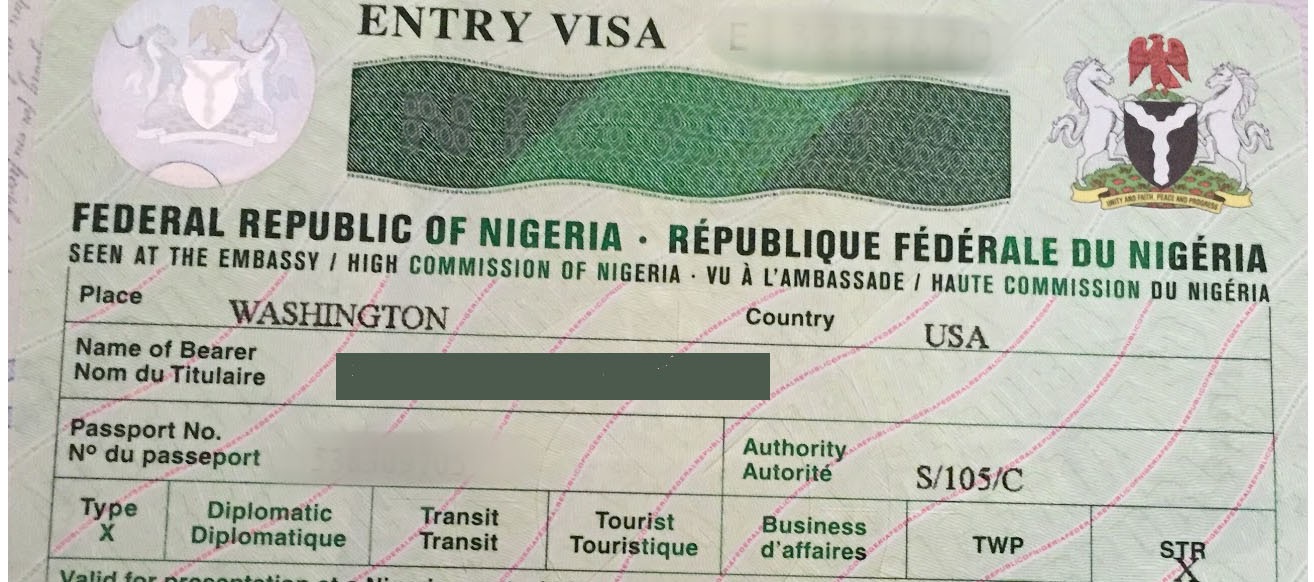
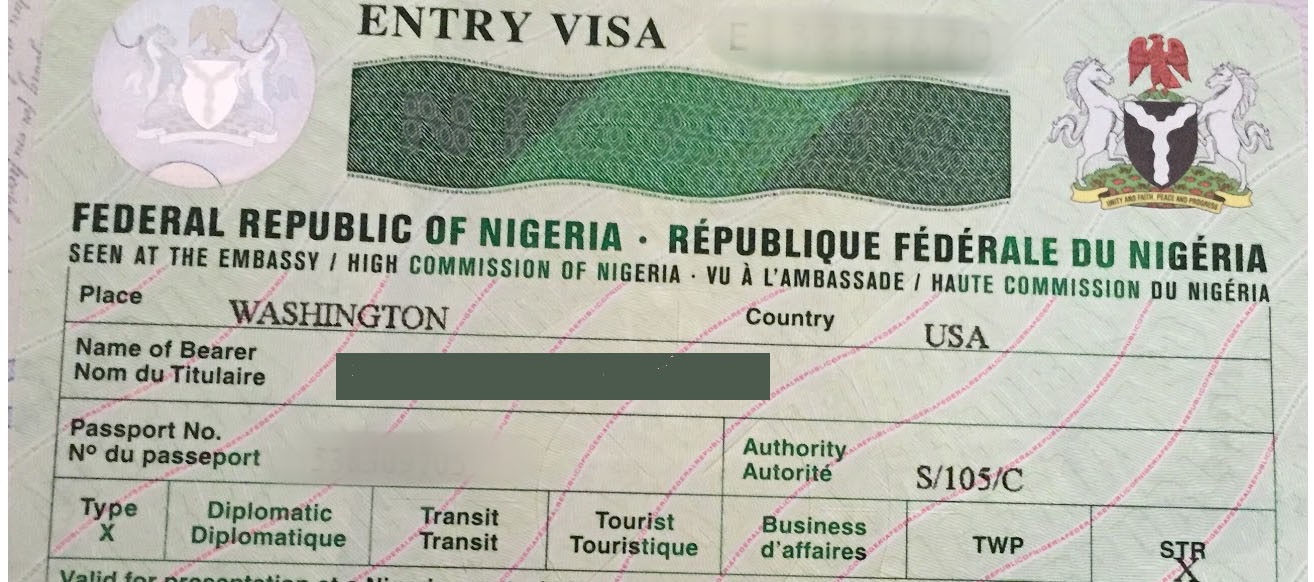
Where am I going? There is something amazing coming up in Nigeria: “The Nigerian government is adjusting its visa policy to attract foreign direct investment. The Nigeria Immigration Service (NIS) said that its decision to introduce the Visa on Arrival (VOA) facility was to attract foreign investments to the nation….Among many complaints against the ease of doing business in Nigeria, is the difficulty in securing visas for foreign investors.”

Congratulations to the Government. This is a good initiative.

Nigeria Introduces Visa on Arrival to Attract Foreign Investments

Nigeria Introduces Visa on Arrival to Attract Foreign Investments

0

The Nigerian government is adjusting its visa policy to attract foreign direct investment. The Nigeria Immigration Service (NIS) said that its decision to introduce the Visa on Arrival (VOA) facility was to attract foreign investments to the nation.

This was made known to the News Agency of Nigeria (NAN) by Mr. Abdullahi Dalhatu, the Controller of immigration in charge of the Murtala Muhammed International Airport (MMIA), on Friday.

Among many complaints against the ease of doing business in Nigeria, is the difficulty in securing visas for foreign investors.

Mr. Dalhatu explained that the visa on arrival policy was meant to facilitate easy travels, especially urgent business trips as well as promote international trading activities. He said the newly introduced facility covers African and non – African citizens, who are not members of the Economic Community of West African states (ECOWAS).

“VOA is a class of short visit visa issued at the point of entry and the facility is readily available to the frequently travelled high net worth investor”, he said.

To remove some of the visa bottlenecks, the facility will provide easy access to potential visitors, who may not readily obtain normal visas at the existing Nigerian Missions in their own countries or those on urgent business engagements and travels, he said.

However, the controller said such travelers must apply for the VOA online, through the official website of the NIS. He explains that the facility was not a passport on arrival, as earlier misconstrued by some Nigerians.

Dalhatu said that the application would be processed online and all the criteria have to be met before a pre- approval was granted to an applicant within 48 hours.

“It is the pre-approval slip that the visitor would use to board a flight using his travel passport” he added.

Africans, who are not ECOWAS members, have the privilege of applying for the facility on arrival before or after, he said, adding that non-African citizens, outside ECOWAS must similarly apply online and get pre–approval before they embark on any journey to the country.

“The service has created a ‘Special Desk’ in our office with a view to attend to such visitors on arrival.

“The personnel in charge of the desk are a group of qualified experts from the service who are readily available to attend to such cases”, Dalhatu added

While the move has been applauded, especially as it would facilitate easy integration that will power the success of African Continental Free Trade Area (AfCFTA), experts believe that Nigeria needs more than an easy visa facility to attract foreign investment.

Areas of major concern are security and infrastructure. The growing spate of killings, kidnapping and lack of basic infrastructure such as electricity and roads, is believed to be the real reasons investors are turning blind eye to Nigeria. Experts say that as long as the situation remains unchanged, FDI inflow into Nigeria will continue to move on snail pace.