Join Ndubuisi Ekekwe As He Keynotes First Bank Fintech Summit 5.0

Sure, Insurance Infrastructure Startup, Raises $100m in Series C to Expand Services
Sure, an insurance infrastructure startup, announced on Tuesday it has raised $100 million in Series C funding that puts its valuation at $550 million.
The funding was co-led by New York-based Declaration Partners and European growth investor Kinnevik, with participation from WndrCo and existing backers W. R. Berkley and Menlo Ventures. The round brings the Santa Monica-based startup’s total raised to $123.1 million since its 2015 inception, TechCrunch reports.
Sure has been pioneering digital insurance since the past five years, the new financing indicates that idea is widely being embraced.
Per TechCrunch, the company launched its first (enterprise SaaS) product in early 2016, and has since expanded its customer-base to include both traditional financial services and fintech companies. Customers include Farmers Insurance, Chubb, Intuit, Betterment, Revolut, Carvana, several automotive manufacturers and a leading global credit card network. All offer insurance programs built on Sure’s infrastructure.
In a conversation with TechCrunch, Sure’s CEO and cofounder Wayne Slavin explained how far the company has come, and what it intends to achieve using the newly raised fund.
While Sure would not disclose hard revenue figures, it does claim to have been profitable since 2019. Slavin says its annual recurring revenue (ARR) has grown “by more than 3X every year over the past several years.”
In a nutshell, Sure says it has created technology infrastructure that modernizes the entire insurance process and “allows it to be embedded into consumer experiences.” In other words, using Sure’s infrastructure, companies can sell insurance directly to consumers “in a matter of milliseconds,” the company claims, through an entirely digital experience that does not involve paper or humans.
The company is at the “forefront” of embedded insurance, according to Slavin.
That embedded insurance, he said, is “insurance that is integrated into the brand’s existing digital products across all industries,” he said.
“This can range from car insurance included in the online purchase of a new electric car or buying a used car on Carvana to purchasing business insurance when you start your company’s new bank account,” Slavin added.
The benefits of using its APIs allow companies to go to market with new insurance product offerings faster, simpler and cheaper compared to other methods, Slavin says.
“Sure differentiates in the three pillars that matter to our customers: tried and tested technology infrastructure, fastest speed to market and the ability to offer fully embedded customer experiences,” Slavin told TechCrunch. “Like any legacy industry being disrupted there are many players trying to ride the wave of ‘embedded’ by rebranding their 1.0 experiences with a fancy new name. True embedded insurance experiences are unique and pioneered by Sure because they’re built from the ground up to fulfill an end-to-end transaction in the embedded channel.”
The company plans to use its new capital from its growth round to accelerate its global expansion, speed up new product launches and continue to “streamline embedded insurance customer experiences.”
International expansion will come in the form of new customers — and offices — in Europe, Latin America and Asia, as well as existing customers with successful domestic programs that plan to expand their insurance solutions to international customers, according to Slavin.
Alas, by omitting Africa in its target territories of expansion, Sure misses a huge opportunity of partnership for traditional insurance companies across countries in the continent.
In the age of fintech boom, the African insurance sector has been dragging its feet, walking shyly as the world of payments undergoes bountiful digital transformation – especially in countries like Nigeria, Kenya and South Africa.
The untapped insurance market in the region presents an irresistible growth opportunity that the digital company needs only partnership with conventional insurance brokers to tap.
For instance, Nigeria, the largest economy in Africa, has only 0.5 percent insurance penetration. The Nigerian Bureau of Statistics reported that the insurance sector recorded a negative 15.3 percent growth in 2020. The slow growth of the sector has been attributed largely to apathy, which is fueled by insurance policies considered un-enticing to potential customers.
While there has been an uptick in the number of players using the digital evolution to change the narrative in the African insurance sector, there is still a wide vacuum to be filled. And partnership with existing digital-based insurance services will provide a shortcut for traditional companies yet to get on board the fintech market. It will also provide immense growth opportunities for digital insurance service providers.
Facebook Responds to Data-Leak Allegations (full text)
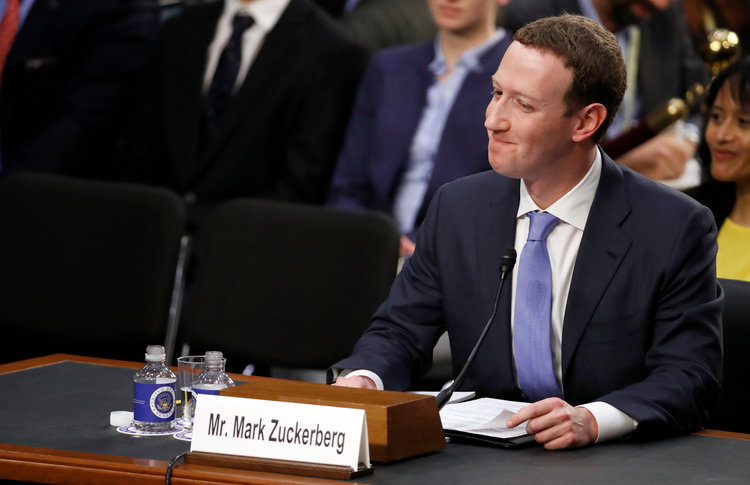
Facebook founder and CEO, Mark Zuckerberg, on Tuesday addressed the issues ranging from the platform and its subsidiaries’ outage that lasted for six hours on Monday, and the recent data leak that alleges that Facebook knows that its platforms are harmful, but chooses to ignore it because the social media platform prefers profit over safety.
The allegation has opened Facebook to a fresh senate probe. After the testimony of the whistleblower, Frances Haugen, a former Facebook product manager, the senate said the company has questions to answer.
In a statement titled, “I wanted to share a note I wrote to everyone at our company”, Zuckerberg explained what happened to Facebook services on Tuesday, and in a detailed counter-argument, refuted the allegation that his company chooses profit over public good.
Read his full statement below.
Hey everyone: it’s been quite a week, and I wanted to share some thoughts with all of you.
First, the SEV that took down all our services yesterday was the worst outage we’ve had in years. We’ve spent the past 24 hours debriefing how we can strengthen our systems against this kind of failure. This was also a reminder of how much our work matters to people. The deeper concern with an outage like this isn’t how many people switch to competitive services or how much money we lose, but what it means for the people who rely on our services to communicate with loved ones, run their businesses, or support their communities.
Second, now that today’s testimony is over, I wanted to reflect on the public debate we’re in. I’m sure many of you have found the recent coverage hard to read because it just doesn’t reflect the company we know. We care deeply about issues like safety, well-being and mental health. It’s difficult to see coverage that misrepresents our work and our motives. At the most basic level, I think most of us just don’t recognize the false picture of the company that is being painted.
Many of the claims don’t make any sense. If we wanted to ignore research, why would we create an industry-leading research program to understand these important issues in the first place? If we didn’t care about fighting harmful content, then why would we employ so many more people dedicated to this than any other company in our space — even ones larger than us? If we wanted to hide our results, why would we have established an industry-leading standard for transparency and reporting on what we’re doing? And if social media were as responsible for polarizing society as some people claim, then why are we seeing polarization increase in the US while it stays flat or declines in many countries with just as heavy use of social media around the world?
At the heart of these accusations is this idea that we prioritize profit over safety and well-being. That’s just not true. For example, one move that has been called into question is when we introduced the Meaningful Social Interactions change to News Feed. This change showed fewer viral videos and more content from friends and family — which we did knowing it would mean people spent less time on Facebook, but that research suggested it was the right thing for people’s well-being. Is that something a company focused on profits over people would do?
The argument that we deliberately push content that makes people angry for profit is deeply illogical. We make money from ads, and advertisers consistently tell us they don’t want their ads next to harmful or angry content. And I don’t know any tech company that sets out to build products that make people angry or depressed. The moral, business and product incentives all point in the opposite direction.
But of everything published, I’m particularly focused on the questions raised about our work with kids. I’ve spent a lot of time reflecting on the kinds of experiences I want my kids and others to have online, and it’s very important to me that everything we build is safe and good for kids.
The reality is that young people use technology. Think about how many school-age kids have phones. Rather than ignoring this, technology companies should build experiences that meet their needs while also keeping them safe. We’re deeply committed to doing industry-leading work in this area. A good example of this work is Messenger Kids, which is widely recognized as better and safer than alternatives.
We’ve also worked on bringing this kind of age-appropriate experience with parental controls for Instagram too. But given all the questions about whether this would actually be better for kids, we’ve paused that project to take more time to engage with experts and make sure anything we do would be helpful.
Like many of you, I found it difficult to read the mischaracterization of the research into how Instagram affects young people. As we wrote in our Newsroom post explaining this: “The research actually demonstrated that many teens we heard from feel that using Instagram helps them when they are struggling with the kinds of hard moments and issues teenagers have always faced. In fact, in 11 of 12 areas on the slide referenced by the Journal — including serious areas like loneliness, anxiety, sadness and eating issues — more teenage girls who said they struggled with that issue also said Instagram made those difficult times better rather than worse.”
But when it comes to young people’s health or well-being, every negative experience matters. It is incredibly sad to think of a young person in a moment of distress who, instead of being comforted, has their experience made worse. We have worked for years on industry-leading efforts to help people in these moments and I’m proud of the work we’ve done. We constantly use our research to improve this work further.
Similar to balancing other social issues, I don’t believe private companies should make all of the decisions on their own. That’s why we have advocated for updated internet regulations for several years now. I have testified in Congress multiple times and asked them to update these regulations. I’ve written op-eds outlining the areas of regulation we think are most important related to elections, harmful content, privacy, and competition.
We’re committed to doing the best work we can, but at some level the right body to assess tradeoffs between social equities is our democratically elected Congress. For example, what is the right age for teens to be able to use internet services? How should internet services verify people’s ages? And how should companies balance teens’ privacy while giving parents visibility into their activity?
If we’re going to have an informed conversation about the effects of social media on young people, it’s important to start with a full picture. We’re committed to doing more research ourselves and making more research publicly available.
That said, I’m worried about the incentives that are being set here. We have an industry-leading research program so that we can identify important issues and work on them. It’s disheartening to see that work taken out of context and used to construct a false narrative that we don’t care. If we attack organizations making an effort to study their impact on the world, we’re effectively sending the message that it’s safer not to look at all, in case you find something that could be held against you. That’s the conclusion other companies seem to have reached, and I think that leads to a place that would be far worse for society. Even though it might be easier for us to follow that path, we’re going to keep doing research because it’s the right thing to do.
I know it’s frustrating to see the good work we do get mischaracterized, especially for those of you who are making important contributions across safety, integrity, research and product. But I believe that over the long term if we keep trying to do what’s right and delivering experiences that improve people’s lives, it will be better for our community and our business. I’ve asked leaders across the company to do deep dives on our work across many areas over the next few days so you can see everything that we’re doing to get there.
When I reflect on our work, I think about the real impact we have on the world — the people who can now stay in touch with their loved ones, create opportunities to support themselves, and find community. This is why billions of people love our products. I’m proud of everything we do to keep building the best social products in the world and grateful to all of you for the work you do here every day.
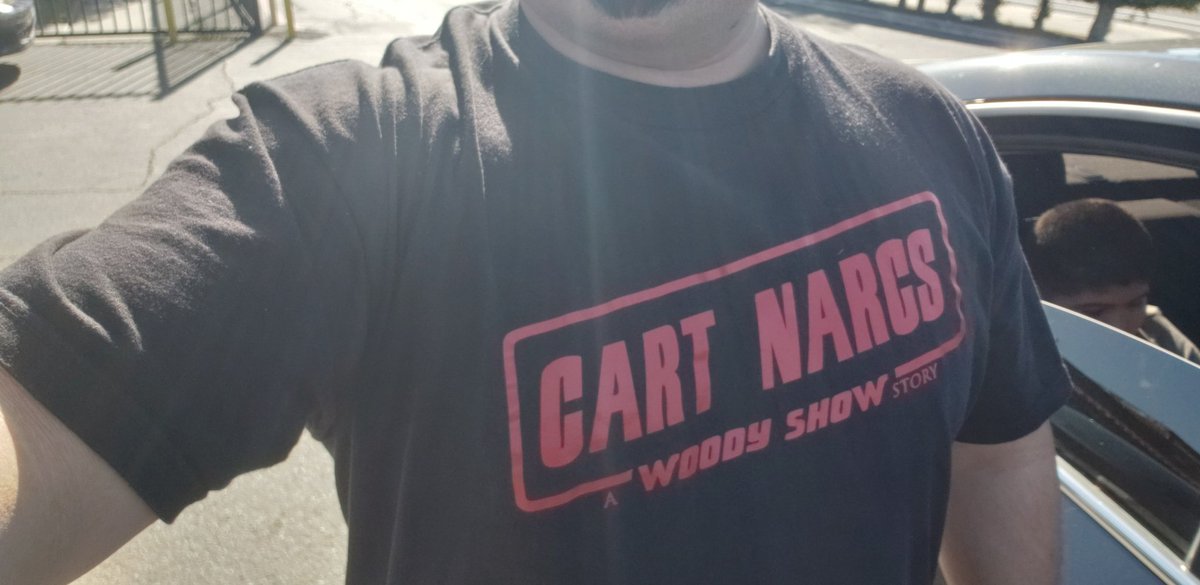
The CartNarcs; all you need to know about them
The Cart Narcs; all you need to know about them.
Do you know that there’s a new world order and enforcement agents whose job is to make sure you return shopping carts to the right place after use or face the brutal consequences?. They are called the Cart Narcs.
Yes, I agree with you that it is ridiculous.
The cart narcs is an organization which has cut across the world and gained much popularity and thousands of followers, supporters and fans across the social media platforms but with no official structure. Their aims, objectives, main functions and duties is just to get shoppers to return shopping carts to the appropriate place after shopping and carrying their wares with and not leave it lying around the mall parking spaces, roads, garages etc or dumping it off at wherever convenient for them.
Hilarious isn’t it?
They originated out of the propensity to instill new world order and change the narratives of people that it is not okay to leave shop carts around or anywhere after shopping and using it to take your items to the garage with the mindset of the shop staffs will take care of it.
Their offices are shopping mall garages, parks, roads close to malls or shopping centres etc they just hang around waiting for defaulter or ‘uncultured’ shoppers or members of the society; so look around and be very careful next time, they could be somewhere watching.
It is their argument that although there are people paid by the malls and shopping centers as mall staffs whose job description is to go around and collect carts used by shoppers and return them to the right place it should be but morality demands that you as a shopper should make the world a better place by always returning your carts to the right place after using it and not dumping it wherever you like or convenient for you and it is morally just to do so and also a civilized and cultured attitude.
They always compare leaving carts behind with the mindset of that there are people paid and whose job is to go around and collect carts and return them, so also there are people paid by the government to clean the streets, cities and the communities but that won’t justify anybody throwing dirts around, also there are people paid in organizations to clean and was toilets but morality and civility demands that you flush the toilet after use.
Be it noted that leaving carts behind or dumping it around or wherever convenient for you is not illegality unlawful, hence shoppers don’t break any law when they shop and dump their carts wherever convenient for them but it is only morally justifiable and thorough to return things to the appropriate places after use.
Let us deviate a bit, there’s a fine line between law and morality, what is moral may not be legal and what is legal may not be moral. For example, it is moral to flush toilets and clean up your shits after use but as disgusting as it may be, it is not illegal or unlawful if you don’t clean it up after use and nobody will charge you. It is legal (although controversial) in some jurisdictions of the world to date or even marry a person of same sense but sane morality frowns at that (dating or marrying of same sex).
Be it noted that the writer is not ignorant of the fact that morality is subjective, that is to say that what is moral in society A may be immoral in society B and vice versa. Moralities in most societies are based on the cultures, ethics, societal values and history of that particular society, therefore, what is moral in Nigeria may be laughed at or seen as silly in Switzerland and what is held to be moral in Switzerland may be frowned at in Nigeria.
Morality being the bedrock of laws, laws are also made in most cases to reflect the morality of the society which in turn reflects the societal values, ethics, principles, history and cultures of the society which as the society grows, gets more exposed and get more developed, it outgrows some of it’s laws or some of its moral standards hence the need for constant amendment of the law to reflect the current societal values and standards.
Sorry for driving you into this controversy of morality cum legality argument.
Let us come back to the cart narc guys, are you in support of what they do/ are doing or do you think it is unnecessary bullying and harassment of people/shoppers since their there modus operandi is to bully, harass and shame any shopper they catch that didn’t return his or her cart to the appropriate places after use, they even go the extra mile of pasting shameful stickers or shoppers cars or items and even video recording the person till the person either succumb to the harassment and return the cart to the right place or you zoom off with shame and anger. Do you think this can even work in our dear country, Nigeria?
Have it in mind that it is only moral to return your cart to the appropriate place after use but it is not illegal or unlawful to dump it around or wherever convenient for you and that’s the reason why the writer deviated to the morality cum legality sphere of argument.
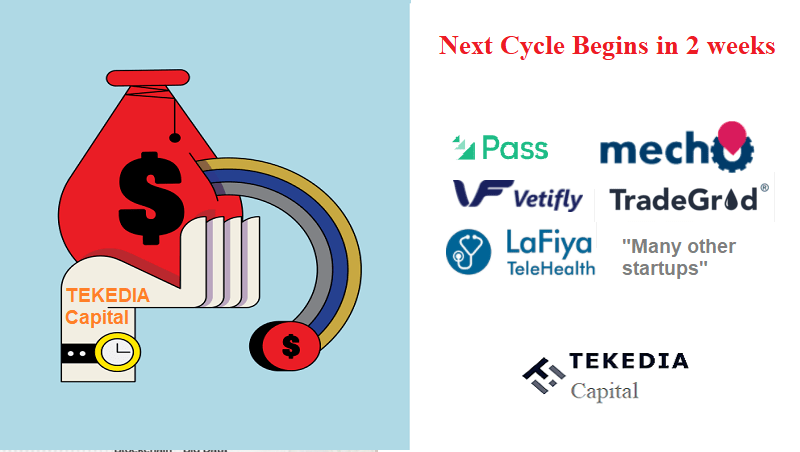
The Next Investment Cycle for Tekedia Capital Syndicate Begins in Two Weeks; JOIN
The next investment cycle for Tekedia Capital Syndicate begins in two weeks. I invite you to join us to own a piece of some of the most amazing startups, out and into Africa. Investors, citizens, investment clubs, companies, etc register to join our Syndicate to see our deal flow. At Tekedia Capital, we co-invest in tomorrow’s winners.