DD
MM
YYYY

PAGES

DD
MM
YYYY

spot_img

PAGES

Home Blog Page 554

12 US Senate Democrats Release Framework for Digital Market Structuring, as Kazakhstan Outlines Plan on Digital Assets

0

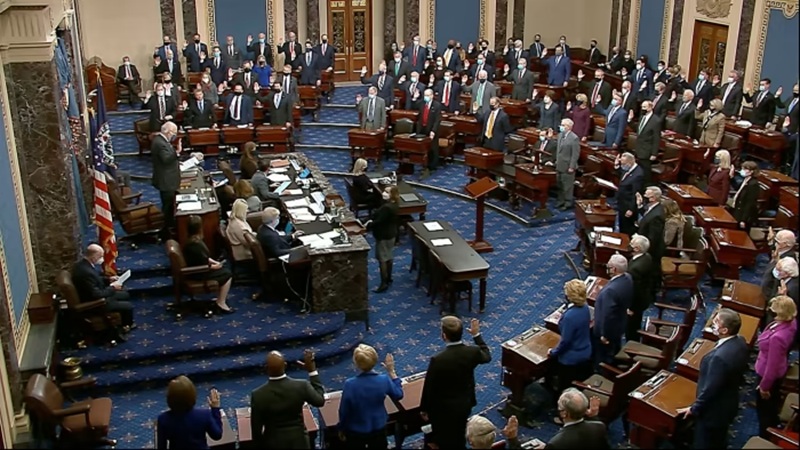
A group of 12 Senate Democrats, including Sens. Ruben Gallego (D-AZ), Mark Warner (D-VA), Kirsten Gillibrand (D-NY), Cory Booker (D-NJ), Catherine Cortez Masto (D-NV), Ben Ray Luján (D-NM), John Hickenlooper (D-CO), Raphael Warnock (D-GA), Adam Schiff (D-CA), Andy Kim (D-NJ), Lisa Blunt Rochester (D-DE), and Angela Alsobrooks (D-MD), released a comprehensive six-page framework for digital asset market structure legislation.

This move ends months of relative public silence from Democrats on the issue and signals their intent to engage in bipartisan negotiations with Republicans, who have been pushing their own versions of similar bills.

The framework emphasizes that the nearly $4 trillion global crypto market is too significant to leave unregulated, highlighting the need for rules that foster innovation while prioritizing consumer protection, financial stability, and preventing illicit activities.

The senators stated: “Digital asset technology has the potential to unlock new businesses and spur American innovation. But questions about digital assets’ place in the U.S. regulatory framework have hobbled both innovation and consumer protection.” They stressed that achieving a “strong, bipartisan outcome will require time and cannot be rushed,” contrasting with Republican calls for faster passage, such as Sen. Cynthia Lummis’s (R-WY) push to deliver legislation to President Trump’s desk by Thanksgiving.

Key Elements of the Seven-Pillar Framework

The proposal outlines seven core pillars to guide future legislation, focusing on regulatory clarity, enforcement, and ethics.

Closing the Gap in the Spot Market for Non-Security Digital Assets | Assign exclusive jurisdiction to the Commodity Futures Trading Commission (CFTC) over non-security tokens in spot markets, addressing current regulatory voids where no agency has clear authority. |

Clarifying the Legal Status of Digital Assets and Regulator Jurisdiction | Provide clear token classification guidelines, distinguishing securities (under SEC oversight) from commodities, and require regulators to issue guidance on how existing securities laws apply to digital assets.

Bringing Issuers into a Regulatory Framework, Mandate disclosures for token issuers, including details on project risks, tokenomics, and compliance with anti-money laundering (AML) rules, while integrating stablecoin issuers (building on the recently passed GENIUS Act) without allowing them to offer interest-bearing products.

Bringing Other Platforms into a Regulatory Framework | Require decentralized finance (DeFi) platforms, decentralized exchanges, and other digital asset trading venues to register with the Financial Crimes Enforcement Network (FinCEN) and comply with AML/KYC standards; incorporate existing platforms into SEC frameworks where applicable.

Blocking Illicit Finance | Strengthen tools to combat money laundering and terrorism financing in crypto, including enhanced reporting, international cooperation, and mechanisms to isolate non-compliant platforms while aiming to protect user financial privacy.

Preventing Corruption and Abuse | Impose restrictions on elected officials and their families from issuing, endorsing, or profiting from crypto projects while in office; require full disclosure of holdings. This pillar explicitly targets potential conflicts, such as those linked to President Trump and his family’s crypto ventures.

Ensuring Fair, Effective Regulation | Boost funding and staffing for the SEC, CFTC, and Treasury; mandate bipartisan rulemaking processes to avoid partisan dominance; streamline hiring for enforcement roles.

This framework overlaps with Republican proposals, like the Senate Banking Committee’s updated discussion draft from September 5, 2025, and the House-passed CLARITY Act (which advanced in July 2025 with 294-134 support), in areas like token classification and dual SEC/CFTC roles.

However, it diverges on stricter DeFi oversight, ethics provisions, and a deliberate pace, which could complicate negotiations. Critics like Sen. Elizabeth Warren (D-MA) have opposed lighter-touch Republican bills, arguing they enable corruption, but the 12 signatories (most of whom supported the bipartisan GENIUS Act for stablecoins) represent a more crypto-friendly Democratic bloc.

Implications for Crypto Regulation

This release marks a pivotal shift, as Democrats had largely ceded the conversation to Republicans in 2025. It paves the way for intensified talks in the Senate Banking Committee, potentially leading to a comprehensive bill by year’s end—though partisan divides on enforcement and timelines remain.

Industry observers, including Paradigm’s Justin Slaughter, see it as a “strong” foundation for bipartisan passage, especially after crypto groups like Fairshake spent $195 million influencing 2024 elections.

On X (formerly Twitter), reactions ranged from optimism about regulatory clarity to concerns over privacy impacts from anti-illicit finance measures. Overall, it underscores growing congressional consensus that the U.S. needs a unified framework to compete globally while safeguarding markets.

Kazakhstan Outlined Plans of Integrating Digital Assets into the Country’s Financial Framework

Meanwhile, on September 8, 2025, during his annual State of the Nation address in Astana, Kazakhstan’s President Kassym-Jomart Tokayev outlined ambitious plans to integrate digital assets into the country’s financial framework.

A key highlight was the proposal to establish a State Fund of Digital Assets (also referred to as the National Digital Asset Fund), which would serve as a strategic cryptocurrency reserve. This move positions Kazakhstan as a proactive player in the global crypto landscape, building on its established role as a major Bitcoin mining hub.

The fund will be created under the Investment Corporation of the National Bank of Kazakhstan. It aims to accumulate “promising assets” in the digital financial system, including high-potential cryptocurrencies like Bitcoin. The reserve will help diversify national holdings, hedge against economic volatility, and support long-term financial returns.

Initial funding could come from seized digital assets from criminal investigations, revenues from state-regulated mining operations, and potentially allocations from the National Fund (Kazakhstan’s sovereign wealth fund, valued at around $60 billion, primarily from oil revenues).

Tokayev directed the Agency for Regulation and Development of the Financial Market to draft comprehensive digital asset legislation by the end of 2025, with full implementation targeted for 2026. This new law will liberalize crypto markets, promote fintech innovation, integrate tokenized assets, and attract new participants while maintaining regulatory oversight.

It builds on existing efforts, such as the launch of the digital tenge in pilot mode in 2023, which is already used for National Fund project financing and will expand to budgets at national, local, and state-owned enterprise levels. The president proposed up to $1 billion in joint government and central bank investments to fuel high-tech and fintech sectors.

This includes channeling bank liquidity into productive economic areas, addressing criticisms that domestic banks favor low-risk investments over real-economy lending. The broader goal is to modernize the financial system, boost competitiveness, and reduce reliance on traditional commodities like oil and gas.

The “CryptoCity” Initiative

In tandem with the fund, Tokayev confirmed plans for CryptoCity in Alatau (a town in southeastern Kazakhstan near Almaty). This will be Central Asia’s first fully digitalized smart city, where residents and businesses can use cryptocurrencies for everyday payments—such as groceries, services, and utilities.

The project emphasizes advanced technology, favorable living conditions, and blockchain integration to showcase digital finance in action. It aligns with a pilot zone announced in May 2025 allowing crypto payments for goods and services, and it could attract IT specialists, developers, and investors to drive economic growth.

Kazakhstan currently holds about 13-14% of global Bitcoin mining hashrate (down from a 2021 peak of 27.3% after China’s ban), generating millions in tax revenue despite challenges like unlicensed operations straining the power grid. Crypto ownership among citizens has doubled in the last two years, reflecting growing adoption.

This announcement follows global trends, with countries like the United States (under President Trump’s executive order for a crypto reserve), Brazil, Indonesia, El Salvador, and Bhutan exploring similar sovereign digital asset strategies.

Kazakhstan’s International Financial Center (AIFC) in Astana already hosts crypto-friendly regulations, including the region’s first spot Bitcoin ETF launched in August 2024 and acceptance of stablecoins for regulatory fees.

However, nationwide crypto payments remain prohibited outside controlled environments to balance innovation with risk management, including warnings about rising online fraud and cybersecurity threats. Tokayev’s vision also includes establishing a dedicated Ministry for AI Development and a “Digital Code” to integrate AI, big data, and the platform economy.

These steps could solidify Kazakhstan’s role as a regional digital finance hub, potentially increasing global attention to its ecosystem while fostering economic diversification. The reaction on X (formerly Twitter) has been positive, with crypto influencers and news outlets highlighting the “snowball effect” of institutional adoption.

Uniswap Analysis Slows & Chainlink Forecast Stalls While BlockDAG Proves Adoption With Viral X10 Miner Rollout

0

Chainlink (LINK) has kept traders waiting for a clear move, with many questioning if the forecast signals real upside ahead. Meanwhile, Uniswap (UNI) is struggling under $10 even as decentralized exchange volumes remain high. Both projects have credibility, but right now, they are not showing tangible signs of adoption that buyers can act on.

BlockDAG offers a different picture. Its X10 miner is already in homes, running and being reviewed by users. Viral unboxing clips confirm the hardware is real, not a concept on a roadmap. With its presale fixed at $0.0013 ahead of the Singapore Deployment Event and a record $403M raised, BlockDAG (BDAG) is providing evidence at scale. For those asking what is the best crypto to invest in now, this mix of utility and community traction makes BlockDAG hard to overlook.

From Unboxings to Proof: BlockDAG’s X10 Miner

BlockDAG is reshaping expectations of presale projects. The X10 miner has moved beyond presentation slides and is now installed in real homes. Unboxing videos across social channels show the hardware plugged in and producing results. This rollout is not a trial run; it is a full adoption happening before a market listing. Such visible proof is rare, which is why many are calling BDAG the best crypto to invest in now.

Every miner shipped is also free marketing. With 19,600 units sold and shipments scaling to 2,000 each week, each setup strengthens legitimacy and demonstrates real-world use. At the same time, the presale has already surpassed $403M, with more than 25.9B coins sold. The coin’s current price is $0.03 in Batch 30, but the rollback to $0.0013 until October 1 offers a limited-time entry point. Early participants who joined at $0.001 are already seeing 2900% paper gains, underscoring the scale of demand.

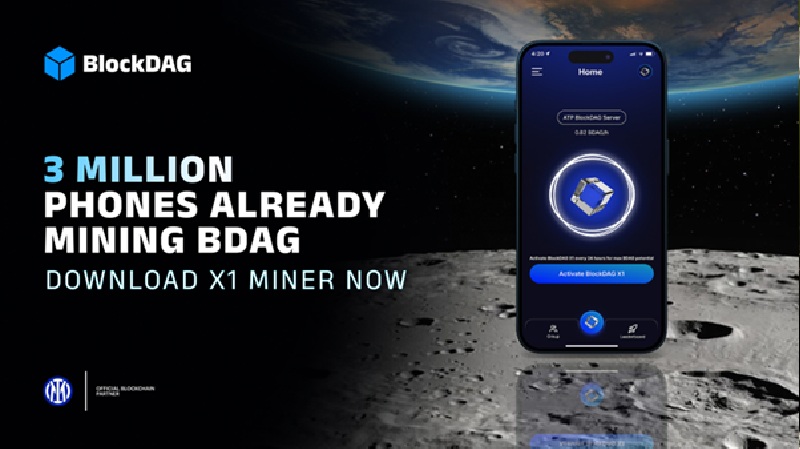
The ecosystem is also taking shape. The X1 Mobile Miner app has attracted over 3M users, and partnerships with Uniswap, Axelar, and Rarable extend reach into DeFi and NFTs. Hackathons in Africa and Asia are producing 30–50 projects per event, supported by grants paid directly in BDAG and USDT. Community activity is strong too, with 325K+ members and billboard campaigns in Tokyo, London, New York, and Las Vegas.

BlockDAG has also confirmed a Deployment Event in Singapore, setting the stage for the next phase of its roadmap. This mix of shipped hardware, community growth, and presale pricing sets BlockDAG apart. It is delivering results in real time and positioning itself as the best crypto to invest in now before its official exchange debut.

Chainlink (LINK) Forecast: Waiting for Breakout

The current Chainlink (LINK) forecast shows price action struggling to break out with conviction. LINK has faced repeated resistance after short-lived rallies, leaving it range-bound and testing trader patience. On-chain activity remains steady, as Chainlink continues to dominate the oracle space with integrations across DeFi platforms and blockchain networks. This consistency underlines its long-term importance, but it has yet to trigger immediate price momentum.

Analysts highlight nearby resistance levels that must be broken before sustained gains are possible. Until then, buyers remain cautious. Support is holding at familiar ranges, but unless a decisive breakout occurs, LINK may continue to drift sideways. Longer-term, Chainlink’s position as the leading oracle provider secures its utility and relevance, but short-term action keeps traders debating entry points.

Uniswap (UNI) Analysis: Holding Near Support

Uniswap (UNI) is trading around $9.45, slipping under $10 as it struggles to hold above resistance near $9.64. Technical signals remain mixed, with some short-term momentum showing buy interest while neutral RSI readings suggest indecision. Support is steady at $8.93, but UNI must reclaim $10–$12 to attract stronger buying. A push beyond that level could open the way toward $15–$18.60, though rejection could see prices fall toward $8.10.

Despite the technical uncertainty, Uniswap maintains its role as the top decentralized exchange. August trading volumes reached $143B, representing almost 40% of the DEX market. Governance activity is also in focus, with two key votes underway: one to create a Wyoming-based entity (DUNI) and another to expand Uniswap v3 to the Ronin chain. Both could influence adoption and market perception. Traders remain cautious, but UNI’s ecosystem strength ensures it stays central to discussions about the best crypto to invest in now.

Summing Up

The Chainlink (LINK) forecast still leaves traders waiting, while the latest Uniswap (UNI) analysis shows the token holding but not breaking higher. Both projects remain important, but neither is demonstrating adoption that is visible to everyday users.

BlockDAG is different. With the X10 miner shipped, 19,600 units sold, 3M users on its app, and a presale that has raised $403M, it is proving its utility before launch. Combined with its fixed $0.0013 presale price and 2900% ROI, BlockDAG is showing real traction. That combination of proof and access is why it continues to be named the best crypto to invest in now.

Presale: https://purchase.blockdag.network

Website: https://blockdag.network

Telegram: https://t.me/blockDAGnetworkOfficial

Discord: https://discord.gg/Q7BxghMVyu


Dogecoin Holds Ground, Pi Network Pushes Forward, BlockDAG Steals the Spotlight With 3M+ X1 Miners

0

The crypto scene is full of stories that keep gaining attention. Dogecoin (DOGE) is holding steady at key support levels, while Pi Network (PI) is looking to spark energy again with its planned mainnet launch. Both coins are drawing attention, yet they face challenges that could slow their path.

On the other side, BlockDAG (BDAG) is showing numbers that set it apart. It has already pulled in nearly $403 million through its presale, now sitting in Batch 30 with a listing price of $0.03.

The launch value has been set at $0.05, locking in clear growth for early entries. Over 26.1 billion coins have been sold, with more than 3 million users mining on the X1 Mobile Miner app. BlockDAG (BDAG) is also planning a major Deployment Event in Singapore on October 1, where the coin will be available at a special $0.0013 price for a limited time, along with the launch of BlockDAG Academy.

While Dogecoin and Pi Network push to rebuild momentum, BlockDAG’s mix of funding, adoption, and global reach shows it as the coin gathering the strongest pace heading toward 2025.

Dogecoin Nears Support But Big Holders Add Pressure

Dogecoin (DOGE) is currently priced close to $0.21 and resting on its 200-day EMA, a zone that many analysts call a major point for decision-making. Chart signals reveal a triangle structure, similar to patterns seen before Dogecoin’s rallies in 2016 and 2020. The coin now faces a squeeze, as it holds support while pushing against falling resistance, leaving open the chance of another breakout move.

But warning signs remain. Derivative reports point to negative funding rates and a jump in short positions, showing doubt among traders. At the same time, large holders have let go of about 250 million DOGE since late August, which adds extra selling weight. Analysts are eyeing support at $0.214 and $0.185, with barriers higher up at $0.253 and $0.370.

Market signals are split. The RSI is near 46, which shows weaker momentum, while the MACD has made a bearish cross. If the daily candle drops below $0.211, losses could stretch toward $0.181. Still, Dogecoin’s community keeps supporting the coin, giving it energy despite these hurdles.

Pi Network Pins Hopes On Mainnet Launch

Pi Network (PI) has struggled through falling prices, exits, and doubt, but crypto analyst Dr. Altcoin says its path does not depend on hitting $1 like a stablecoin. He explains that what matters most is building trust, adoption, and actual use in payments between people. If enough users and shops accept Pi for goods and services, he says, the price will find stability naturally through demand and supply, without needing a one-to-one tie to the U.S. dollar.

Pi’s real strength, he adds, lies in becoming the main unit of its own digital system instead of trying to copy traditional currencies.

Meanwhile, the Pi Network group is working toward its September 3 mainnet release with version 23.01, which introduces enhanced safety features and improved speed. If this rollout works as planned, it could bring back faith and give the project new life. Many now wait to see if Pi will finally match the long-time promises and prove its place in digital payments.

BlockDAG Rockets Ahead With $403M And Global Growth

BlockDAG is outpacing its rivals by achieving milestones that demonstrate genuine strength and adoption. The project has already raised close to $403 million, putting it among the biggest fundraising efforts in the market this year.

Its current presale has advanced to Batch 30, where the coin is listed at $0.03, marking a 2,900% surge since its starting phase. With a confirmed launch price of $0.05, BlockDAG provides clear growth momentum for early backers and shows no signs of slowing down.

Community numbers highlight how quickly interest is building. More than 26.1 billion coins have been sold so far, while the X1 Mobile Miner app has drawn over 3 million daily users from more than 130 countries. This easy-to-use mining system is fueling worldwide participation and building long-term network strength. In addition, over 19,000 physical miners have already been delivered, strengthening the system ahead of its official launch.

Looking ahead to future events, excitement is building for the upcoming mega Deployment gathering in Singapore on October 1. To celebrate the milestone, BlockDAG (BDAG) is offering the community a limited-time chance to secure coins at just $0.0013.

This bold move highlights the project’s confidence in its path toward mainstream adoption. Beyond events and pricing, the team is also focusing on learning tools with the launch of BlockDAG Academy, which helps new users understand blockchain and boosts awareness on a global scale.

With financial traction, wide adoption, and expanding education, BlockDAG is not just another coin chasing hype. Building a strong foundation is key to placing it at the front of the race as crypto eyes 2025.

Final Thought

Dogecoin and Pi Network show sparks of hope but also face barriers. Dogecoin must stay strong above $0.21 while resisting sell pressure from whales and overcoming mixed technicals. Pi Network is betting on its September 3 mainnet release and new upgrade to restore belief, but the project still must prove reliability and real-world use.

In contrast, BlockDAG is already showing action, not just promises. With $403 million raised, Batch 30 at $0.03, over 26.1 billion coins sold, and a launch price at $0.05, its progress is clear. Add in 3M+ X1 miners, the October 1 Singapore Deployment Event, BlockDAG Academy, plus the special limited-time $0.0013 offer, and it’s easy to see why BlockDAG is setting the pace as top crypto presale into 2025.

Presale: https://purchase.blockdag.network

Website: https://blockdag.network

Telegram: https://t.me/blockDAGnetworkOfficial

Discord: https://discord.gg/Q7BxghMVyu


Christie’s Shuts Down Dedicated NFT Division Amid Market Downturn

0

Christie’s, widely recognized as the world’s largest art auction house by sales volume, has announced the closure of its standalone digital art department, which primarily handled NFT (non-fungible token) sales.

This move integrates NFT and digital art offerings into the broader 20th and 21st-century art category, signaling a strategic pivot away from specialized NFT operations. While the auction house will continue to sell digital works, including NFTs, the decision reflects the cooling enthusiasm for NFTs in the traditional art world following years of market contraction.

Christie’s was a pioneer in legitimizing NFTs as fine art. In March 2021, it made headlines by auctioning digital artist Beeple (Mike Winkelmann)’s Everydays: The First 5,000 Days for a record-breaking $69.3 million—the first major pure NFT sale by a leading auction house.

This transaction, which exceeded estimates and drew global attention, helped propel the NFT market to a peak valuation of over $40 billion in 2021-2022. Christie’s followed up with other high-profile sales, such as Beeple’s Human One for $28.9 million in November 2021, and launched Christie’s 3.0 in 2022, the first fully on-chain NFT auction platform for a traditional auction house.

The platform facilitated sales of works by artists like Refik Anadol, Tyler Hobbs, and even Bitcoin Ordinals in 2024. The department, established in 2022, also explored Web3 integrations, including partnerships with platforms like OpenSea and a crypto-focused real estate team launched in 2023.

These efforts positioned Christie’s at the forefront of blending blockchain technology with established art markets. The closure comes amid a broader slump in the global art market and a sharp decline in NFT activity:

According to the Art Basel & UBS Art Market Report 2025, global art sales fell 12% to $57 billion in 2024, with auction house revenues dropping 20% to $23 billion. NFT-specific sales have been even more volatile, with a 2024 NFTevening report estimating that 96% of NFTs are now “dead” (i.e., worthless or illiquid).

While the NFT market saw a brief rebound in mid-2025 (with weekly sales hitting $115-170 million in July-August), activity has slowed to around $92 million per week by early September. High-profile platforms like those from Bybit, Kraken, and GameStop have also shut down their NFT marketplaces due to low trading volumes.

The decision follows the February 2025 appointment of new CEO Bonnie Brennan and aligns with cost-cutting measures. At least two staff members were affected, including Vice President of Digital Art Nicole Sales Giles, though one specialist remains to oversee integrated sales. A Christie’s spokesperson described it as a “strategic decision” to reformat digital art sales for efficiency.

Digital art advisor Fanny Lakoubay noted on X (formerly Twitter) that auction houses can no longer justify dedicated departments when NFT revenues lag behind traditional categories, despite occasional successes.

NFT collector Benji echoed this, calling it Christie’s “Kodak moment” and criticizing the house’s 25-30% commission rates as unsustainable compared to zero-fee Web3 platforms like Gondi. This isn’t isolated to Christie’s; rival Sotheby’s laid off multiple NFT staff in 2023 and has since scaled back, though it maintains a digital art presence through sales like its 2024 CryptoPunk auction for $66,000—far below 2021 peaks.

Implications for the NFT Art Market

Christie’s move underscores waning mainstream art-world interest in NFTs as a standalone category. While digital art will persist, it may lose the prestige of dedicated auctions, potentially pushing creators toward niche Web3 platforms.

NFTs aren’t vanishing; the market cap surged 40% to over $9 billion in August 2025, driven by Ethereum-based collections. Christie’s integration could still enable hybrid sales, blending physical and digital works.

The art sector is adapting to volatility, with focus shifting to AI-generated art and sustainable blockchain uses. However, without institutional backing like Christie’s, NFTs may struggle to regain their 2021 hype as viable fine art investments.

This development highlights the NFT boom’s fleeting nature: from revolutionary disruptor to integrated niche in just four years. For collectors and artists, it emphasizes the need for diversified platforms beyond traditional auction houses.

TRON Announces Deployment of USDD Stablecoin on the Ethereum Blockchain

0

Justin Sun, the founder of TRON and a prominent figure in the crypto space, announced the native deployment of USDD—TRON’s overcollateralized algorithmic stablecoin—on the Ethereum blockchain on September 8, 2025.

This move marks a significant expansion for USDD, which was originally launched on TRON in May 2022 by the TRON DAO Reserve, just before the infamous TerraUSD (UST) collapse that shook the stablecoin market. The Ethereum integration aims to leverage the network’s massive DeFi ecosystem, where stablecoin supply has recently hit a record $165 billion, to boost adoption and challenge established players like Tether (USDT) and USD Coin (USDC).

USDD is designed to maintain a 1:1 peg to the US dollar through overcollateralization and algorithmic mechanisms, backed primarily by TRON’s native token (TRX) after Sun removed approximately $726 million in Bitcoin collateral in August 2024.

At launch, USDD reported a collateralization ratio of 204.5%, emphasizing its overcollateralized nature to enhance stability. The Ethereum contract underwent a full audit by CertiK, a leading blockchain security firm, to address concerns about smart contract vulnerabilities.

The launch introduces several tools to facilitate seamless integration and attract users: Allows users to mint USDD directly on Ethereum and swap it 1:1 with USDT and USDC with minimal or no slippage. This mechanism is crucial for maintaining the peg and providing liquidity in DeFi protocols.

Starting September 9, 2025, Ethereum users can earn tiered rewards of up to 12% APY on USDD holdings, scaling down to 6% as adoption grows. Rewards accrue continuously and can be claimed every eight hours via the Merkl Dashboard. This incentivizes early adopters and positions USDD as a yield-bearing alternative to traditional stablecoins.

A savings version of USDD is planned, enabling users to earn interest through a decentralized system, further embedding it in Ethereum’s lending and staking ecosystems. USDD now spans 10 networks, including Binance Smart Chain (BSC), Avalanche, and Polygon, with cross-chain bridges from providers like Stargate Finance, Symbiosis, and DeBridge for interoperability.

Justin Sun celebrated the launch on X, stating: “The decentralized stablecoin USDD has finally arrived on Ethereum! From now on, everyone has a decentralized choice when it comes to stablecoins! USDD is growing! Swap for USDD and join mining activities with up to 12% APY!” This reflects Sun’s vision for USDD as a “decentralized alternative” in a market dominated by centralized issuers.

Entering the Stablecoin Battlefield

The stablecoin sector is booming, with total market capitalization exceeding $2.5 trillion as of September 2025, driven by DeFi growth, payments, and regulatory clarity. USDD enters this arena with ambitions to rival Tether, which holds over $169 billion in market cap (about 367 times larger than USDD’s ~$450-460 million).

Ethereum alone hosts over $80 billion in stablecoin liquidity, primarily in USDT, USDC, and DAI, making it a prime battleground. USDD’s TRON roots give it an edge in low-fee transactions—TRON’s ecosystem, including SunSwap (with $3B monthly volume) and JustLend (23% YoY borrowing growth), has seen strong activity.

However, its heavy reliance on TRX exposes it to volatility risks; a TRX price drop could pressure the collateral ratio. Past events, like USDD dipping to $0.983 during the 2022 Terra collapse, highlight these vulnerabilities. While the 12% APY and PSM could draw initial liquidity (early X posts note whales accumulating), USDD faces hurdles:

Liquidity depth on Ethereum lags behind competitors, and its small market share (0.3% of Tether’s) requires rapid growth. Algorithmic stablecoins remain under watch post-Terra, and Sun’s history (e.g., SEC investigations) adds skepticism.

High yields may not last; most Ethereum protocols offer 2-5% APY, raising questions about funding sources. Despite this, the launch aligns with TRON’s multi-chain push and could benefit from Ethereum’s $165B stablecoin surge.

If USDD builds deeper integrations and diversifies collateral, it might carve a niche—especially for yield-hungry DeFi users. As one X post put it: “Stablecoin war heating up with $450M vs $169B tether dominance… Don’t fade this!” For now, it’s a bold entry, but overtaking Tether will demand more than incentives.