DD
MM
YYYY

PAGES

DD
MM
YYYY

spot_img

PAGES

Home Blog Page 5546

CBN Postpones the Launch of E-naira – What Could Have Happened?

1

The Central bank of Nigeria (CBN) has postponed the much anticipated launch of its Digital Currency, the eNaira.

The disappointing announcement was made on Friday by the financial regulator’s spokesman, Mr Osita Nwanisobi, who explained that the planned launch has been canceled because it coincides with Nigeria’s 61st Independence Anniversary, which has many key activities that the e-naira’s unveiling could not get along with.

Last week, the e-naira website went up live to the excitement of Nigerians who couldn’t wait to see the platform power their digital currency transactions, making the news that the launch has been postponed, heartbreaking.

But explaining further on the development, Mr. Nwanisobi assured Nigerians that the e-naira project remains intact. He said the CBN and stakeholders have worked round the clock to ensure a seamless process that will be for the overall benefit of the customer, particularly those in the rural areas and the unbanked population.

Mr. Nwanisobi also explained that the decision to postpone the launch of the Central Bank Digital Currency (CBDC) is in deference to the mood of national rededication to the collective dream of One Nigeria.

The launch had been slated for October 1, which would have made it part of the Independence Day activities.

No new date was announced for the launch of the digital currency, which has got many wondering if there is more to it.

Could there more be to it?

On Tuesday, a cease and desist document sent to the CBN over the use of the name eNaira, was published online.

The document titled: “Infringement of Trademark & Violation of Corporate Name cease and desist Notification to the Central Bank of Nigeria,” signed by Olakule Agbebi Esq for Olakule Agbebi & Co., was reportedly sent to the apex bank, warning it to cease the use of the eNaira name.

The notice, which was sent on behalf of “ENAIRA PAYMENT SOLUTIONS LIMITED (RC 508500)” said the company has been incorporated since 7th April 2004, registered in class 36 and class 42.

The document stated that the scheduled launch of the eNaira is a threat and shows willful infringement of his client’s trademark. The notice also added that “ENAIRA PAYMENT SOLUTIONS LIMITED has now been exposed to damages, loss of business and loss of goodwill due to CBN’s infringement.

“For this reasons, our client has approached the Federal High Court in Suit No: FHC/AB/CS/113/2021 between ENAIRA PAYMENT SOLUTIONS LIMITED vs CENTRAL BANK OF NIGERIA to seek a restraining order including an order to restrain CBN from proceeding in the launch on 1st October 2021,”? the Notice stated. “In the interim, the CBN is hereby warned to cease and desist from using or purporting to use the name eNaira for its product or in any way,” it added.

It is therefore believed that the postponement of the CBDC launch is in connection with the unexpected issue of trademark infringement by the CBN. Many Nigerians are concerned that the central bank would ignorantly use a name registered by a business entity without their approval.

Ndubuisi Ekekwe To Keynote First Bank Fintech Summit 5.0

0

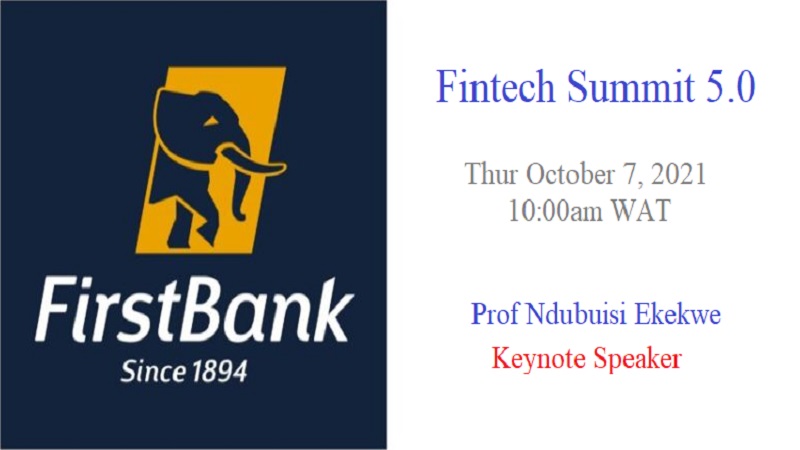
Good People, this a pre-event alert to block the date/time for the 5th edition of First Bank Fintech Summit. Yours truly will keynote this year’s one and I will be speaking on Open Banking and the grand unification of financial services across many dimensions. The Summit is an event geared towards bringing together the finest and most innovative subject matter experts who are at the forefront of digital innovation both locally and on the global stage. The schedule is here.

Vedantu, Indian Edtech Startup, Raises $100m to Become A Unicorn

0

As China’s crackdown on its tech industry extends to edtech, spooked investors appear to be turning attention to another huge market for online education – India.

Vedantu, an edtech platform has raised $100 million in a Series E round, making it the latest Indian startup to become a unicorn. The fund also marks another milestone for India’s online learning industry.

The round, which pushed its value to $1 billion up from $275 million early last year, was led by Singapore-headquartered — and Temasek-backed — private equity firm ABC World Asia.  The startup said the new round was “strongly” supported by existing investors Coatue Management, Tiger Global, GGV Capital and WestBridge.

Based in Bangalore, Vedantu offers live and interactive courses for students in grades six through 12. Through partnerships with Airtel and Tata Sky that enables it to offer its courses on their respective satellite cable TVs, the startup offers a large library of lessons at no cost to students.

In July, China extended its tech sector reforms to edtech, asking companies in the industry to go non-profit. The move has wiped over $100 billion in China’s online learning industry and forced investors to turn their attention to other places.

India, with a booming digital market that has been enthusiastically spearheaded by Prime Minister Nerandra Modi, has become a favorite destination for investors looking for edtech markets to put their money. The effects of COVID-19 in the country has also spurred the number of students who have switched to online learning, pumping the growth potentials of the edtech sector.

India has over 250 million school-age population, the largest in the world. The country’s edtech user base saw a sharp spike due to COVID: total users grew 2x, from 45 million in 2019 to 90 million in April 2020, analysts at Bernstein wrote in a report to clients earlier this month.

Vedantu says it has amassed over 35 million monthly active users, and as of last year, had 200,000 paying customers. Vamsi Krishna, co-founder and chief executive of Vedantu, told TechCrunch in an interview that paying subscriber figures is expected to more than double this year. The startup’s revenue has also grown more than 4x in the past one year, and the current annual run rate is around $65 million, he said.

While India booms with millions of students, the quality of education and its affordability have become two major challenges. Online tutors are now working to fix the challenges.

Besides Vedantu, India is home to other online learning platforms such as Unacademy and Byju’s, which operates an eponymous digital reading platform for kids aged 12 or younger.  The company, which in July, acquired Epic in a $500 million deal, holds the country’s most valuable startup status.

Krishna said Vedantu‘s goal is to fill the vacuum in India’s education sector not marketing, (explaining why the startup isn’t funded regularly) and it will keep innovating in its own pace to achieve that.

“You have to look at our genesis. We were already running a successful education venture. The reason why we started Vedantu was to solve the challenges teachers and students were facing. Having spent 16 years now in the education space, we know that creating a significant impact takes time. So our orientation has always been long-term,” he said.

Vedantu has organically amassed some users in over 47 additional countries, and has been looking for opportunities either in merger or acquisition, to expand its services.

“As long as you are able to innovate for students and deliver value, nothing can prevent you from creating a long-term sustainable company. You can’t afford to keep getting distracted with what others are doing and how their revenue or valuation is growing. This is what we have been telling our team from the beginning,” he said.

Per TechCrunch, analysts at Bernstein estimate India’s edtech market to be worth $126 billion by next year, up from $63 billion in 2016. Spending on the K12 education market is expected to jump to $55 billion by 2022 and the post-K12 education market is projected to hit $71 billion.

In a statement, Sugandhi Matta, chief impact officer at ABC World Asia, said, “Vedantu embodies our investment themes of providing better access to quality education and using digital technology to improve lives and livelihoods. In India, online education has the potential to extend the scope of ‘right to education’ to students in the underserved community and capture the ‘next half billion’ income group, representing over half of the country’s student population.

Vedantu said it plans to use the newly raised funds to expand its offerings aimed at students in grade one to five.

The Unicorns And Wealth of Africa

0

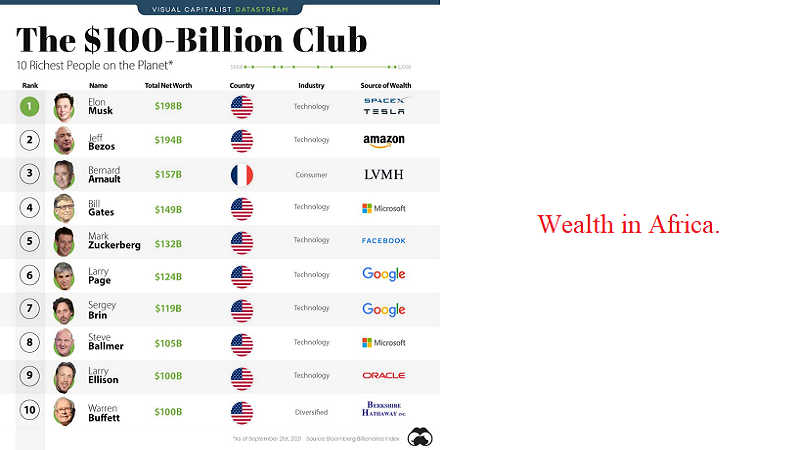
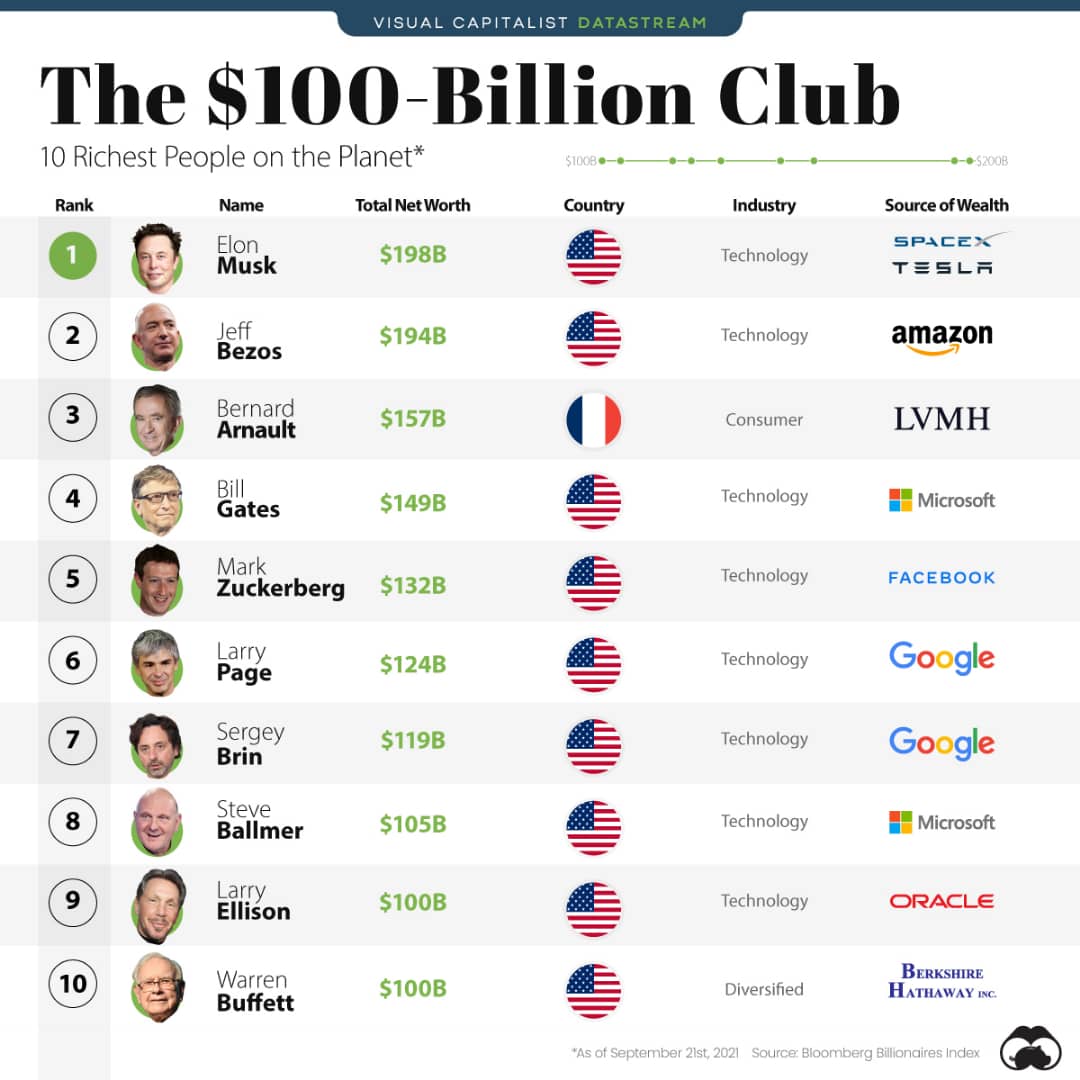
This is the global roll call and the reason why we started Tekedia Capital. Technology is the accelerant that will advance all industrial sectors because every business is increasingly a technology business. Africa* has five unicorns as I write: Interswitch, Andela,  Flutterwave, OPay, and Wave.

I expect this number to hit 15 by the end of 2023 (India has minted 28 so far in 2021). Andela is another non-fintech in that list after Jumia, an ecommerce, until it exited the private club. MENA’s Careem which Uber acquired was also in that club. Largely, by 2030, some of these founders will become the new $100 million club owners just as the people on this list.

Learn what we are doing at Tekedia Capital here.

Tekedia Capital offers a specialty investment vehicle (or investment syndicate) which makes it possible for citizens, groups and organizations to co-invest in innovative startups and young companies in Africa and around the world. Capital from these investing entities are pooled together and then invested in a specific company or companies.

We invest in mainly technology-anchored companies and are sector-agnostic which means those companies could be operating in any industry, including finance, real estate, education, health, logistics, etc. The opportunity is open for individuals in Africa, Africans in diasporas, global citizens in any place in the world, investment groups and organizations around the world.

The Message from ex-Central Bank Governor on Nigeria’s Economic Readiness

0

The ex-governor of the Central Bank of Nigeria, Alhaji Muhammad Sanusi, delivered this message during the closing ceremony of the Kaduna Investment Summit, according to Daily Trust.

Only eight of every 100 Nigerians who start primary school complete university.

“Globally, work is being redefined; 30 to 40 per cent of workers in developed economies will need to significantly upgrade their skills by 2030. And what are the major drivers of this redefinition? ICT and remote working, which we have seen even here with COVID-19.

“There is increased automation and artificial intelligence. Very soon, robot will take over work in most countries and those who would have job are those who operate the robots, manufacture the robots or service the robots.”

Alternative energy sources

“A few months ago, Germany was able to produce enough renewable energy for the entire country’s need. Today, we are having difficulties selling Nigerian oil. So, not only are we having problems producing, even when we produce, the market is not there.

“So, this is forcing a change, and for us a country that depends on oil, things need to change.”

Skill creation for the young people

“Data is one of the most crucial support that can be given to entrepreneurs for innovation,”

While calling on government to encourage market access, he said, “If Kaduna state government continues with its e-government plan, it will be a big market itself and it will encourage investment which are all knowledge economy aspiration and a shift in government spending to match the priority.”