DD
MM
YYYY

PAGES

DD
MM
YYYY

spot_img

PAGES

Home Blog Page 5553

Fighting Crimes in Africa via Tech Measures

0

In the contemporary global community, crimes have abruptly and obviously become prevalent in such a manner that one could boldly assert that they are swiftly becoming synonymous with the modern society otherwise known as the ‘digital age’.

As such uncalled and barbaric activities prevail unabated, it has conspicuously become imperative for the concerned authorities in every affected area to think inwards with a view to initiating new innovative mechanisms towards combating them.

Mobile technology such as tracking devices otherwise known as ‘trackers’, which has emerged as a powerful crime-fighting tool, has shown significant impact in recent years on most countries across the globe.

A tracker is specially programmed equipment meant to trace the actual location of a person or thing. However, it’s worth noting that devices like cell phones, computers, cameras, and what have you, can equally function as a tracker if adequately utilized.

Cell phones, particularly Smartphones, contain inbuilt mechanisms including Global Positioning System (GPS) among other location information that the various law enforcement agencies find valuable. Information like voice call history, text/multimedia messages, phonebook contacts, web browser history, and email, can tremendously help investigators to gather people’s aims and the occasions they have attended, thereby providing the required direction.

Tracking people via their mobile devices has been adopted by several agencies in most nations, and has become very much a part of most investigations because virtually every adult now possesses a cell phone. Cell phone records can identify calls made and received.

The cellular towers that were used in the conversation, data communication, as well as the Short Message Service (SMS), can as well be obtained.  The cell phone records hold latitude and longitude information that can be used as a historical reference to identify where the mobile device was at a particular period.

Similarly, citizens are advised to regularly send digital photos and videos of crimes in their custody to apt quarters. New technology allows sent images to be directly linked to the record of a related call, and be forwarded to emergency respondents on their way to the crime scene.

A good example of such technology is CrimePush, a multiplatform Smartphone app that allows users to report crimes effectively and at ease. It equally gives users the ability to forward multiple GPS-tagged distress messages to designated emergency contacts/quarters.

High-profile criminal incidents all over the world have proven beyond doubts how valuable mobile phone images can be during crime investigations. The bombings in the United Kingdom (UK), precisely London, in July 2005 marked a turning point in news coverage and the role of camera phone images.

Witnesses to the attacks used their cell phone cameras to record their experiences in the aftermath. Not only did it signal a new era of citizen journalism, but police in London were able to use the sent photos as clues towards tracking the terrorists that masterminded the bombings.

SMS is more discreet and safer in some circumstances to include burglaries and kidnapping. Several police departments in various countries have text-a-tip programs that allow people to send anonymous messages from their cell phones.

With a view to providing people with a confidential means of communication, SMSs are sent to a separate third-party server where identifying information is removed and assigned an encrypted alias to ensure callers’ anonymity.

The various security agencies on the African continent, especially the police, are required to fully employ the use of various tracking devices in issues regarding crimes. Technology is being developed and deployed by several criminals to perpetrate crimes, with the aim of leaving no, or little, digital footprint. This ranges from selling illicit goods on the internet to mass identity theft and credit card fraud.

Vehicle crime equally poses a dynamic challenge to these agencies. Vehicle crime investigators are invariably faced with ever-changing technology as well as regular introduction of new vehicle models. Modern vehicles are more like mobile computers constantly threatened by hackers. The police must take note of this fact and advance on it.

Digital forensics is a branch of science encompassing the recovery and investigations of materials found in digital devices including computers, cell phones, and cameras. The police will continue to be challenged to acquire the needed tools and training to perform competent digital forensic investigations, and keep pace with criminal activity.

On this premise, it has become pertinent for digital forensic departments to be designed in all police quarters, and such units ought to be sustained by continually providing the required equipment, manpower, and environment as time progresses.

Legislation can also be of help while discussing this new innovation. Hence, lawmakers of the various concerned countries ought to provide enabling laws, mandating all vehicles coming into their territories to bear micro-dotting technology. This would ensure that each vehicle contains approximately 1000 hidden markers that hold the identity of that vehicle, so that, in the event of the vehicle being stolen, it can be easily identified.

Importantly, the locations of the 0.5mm dots are not visible to thieves, thus cannot be altered by them. The police personnel should also be trained on how to identify data-dot technology. Continual in-service training would, therefore, be very helpful in this regard towards boosting staff confidence and competence.

The extant Cybercrime Acts in the countries under review should be reviewed by the present legislatures therein, and consequently implemented by setting up a special unit under the Police Force that would be in charge of crimes involving the internet.

Such a unit must possess all the needed devices and experts. The Nigerian Communications Commission (NCC), alongside similar agencies across Africa, is on its part expected to play a major role in crimes pertaining to the use of cell phones, thus the police must endeavour to collaborate with the commission.

The truth remains that, for Africa as a people to properly tackle all kinds of crimes, the relevant authorities must boast of various well-equipped sensitive units on digital investigations, cyber security, and/or electronic discovery, as the case may be.

As sophisticated crimes evolve on a daily basis in our present days’ society, it has conspicuously become imperative for all the relevant authorities to equally consider deploying sophisticated measures with a view to tactically tackling the societal menace no matter whose ox is gored.

At this juncture, I candidly implore the various law enforcement agencies and agents operating in various nations yet to embrace the current realities, to do so with all manners of seriousness and as a matter of urgency.

All the needed technicalities and techniques must be duly employed by the concerned bodies and individuals towards aptly arriving at the desired destination. It is not rocket science, but apt deployment of required tech measures as highlighted herein.

It’s indeed high time we did the needful in a bid to salvage our respective societies that have seemingly been overtaken by men of the underworlds. This can only be accomplished by jettisoning all forms of frivolities for priorities’ sake. 

Lesson from Anthony Joshua’s Loss to Oleksandr Usyk

1

AJ (Anthony Joshua) did not have a good fight yesterday! To a large extent, that was an upset.  Like his first loss, he might have underrated Oleksandr Usyk. Congrats to the Ukrainian who now holds the WBA, IBF and WBO world heavyweight titles. Usyk improves to 19-0 with 13 KOs while AJ drops to 24-2, with 22 KOs.

Boxing could be likened to a new entrant entering a new market with the title defender the incumbent, and upstart boxer the new entrant [Michael Porter’s forces – threat of a new entrant]. If you do not close that entrant in 18 months, you are done. Using Mike Tyson playbook (everyone has a strategy until you knock him), you must close your challenger within 3 rounds. If you do not, you could be worn down and lose the match.

Check great boxing matches, either you close quickly or your title is on the line. So, an entrant has to find a way to survive the first 3 rounds. For Floyd Joy Mayweather Jr., if he does not close out in 3 rounds, he changes to endurance boxing where he is one of the best in the world (the spirit no one can lay hands on!). Floyd’s boxing is a great example on how to protect a business castle  through a deepened moat. I like to watch him because of his speed to punch and also the ability to maneuver whatever anyone throws at him. No wonder he is undefeated!

AJ – we no dey carry last. Get back the belts. You remain a champion – it takes the killing of one tiger to be called the killer of tigers, the Igbo proverb says. You have already won many and will remain a champion any day.

Comments on LinkedIn Feeds

Comment: ”If you do not close that entrant in 18 months, you are done.” Interesting comparison between boxing and the Innovator’s dilemma, Ndubuisi Ekekwe ?. However, I am curious as to how you came about the ”fixed/definite” 18-months timeframe for incumbents to ”close” or overcome new entrants in an emerging market, especially as critics of Clayton Christensen (based on his book – The Innovator’s Solution) suggest that the social aspects of a market are dynamic and continue to change even if the new innovation/technology in question is somewhat ”fixed/definite”.

My Response: Pick any product category, look at those that survived by introducing a product to keep the moat strong. Those that waited excess of 18 months, typically struggle to catch up. Ford, Toyota/Tesla, Digital Cam/Kodak, etc, Union Bank Nigeria/ GTBank, etc

But look at those who kept their seats like P&G, JnJ, Facebook always respond in 6 months or earlier, etc. Pick sectors with radical innovators and impacts. My data is 18 months and that is what I tell company Boards. And I have tons of data to back that up, looking at introduction and response.

Dangote responds even faster (9 months if you watch). When Lafarge brought Michel and the man cut CEO wage by 10%, reduced staff cost by 49% and delivered 1,429% perfect profit, Dangote quickly closed and hired him. That was the right response!

The Covid-19’s 20% Job Loss Tragedy in Nigeria

0

It was really a tragedy for many families: “About 20% of full-time staff at formal and informal businesses in Nigeria lost their jobs in the heat of the Covid-19 pandemic in 2020. The startling figure is from a survey conducted by the United Nations Development Program (UNDP) in conjunction with the Nigerian Bureau of Statistics (NBS), who studied 2,964 businesses in every state in the country in order to understand the effect of the pandemic between the second and fourth quarters of the year.” The nation needs to ramp up initiatives to get these citizens back to work and more.

The full report here (PDF):

It is now over a year since the coronavirus outbreak was declared a global pandemic by the World Health Organization. COVID-19 has claimed over 4 million lives and infected over 200 million people worldwide. The pandemic’s impact has touched almost every aspect of modern life, upending public health systems, the global economy, travel, supply chains, community and social ties and how we work. Unemployment has risen, and the global economy shrank by 4.4% in 2020, according to International Monetary Fund (IMF) estimates. The vast majority of nations around the world entered into recessions, having experienced negative GDP growth.

Developing countries have suffered disproportionately due to the socio-economic fallout from the pandemic. Wealthier nations can afford to institute the crippling lockdowns and restrictions necessary at times to arrest the spread of the virus, and to support their populations so they can stay at home in an effort to limit community spread. Many developing countries however were often forced to rely on a mishmash of truncated measures to limit the fallout on populations already living in poverty or who rely on daily work for subsistence.

This report detail the ramifications of the COVID-19 pandemic. Disruption in operations was evident across enterprises with at least two thirds of businesses currently operating in the country having had to close down during the pandemic. The results also shed light on resistance to lockdown directives and regulation by the government, particularly among informal enterprises where a third continued to operate throughout the pandemic. Around one in ten businesses were still closed at the time of the survey.

With that 20% paralysis, unemployment has ramped up in Nigeria.

As Nigerians Await 5G Network

0

During the Federal Executive Council (FEC) meeting that took place in Abuja, Nigeria on 8th September 2021, presided over by President Muhammadu Buhari, a National Policy on the Fifth Generation (5G) Network was approved for the country’s Digital Economy.

The said policy was approved following the presentation by the Minister of Communications and Digital Economy, Dr. Isa Pantami, and its onward implementation reportedly takes immediate effect.

In view of this development, the National Frequency Management Council (NFMC) is expected to soon release the needed spectrum to the Nigerian Communications Commission (NCC) for the Mobile Network Operators (MNOs) – domiciled in the country – that meet all the required conditions.

The Technical Assistant on Information Technology to the Communications Minister, Mr. Femi Adeluyi – who disclosed this development in Abuja immediately after the Council meeting – reminded that the National Policy had been developed over a period of 2 years, due to the need for extensive stakeholder engagement as well as ensure adequate public awareness and sensitization.

He, therefore, notified that the stakeholder engagement was “thorough and multi-sectoral in nature”.  He also took into account the report of the 3-month 5G trials that commenced on the 25th November 2019, adding the report critically reviewed and studied the health and security implications of deploying the 5G network in Nigeria.

Mr. Adeluyi conclusively stated that the NCC, as the regulator of the telecommunications sector, would continue to engage stakeholders in a bid to develop the regulatory instruments required for the successful deployment of the technology in Nigeria.

It could be recalled that sometime in 2019, the Chief Executive of the Nigerian Communications Commission (NCC) Prof. Umar Danbatta disclosed that the agency had approved dedicated spectrum for trial deployment of the 5G network services in the country.

In his words, he acknowledged the evolving trends in the Information and Communication Technology (ICT) ecosystem, giving rise to such technologies as Internet of Things (IoT) applications and Smart cities and communities, among others, saying the NCC was well positioned to jump-start trial of the 5G deployment.

Prof. Danbatta further stressed that the recent licensing of seven infrastructural firms to deploy metro and inter-city fiber and broadband point of Access with a minimum capacity of 10Gbps across the 774 Local Government Areas (LGAs) of Nigeria, was in accordance with the “8-point agenda of the commission for the provision of ubiquitous broadband infrastructures” within the shores of the country in the “Next Level document”.

It’s not anymore news that a lot of misconceptions have been stuck into the mindset of an average Nigerian, hence this topic. Many have been made to believe that the 5G is nothing but a dead zone targeted to consume the entire human race within a shortest time frame. In other climes, most Nigerians are of the notion that the proposed network is just a politically-motivated missile meant to override the country’s socio-political space.

One inevitable fact we, as a people, must embrace is that technology has come to stay not just in Nigeria but across the global community, hence anyone who makes an effort to tag it a monster is really taking himself aback. Though it has done several wrongs, the rights emanating from its existence remain innumerable.

On the above note, it’s very pertinent and crucial to fully comprehend the meaning and essence of the 5G network. As the acronym implies, it’s a 5th Generation mobile network. It is dedicated to handle a much larger role than that of the already existing ones such as the 1G, 2G, 3G and 4G networks, respectively.

5G was introduced to elevate the mobile network to not only interconnect people, but equally interconnect and control machines, objects, or any form of devices. It’s meant to deliver new levels of performance and efficiency that would empower new user experiences and connect new industries.

The 5G network is meant to deliver multi-Gbps peak rates or faster speeds, ultra-low latency, massive capacity, coupled with more uniform user experience. It’s imperative to note that the 1G was designed to solely deliver analog voice, 2G for digital voice, 3G necessitated mobile data, whilst the 4G ushered in the era of mobile internet, which we are currently enjoying.

In summary, 5G is a new kind of network in the telecom sector. It’s a platform for innovations that won’t only enhance today’s mobile broadband services, but equally expand mobile networks to support a vast diversity of devices and services, as well as connect new industries with improved performance, efficiency and cost.

5G is, therefore, an advanced wireless technology that has begun wide deployment since 2019. It’s worth noting that, as at October 2019, over four million Koreans had access to the 5G network.

It’s equally amazing to comprehend that China has for long deployed over 100,000 base stations in her quest for 5G wide usage. Survey revealed that about 150 million 5G mobile subscribers were expected in the Asian country by 2020.

Leading international organisations, such as the World Health Organisation (WHO) and the International Telecommunications Union (ITU), alongside various independent medical experts, have confirmed that the deployment of 5G networks leave no adverse health effects and are safe.

It’s noteworthy that several countries have already commenced the deployment of 5G and are currently enjoying its numerous benefits. Some of these countries include the United Kingdom, United States, and Korea Republic, to mention but a few. Even on the African Continent, countries like South Africa and Lesotho have equally keyed in. This information is verifiable.

Technically speaking, reliable research indicates that the 5G network offers significant advantages over the current technologies. Some of its advantages include, but not limited to, much lower latency, higher bandwidth, greater device density, longer battery life for nodes and greater network flexibility.

On the other hand, the 5G network operates in a high-frequency band of the wireless spectrum, between 28 and 60 Gigahertz (GHz). It’s expected to add unlicensed frequencies such as the 3.5 GHz to its list of new frequencies for mobile use. This means a lot of bandwidth would be available to the teeming users.

The aforementioned factor signifies that the 5G won’t only boost ease of communication among telecom subscribers but equally expand the economic band or prospect of any country involved.

Since the 5G mobile network will soon apparently dominate the global telecom sector, Nigeria as an entity must therefore not act in abeyance than to concentrate on how best an effective and efficient 5G can be duly introduced and utilized in the Nigerian space.

As Nigeria, likewise other developing countries, is still trial-testing her technologies and securities toward creating and launching a wholesome environment for the 5G network, she must acknowledge the key parameters that require apt consideration and attention.

Like I have already pointed out in my previous analyses in various platforms and fora, at such a time like this, the authorities imbued with the powers to regulate and manage the telecom space must concentrate on the intricacies surrounding the technicalities and securities of the 5G network towards ensuring it isn’t hijacked by men of the underworlds.

They must, therefore, deploy the needed expertise and mechanism to avert any form of criminalities likely to emerge thereof. This very aspect, which is very crucial and inevitable, might require suitable legislation.

More so, it would interest – or perhaps shock you – to realize that over 70% of Nigerians are presently yet to key into the Fourth Generation (4G) Network, let alone the 5G. This is the reason the concerned bodies need to speed up action on awareness and sensitization.

5G has conspicuously come to stay, hence we must focus seriously on how to embrace and welcome it. But mind you, this cannot aptly be done if the needful isn’t duly considered.

MutiChoice Launches DStv Internet for Home Internet

1

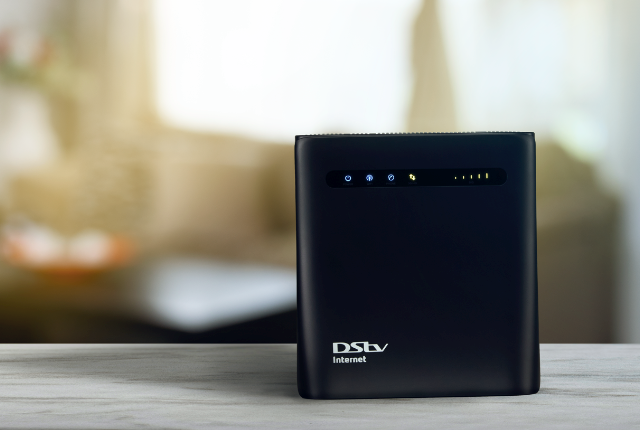
Hello DStv Internet. DStv Internet is a fixed-wireless-access service, which means that customers can now get connected to the Internet with a Sim card and Wi-Fi router – a perfect option for those who do not have fibre in their residential area but want to access the Internet regularly using various devices in their home. 

Sorry, that service is only available in South Africa. But expect in the near future for MutiChoice, parent company of DStv, to be offering internet services in Africa. Today, MTN is powering that in South Africa but I can assure that if Elon Musk makes progress in the continent with SpaceX Starlink satellite broadband solution, DStv which is already in homes via those cables will be a natural partner.

As that happens, expect a double play strategy where the DStv programming will remain the one oasis while DStv internet will cover the flanks for any frontal attack from Netflix. Yes, if you do not want to go through the air (satellite/TV) and prefer the web, I (DStv) want to assure you (Netflix) that I run an ISP (internet service provider) business and can pipe my preferred shows faster.

It is a great vision: buy your home internet and TV shows from one brand. Yes, bundling things work and DStv is deepening its moat on the web: watch that football game via another content provider and pay full fees on broadband, but bundle with DStv, the meter is turned off.

MultiChoice has launched DStv Internet with MTN as its network partner to provide Internet access to those who do not have access to fibre services.

The company said that the move is to diversify its offering as part of MultiChoice’s ongoing evolution from a traditional video entertainment business.

DStv Internet is a fixed wireless access service, and the company said it will use a SIM card and Wi-Fi router.