DD
MM
YYYY

PAGES

DD
MM
YYYY

spot_img

PAGES

Home Blog Page 5598

Commendable Playbook from Nigeria’s Securities and Exchange Commission (SEC)

1

I truly want to commend the Director General of Nigeria’s Securities and Exchange Commission (SEC),  Lamido Yuguda, for his nuanced, analytical and data-driven playbook in the SEC. If you have not noticed, note that the SEC has been more consultative and engaging. They continue to do regulatory work while making sure that the economy is exposed to potential opportunities of the future.

So the news that the SEC  has set up a fintech division to study crypto investments and products in order to come up with regulations is a welcome development. Notice that I have no interest in these domino called crypto investments.

Months after the Central Bank of Nigeria (CBN) ordered regulated financial institutions to cease all transactions in cryptocurrencies due to its volatility and lack of regulation, the Nigeria’s Securities and Exchange Commission (SEC) has come up with an idea that will enable it to regulate the new market.

Nigeria’s SEC Director General Lamido Yuguda said on Thursday it has set up a fintech division to study crypto investments and products in order to come up with regulations, Reuters reports.

“We are looking at this market closely to see how we can bring out regulations that will help investors protect their investment in blockchain,” he told Reuters in a virtual interview in Abuja.

According to the report, Yuguda did not provide a time frame for issuing regulations but said the SEC will step in with regulations once crypto is allowed within the Nigerian banking system.

My interest is that Nigeria must allow its young people to participate in a game their peers are playing globally while making sure such will not destroy their futures and the national economy. In other words, we need to regulate and not BAN or SUSPEND.

Yet, the SEC must elevate its status. I have noticed that the apex bank has banned startups it gave greenlights in some categories. So, if it can make rules and cannot defend the rules before other agencies, it may be better to stop issuing worthless permits!

Nigeria’s Securities and Exchange Commission (SEC) Establishes Fintech Division to Understudy Cryptocurrency

Nigeria’s Securities and Exchange Commission (SEC) Establishes Fintech Division to Understudy Cryptocurrency

1

Months after the Central Bank of Nigeria (CBN) ordered regulated financial institutions to cease all transactions in cryptocurrencies due to its volatility and lack of regulation, the Nigeria’s Securities and Exchange Commission (SEC) has come up with an idea that will enable it to regulate the new market.

Nigeria’s SEC Director General Lamido Yuguda said on Thursday it has set up a fintech division to study crypto investments and products in order to come up with regulations, Reuters reports.

“We are looking at this market closely to see how we can bring out regulations that will help investors protect their investment in blockchain,” he told Reuters in a virtual interview in Abuja.

According to the report, Yuguda did not provide a time frame for issuing regulations but said the SEC will step in with regulations once crypto is allowed within the Nigerian banking system.

The SEC has sought to regulate crypto on the grounds that they qualify as securities transactions. In February, the financial asset regulator said it’s embarking on research and consultations in collaboration with the CBN to develop a regulatory framework for Nigeria’s booming crypto market which was scuttled by CBN’s order.

“There is a lot of investment moving into the cryptocurrency market and the tendency is that it will reduce the amount of investments in the stock market.

“Part of the desire of the SEC even in the future is to provide a regulatory framework that will take care of all these challenges that we have seen internationally and the entire world is grappling with in terms of cryptocurrency and digital assets.

“For us at the SEC and capital market, it is something to look at, the world cannot be moving forward and we will be static, no. It is important for us to review, understand, appreciate and introduce regulations that will guide the movement of the market in this direction,” Timi Agama, Head of Department, Registration, Exchanges, Market Infrastructure and Innovation Department of SEC said then.

Nigeria’s cryptocurrency market has faced relentless opposition from the government after the country’s apex bank alleged the burgeoning market is plummeting the naira, Nigeria’s fiat.

The CBN’s order, which forbids financial institutions in Nigeria from carrying out crypto-related transactions, pushed many crypto traders to Peer to Peer (P2P) platforms, drastically reducing the country’s huge crypto trading volume.

Before the CBN’s order, Nigeria ranked top among the countries using cryptocurrency in the world, having only the United States ahead. The crypto market has since grown above $2 trillion in value as more countries and institutions embrace the digital asset.

Investment opportunities in Nigeria have been greatly stymied by the government’s opposition to cryptocurrency, especially for youths who had found employment in the trade.

Yuguda said SEC has been in talks with the central bank, part of which led to the launch of the country’s digital currency, e-naira.

Now, the commission is seeking to work with fintech firms to boost the marketing of domestic securities to prevent capital flight.

He said the SEC is looking to boost savings through investment schemes, which currently have over 4 trillion naira ($9.7 billion) under management split between public and private fund managers. Yuguda said the regulator has asked private managers to put in place custody arrangements to protect investors.

However, concerns remain if the government, through the CBN, will allow anything related to cryptocurrency to be legally traded in Nigeria like before. The central bank’s development of e-Naira suggests the government wants only digital assets it can control.

The CBN said it made the decision to restrict the use of cryptocurrency to protect the naira, and to stop those funding terrorism via cryptocurrency. The apex bank had last month blocked the accounts of six fintech firms for alleged illegal forex and cryptocurrency transactions that it said undermines the naira.

WhatsApp Handed A €225m Fine As Europe Tackles Private Data Law Breaches

0

As Europe tightens its grip on antitrust regulations, many tech companies are beginning to reckon with the costly awakening. Apple, Google, Amazon and Microsoft have all had a foretaste of what the future will look like in Europe where there is no room for privacy and competition violations.

Europe is making a statement as it prepares to rein in on the excesses of tech companies, forcing them to understand its antitrust language. WhatsApp is the latest example of the bloc’s new approach to antitrust cases. The messenger app has been fined €225m by Ireland’s data watchdog for breaching privacy regulations.

The Dublin-based Data Protection Commission (DPC) announced the decision on Thursday after a three-year investigation into the messaging app, ordering WhatsApp to remedy its policies to protect personal data.

It is the largest fine ever from the Irish DPC, and the second-highest under EU GDPR rules.

The watchdog said WhatsApp had committed “severe” and “serious” infringements of the general data protection regulation (GDPR), a landmark rule on transparency that became enforceable in 2018.

“This includes information provided to data subjects about the processing of information between WhatsApp and other Facebook companies,” it said in a statement.

WhatsApp’s parent company Facebook, has its EU headquarters in Ireland, and the Irish regulator is the lead authority for the tech giant in Europe. WhatsApp said it disagrees with the decision, calling it “entirely disproportionate” and said it plans to appeal.

Per Guardian, in the 266-page ruling the commissioner, Dixon said the company provided only 41% of prescribed information to users of its service. Non-users – whose messages sent on other apps could be forwarded to the platform by WhatsApp users – got no information, denying them the right to control their personal data.

Four “very serious” infringements violated the core of GDPR, said Dixon. “They go to the heart of the general principle of transparency and the fundamental right of the individual to protection of his/her personal data which stems from the free will and autonomy of the individual to share his/her personal data in a voluntary situation such as this.”

The violations affected an “extremely high” number of people, said the watchdog.

In response to the ruling, WhatsApp said in a statement it “is committed to providing a secure and private service. We have worked to ensure the information we provide is transparent and comprehensive and will continue to do so. We disagree with the decision today regarding the transparency we provided to people in 2018 and the penalties are entirely disproportionate.”

The fine relates to an investigation which began in 2018, about whether WhatsApp had been transparent enough about how it handles information. The issues involved were highly technical, including whether WhatsApp supplied enough information to users about how their data was processed and if its privacy policies were clear enough.

GDPR rules allow for mammoth fines of up to 4% of the offending company’s global turnover. Earlier fine proposed by Dixon when she finished her investigation into WhatsApp last year was much lower, ranging from €30 to €50m.

The Irish DPC said it had submitted its decision to other national data authorities, as required under GDPR, “following a lengthy and comprehensive investigation”, and received objections from eight countries, including Germany, France, and Italy. Eight data regulators in other EU countries rejected that.

The issue was referred to the European Data Protection Board (EDPB), which oversees the GDPR. It made a binding ruling in July, asked the Irish DPC to tweak its finding, “reassess” its proposed fine of €30-50m and amend its decision “by setting out a higher fine amount”.

“This decision contained a clear instruction that required the [Irish data protection commission] to reassess and increase its proposed fine on the basis of a number of factors contained in the EDPB’s decision and following this reassessment the DPC has imposed a fine of €225m on WhatsApp,” Dixon’s office said.

“In addition to the imposition of an administrative fine, the DPC has also imposed a reprimand along with an order for WhatsApp to bring its processing into compliance by taking a range of specified remedial actions.”

While many have been critical about the efficacy of the DPC’s probes, the reviewed fine has been widely acceptable.

This “shows how the DPC is still extremely dysfunctional”, privacy campaigner Max Schrems said, welcoming the decision.

“The DPC gets about 10,000 complaints per year since 2018 – and this is the first major fine,” he said.

And because of WhatsApp’s planned appeal, “in the Irish court system, this will mean that we will see years before any fine is actually paid”.

Amazon is the only company that has been fined more for breaking GDPR rules. In July, Luxembourg’s regulator fined the e-commerce giant €746m for what it said was non-compliance with data-processing laws.

WhatsApp, unlike many other social media apps, doesn’t sell ads, limiting its use of consumers’ data. Being fined €225m for misuse of data means there is no sacred cow in GDPR’s push to protect private data in Europe.

Tomorrow Is Graduation Day for 5th Edition of Tekedia Mini-MBA

0

Dear Member,

Let me begin by congratulating you for completing this academic excursion with Tekedia Institute. I am very confident that your business capabilities have been deepened, and that you are ready to go into the markets, and advance the wealth in nations.

We thank you for joining us for the 5th edition of Tekedia Institute Mini-MBA. At 7pm WAT tomorrow, we will bring this edition to a closure (Zoom link in the Board).  On behalf of our Faculty, staff and the entire community, thank you for choosing Tekedia Institute for your learning journey.

From today, you are part of the Tekedia alumni community (add it on LinkedIn profile). Yes, today does not end the knowledge excursion; this is just the beginning of this co-learning and co-advancement relationship.

We will be back with Tekedia Innovation Week and Tekedia Career Week later in the year. Sat, Sept 4 | 7pm WAT | It’s Graduation Day

Regards,

Tekedia Team

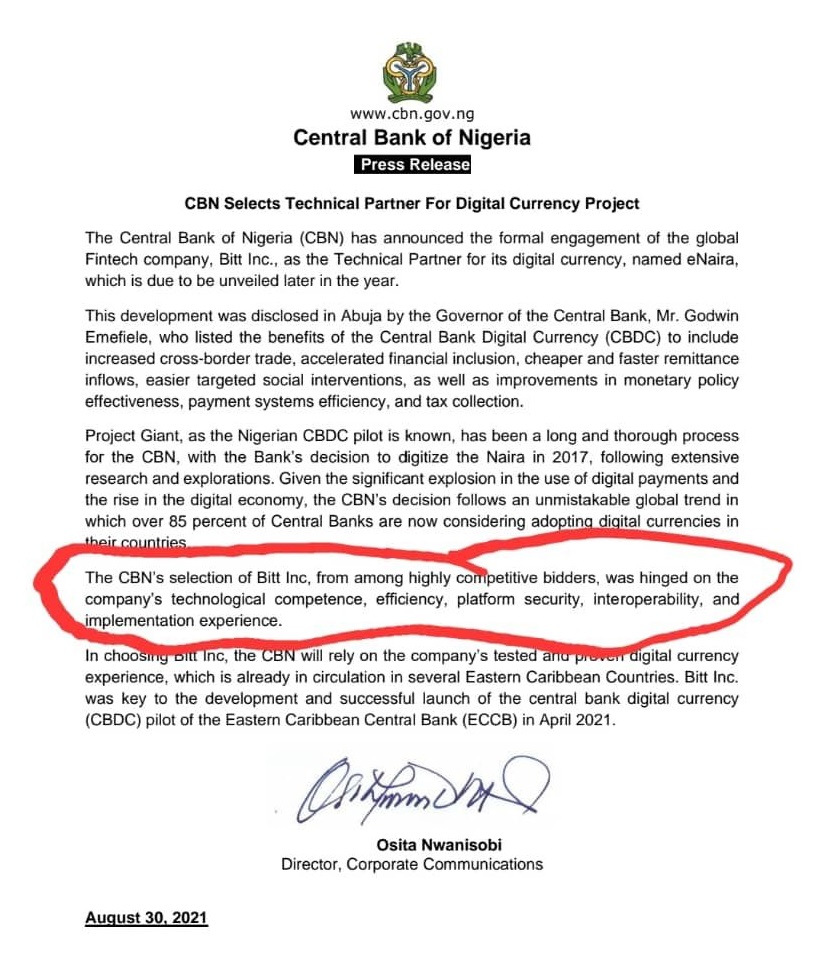
The Central Bank of Nigeria (CBN)’s Bitt Inc Appointment for eNaira

6

Nigeria does not challenge its young people. I am not sure how we can rise as a nation if we do not change that playbook.  After my well-received interview on the NTA, a senator called me on one statement I made therein. I have noted that Nigeria lost an adjacent war,  when we failed to use the paralysis of Boko Haram and Insurgency to build a security sector which could export tools, know-how, technologies, etc at least to other African nations. 

So, we fought the war and are still fighting,  but no local economic capabilities have been built from that war. My postulation was asking the military to spend 20% of all non-payroll budgets on local companies. Possibly, that would have seeded a new sector. But nothing like that: we get the money from the federal budget, and we send it to France, Israel, Turkey, etc.

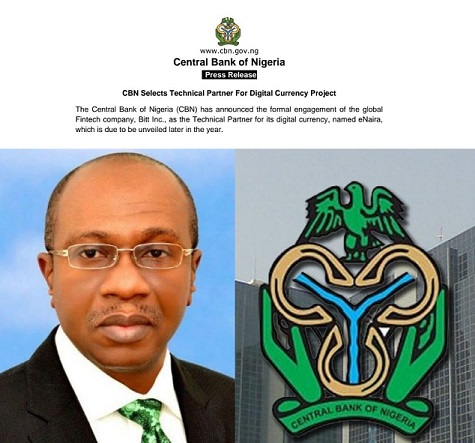
Now, take that thinking to the evolving eNaira: the Central Bank of Nigeria (CBN) has chosen Bitt Inc, a company in the Caribbean as a technical partner. That was another missed opportunity. While I understand the technical challenges, and the necessity of speed, the fact remains that the pockets of startups which went down after the CBN cryptocurrency technical ban, could have provided technical capabilities for this project. Today, we have to go to the Caribbean (a great place of course) to get experts!

Just think about it: if the military commits to spend 20% of its non-payroll budgets on local companies providing services to the defence sector, many Nigerians in Boeing, Raytheon, etc will resign and come home to set up feeder companies because there is an assured market of billions of dollars. If CBN follows that roadmap, there are Nigerians who will come along for its project, just as India is doing by building its own tools with its own people. 

You cannot be fighting for Naira in the forex market when we continue to import technical partnership in areas Nigerian companies and Nigerian people can be given opportunities. It is not only factories that must source raw materials internally, CBN and government agencies have obligations to do so.