DD
MM
YYYY

PAGES

DD
MM
YYYY

spot_img

PAGES

Home Blog Page 56

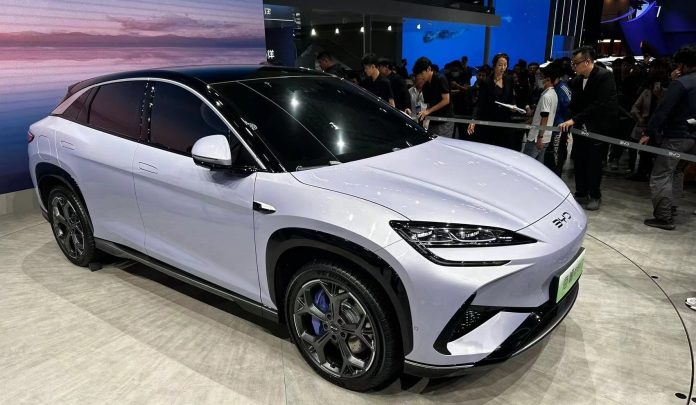
BYD’s Sales Suffers Decline In China, Pushing Tesla Rivalry to a New Phase as Overseas Push Masks Eroding Edge

0

Sales growth at BYD slowed sharply in 2025, underlining mounting pressure on China’s largest electric vehicle maker as intensifying competition at home and signs of a fading technological edge begin to weigh on its dominance.

The sharp deceleration in sales is more than a China-only story. It marks a turning point with implications for the global electric vehicle market, where competition is intensifying, margins are thinning, and the long-simmering rivalry between BYD and Tesla is taking on a more complex, global character.

The Chinese automaker said full-year sales rose 7.73% to 4.6 million vehicles, its weakest growth in five years. December sales fell 18.3% year-on-year, extending a four-month slide and marking the steepest monthly drop in nearly two years. The slowdown followed BYD’s decision to cut its 2025 sales target by 16%, an acknowledgment that domestic demand had weakened sharply from mid-year amid fierce competition from Geely, Leapmotor, and other fast-moving rivals.

At home, the data point to a market that has entered a more mature and unforgiving phase. Price cuts, once a lever to rapidly expand market share, are now yielding diminishing returns. BYD’s decision in May to slash prices across more than 20 models triggered a selloff in Chinese auto stocks and prompted Great Wall Motor’s chairman to warn publicly that China’s auto industry was in an “unhealthy” state. That comment captured a broader concern: China’s EV market, the largest in the world, is becoming oversupplied, with too many players chasing slowing demand.

Chinese media outlet Southern Metropolis Daily reported that BYD chairman Wang Chuanfu told investors in December that the company’s domestic struggles reflected a weakening of its technological leadership. Wang said BYD would roll out major innovations in 2026, a signal that management believes the next phase of competition will hinge less on price and more on differentiated technology.

Over the past year, BYD has already pushed hard on features. It introduced advanced driver-assistance systems on vehicles priced below $10,000 and launched models boasting ultra-fast charging. However, rivals quickly matched or undercut those moves, eroding BYD’s advantage and forcing it into a margin-sapping price war. The pressure has been significant enough that BYD slowed production and delayed capacity expansion in mid-2025, according to Reuters, a notable shift for a company long defined by relentless scaling.

These dynamics matter globally because China has been the engine of EV growth worldwide. A cooling Chinese market increases the incentive for domestic champions like BYD to look outward, exporting both vehicles and competitive pressure to Europe, Southeast Asia, Latin America, and beyond.

That shift is already underway. BYD’s overseas sales surged 150.7% in 2025 to just over 1 million units, becoming the company’s main growth driver. Europe, in particular, has emerged as a key battleground. BYD’s competitively priced models have gained traction as consumers grapple with high inflation and rising interest rates, conditions that favor lower-cost EVs over premium offerings.

This is where the implications for Tesla become most pronounced. In 2025, BYD sold 2.26 million electric vehicles, positioning it to overtake Tesla in annual EV sales for the first time. Tesla was expected to deliver about 1.64 million vehicles, an 8.3% decline from the previous year. The crossover is symbolic, highlighting a shift in the center of gravity of the EV market toward manufacturers that can deliver scale at lower price points.

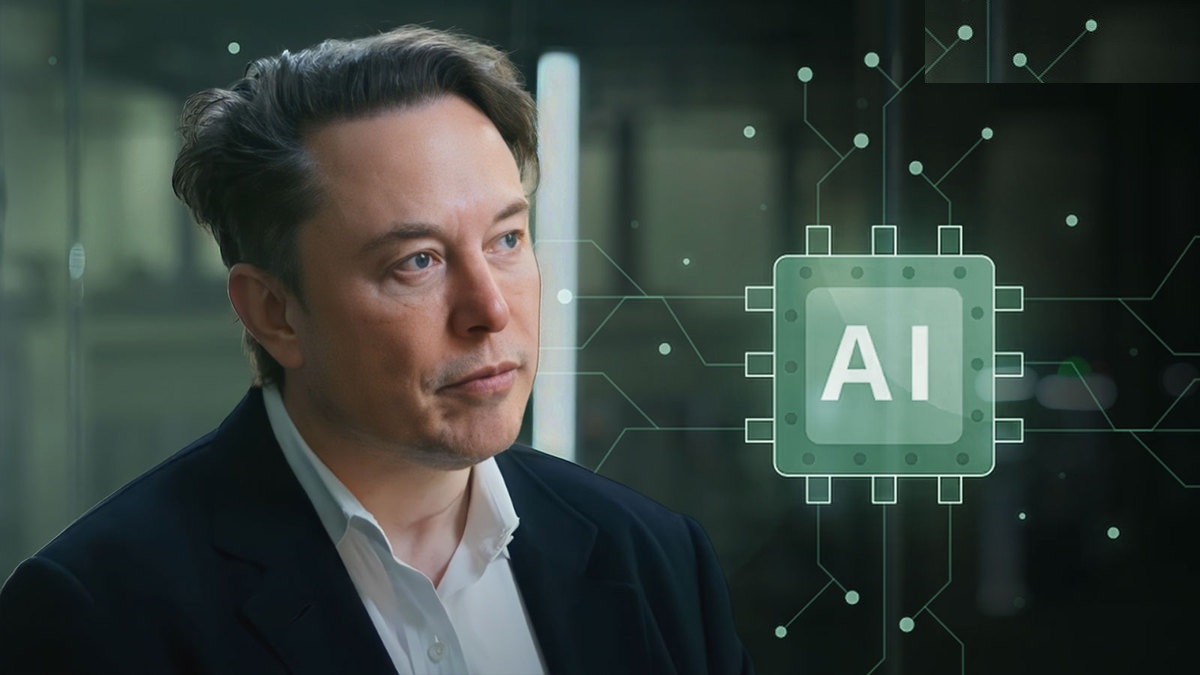
Tesla’s strategy, however, is diverging sharply from BYD’s. Elon Musk has deprioritized plans for a mass-market $25,000 EV, instead focusing Tesla’s future on artificial intelligence, full self-driving software, and robotaxis. Musk has said these technologies, rather than vehicle volume alone, will define the next era of automotive competition.

BYD, by contrast, remains firmly committed to volume, vertical integration, and aggressive pricing, backed by control over key parts of its supply chain, including batteries. That approach gives BYD resilience in a global market where affordability is becoming more important, particularly as governments scale back EV subsidies and consumers become more price-sensitive.

The rivalry is therefore no longer just about who sells more cars. It reflects two competing visions of the EV future. Tesla is betting that software, autonomy, and AI-driven services will justify higher prices and unlock new revenue streams. BYD is betting that scale, cost control, and steady incremental innovation will win over mass-market buyers across multiple regions.

But BYD’s domestic slowdown now introduces a note of caution into that strategy. Margin pressure at home could limit how aggressively it can price vehicles abroad without hurting profitability. At the same time, intensifying scrutiny in Europe and the United States over Chinese EV imports, including tariffs and trade investigations, could complicate its overseas expansion.

Still, BYD’s ability to offset weakness in China with explosive growth abroad underscores how competitive the global EV market has become. The rise of BYD as a credible global Tesla rival reinforces the reality that competition is no longer coming only from Silicon Valley or Detroit, but from Chinese manufacturers willing to fight on price, scale, and speed.

The EV industry is entering a more demanding phase as 2026 approaches. Growth is slowing in key markets, technology advantages are narrowing, and the battle is shifting from early adoption to mass-market sustainability. BYD’s stalling momentum at home and accelerating push abroad capture that transition — and set the stage for a more intense, globally consequential rivalry with Tesla.


ByteDance Prepares $14bn Nvidia Chip Splurge as AI Ambitions Collide With China–U.S. Tech Politics

0

ByteDance is preparing to spend about 100 billion yuan ($14 billion) on artificial intelligence chips from Nvidia in 2026, a sharp increase from roughly 85 billion yuan this year, according to people familiar with the matter who spoke to SCMP.

The proposed spending, which underscores both the scale of its AI ambitions and the strategic importance of access to U.S. chip technology, hinges on whether Nvidia is ultimately allowed to sell its H200 graphics processing units to Chinese customers, a decision that remains subject to regulatory approval in Beijing despite Washington recently easing restrictions on the chip.

The budget, sources cautioned, could still change depending on policy outcomes and market conditions.

The planned outlay forms part of ByteDance’s broader push to dramatically expand capital expenditure on artificial intelligence next year. The Beijing-based company, which is privately valued at about $500 billion, is preparing to lift total AI investment to as much as 160 billion yuan in 2026, according to a Financial Times report earlier this month.

At the heart of the strategy is ByteDance’s surging demand for computing power across its sprawling ecosystem, which includes TikTok and Douyin, its rapidly growing cloud business Volcano Engine, and its expanding suite of large language models.

Volcano Engine, ByteDance’s enterprise cloud arm, is set to become the exclusive AI cloud partner for China Central Television’s Spring Festival Gala, the most-watched television broadcast in the country. The partnership highlights how deeply embedded ByteDance’s infrastructure has become in high-profile national platforms, further intensifying its need for reliable, large-scale AI compute.

The company’s chatbot, Doubao, illustrates the pace of that growth. Doubao is now processing more than 50 trillion tokens per day this month, up from just 4 trillion tokens in December 2024. Tan Dai, president of Volcano Engine, recently said the platform has served more than 100 corporate clients, collectively processing over 1 trillion tokens to date.

Alongside its reliance on Nvidia, ByteDance is working to reduce long-term exposure to supply constraints and geopolitical risk by building internal semiconductor capabilities. Its in-house chip design unit, which employs around 1,000 staff, has made progress on a processor that matches the performance of Nvidia’s H20 chip — a China-tailored product — but at a lower cost, according to one of the sources.

The H20 was designed by Nvidia to comply with earlier U.S. export controls before being blocked, and its absence has accelerated efforts by Chinese firms to develop domestic alternatives. ByteDance is not alone in this push. Other Chinese technology groups are pursuing similar strategies to gain greater control over chip supply, pricing, and long-term planning.

Beyond processors, ByteDance has also been investing in memory technologies, including high-bandwidth memory, through a combination of internal research and equity stakes in specialized start-ups. These components are critical for training and running large AI models efficiently, and shortages can be as constraining as limited access to GPUs.

Internally, ByteDance’s chip arm works closely with Seed, the company’s frontier AI research team, highlighting how semiconductor design is becoming increasingly central to core AI development rather than a peripheral function.

Reflecting growing geopolitical sensitivity, ByteDance transferred its chip unit to a Singapore-incorporated subsidiary, Picoheart, in September. The move came amid intensifying China–U.S. tensions over technology. Some employees based in mainland China have been asked about relocating to Singapore, particularly those working on projects considered more sensitive, according to staff familiar with the discussions.

On the supply side, Nvidia is racing to capitalize on pent-up Chinese demand. The company hopes to ship its newly approved H200 chips to Chinese customers before the Lunar New Year holiday in mid-February, Reuters has reported. Interest from Chinese technology groups has been strong, though Beijing has yet to approve any purchases, leaving timelines uncertain.

The H200 is Nvidia’s second-most powerful AI chip and a significant step up from products currently available to many Chinese firms. That performance gap explains why companies like ByteDance are willing to allocate tens of billions of yuan to secure access, even as domestic chipmakers gain ground.

Beijing, for its part, is attempting to strike a careful balance. While authorities want to accelerate AI development to support economic growth and technological leadership, they are also keen to promote the adoption of domestic chips from companies such as Cambricon Technologies, Huawei’s Ascend unit, Moore Threads Technology, and MetaX Integrated Circuits.

Whether ByteDance ultimately gets the green light to deploy Nvidia’s H200 at scale will be a key test of how that balance is managed — and a signal of how far China is willing to lean on foreign technology as it races to build its AI future.

Warren Buffett Steps Down After Six Decades as Berkshire Hathaway CEO

0

Warren Buffett, the billionaire investor widely known as the “Oracle of Omaha,” has stepped down as Chief Executive Officer of Berkshire Hathaway on Wednesday, ending a remarkable six-decade tenure that transformed the company into a global powerhouse.

Renowned for his astute wisdom and clear-eyed approach to investing, Buffett played a central role in demystifying finance for millions of investors worldwide. He took control in 1965, delivering compounded annual returns of 19.9% that crushed the S&P 500’s 10.4%, turning a $10,000 investment into tens of millions.

According to The Wall Street Journal, Buffett remained consistent with his long-held investment philosophy in his final year at the helm. Berkshire Hathaway sold approximately $10 billion more in stocks than it purchased through September, while the company’s cash reserves swelled to a record $358 billion—underscoring Buffett’s cautious stance amid market uncertainty.

When Buffett took control of Berkshire Hathaway, it was a struggling textile company. Through disciplined capital allocation and long-term thinking, he transformed it into one of the most valuable conglomerates in the world. Under his leadership, Berkshire evolved into a diversified empire with major interests in insurance (GEICO), railroads (BNSF), energy (Berkshire Hathaway Energy), manufacturing, retail, and some of the world’s most iconic public companies, including Apple, Coca-Cola, and American Express.

Berkshire’s growth under Buffett was remarkable. Shareholders who invested early saw returns that consistently outperformed the broader market, making Berkshire Hathaway a benchmark for long-term value creation. His investment philosophy became his signature legacy. Rooted in the value-investing principles pioneered by his mentor, Benjamin Graham, he emphasized buying high-quality businesses with strong fundamentals, durable competitive advantages, and trustworthy management—at reasonable prices. He famously avoided speculation, market timing, and complex financial engineering, advocating instead for patience and discipline.

His annual letters to shareholders became must-read documents for investors worldwide, offering clear insights into markets, economics, and human behavior. In simple, relatable language, Buffett demystified investing and made financial wisdom accessible to millions.

As CEO, Buffett set a high standard for corporate leadership. He ran Berkshire Hathaway with a decentralized structure, trusting managers to operate independently while holding them to strict ethical standards. Integrity, transparency, and accountability were non-negotiable.

He also aligned himself closely with shareholders. He drew a relatively modest salary, avoided excessive executive compensation, and consistently treated shareholders as long-term partners. This approach strengthened trust and reinforced Berkshire’s reputation as a company built to last.

Buffett’s exit as CEO reflects careful succession planning rather than abrupt change. He spent years preparing the next generation of leadership and embedding Berkshire’s culture and values into the organization. His successor inherit not only a strong balance sheet, but a clear philosophy centered on long-term thinking, ethical conduct, and disciplined decision-making.

Notably, Buffett’s exit as CEO reflects careful succession planning rather than abrupt change. He spent years preparing the next generation of leadership and embedding Berkshire’s culture and values into the organization. His successor Greg Abel, steps in as CEO on January 1, inheriting a $381.7 billion cash pile and a diversified empire. As Greg prepares to assume the role of CEO, he faces the immediate challenge of reassuring investors and maintaining confidence in Berkshire’s future.

Xi Jinping Confirms China on Track for 5% Growth in 2025, Vows More Proactive Policies in 2026

0

President Xi Jinping declared on Wednesday that China is on course to achieve its “around 5%” growth target for 2025, reaching approximately 140 trillion yuan ($20 trillion), while pledging “more proactive” macroeconomic policies in 2026 to sustain momentum amid persistent domestic challenges and external trade frictions.

In a televised New Year’s address broadcast by state broadcaster CCTV and remarks at a traditional New Year’s tea party with top Communist Party officials, Xi described 2025 as an “extraordinary” year marked by strong resilience, export performance, and technological breakthroughs.

“Our country’s economy is expected to move forward under pressure… showing strong resilience and vitality,” he told party leaders, highlighting advancements in defense capabilities and science and technology as reaching “new levels.”

The confirmation aligns with official projections and recent data showing robust exports offsetting weaknesses in consumption and property investment. China’s trade surplus surpassed $1 trillion for the first time in November, driven by front-loading ahead of potential U.S. tariffs and resilient global demand for manufactured goods. Full-year growth is widely anticipated to land near the target, buoyed by fiscal stimulus, including special treasury bonds and a record surplus providing FX buffers.

However, independent analyses paint a more nuanced picture. The Rhodium Group think tank estimated actual growth at just 2.5% to 3%—roughly half the official figure—citing discrepancies in data reporting and underlying economic strains. BBVA Research raised its 2025 forecast to 5.0%, noting strong first-half performance and stable Q3 growth at 4.8%, down 0.4 points from Q2. The first three quarters officially grew 5.2%, but the seasonally adjusted quarter-on-quarter pace slowed, reflecting headwinds like soft household spending and property woes.

Xi reiterated commitments to “improve the quality of the economy while maintaining reasonable growth” and advance “common prosperity,” but offered no specific new measures. The emphasis echoes the Central Economic Work Conference earlier this month, where leaders pledged a “proactive” fiscal stance for 2026—including “special actions to boost consumption”—and acknowledged “prominent” imbalances between strong supply and weak demand.

Policymakers have allocated 62.5 billion yuan from special treasury bonds for a 2026 consumer goods trade-in scheme offering subsidies for appliances, and front-loaded 295 billion yuan in central budget funding for major projects.

Xi spotlighted China’s “fastest growing innovation capabilities,” citing surges in artificial intelligence, large language models, and “new breakthroughs in independent chip development.” This reflects Beijing’s intensified drive for self-reliance amid U.S. export controls on advanced semiconductors.

The National Integrated Circuit Industry Investment Fund (“Big Fund”) launched its third phase in 2024 with 344 billion yuan in capital, channeling hundreds of billions into domestic chipmaking. Reports emerged this month of Chinese scientists advancing a prototype extreme ultraviolet lithography machine capable of producing cutting-edge nodes—a capability Washington has sought to restrict.

Despite export strength, second-half momentum faltered with soft household spending, persistent deflation with core CPI averaging below 1%, and a prolonged property crisis dragging on developer liquidity and consumer confidence. Property investment contracted 10% in 2025, while retail sales growth slowed to 3%.

Policymakers have responded with targeted measures: allocating 62.5 billion yuan from special treasury bonds for a 2026 consumer goods trade-in scheme offering subsidies for appliances, and front-loading 295 billion yuan in central budget funding for major projects.

Concerns over a second-half slowdown persist, weighed down by soft household consumption, persistent deflation, and a prolonged crisis in the property sector. Despite exports holding up, growth momentum has faltered, weighed down by soft household consumption, persistent deflation, and a prolonged property sector crisis.

China’s trade surplus, which topped $1 trillion for the first time in November, could lead to more tensions with trade partners, some of which are calling on China to do more to reform its economy and reduce its dependence on exports to support growth.

Analysts anticipate continuity in “moderately loose” monetary settings and expanded fiscal support, potentially via a higher deficit target of 4% of GDP and more special bonds. Focus areas include consumption vouchers, property stabilization (white-list financing, inventory purchases), and high-tech investment.

Chinese equities capped a strong year, with the Shanghai Composite Index gaining 18%—its best since 2019—and the blue-chip CSI300 also up 18%, the strongest in five years. The onshore yuan appreciated past the psychologically key 7-per-dollar level for the first time in 2.5 years, on track for its largest annual rise since 2020, supported by capital controls and export earnings.

Musk’s xAI Scales Up Data Centre Footprint with New Facility, Targets Near-2GW Compute Power in Escalating AI Arms Race

0

Elon Musk’s artificial intelligence startup xAI is accelerating its infrastructure push, acquiring a third building to expand its data center footprint as it seeks to lift training capacity to nearly 2 gigawatts of compute power.

The move underpins how the race to build ever more powerful AI models is increasingly being decided not just by algorithms, but by access to electricity, land, and specialized chips.

Musk disclosed the purchase on Tuesday in a post on X, saying xAI had bought a third facility called “MACROHARDRR,” without revealing its precise location. The name appears to be a deliberate play on Microsoft, a key backer of OpenAI. Earlier, The Information reported, citing property records and a person familiar with the project, that the building for the third supersized data center is planned outside Memphis, Tennessee, where xAI is already operating its flagship supercomputer cluster, Colossus.

Colossus, based in Memphis, has been billed by xAI as the largest AI supercomputer in the world. The system is central to Musk’s ambition of turning xAI into a credible challenger to OpenAI’s ChatGPT and Anthropic’s Claude. According to people familiar with the plans, xAI intends to expand Colossus to house at least one million graphics processing units, a scale that would put it among the most compute-dense AI installations globally.

The newly acquired warehouse is expected to begin conversion into a data center in 2026, The Information reported. It would complement both the existing Colossus cluster and a planned Colossus 2 facility. Crucially, both sites are located near a natural gas power plant that xAI is building in the area, alongside other power sources, highlighting how energy access has become one of the most significant bottlenecks in advanced AI development.

The near-2GW compute target is striking. For context, data center campuses operating at that level rival the power consumption of small cities. As AI models grow larger and more complex, training runs can take weeks and require an enormous, continuous energy supply. This has pushed leading AI companies to secure long-term power arrangements, invest directly in generation assets, and, in some cases, rethink where data centers are located.

Vertical integration appears to be a strategic choice for xAI. Unlike OpenAI and Anthropic, which rely heavily on cloud partners such as Microsoft and Amazon, Musk is pursuing a more self-contained model, combining proprietary data centers, power generation, and in-house model development. Supporters say this could give xAI greater control over costs and scaling, while reducing reliance on third-party infrastructure that may be constrained by competing demands.

The expansion also reflects the broader surge in capital spending across the AI sector. Tech companies have been pouring hundreds of billions of dollars into data centers, chips, and networking equipment to support a global frenzy for AI solutions. Nvidia’s dominance in AI chips has made access to GPUs a strategic priority, while power availability has emerged as a limiting factor even for the largest cloud providers.

However, the rapid buildout has not gone unchallenged. Environmental groups and local activists have raised concerns about the impact of large data centers, pointing to their heavy electricity consumption, water use for cooling, and increased strain on local grids. xAI’s proximity to a natural gas plant has intensified scrutiny, as critics question the climate implications of fossil-fuel-powered AI infrastructure at a time when governments and companies are pledging to cut emissions.

Musk has previously argued that AI progress requires massive compute and that reliable baseload power is essential to support it. Yet the tension between AI’s growth and sustainability is becoming harder to ignore, particularly as projects scale into the gigawatt range.

Strategically, the expansion signals Musk’s determination to keep xAI in the top tier of AI developers as competition intensifies. With OpenAI reportedly working on increasingly powerful models and Anthropic attracting significant enterprise adoption, the ability to train faster, larger, and more capable systems is becoming a decisive advantage.

xAI’s latest move reinforces a central reality of the sector as the AI arms race deepens: leadership is no longer just about who has the smartest models, but who can marshal the infrastructure, energy, and capital required to run them at unprecedented scale.