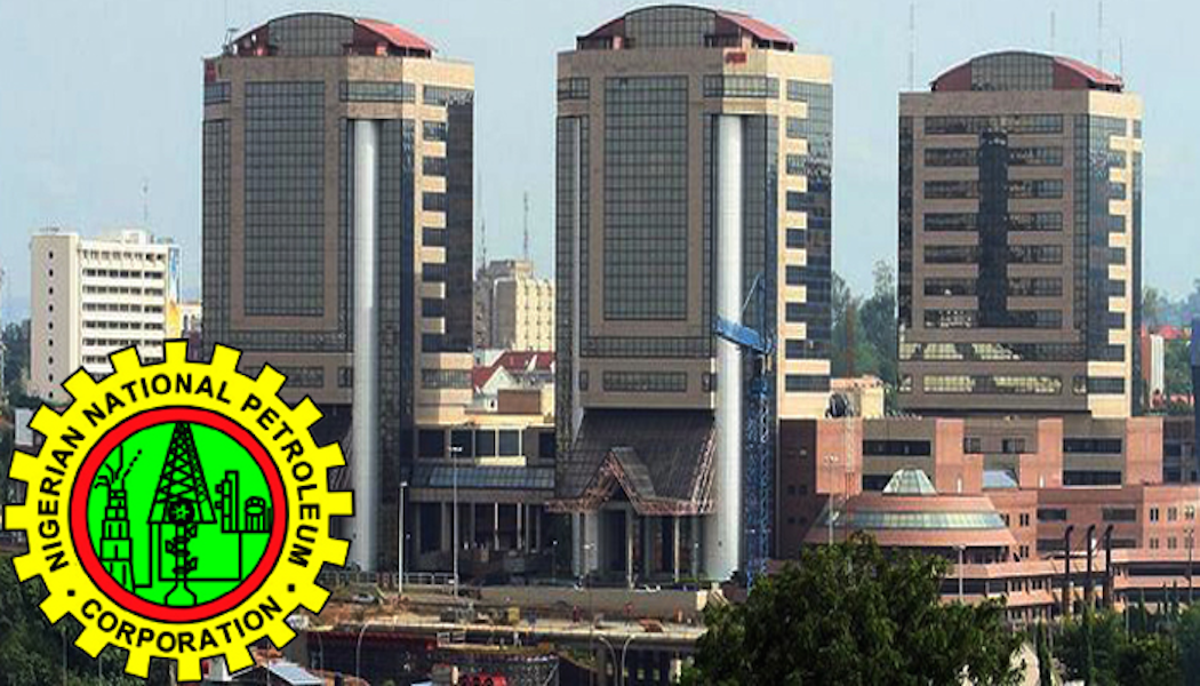
Following the signing of the Petroleum Industry Bill (PIB) into law by President Muhammadu Buhari on Monday, the federal government says the Nigerian National Petroleum Corporation (NNPC) will cease to exist within the next six months as specified by the Petroleum Industry Act (PIA).
The move was disclosed by Mele Kyari, group managing director of NNPC, on Monday, during an interview with AriseTV. He said the national oil company would be transformed into a private company that would pay taxes and dividends to its shareholders, and the new company would be incorporated under the Company Allied Matters Act (CAMA).
Kyari explained that all liabilities and assets of the NNPC will be transferred to the new company, though he noted that some toxic assets may be excluded.
“Coming back to the NNPC, the provision of the law clearly states that the corporation will be transformed into a CAMA company. The meaning of this is that the company will just be another privately owned company, in a sense,” Kyari said.
“This company will pay taxes, royalties and dividends to its shareholders. This isn’t the situation today because the corporation has no such obligation. This has stalled its development, its growth and its prosperity.
“According to the new Petroleum Industry Act, a new company will be incorporated within six months. That means all assets and liabilities of the NNPC will be transferred to the new company.
“Not all of them, by the way. The bill is very clear. Some toxic assets of the corporation may not be transferred. The federation or shareholders can decide to keep some of the assets and leave some with the corporation.
“Therefore, you are going to have a much more efficient, much more slimmer, much more commercial national oil company,” Kyari said.
Accordingly, President Buhari has commenced implementation of the PIA by approving a steering committee to oversee the process.
The committee headed by the Minister of State, Petroleum Resources, Timipre Sylva is made up of other members that include the Permanent Secretary, Ministry of Petroleum Resources, Group Managing Director, NNPC, Executive Chairman, FIRS, Representative of the Ministry of Justice, Representative of the Ministry of Finance, Budget and National Planning, Senior Special Assistant to the President on Natural Resources, Barrister Olufemi Lijadu as External Legal Adviser, while the Executive Secretary, Petroleum Technology Development Fund, will serve as Head of the Coordinating Secretariat and the Implementation Working Group.
Per Guardian, the primary responsibility of the steering committee will be to guide the effective and timely implementation of the PIA in the course of transition to the petroleum industry envisaged in the reform program, and ensure that the new institutions created have the full capability to deliver on their mandate under the new legislation.
The committee has 12 months duration for the assignment, and periodic updates will be given to Buhari.
The Petroleum Industry Act provides legal, governance, regulatory and fiscal framework for the Nigerian petroleum industry, the development of host communities, and related matters.
The controversial bill was passed by the Senate on July 15, 2021, while the House of Representatives did the same on July 16, thus ending a long wait since the early 2000s.
However, the move to unbundle NNPC has stirred mixed reactions from Nigerians who hail or criticize the federal government for towing the path after taunting it previously. The former vice president of Nigeria and People’s Democratic Party (PDP)’s presidential flag bearer, Atiku Abubakar, had, during his campaign, promised to privatize the Nigeria’s oil company, a move that was highly opposed by supporters of the ruling All progressive Congress (APC).
However, the PIA has brought a moment of twist that many believe is long overdue, and will help to sanitize NNPC’s operations that have been riddled with allegations of malfeasance.