DD
MM
YYYY

PAGES

DD
MM
YYYY

spot_img

PAGES

Home Blog Page 5618

The Case Against Bamboo, Trove, Chaka, Risevest, etc by Nigeria – And Why It’s Unfair

8

The case the government made against the investing apps like Bamboo, Trove, Chaka, Risevest, pushing the federal court to freeze the bank accounts of the startups is now public. Here are the key things:

  • The government noted that the entities are majorly owned by individuals and firms based in the United States of America.
  • The government thinks the firms are operating as  asset management companies without the necessary licenses, violating a Central Bank of Nigeria (CBN) directive issued in its circular referenced TED/FEM/FPC/GEN/01/012 and dated July 1, 2015.
  • The government is unequivocal that the operations of these firms are contributing to the weakening of Naira: ‘He said there was the need to block 15 accounts of the firms for 180 days to stop the firms from moving their funds out of Nigeria. “We need to write the embassy, we need to go to the Foreign Affairs, the minister will serve the U.S. to seek assistance so that we can block these linkages.”’
  •  Dealing in cryptocurrency trading, a contravention of the CBN policy.

The core issue here is that the Central Bank of Nigeria (CBN) is not happy that these firms source forex in Nigeria and then use them to buy financial products like bonds, stocks, etc in US and other global markets. Largely, they are importing things into Nigeria with the undesirable impact of pushing Nigeria’s balance of payment into an unfavourable column. 

Read here on how the money moved around from Flutterwave, Paystack, Monify, Paystack, BuyCoins, etc.

The 6 boards of these companies should come together and engage CBN immediately. They should push for a small fine and warning so that they do not go under. Also, CBN should modulate and find a workable framework like appointing a commercial bank custodian for the startups. If these 6 firms go under, Nigeria loses. So, here, I expect the apex bank to act as a regulator and a growth enabler at the same time.

Meanwhile, I am waiting to read from the Securities and Exchange Commission (SEC) which baptized some of these startups with a “license” to do their thing. It needs to help them.

Yet, everything happening here is a pure lack of how software is eating and saving the world by our  government. Yes, what these companies are being accused of are what treasury departments of big banks do daily for the 1%. So, if the apex bank is worried about Nigerians investing in foreign financial products, it should also close treasury departments of banks which help the big guys onload on New York and London stocks.

That these apps have provided a way for the small people to get into the games which the rich have been practicing since Lord Lugard woke up with a chosen mistress, and concatenated this nation should not be criminalized.

Nigeria needs to engage and avoid this culture of BAN and SUSPEND. If there is anything these companies are required to do, CBN should help them. Yet, our firms must ensure they understand the laws of the land and go out to ensure they comply.

Nigeria’s Court Freezes Bank Accounts of Chaka, Bamboo, RiseVest, Trove, etc on CBN Request

Tekedia Capital Congratulates Portfolio TradeGrid for Filing New Patent in US

0

Tekedia Capital congratulates our portfolio TradeGrid for beginning a new patent in the United States Patent & Trademark Office. Let’s build the digital operating system for new energy and the downstream sector of oil & gas. All the way to the big bell ringing guys.

Tekedia Capital >> building the next Africa through innovation. Join our syndicate and own a piece of Africa’s great technology startups.

Tekedia Capital offers a specialty investment vehicle (or investment syndicate) which makes it possible for citizens, groups and organizations to co-invest in innovative startups and young companies in Africa and around the world. Capital from these investing entities are pooled together and then invested in a specific company or companies.


Register for “Business Growth Playbooks w/ Ndubuisi Ekekwe”, 4.30pm WAT on Saturdays

0

In business, growth solves most problems. But how do you grow? In a new Tekedia Institute program, “Business Growth Playbooks w/ Ndubuisi Ekekwe”, we will examine the mechanics of growth.

This is a live program which takes place on Zoom. It focuses exclusively on growth strategies, mechanisms, models, frameworks, etc which businesses can deploy to win new markets and territories. In other words, the program objective is to master the physics of business growth, biased for the African markets.

Cost is N20,000 naira or $60. It will run for 8 weeks (Sept 4 – Oct 23, 2021), every Saturday at 4.30pm WAT. Get your seat because it is built for people and businesses.

10 Most Powerful Football Journalists You Should Know in Nigeria 

0

Introduction 

Sports is not only about sports stars and the sporting events that you can see live, because how many of us have that privilege, even? How many of us can actually go to a foreign location where our favorite team is playing and cheer for our team? How many of us know our beloved sports stars personally or well enough to get an exclusive interview with them and get the latest scoop not only on their future goals, their past, but also about their personal lives? How many of us are extremely well versed in sports terms to know which one a particular sports person used to get ahead of everyone else in an event? What about our need to know about not only local or regional or even national, but also international sports and the news that comes along with it? 

For all this, you need your sports journalists. And if these sports journalists are the very best in their endeavors, then you will get the scoop that is closest to the truth and staying up to date in the world of sports is never a bad idea, right? For sports betting enthusiasts, on the other hand, you just need to click https://www.telecomasia.net/sports-betting/sites/ and get your real money betting fix right now. 

The following is a list of the 10 best football journalists that you should know in Nigeria:

  • Paul Bassey: He is the oldest football journalist of great repute in Nigeria, literally a veteran in the Nigerian journalism segment. He rose fast to the top of the ladder and has a lot of power over sports journalism in Nigeria. Bassey is now an NFF technical committee member and also a FIFA Match Commissioner;
  • Mitchell Obi: CEO of AIPS and the executive Vice Chairperson of MasterSports, Obi became so popular through his show, MasterSports;
  • Emeka Anyadike: A man of many talents, Anyadike is a television football analyst and a main proponent of SuperSports; 
  • Mumini Alao: Being the Group Managing Director of Complete Communications Limited, Alao is a key player in Nigerian football journalism;
  • Godwin Dudu Orumenis: President of MultiSports, Orumenis is a natural at sports analysis;
  • Larry Izamoje: CEO of Brila FM, the only and first Radio Station for sports in Nigeria;
  • Ben Alaya: General Manager and Editor-in-Chief of SportsDay newspapers, the fastest growing sports chain newspaper in Nigeria;
  • Toyin Ibitoye: Presenter at Sports Tonight and the Producer of Sunrise Sports;
  • Godwin Enakhena: CEO of Global Media;
  • Emeka Nwani: Called the Apostle of Nigerian League, Nwani writes and debates football.

Conclusion

Football is a much loved sport in Nigeria with several national teams to boot and a host of sports channels where football analysis is a much loved journalism sector for all newbie journalists. Following the above-mentioned journalists or connecting with them will not only give you the latest scoop on football, but also allow you to get an in into the world of Nigerian sports journalism. 

Beyond Regulation, China Wants Equal Distribution of Wealth

0
Chinese leaders are pragmatic

China’s recent crackdown on its tech industry, which has wiped billions of dollars off its economy, drastically reducing the fortune of its billionaires, has an undertone intent with a volume louder than the seeming regulatory concerns buoying it.

Months have passed since the shakeup in China’s tech industry, which started with the suspension of the highly anticipated Ant group’s mega IPO, and spread rapidly to many other players in the sector including the edtech, took root.

A report by CNBC says that beyond what everyone has thought, China’s war against its tech industry has little to do with regulatory awakening and more to do with the desire for equal distribution of wealth.

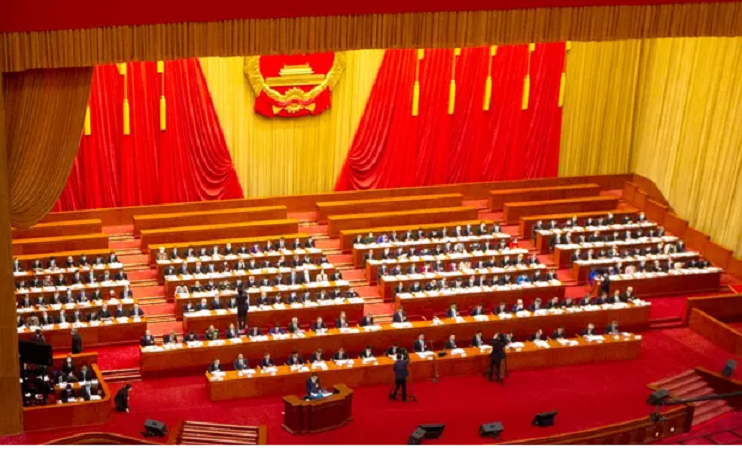
Chinese President Xi Jinping emphasized at a finance and economic meeting Tuesday the need to support moderate wealth for all — or the idea of “common prosperity,” which analysts have said is behind the latest regulatory crackdown on tech companies.

Significantly, the meeting was the first Xi led publicly since a two-week quiet period. Chinese leaders typically spend early August in secret political discussions at a resort in Beidaihe, about a three hours’ drive east of Beijing.

The meeting called for the “reasonable adjustment of excessive incomes and encouraging high income groups and businesses to return more to society,” state media said in Chinese, according to a CNBC translation.

Leaders also specified common prosperity does not mean prosperity for just a few and is not a form of equal distribution, state media said. Rather, progress toward the goal would occur in stages, the report said.

Delivering “common prosperity” has emerged in recent months as an underlying theme of Chinese political discussion. The term is generally understood as moderate wealth for all, rather than just a few. But it remains a vague, frequently used slogan.

Yue Su, principal economist at The Economist Intelligence Unit, said in a statement she expects authorities to be pragmatic in implementation.

“Considering that raising taxes on high-income groups and capital returns may curb investment and potentially lead to capital outflows, the Chinese government will not completely ignore the impact of redistribution policies on the economy,” she said.

She added that privatization will likely slow public services such as education, care for the elderly or medical care, with authorities at the very least becoming more strict in monitoring prices and affordability.

Income inequality among China’s 1.4 billion people has increased over the last few decades. The top 10% of the population earned 41% of national income in 2015, up from 27% in 1978, according to estimates published in 2019 by Paris School of Economics professor Thomas Piketty and a team.

But the lower-earning half of the population has seen its share of national income fall to about 15%, down from about 27% in 1978.

This year, urban residents in the coastal city of Shanghai had an average per capita disposable income of 7,058 yuan ($1,091) a month, far higher than the 4,021 yuan for those in cities nationwide, and well above the 1,541 yuan for rural residents, official data showed.

The Chinese government has claimed it eliminated extreme poverty in the country as of the end of last year. That marked a first step to fulfilling the longer-term pledges of the ruling Chinese Communist Party, which celebrated its 100th anniversary in July.

“Elaborating on the ‘common prosperity’ objective, China has affirmed its effort to rebalance the economy toward labor, tackling social inequality with redistribution, social welfare, taxes and inclusive education,” Morgan Stanley analysts said in a report distributed Wednesday, noting a target — “to increase the middle-income group’s share of the economy.”

Based on the top economic policy meeting, the analysts said they expect additional measures to support economic growth, such as a cut to the reserve requirement ratio.

Data for July showed China’s economic growth slowed more than analysts’ expected, including figures on spending by individual Chinese consumers.

However, economists have noted that growth is not as important for Beijing this year as tackling long-term problems such as a buildup of debt and risks in the vast real estate market.

“Finance is the core of the modern economy, with ties to development and security,” CNBC’s translation of state media said, citing Xi’s remarks at Tuesday’s meeting. “It must follow the principles of marketization and the rule of law, and coordinate the prevention and resolution of major financial risks.”

While the idea of equal distribution of wealth may seem good to many Chinese people, it poses a major economic danger for the second-largest economy in the world. The sustainability of China’s economy hangs largely on its conglomerates that are amplifying individual wealth of founders and business executives.

Experts warn that attempts to force Chinese billionaires to give up measures of their wealth will likely spook the interest of investors, who recently have found the South Asian country, a lucrative destination to plant their money.