DD
MM
YYYY

PAGES

DD
MM
YYYY

spot_img

PAGES

Home Blog Page 5619

Liquid, Another Crypto Exchange Loses $100m to Hackers

0

Barely one weeks after digital token platform Poly Network was hacked in a $600m heist, another crypto exchange has suffered cyber-attack.

Leading Japanese cryptocurrency exchange Liquid has been hit by hackers, with almost $100m estimated to have been stolen. The company said that some of its digital currency wallets have been “compromised.”

“We are sorry to announce that #LiquidGlobal warm wallets were compromised, we are moving assets into the cold wallet,” the company said on Twitter.

The culminating cases of digital wallets’ heists have cast doubt on the security of exchanges, depleting investors’ trust in putting their money in the digital asset.

So-called ‘warm’ or ‘hot’ digital wallets are usually based online and designed to allow users to access their cryptocurrencies more easily, while ‘cold’ wallets are offline and harder to access and therefore usually more secure.

Blockchain analytics firm Elliptic said its analysis showed that around $97m in cryptocurrencies had been taken, with Bitcoin and Ethereum tokens amongst the haul, according to BBC.

Liquid has said that it was tracing the movement of the stolen cryptocurrencies and working with other exchanges to freeze and recover the assets.

Liquid was founded in 2014 and operates in over 100 countries, serving millions of customers around the world.

It is one of the world’s top 20 biggest cryptocurrency exchanges by daily trading volumes, according to CoinMarketCap data.

More than a week ago, $600m was stolen from blockchain site Poly Network after a hacker exploited a vulnerability in its system.

“The amount of money you have hacked is one of the biggest in defi [decentralised finance] history,” Poly Network said.

Since then the hacker, who goes under the name of Mr White Hat, has returned around $427 million of the assets, and has been reportedly offered a job by Poly Network.

Liquid is not the only Japanese cryptocurrency platform to be hit by a major heist.

In 2014, Tokyo-based exchange MtGox collapsed after almost half a billion dollars of bitcoin went missing, while Coincheck was hacked in a $530m heist in 2018.

Since 2011, hackers have stolen more than $8 billion worth of cryptocurrencies. According to a report from Amsterdam-based blockchain analytics firm Crystal Blockchain, over $2.8 billion was stolen through exchange security breaches that totaled 113 as of last year, and has increased following a number of heists in 2021.

The exchanges are being targeted as bitcoin and the rest of cryptocurrencies gain mainstream acceptance. Bitcoin is gradually rising from its months of slump that started in April, following concern about the impact of mining on the environment. The crypto coin neared $50,000 for the first time in more than three months as players work to stem the tides that have resulted in massive selloffs.

Ndubuisi, With What Is Happening In Fintech, How Do I Invest In Nigerian Bank Stocks?

0

I run a subscription service called Private Client Services (PCS) where business leaders email, call and ask questions. Let me share this correspondence with a client as many here have asked similar questions. I have edited out specific broad recommendations since no one here signed PCS terms (risk on you).

PCS Client Question: Ndubuisi, we want to invest in NSE [Nigerian Stock Exchange] banks. With what is happening in fintech, what do you think?

Ndubuisi Response: Chairman, the long-term outlook on Nigeria’s banking system is positive. However, I see a challenging half-decade on their valuations as investors price the impact of fintechs/ digital challenger banks. As global investors prefer the fintechs, over buying stocks of the banks, I expect a sustained underperformance which would accelerate in late 2023 when the digital tech firms circle more domains. Even insurers and HNI independent investors are betting via these fintechs rather than buying direct bank stocks. Any substitute vehicle is not good for the bank stocks.

Yet, the banks, led by extremely brilliant minds will find ways to keep investors happy: I expect dividends to accelerate and that would be a way to cushion the effect of the evolving perception. So, if you want to buy bank stocks, buy dividend paying ones, with the assumption that even if the stocks do not move, dividends will take care of you. Here are the best using the aggregate of the last 5 years:[…]

The banks have great balance sheets and are evolving also just as fintechs. More so, the only way banks can play would be holdco which gives them structures to also do what fintechs are doing. So, we cannot count them out. Here is my calendar; let us speak and I will provide more insights when you are free.

Ndubuisi

From FUGAZ to GOFIZ, Nigeria’s New Leaders In Financial Sector

2

By 2030, eighty percent of the richest Nigerians would have made money from technology. The empires of the future are being built, and this is a cambrian moment of unparalleled age of entrepreneurial capitalism, bigger than what happened in the 1990s when the new generation banks were started. We’re in the application utility decade, passing from the voice telephony decade (2000s) through mobile internet decade (2010s).

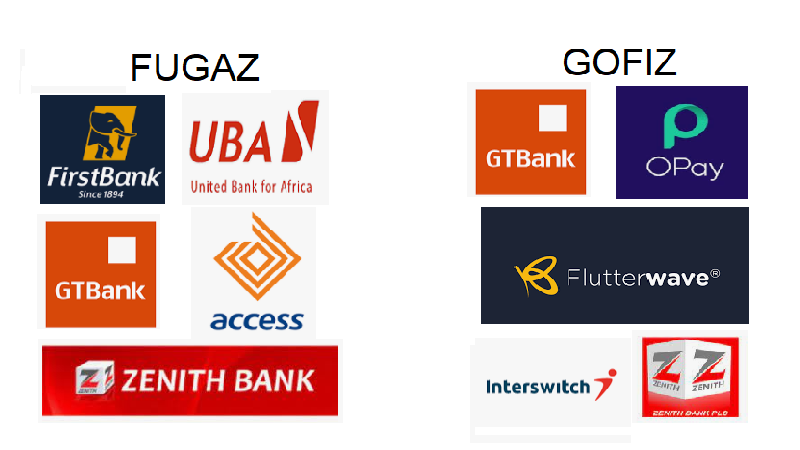
By 2025, about ninety percent of the top leading financial institutions in Nigeria will be all tech. The investment bankers in Lagos always write of FUGAZ (First Bank, UBA, GTBank*, Access, Zenith); I always update that to FUSGAZ to include Stanbic IBTC which has a larger market cap than any of UBA, Access and First Bank even though it is “foreign”. So, for that foreign gene in Stanbic IBTC, let us just use FUGAZ.

Today, I have updated a composite which tracks both public and private businesses, looking at the most critical financial institutions in Nigeria. We have GOFIZ which represents GTBank*, OPay, Flutterwave, Interswitch and Zenith Bank. These are the largest (indigenous*) financial institutions with a market cap of at least $1 billion in Nigeria. The most valued financial entity in Nigeria now is OPAY. Interswitch and Flutterwave (each worth $1 billion) are bigger than First Bank, UBA and Access Bank; sure the former duo are private entities while the latter trio are public.

My tracking system posits that by 2025,  in the top 10 financial firms in Nigeria, 90% will be tech-firms. People, your world is changing.

Welcome GOFIZ but this is not certain. I see 3 mutants on the way.

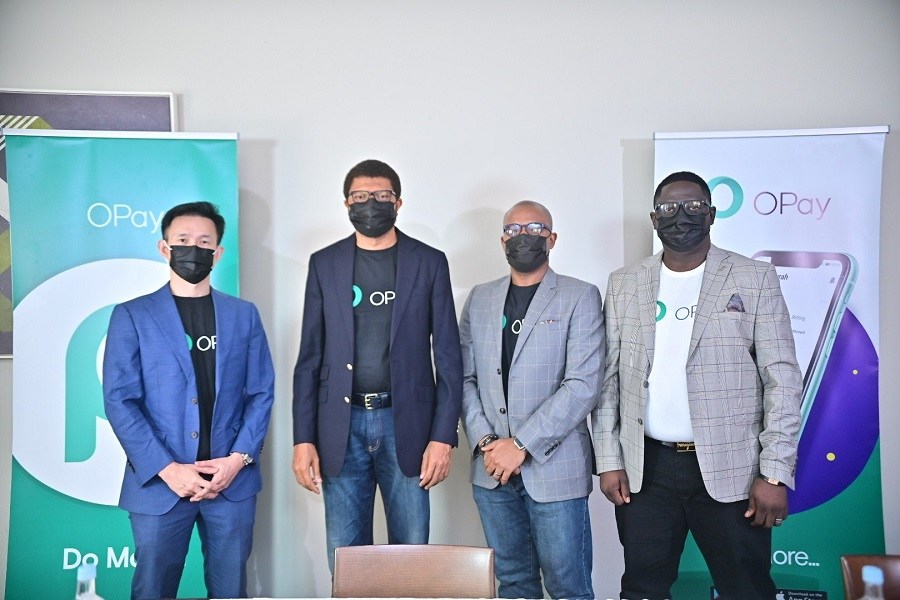
Nigeria’s Operating OPay Raises $400M at $2 Billion Valuation Led by SoftBank

Nigeria’s Operating OPay Raises $400M at $2 Billion Valuation Led by SoftBank

1

A few days ago, I made two calls here and here: (1) Chinese tech firms  will begin looking for Africa for growth because the future of digital technology in China is uncertain as the clampdown accelerates and China redesigns the architecture of its economy; (2) a digital challenger bank in Nigeria will buy a traditional bank in Nigeria to overcome the new N1 million cap which the Central Bank of Nigeria (CBN) has put on microfinance banks and fintechs. Most digital banks use microfinance bank licenses and microfinance regulations govern them.

Today, we are learning that Japan’s mega fund, SoftBank, is leading a $400 million raise in OPay, pushing the company to a valuation of $2 billion: “The company, founded in 2018, had an exclusive presence in Nigeria. It provided various digital services ranging from mobility and logistics to e-commerce and fintech at cheap rates for consumers.” Yes, within 3 three years, OPay has a market cap that is bigger than more than 80% of Nigerian banks. This shows the impact of technology in an industrial sector. 

Chinese-backed and Africa-focused fintech company OPay raised $400 million in new financing led by SoftBank Vision Fund 2, Bloomberg reported Monday, valuing the company at $2 billion.

The round, which marks the Fund’s first investment in an African startup, drew participation from existing investors like Sequoia Capital China, Redpoint China, Source Code Capital, and Softbank Ventures Asia. Other investors, including DragonBall Capital and 3W Capital, also took part in the new financing round.

This news comes three months after The Information reported that the company was in talks to raise “up to $400 million at a $1.5 billion valuation” from a group of Chinese investors. The new financing also comes two years after OPay announced two funding rounds in 2019 — $50 million in June and a $120 million Series B in November.

(OPay, Kuda, etc depending on what CBN does on its new regulations may be looking at acquiring a full bank license or buying one of the small banks with all the funds they have. Do not count that playbook out.)

Africa now runs on fintech because the largest raises have come from fintech. Interestingly, we are still at the infancy level of this redesign. Total consumer transaction volume in Nigeria  is estimated to be in the range of $301 billion yearly according to Fletcher School and Mastercard, so even if OPay processes $2 billion monthly (its number in December 2021), there are many rooms to grow.

In addition, fintech has produced the most mega-rounds so far. TymeBank raised $100 million in February, Flutterwave bagged a $170 million round in March, while Chipper Cash secured $100 million in May. OPay’s raise is the largest of the lot and makes it the other African fintech unicorn asides from Flutterwave and the third unicorn after e-commerce giant Jumia. The three make up the five billion-dollar tech companies on the continent, in addition to Interswitch and Fawry.

If you keep records, the largest and most valued financial entity in Nigeria today is OPay, well above the market cap of any of  Zenith bank, GTBank parent firm, etc. And they did it within 3 years. Now, you get the message when I say that the empires of the future belong to digital tech entrepreneurs in Africa. That was why I started Tekedia Capital Syndicate to open the doors for anyone to own a piece of these emerging companies of the future.

Comment on LinkedIn Feed

Comment: We need to make room for OPay in FUGAZ

My Response: To be fair, the current FUGAZ is stale: it needs to be GOFIZ as they are now the largest financial institutions in the land. Sure, Flutterwave, Interswitch and Opay are private. As I have predicted, by 2025, in the top 10 financial firms in Nigeria, 90% will be tech-firms. This is a cambrian moment and Nigeria is undergoing changes.

Paul O. Erubami, CEO of Max-Migold, Awards Many Scholarships To Tekedia Institute

0

Good People, please Join me to thank  , the Principal Consultant and CEO of , a physical facilities management, training, inspection, and technology advisory firm, for funding the FUTURE. Mr. Erubami has offered scholarships to tens of young people to attend Tekedia Institute Advanced Diploma programs.

The Erubami Scholars will spend 8 weeks with us and each will pick tracks from Logistics & Supply Chain Management;
Business Innovation, Growth & Sustainability; Project Management; Risk Management; Business Administration; Innovation & Design Thinking; and  Accounting, Auditing, Forensics & Taxation.

Across Africa, young people are acquiring capabilities from business leaders who teach at our Institute. The impact is evident. We wish Mr. Erubami and Max-Migold open markets in business for funding the Future of Africa. And to the Scholars, welcome to the Institute; you will master the mechanics of markets.

Please drop some lines below…this is huge. The Bank of Industry likes our work and in 8 months has extended $2 million credits to our innovators from here. Out of these scholars, the promises of the future become more amazing.