DD
MM
YYYY

PAGES

DD
MM
YYYY

spot_img

PAGES

Home Blog Page 5621

The Impossibility of Jack Dorsey’s Tweet As “32% of Nigerians” Do Not Own Bitcoin

5

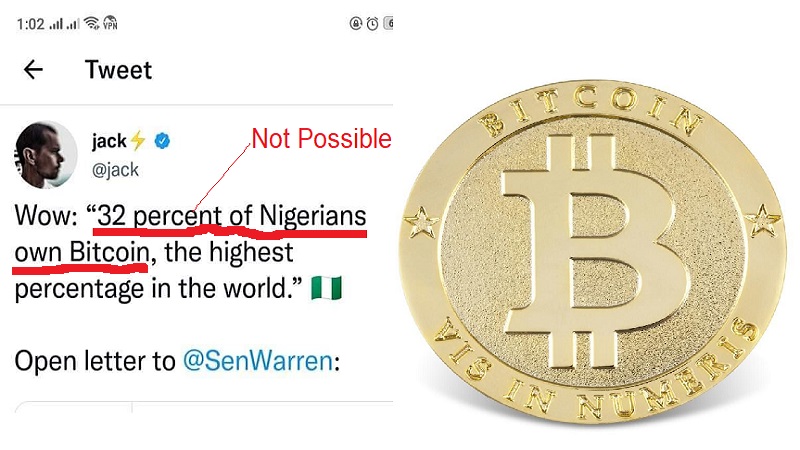
Senator Warren, the data  is wrong: 32% of Nigerians do NOT own Bitcoin. It is absolute fake data they made up. Do not put any power on the open letter because the premise is invalidated by the fake data. Get me right, I am not against Bitcoin or cryptocurrency but I am against a fact-free economics. Look at this:

  • Nigeria has a population of 210 million. The 32% will give you 67.2 million people.
  • To have Bitcoin, you need to have a bank account, most of the time, since you need to fund the purchase via an electronic means (cash transactions with exchanges or peers are rare). Functional bank accounts in Nigeria using bank verification numbers are less than 40 million. Because Bitcoin’s total user base is a subset of this number, it is impossible for more than 40 million to own Bitcoin in Nigeria.
  • Nigeria has about 104 million internet users. If we have to believe the quote, the implication is that for every 2 online users in Nigeria, at least one has Bitcoin. That is totally nonsense. More so, I do not concede that Nigeria has 104 internet users even though I will concede that Nigeria has SIMs with internet enabled capabilities. Many here continue to use their phones to talk! 
  • Exchanges are running bad statistics; they over extrapolate. If in 10 young men in Lagos state, three have Bitcoin, it then means 30% of Nigerians have Bitcoin!  Simply visit Bayelsa, Zamfara, Ebonyi, and Osun, you will see that the extrapolation is nebulous.

Yet, Nigerian young people are promising. America can invest $1 billion via USAID to support startups including blockchain and crypto ones, along with education, logistics, healthcare, etc. But the premise must be built on reliable data.

From that letter, he pulled the 32%: “As the Nigerian naira plummets in value, Bitcoin has become a necessity. 32 percent of Nigerians own Bitcoin, the highest percentage in the world. Furthermore, remittances into Nigeria exceeded $17 billion in 2020, and a substantial proportion of this value is conveyed in Bitcoin. Lastly, Nigeria has one of the youngest populations in the world, and, on a globe basis, this progressive cohort increasingly embraces Bitcoin.”
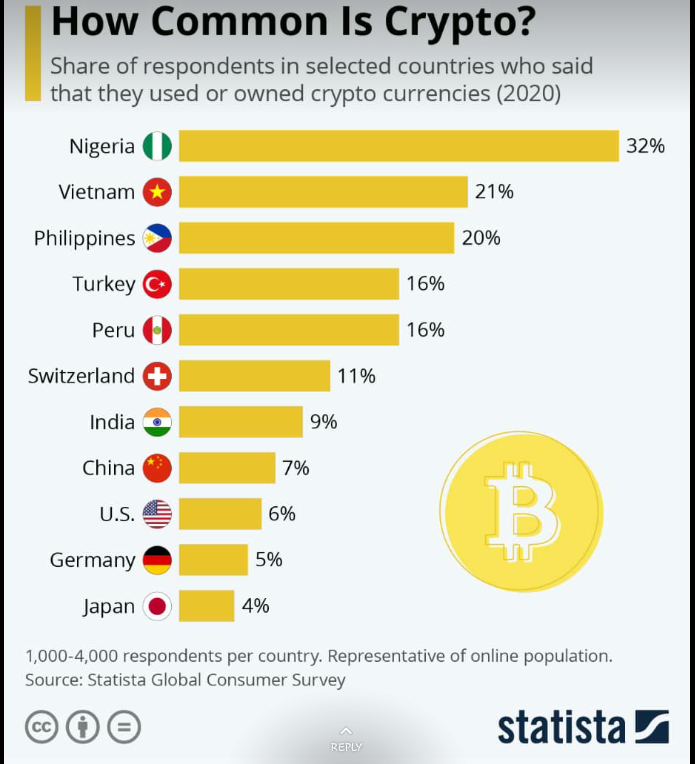

The data

Tekedia Institute Welcomes McPherson University Champions, The Final Year Students

0

Good People, join me to welcome McPherson University champions, final year students of this amazing African university. To Vice Chancellor Prof Adeniyi Agunbiade, Registrar  Mrs. Tokunbo Kehinde  and Bursar Mr. Adeyemi Onilado, Tekedia Institute is honoured to welcome the champions.

The University has trained and prepared these students. Our little contribution in Tekedia is to deepen their understanding of the mechanics of market systems. Together, the champions will become better to go into the markets and fix frictions, transforming our communities with innovations, and advancing the wealth of nations.

McPherson University champions, welcome to the Institute. I will be formally welcoming all during the CollegeBoost Hour. People, join me to welcome these students; we see innovators and project champions among them, to lead on the opportunities of the future. Champions for the world.

Source: LinkedIn

The Lamentation On Nigeria’s Lost 40 Years Of Economic Progress

2

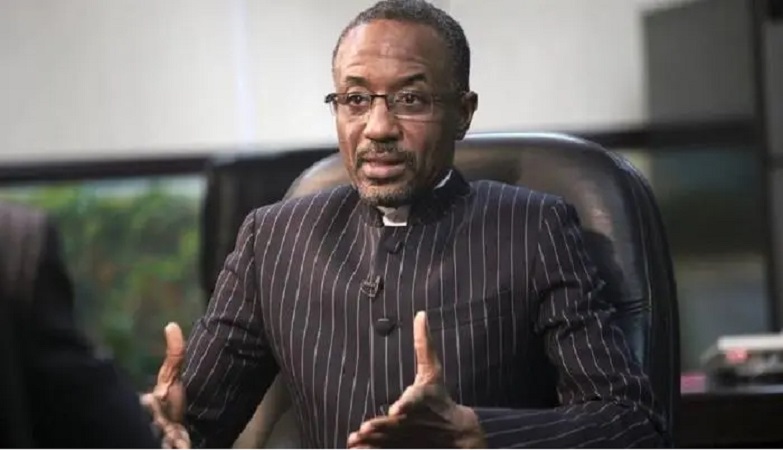
The former Central Bank of Nigeria governor, Muhammadu Sanusi ll, has dropped those lines that usually put high voltage verbal attack on his person: Nigeria has wasted 40 years, and all the gains during President Goodluck Jonathan have been reversed.

According to the ex-emir and ex-banker,  all indices show that the purchasing power of Nigerians has plummeted, and income has fallen to 40 year low. He noted that Nigeria rose to the mountaintop in 2014 when it recorded the highest per capita income on record. But since then, gravity has been pulling the number down. In his model, by 2023, we will be back to 1980 numbers! Tufiakwa.

He dropped these lines in Kaduna at a colloquium to mark his 60th birthday:

“In 1980, Nigeria’s GDP per capita on purchasing power parity basis was $2,180. In 2014, it appreciated by 50 per cent to $3,099. According to the World Bank, where were we in 2019? $2,229. At this rate in the next two years in terms of purchasing power parity, the average income of a Nigerian would have gone back to what it was in 1980 under Shehu Shagari. That means, in 40 years, no progress, we made zero progress. 40 years wasted,” he said.

What is the solution?

Option A: Vote the same people who have been running the show for ages because they belong to your tribe.

Option B: Try a new generation of leaders who can fix Nigeria irrespective of ancestral affinity. For instance, under my leadership, I will formalize land assets, putting velocity on them, and within 18 months of taking power, I will double per capita income in rural Nigeria. I will deploy two business models: aggregation model (aggregating the land) and marketplace (to deepen orchestration of demand-supply framework). How he wishes? Malaria dream for the village boy!

The aggregation will deploy startups at ward level to map the assets and afterwards, they will put them in land registry and marketplaces, which the owners will activate to make it easier for buying and selling to happen faster, and at scale. Watch this video to get the idea.

Then many other things have to happen.

The Numbers

In a plot, this is what the former Central Bank of Nigeria governor, Muhammadu Sanusi ll, was talking about. He extrapolated that by 2023, the number will hit 1980 level.  We hope that will not come to pass as that would mean mass poverty, unconstrained. But irrespective of your political affinity, Nigeria has a REAL question to answer now,  and that question is this: can doing the same thing again, and again, produce different results, and if we answer NO, then what next?

Inaugural Address by Ndubuisi Ekekwe, President, LinkedIn Nation

As Kabul Fails for Taliban, Lessons for Everyone

5

If the Taliban takes over Afghanistan despite all the military capabilities and preparations the Afghan soldiers have received for years, what could be the conclusion here? Increasingly in most parts of the “fragile world”, we are seeing a scenario where untrained and unprepared militants (in the formal sense of it), are unloading trained military.

As these things happen, it may be time to examine the whole nexus that democracy can work everywhere. Democracy works because good people make civilians the commander- in-chief on the belief that the military will hold the nation. But when that is not the case, does that make sense?

Yes, after the death of the Chadian president this year in a battle, the world kingmakers unanimously supported a military man (the president’s son) to take over instead of the second in command  who happened to be a civilian. Specifically, the French government made the point that the circumstances on the ground did not support following the democratic tenet. Largely, the world is moving into a new dimension of conflict where pockets of crises are here and there, and terrorists and militants seem to be overwhelming formal armies in “fragile states”.

Sure, the Afghan  is different (unlike say Libya and Iraq) but the emerging result is palpable: Taliban is largely back to power. Nigeria – you need to study these cases very well!

And before I close, our wishes to the good people (innocent civilians) of Afghanistan; they are now on their own!

Update: Afghanistan falls flat

The Man Who Lost $20 billion in 2 Days

3

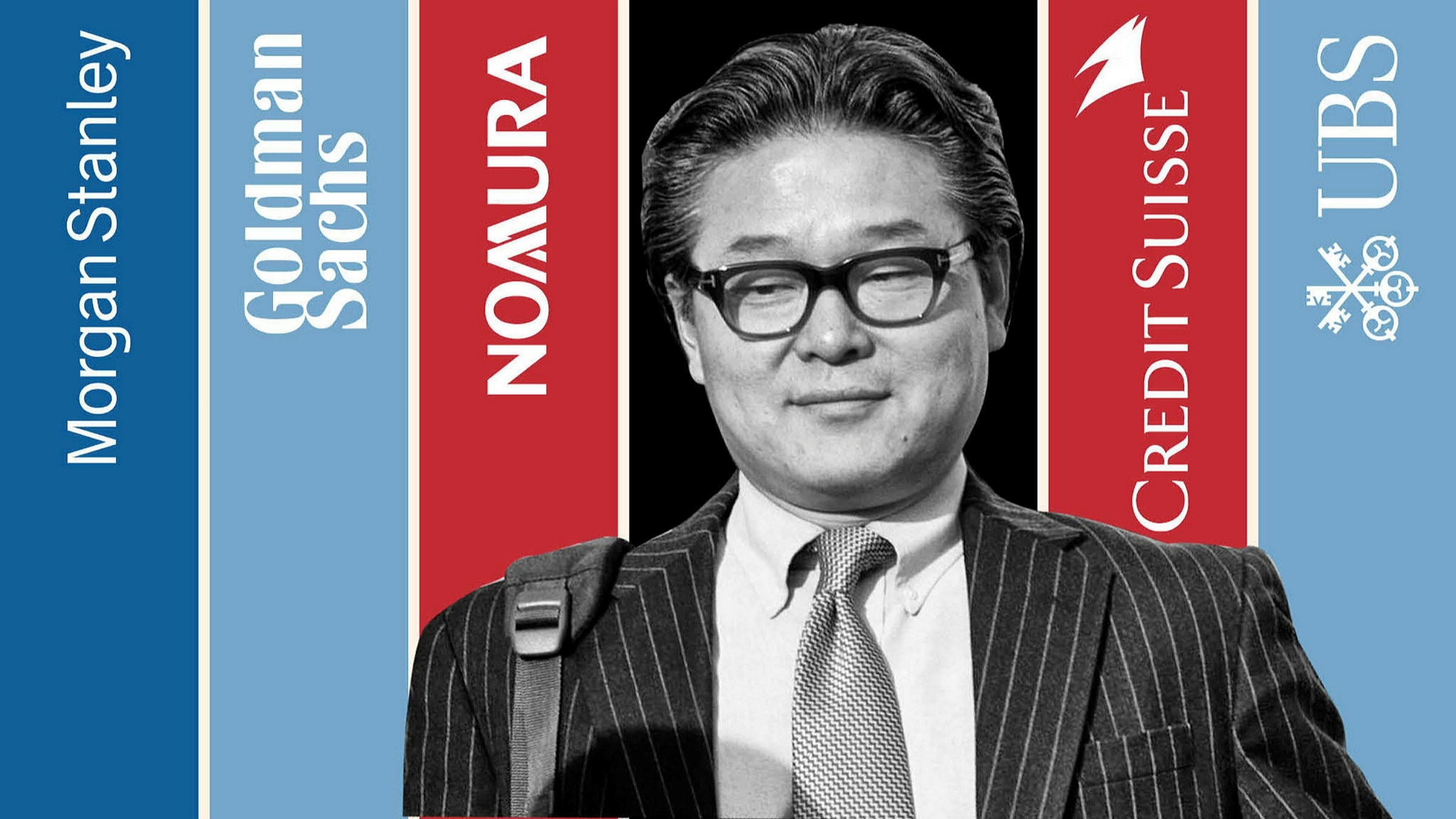
We celebrate legends of markets here. I also want to note that on the way up, some are beaten by markets. Bloomberg News reported that Bill Hwang lost $20 billion in 2 days when Archegos Capital Management went down in March 2021.  Archegos had defaulted on margin calls from investment banks like Goldman Sachs, Morgan Stanley, Credit Suisse and Nomura Holdings.

Why It Matters: Hwang ran a family office that imploded in March and caused massive losses at a few big banks when Archegos couldn’t meet margin calls. Archegos had more than $20 billion of capital and total bets exceeding $100 billion.

Global banks lost nearly $10 billion from the Archegos fallout. Credit Suisse Group AG (NYSE: CS), Nomura Holdings Inc (NYSE: NMR) and Morgan Stanley (NYSE: MS) were among the hardest hit.

As they say, everyone remembers the last trade. What destroyed Bill’s family office was total return swaps and risky plays.

A total return swap is a swap agreement in which one party makes payments based on a set rate, either fixed or variable, while the other party makes payments based on the return of an underlying asset, which includes both the income it generates and any capital gains. In total return swaps, the underlying asset, referred to as the reference asset, is usually an equity index, a basket of loans, or bonds. The asset is owned by the party receiving the set rate payment.

But do not think far: when gravity could not hold Nigeria’s stock market just before the great recession of 2008, banks extended credits to investors to buy their stocks, holding the same stocks as collateral!

If you look carefully, if things go bad, banks will lose! I think we have stopped that now in Lagos as believers have been delivered.

If you have time, read about Bill. You will learn one or two things when it comes to investments.