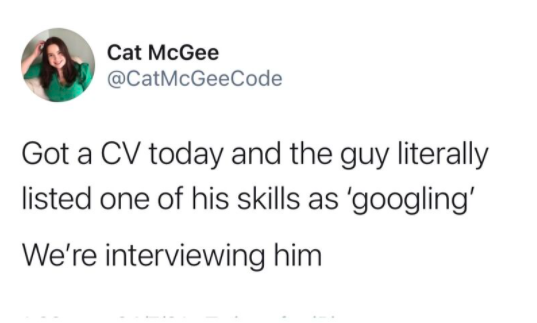
I saw this, this morning, and as often is the case, it provoked far too many thoughts to condense into a comment, so I decided to do a Tekedia Institute piece on it.
To understand where I am coming from, we have to go back to examining the circumstances and the experience of doing my masters degree, because that was the first point at which I had a strong dependency on the results of online searches.
I had just driven a huge infrastructural project for my employer in the UK – A UK wide CRM/ERP system for the Construction Community, with special focus on enabling ‘Minority Led Enterprises’ (MLEs). Prior to that, my sole experience of vague relevance, was a side business ‘A Grade Upgrades’ which offered ‘Clone’ PC’s built to customer specification, P.C. upgrades, Network Solutions and hardware sourcing to S.O.H.O. market locally in London. CRM/ERP was very new at the turn of the millennium, and while I had a strong vision, I was technically bumbling along from milestone to milestone. The seats of all my pants felt like a hot iron had been left on them for too long!
I envisaged myself as a generic and sector agnostic salaried CEO. I didn’t specifically see myself moving forward in the Internet/Tech space. I had done a Management PGD equivalent which while it had weak academic standing, it was for all extensive purposes, an MBA. I wanted to improve my credentials, but didn’t fancy spending several years in academia land covering 80%+ old ground, just to be able to write ‘MBA’ after my name.
Expecting to be a ‘career CEO’ moving forward, I decided to do an MSc. IT as a means of equipping myself with the needful to embed the rapidly developing IoT space into Corporate Vision rather than having to rely on a dedicated officer to widget that on for me.
One of the modular elements of the MSc. IT was three ‘Discussion Questions’ (DQs) needed to be completed by close of Monday, and over the course of the week, they were subject to peer defense through remote submission in an online portal. In short, peer co-learners would critically assess your work through raising technical objections, or by producing departures which were sometimes benign and illustrating to the examiner that they understood your work, but sometimes were overt about filling in perceived content gaps in a way that eluded your piece was incomplete. So over the week co-learners were expected to show a quality body of work, meaningfully acknowledging benign interaction, and rebuffing criticism of their own DQ responses, as well as actively participating in peer assessment of the others.
Most of my co-learner peers were huge Subject Matter Experts (SME’s) in some area of computing.
The three most common high skill areas were firstly the network experts – these are folk that knew all the compound calculus behind traffic shaping and congestion control in very complex networks.
Secondly you had the Distributed Database System (DDBS) experts, who could fluidly move from one form of sql to another, be it Oracle, Informix, DB2, MS, My-Sql etc, without having any syntax authoring problems.
The third common area of expertise were the coders, that knew a lot on OS code, most commonly C, C++ or Java, and some knew coding for web presence.. (x)html, CSS, Javascript, php, c# and various middleware technologies.
In addition to this, there were some Corporate IT Heads who were generalists and technically had some LAN and OS skills, desktop support, IT policy, budget management, contract management and technical procurement skills.
So how could I distinguish myself being an underdog in such a competitive engagement environment?
Well, the first thing is that ‘devs’ or people whose most recent accomplishments have been things like CCNA, CCNP, MSCE, RHCE etc are not always effective prose writers. I adopted a writing style that combined technical detail with IT ‘journalism’.
The second thing is that these deep experienced niche experts were not accustomed to an environment where they expected to have their assertions challenged. This meant they frequently neglected to support statements core to their pieces’ thesis with solid references. This doesn’t fly in an academic piece and a module moderator will hammer you for ‘cos I say so’ even if it’s right on the money.
Initially, perhaps born out of some level of ‘imposter syndrome’ I always referenced my work really well. I found an online technical/academic library called Safari Books Online, where about 15 bucks a month buys you a personal online bookshelf of 20 books from a choice of millions. From the initial act of filling the bookshelf, books can be swapped out at a rate of 5 per week.
Many well known academic and industry publishers such as Wiley, McGraw-Hill, Prentice Hall, Addison Wesley, Pearson Press, Merill, New Riders, Que, Sams and O Reilly, along with industry house publications from the likes of Adobe, Cisco and Microsoft Press were represented.
Buying physical books was the most common means of getting support at the time, and they were more time consuming to source, locate suitable quotes, and transcribe quotes into work, as well as being expensive. This was a time when Amazon was known as being an online book distributor, long before AWS!
My online bookshelf made it easier for me to build a moat around my DQ responses and build high walls.

Another technique I had was to recognise when I had no ‘familiar territory’ on which to ‘fight’ my primary DQ position. This happened often. Then I would find a way of moving the goalposts by adopting a position that, at least, the territory would not be familiar to anyone else either. This created a level playing field.
I recall one such scenario in the generalist opening module ‘Computer Structures’, the DQ asked to make a technical comparison of two computer languages on a range of indicators. I predicted that a majority, with experience of Windows coding would probably compare C++ with C, a significant minority might compare Java with either of them. I anticipated correctly. I had done some Cobol during a brief period as a teenage MTU student, and I decided to compare this with an obscure language ‘Eifel’.
Later in the Operating Systems module, a similar question saw me compare ‘Debian for Sparc’ (A linux distro designed to run on Sun Microsystems RISC architecture) and HP-UX (a proprietary Hewlett Packard Unix designed to run on HP hardware similar to Sun RISC). Others generally compared Windows 2003 Server with 2K Server, some did NT, and a few included Red Hat.
It is also important to realize who you most need to impress. Module Moderators see extremely similar work produced week-in-week-out. Peers may provide critical review, but Moderators assign grades. I worked hard to create a sense of wonder around what uncommon spin I might come up with next. I also threw in throwbacks from time to time (like Cobol) that might stimulate nostalgic thoughts beaming Moderators back to ‘freshmen’ days. Above all though, I created my own journey.
Starting out as the weakest bio around, and being targeted on the expectation that I was the lowest hanging fruit, as I moved through modules, I gradually got to the point where moderators were sometimes sole challengers to my work, and I usually gave ‘follow-on’ responses of similar quality to my primary work.
Peer challengers became ‘converts’ and gradually began messaging me, giving me a statement and looking for help with book reference content to support it. I would barter with them for extra insights on solving technical exercises. I didn’t want a ‘right answer’. I wanted to understand the mechanics of the approach and arrive at an acceptable result myself.

Regardless of the great help of the Online Bookshelf, because of the authoring effort, publication and dissemination/distribution demands, it can take at very minimum a year for professional thoughts to reach readership in this format.
This means work supported solely by International ISBN Agency content will have a degree of dated feel to it. The only way to get something really current is to search for breaking online content.
Books for Believability. Internet for Immediacy.
For this your main tool is a search engine – many say to ‘Google’.
When I recall back to that period when I was retrieving huge volumes of information on the internet in the new millennium, I remember it being much easier than it is now.
The content was far less commercialized, and for sure, companies willing to pay their way for good SEO did always get to the top, but getting the right unique content was always possible with a small bit of scrolling, and maybe an extra bit of intuitiveness in the search.
Basic things, like amending the search with conditions like -word to refine the search by removing all results containing a word common in title or meta descriptions of unwanted results, or +word to refine the search by listing only results containing a word common in title or meta descriptions of needed results.
What do I call unique content? Well, from an intelligence gathering perspective, the most unique content is that which demonstrates a high level of altruistic intent on behalf of the author or content manager to provide the content purely for its own sake.
Highest value results :
- Have no commercial intent
- Have no specific bias, conscious or otherwise
- Are not thesis driven but can be thesis contributing or forming
- Do not reflect an agenda
- Do not carry a personal narrative or preposition
The following entities reduce, by virtue of purpose or objectives the impartiality of this kind of content:
- Businesses and Corporate Bodies
- Sovereign Governments; Political Entities
- Civil Agencies
- NGOs, Charities and Pressure Groups
- Educational Institutions
- Religious Organisations
- Sporting and Recreational Clubs
- Paramilitary Organisations
- Community or Local Associations
- Commercial News Agencies
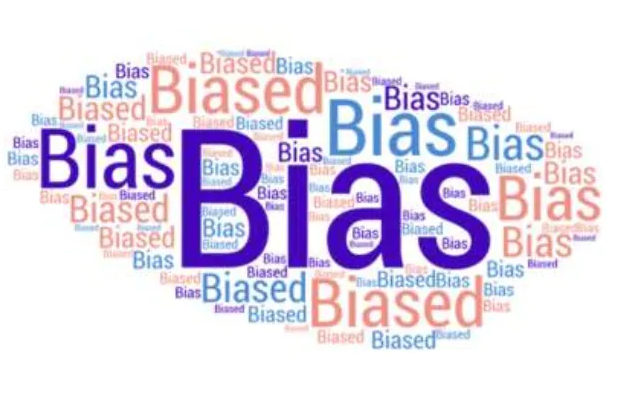
Ultimately 100% bias free content is not realistically attainable. A researcher needs to have an understanding of bias. If the business intelligence product they wish to create from the research is likened to a painting, they need to try as far as possible to start with a clean canvas.
Biased content means starting with a canvas which has blemishes. The researcher needs to know the level and nature of blemish that is acceptable for employer, client or self consumption.
But certainly, over the course of my MSc., low bias content was far easier to find than it is today.
‘ I consider the web to be an absolutely invaluable resource, but I think of it as a complementary tool to the academic library. While the amount and diversity of information on the web has increased exponentially the last few years (and should continue to do so), searching the web is still a time-consuming and rather inefficient chore’
Professor Michael Bryson, Director of Sustainability, Roosevelt University, Chicago US.
Yücel Saygin, member of Sabanci University Faculty of Engineering and Natural Sciences, and Gizem Gezici, PhD Student at the Computer Science and Engineering Program, in collaboration with Aldo Lipani and Emine Yilmaz from University College London (UCL) conducted a study on impartiality of search engines when retrieving results on two variables/indicators – ‘perspective’ and ‘ideology’. The comparison was made using Google and Bing. They discovered striking differences in results.
‘What’s the problem with tools that become so natural to the generation has grown up using them? It is that, just as a stage magician may use elaborately concealed machinery to accomplish a trick, there are hidden mechanisms in search engines that people need to know about, just as they may have learned to play sports “naturally” but need coaching to avoid wasted effort and injuries. Searching needs to be taught — to everyone, but in schools particularly.’ – Time Magazine
Now that we have established that not everything works the same regarding ‘intent’ from one search engine to another, an additional matter of difference to be considered is the revenue model.
If something is free, take a long hard look at it, because they are getting revenue i.e. monetizing your actions somehow. Nothing wrong with this in principle. We all have to make a living and search engine employees don’t work for free.
As for the teachings of Ndubuisi Ekekwe’s Tekedia Institute you need to understand their One Oasis, their Double Play, and/or their Aggregation Constructs.
In order to understand the full value of what you are notionally getting for free, you need strong visibility on how what they serve you is qualified by their need to make a profit.

Every search engine does not have exactly the same model. If for instance you don’t see adverts on the search field screen, and they don’t keep your search data, then that may mean they have a more aggressive doctoring of SEO in the direction of their sponsors results than some other engines.
So what are the take aways?
For an academic pursuit in a competitive framework –
Build your ‘Moat and ‘Walls’ by referencing your work well, with strong support from respected ISBN registered publications. Educational establishments often have a prescribed list of publishing houses they respect.
If you cannot find a submission focus or content topic which is strong ground for you, at least level the playing field by choosing an option that will not be familiar for peer challengers.
Sprinkle some online content to make it current (Books for Believability. Internet for Immediacy.)
Never turn down the opportunity to convert peer competitors to journey partners.
For online research –
Understand both Search Engines themselves and the content owners they serve up will have biases. Learn to evaluate those biases so that you can understand the full value of content.
Examine the revenue model of search engines, understand where their money comes from and decide which engines you want to use, when, and for what. Google is not the only show in town.
As for somebody who cites ‘Googling’ as a skill… for sure it is. But as we have seen, there is so much more than just selecting a few words to put into a search bar and clicking ‘go’ or ‘enter’. Its reasonable for those who weight it sufficiently to mention it specifically in a CV are pushed to show this deeper understanding!
References and Acknowledgements (not in the main text body) :
blogs.roosevelt.edu/mbryson/teaching/finding-sources/
gazetesu.sabanciuniv.edu/en/science-and-tech/impartiality-search-engines-discussed-detail
democraciaparticipativa.net/noticias-news-a-blogs/navegando-browsing/17161-the-most-reliable-impartial-and-relevant-search-engines.html
en.wikipedia.org/wiki/Search_neutrality
time.com/5318918/search-results-engine-google-bias-trusted-sources/
yourstory.com/2014/03/ultimate-master-list-revenue-models-web-mobile-companies/amp/
www.economysecrets.com/search-engines-make-money/