The dust is rising once again over the gig economy in California, unsettling the dispute that was seemingly put to rest through proposition 22 invoked by ride-hailing operators in the state last year.
On Friday, a California judge ruled that the ballot measure from last November defining Uber and Lyft’s drivers as independent contractors is unconstitutional, reopening the case about the status of drivers working for the app-based ridesharing companies once again.
Washington Post reports that in a ruling issued Friday, Alameda County Superior Court Judge Frank Roesch declared that Proposition 22 is “unenforceable,” arguing several sections of the measure are unconstitutional under California state law. They included a section that required a seven-eighths legislative supermajority to amend the measure, which defied the legislature’s amendment power under the state constitution, according to the judge.
Roesch said that avenue for amendments ran counter to the state constitution, instituting a threshold that was “difficult to the point of near impossibility.”
In California, ballot measures are required to be limited to a single subject, and the provisions in the measures must be related. The judge found that the measure pitched to Californians in November overstepped that requirement by limiting the legislature’s ability to allow workers’ to collectively bargain. Proposition 22 passed by a 59-to-41 percent vote in November.
“A prohibition on legislation authorizing collective bargaining by app-based drivers does not promote the right to work as an independent contractor, nor does it protect work flexibility, nor does it provide minimum workplace safety and pay standards for those workers,” Roesch wrote. “It appears only to protect the economic interest of the network companies in having a divided, ununionized workforce, which is not a stated goal of the legislation.”
Uber criticized the ruling Friday and said it intended to appeal.
“This ruling ignores the will of the overwhelming majority of California voters and defies both logic and the law,” Uber spokesman Noah Edwardsen said. “Meanwhile, Prop 22 remains in effect, including all of the protections and benefits it provides independent workers across the state.”
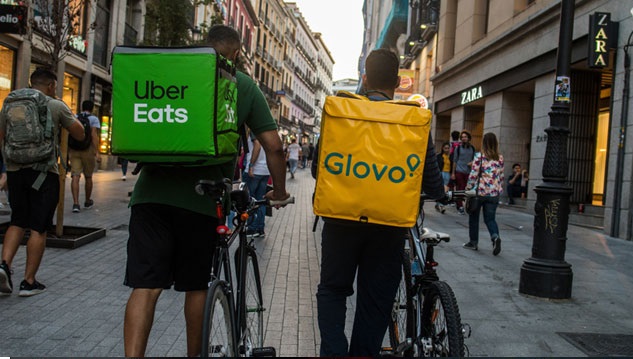
The hotly contested measure, driven by a $200 million campaign mounted by companies such as Uber, Lyft and DoorDash, followed a 2019 state law that defined Uber and Lyft drivers as employees. The companies and fellow apps mounted a vigorous defense, arguing the requirements of employment would impede the flexibility they offer drivers — and that the majority of drivers did not want to be employees.
California voters sided with Uber, denying drivers benefits by classifying them as contractors.
Advocates for employment argued drivers should be entitled to a minimum wage and benefits such as health insurance, sick leave and job protections.
Prop 22 created a limited set of benefits such as an earnings guarantee and a health care stipend, but not the typical protections of employment under state law.
Geoff Vetter, a spokesman for the Protect App-Based Drivers & Services Coalition, said his pro-Prop 22 group would file an immediate appeal.
“This outrageous decision is an affront to the overwhelming majority of California voters who passed Prop 22,” he said in a statement. “We will file an immediate appeal and are confident the Appellate Court will uphold Prop 22.”
Vetter noted the court ruling is not binding and said he expected it to be stayed as the group appeals.
Veena Dubal, a professor of law at the University of California Hastings who co-wrote an amicus brief on behalf of the petitioners, said the companies erred in “trying to completely take away the right of legislatures and municipalities to do anything on behalf of workers, as well as trying to take the workers out from the state’s workers’ compensation scheme.”
“They were trying to do too much in one proposition,” she said.
Stanford University law professor emeritus William Gould, who also co-wrote on behalf of the petitioners, said the judge’s methodical arguments would be hard to defend against. The gig companies faced a steep road ahead, he said, potentially stretching beyond the Court of Appeal.
“I think this is quite obviously important and precedential, and the final word is going to be with the Supreme Court of California,” he said.
The Friday ruling means uncertainties for both drivers and apps operating on gig economy. Uber and Lyft had argued that classifying their drivers as employees will impact the flexibility they’re enjoying, limit the number of drivers using their apps and spike the cost of trips. It was based on these arguments that Californians voted in the prop 22 ballot to maintain the status quo.
The Appeal and Supreme Courts will likely determine the fate of the parties. However, either of them will have a huge price to pay depending on the courts’ decision, but the gig economy will have more to lose. A ruling upholding drivers’ wishes will force Uber to downsize in California, its biggest market, further depleting its revenue that has been greatly hampered by the pandemic.