DD
MM
YYYY

PAGES

DD
MM
YYYY

spot_img

PAGES

Home Blog Page 5622

Beyond Regulation, China Wants Equal Distribution of Wealth

0
Chinese leaders are pragmatic

China’s recent crackdown on its tech industry, which has wiped billions of dollars off its economy, drastically reducing the fortune of its billionaires, has an undertone intent with a volume louder than the seeming regulatory concerns buoying it.

Months have passed since the shakeup in China’s tech industry, which started with the suspension of the highly anticipated Ant group’s mega IPO, and spread rapidly to many other players in the sector including the edtech, took root.

A report by CNBC says that beyond what everyone has thought, China’s war against its tech industry has little to do with regulatory awakening and more to do with the desire for equal distribution of wealth.

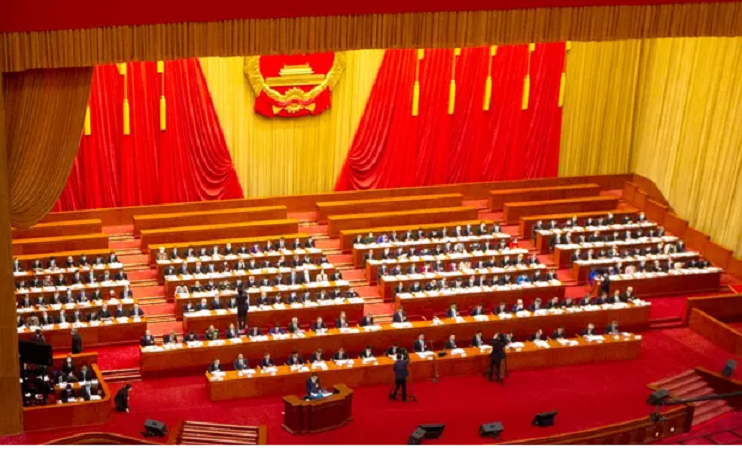
Chinese President Xi Jinping emphasized at a finance and economic meeting Tuesday the need to support moderate wealth for all — or the idea of “common prosperity,” which analysts have said is behind the latest regulatory crackdown on tech companies.

Significantly, the meeting was the first Xi led publicly since a two-week quiet period. Chinese leaders typically spend early August in secret political discussions at a resort in Beidaihe, about a three hours’ drive east of Beijing.

The meeting called for the “reasonable adjustment of excessive incomes and encouraging high income groups and businesses to return more to society,” state media said in Chinese, according to a CNBC translation.

Leaders also specified common prosperity does not mean prosperity for just a few and is not a form of equal distribution, state media said. Rather, progress toward the goal would occur in stages, the report said.

Delivering “common prosperity” has emerged in recent months as an underlying theme of Chinese political discussion. The term is generally understood as moderate wealth for all, rather than just a few. But it remains a vague, frequently used slogan.

Yue Su, principal economist at The Economist Intelligence Unit, said in a statement she expects authorities to be pragmatic in implementation.

“Considering that raising taxes on high-income groups and capital returns may curb investment and potentially lead to capital outflows, the Chinese government will not completely ignore the impact of redistribution policies on the economy,” she said.

She added that privatization will likely slow public services such as education, care for the elderly or medical care, with authorities at the very least becoming more strict in monitoring prices and affordability.

Income inequality among China’s 1.4 billion people has increased over the last few decades. The top 10% of the population earned 41% of national income in 2015, up from 27% in 1978, according to estimates published in 2019 by Paris School of Economics professor Thomas Piketty and a team.

But the lower-earning half of the population has seen its share of national income fall to about 15%, down from about 27% in 1978.

This year, urban residents in the coastal city of Shanghai had an average per capita disposable income of 7,058 yuan ($1,091) a month, far higher than the 4,021 yuan for those in cities nationwide, and well above the 1,541 yuan for rural residents, official data showed.

The Chinese government has claimed it eliminated extreme poverty in the country as of the end of last year. That marked a first step to fulfilling the longer-term pledges of the ruling Chinese Communist Party, which celebrated its 100th anniversary in July.

“Elaborating on the ‘common prosperity’ objective, China has affirmed its effort to rebalance the economy toward labor, tackling social inequality with redistribution, social welfare, taxes and inclusive education,” Morgan Stanley analysts said in a report distributed Wednesday, noting a target — “to increase the middle-income group’s share of the economy.”

Based on the top economic policy meeting, the analysts said they expect additional measures to support economic growth, such as a cut to the reserve requirement ratio.

Data for July showed China’s economic growth slowed more than analysts’ expected, including figures on spending by individual Chinese consumers.

However, economists have noted that growth is not as important for Beijing this year as tackling long-term problems such as a buildup of debt and risks in the vast real estate market.

“Finance is the core of the modern economy, with ties to development and security,” CNBC’s translation of state media said, citing Xi’s remarks at Tuesday’s meeting. “It must follow the principles of marketization and the rule of law, and coordinate the prevention and resolution of major financial risks.”

While the idea of equal distribution of wealth may seem good to many Chinese people, it poses a major economic danger for the second-largest economy in the world. The sustainability of China’s economy hangs largely on its conglomerates that are amplifying individual wealth of founders and business executives.

Experts warn that attempts to force Chinese billionaires to give up measures of their wealth will likely spook the interest of investors, who recently have found the South Asian country, a lucrative destination to plant their money.
Nigerian Government Moves to Unbundle NNPC

3

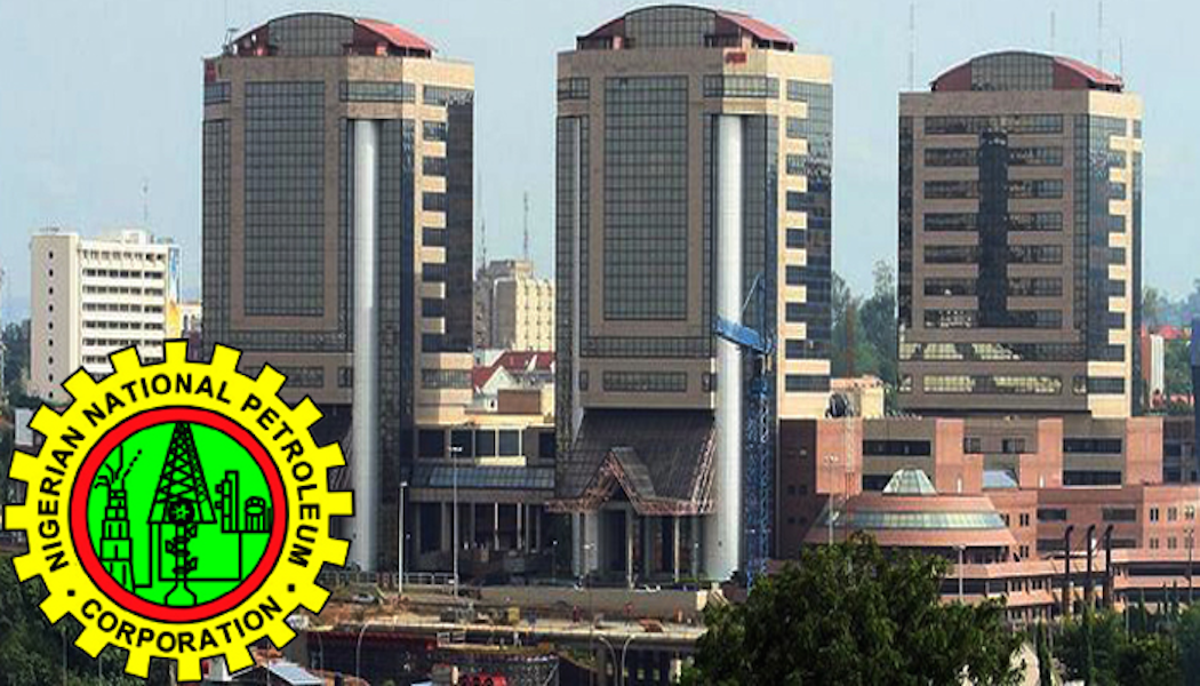
Following the signing of the Petroleum Industry Bill (PIB) into law by President Muhammadu Buhari on Monday, the federal government says the Nigerian National Petroleum Corporation (NNPC) will cease to exist within the next six months as specified by the Petroleum Industry Act (PIA).

The move was disclosed by Mele Kyari, group managing director of NNPC, on Monday, during an interview with AriseTV. He said the national oil company would be transformed into a private company that would pay taxes and dividends to its shareholders, and the new company would be incorporated under the Company Allied Matters Act (CAMA).

Kyari explained that all liabilities and assets of the NNPC will be transferred to the new company, though he noted that some toxic assets may be excluded.

“Coming back to the NNPC, the provision of the law clearly states that the corporation will be transformed into a CAMA company. The meaning of this is that the company will just be another privately owned company, in a sense,” Kyari said.

“This company will pay taxes, royalties and dividends to its shareholders. This isn’t the situation today because the corporation has no such obligation. This has stalled its development, its growth and its prosperity.

“According to the new Petroleum Industry Act, a new company will be incorporated within six months. That means all assets and liabilities of the NNPC will be transferred to the new company.

“Not all of them, by the way. The bill is very clear. Some toxic assets of the corporation may not be transferred. The federation or shareholders can decide to keep some of the assets and leave some with the corporation.

“Therefore, you are going to have a much more efficient, much more slimmer, much more commercial national oil company,” Kyari said.

Accordingly, President Buhari has commenced implementation of the PIA by approving a steering committee to oversee the process.

The committee headed by the Minister of State, Petroleum Resources, Timipre Sylva is made up of other members that include the Permanent Secretary, Ministry of Petroleum Resources, Group Managing Director, NNPC, Executive Chairman, FIRS, Representative of the Ministry of Justice, Representative of the Ministry of Finance, Budget and National Planning, Senior Special Assistant to the President on Natural Resources, Barrister Olufemi Lijadu as External Legal Adviser, while the Executive Secretary, Petroleum Technology Development Fund, will serve as Head of the Coordinating Secretariat and the Implementation Working Group.

Per Guardian, the primary responsibility of the steering committee will be to guide the effective and timely implementation of the PIA in the course of transition to the petroleum industry envisaged in the reform program, and ensure that the new institutions created have the full capability to deliver on their mandate under the new legislation.

The committee has 12 months duration for the assignment, and periodic updates will be given to Buhari.

The Petroleum Industry Act provides legal, governance, regulatory and fiscal framework for the Nigerian petroleum industry, the development of host communities, and related matters.

The controversial bill was passed by the Senate on July 15, 2021, while the House of Representatives did the same on July 16, thus ending a long wait since the early 2000s.

However, the move to unbundle NNPC has stirred mixed reactions from Nigerians who hail or criticize the federal government for towing the path after taunting it previously. The former vice president of Nigeria and People’s Democratic Party (PDP)’s presidential flag bearer, Atiku Abubakar, had, during his campaign, promised to privatize the Nigeria’s oil company, a move that was highly opposed by supporters of the ruling All progressive Congress (APC).

However, the PIA has brought a moment of twist that many believe is long overdue, and will help to sanitize NNPC’s operations that have been riddled with allegations of malfeasance.

Lafiya Telehealth, Beeptool Welcome NCC Delegation in Lagos

0

Let me thank a high powered delegation from the Nigerian Communications Commission (NCC) for checking our team today (Wed) in Lagos. We have successfully built and deployed a broadband service which uses TV whitespaces, delivering services which support telehealth services and payment systems. Provided there is a TV signal, our internet works.

We appreciate the support from the regulators, continuing from our playbook of proactively engaging them, and working with them on our designs, experimentations and processes.

Thank you for your support to BeepTool, LaFiya TeleHealth, etc. We are the only health-tech company in Africa which is also a medical device maker. Our vision is simple: every market, village square, church, mosque, school, etc will have a cloud hospital with medical diagnostic tools, linked into a cloud via IP addresses so that they can reach doctors in any part of the world.

Our technology will serve Nigeria – and we thank NCC for visiting. Please come back again, and again. And to Tekedia Capital investors who have supported the mission, we are confident that party time will be huge.

Why Temperature Data Loggers are Critical to the Covid-19 Vaccine Rollout

0

As we prepare to put the coronavirus pandemic behind us, it’s become clear that widespread and rigorous Covid-19 vaccine programs will play a very indispensable role. Even more important, the recovery from the pandemic must be supported by large-scale use of advanced data and monitoring technologies, which can ensure that the vaccine reaches the right people at the right time, in the right conditions.

And that’s where temperature data loggers will have a critical role to play. These nifty pieces of temperature-monitoring equipment have seen a dramatic leap in technology, features, and capacity in the last few years. So, they are well-equipped to stand up to the challenge of making sure billions of doses of potent Covid-19 jabs end up safely in the hands of people around the world.

Let’s talk about temperature data loggers and why their value to the Covid-19 vaccine rollout is absolute.

The Unique Covid-19 Vaccine Cold Chain Challenges

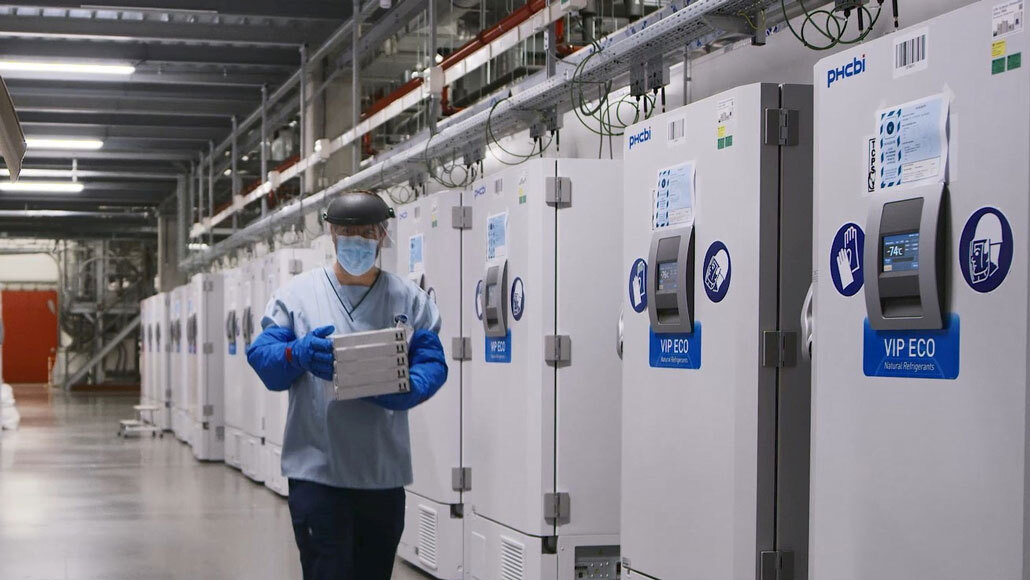
Much has already been told about the need for certain Covid-19 vaccines to be made, shipped, and stored at ultra-cold temperatures. Perhaps the BioNTech / Pfizer and Moderna variants are the two most talked-about coronavirus vaccines when it comes to the ultra-freezing storage requirement.

You see, carriers and logistics companies are well-equipped and experienced in cold supply chains of traditional vaccines like flu shots that must be stored and transported at a standard temperature range of between 2°C and 8°C. 

However, mRNA-based vaccines like the BioNTech / Pfizer are a different kettle of fish. They must be stored at extremely low temperatures between -80°C and -60°C to maintain optimal potency and efficacy. These ultra-cold conditions will keep fragile ingredients of the mRNA-based vaccines from falling apart for up to 6 months. 

But, once they’re broken out of the dry ice packs, the vaccine must be stored in a freezer at a temperature range of -25°C to -15°C for up to 14 days, according to the U.S. Center for Disease Control and Prevention (CDC).  

Even Johnson & Johnson’s Janssen Covid-19 vaccine, which doesn’t require ultra-freezing storage, can be kept at average cold supply chain temperatures of between 2°C and 8°C for only up to six hours.  

No matter the kind, if vaccine batches are exposed to temperatures outside of their recommended range, the heat introduced into the freezer or storage box will break down the fragile components, rendering the vaccine ineffective and thus unusable. 

While vaccine spoilage and wastage due to inadequate temperature controls and other logistical problems are not new to the industry, the need to address the issue is now more critical than ever. After all, we cannot afford to lose more precious Covid-19 vaccines — as we’ve recently witnessed in countries like France where around 25 percent of the delivered Oxford/AstraZeneca vaccine went to waste, especially now when dire vaccine shortages are being reported around the world.

Closer to home, numbers from 10 states reveal that well over 1 million Covid-19 doses have gone to waste since vaccine rollout kicked off in the U.S. According to the New York Times, the culprits for coronavirus vaccine wastage range from transportation and storage issues to equipment breakage and expiration.

It goes to show that constant monitoring of vaccine temperature and other environmental factors is crucial at every step of the vaccination process. We must keep an eye on every Covid-19 vaccine, every storage facility, every box, every refrigerator, every vaccination station, and every piece of shipping equipment.

And that’s shining the spotlight only on the Covid-19 vaccine cold supply chain. We must also consider the timely supply of all stabilizing agents, syringes, vials, and everything else that’s needed for the end-to-end vaccine rollout process.

Digital Temperature Data Loggers to the Rescue

The need for constant monitoring to ensure the vaccines are kept at ultra-cold temperatures poses a unique challenge to cold chain managers. For one, you can’t simply open the door of the cold box or freezer every time you want to check the temperatures. That would let in heat and end up degrading the fragile components of the vaccine.

That’s why everyone, from doctor’s offices to big-box pharmacies like Walgreens, has switched to automated temperature data loggers. The intelligent temperature sensors are placed inside the transport equipment or freezer to continuously keep track of vaccine temperature in transit and storage.

But temperature data collected by the loggers must be accessed and analyzed to ensure that vaccines are always in the right conditions. In the past, you’d have to use a USB flash dish or plug the data logged physically into a computer to retrieve the data so that personnel can inspect the temperature records for anomalies and cold chain breaches.

Thankfully, device companies like Dickson have come up with next-gen, cloud-based wireless cold chain data loggers. A set of these compact devices sit side by side with vaccines inside freezers or transport containers, continuously transmitting temperature data to cold chain managers, pharma companies, and clients.

According to Dickson, today’s data loggers are versatile and can be configured to not only transmit temperature data wirelessly but can also integrate with software applications for easy analysis, storage, and documentation. Some state-of-the-art digital data loggers can also double up as alarms, capable of sending out customized alerts via text, phone call, or email.

Because of the cloud connection, anyone with permission can access the monitoring data on vaccine temperature at any time, from anywhere, and using any internet-connected device, be it a computer, tablet, or mobile. Thanks to this setup, any damaging event (such as a breach of the cold chain) can be detected and quickly rectified before the vaccine starts to degrade.

Conclusion

Rolling out Covid-19 vaccinations has not been an easy walk in the park. Countries and pharmaceutical companies have to manage cold chain logistics of millions of Covid-19 jabs, all while battling widespread vaccine shortages, hesitancy, and misinformation. Data logger technology can help them ensure the successful delivery of safe and effective coronavirus vaccines by monitoring temperature every step of the way.

New Tekedia Mini-MBA Course: “Lean Principles in Supply Chain Optimization”

0

Every edition of Tekedia Mini-MBA is different. We use feedback and questions asked by our learners during live sessions to develop new courses and update existing ones. One of the things we noted in the supply chain and logistics course was the necessity of deepening optimization, agility & lean management within the supply chain framework.

To deal with that, we went to one of the best in that domain: he worked in DHL for close to 4 years and UPS for close to 10 years rising to Global Engineering EUD Manager – Global Logistics.  Because supply chain is commerce, he moved into the financial side, making sure we enjoy cocoa in many ways at Barry Callebaut Group, Belgium.

Chibueze Noshiri will teach a new course in the 6th edition of Tekedia Mini-MBA titled “Lean Principles in Supply Chain Optimization”. Our syllabus has been updated accordingly.

Welcome Mr. Noshiri to Tekedia Institute school.tekedia.com