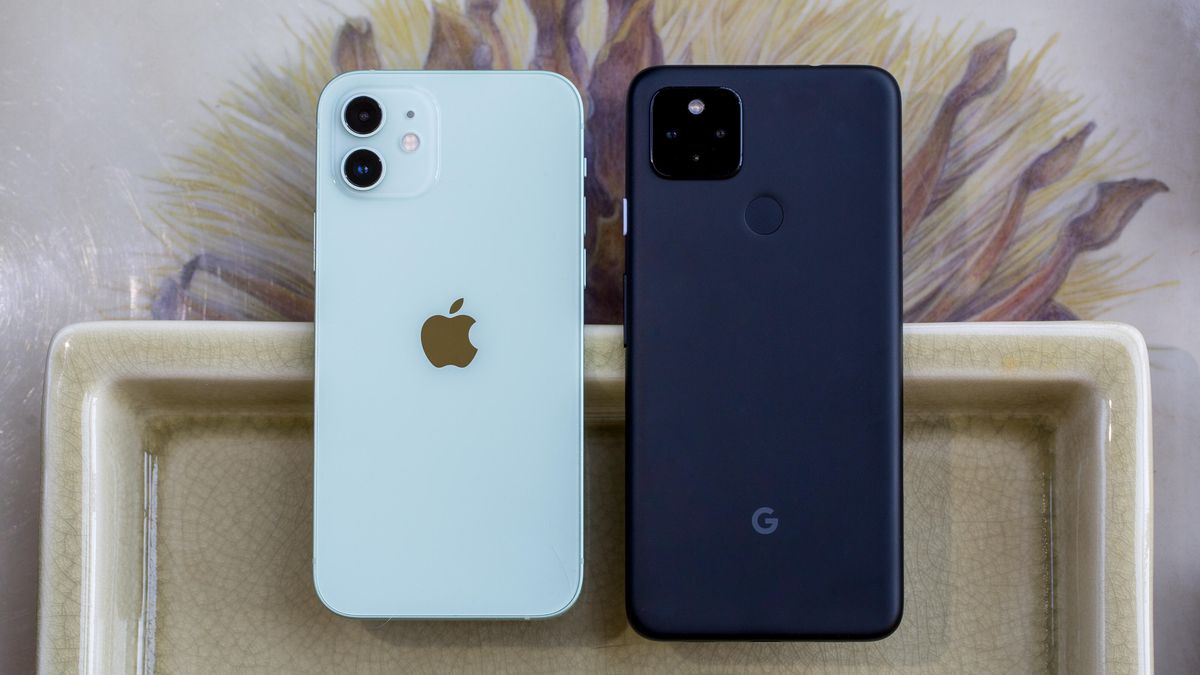
Option A: a digital market with only one payment processor and means to pay (Apple iOS)
Option B: a digital market where any merchant can build a preferred payment processor (what a new US bill wants).
A new US bill wants to break the duopoly of the Google Android store and Apple iOS store. Among others, it wants to give people the opportunity to setup their own payment systems within these ecosystems: “The legislation applies to companies that own or control an App Store with more than 50 million users, and it would prohibit Apple from forcing developers to use its own in-app purchase system, allowing developers to distribute apps through alternative app stores.”
On Wednesday, a new bipartisan antitrust legislation that targets Apple’s App Store and Google’s Play Store was introduced by three U.S. Congress members, in a first attempt to change how app stores are dominated by Google and Apple operate.
US Senators Richard Blumenthal (D-Conn.), Marsha Blackburn (R-Tenn.), and Amy Klobuchar (D-Minn.) introduced their Open App Markets Act.
“Google and Apple have gatekeeper control of the two dominant mobile operating systems and their app stores that allow them to exclusively dictate the terms of the app market, inhibiting competition and restricting consumer choice,” the lawmakers said.
I have checked Google and Apple stocks and the bill did not influence markets. In other words, investors did not see the new rules as a threat. If you force Apple to provide access, it can do so if that becomes the law but it can put a notice “this seller processes payments outside Apple” – a critical warning that may even affect the reputation of the merchant within the ecosystem.
This is not new. Amazon lists items after search and tells you the items which are fulfilled by Amazon. Typically, if prices are relatively the same, many buy from the items which are under the control of Amazon, instead of dealing with merchants they do not know. If Apple does not provide the confidence on the payment system, many will stop spending.
Yet, there needs to be a balance on the fees but Congress must be very careful not to legislate out what makes people use these apps – security of payment in trusted platforms- in the age when cyber related issues have ballooned.
On Wednesday, a new bipartisan antitrust legislation that targets Apple’s App Store and Google’s Play Store, was introduced by three U.S. Congress members, in a first attempt to change how app stores are dominated by Google and Apple operate.
US Senators Richard Blumenthal (D-Conn.), Marsha Blackburn (R-Tenn.), and Amy Klobuchar (D-Minn.) introduced their Open App Markets Act.
“Google and Apple have gatekeeper control of the two dominant mobile operating systems and their app stores that allow them to exclusively dictate the terms of the app market, inhibiting competition and restricting consumer choice,” the lawmakers said.
The legislation applies to companies that own or control an App Store with more than 50 million users, and it would prohibit Apple from forcing developers to use its own in-app purchase system, allowing developers to distribute apps through alternative app stores.
The summary of the legislation highlights the government’s concern over Google and Apple’s dominance which has stifled competition and gives smaller players a little or no say in the app market. The summary of the legislation is as follows:
The Open App Markets Act would protect developers’ rights to tell consumers about lower prices and offer competitive pricing; protect sideloading of apps; open up competitive avenues for startup apps, third party app stores, and payment services; make it possible for developers to offer new experiences that take advantage of consumer device features; give consumers more control over their devices; prevent app stores from disadvantaging developers; and set safeguards to continue to protect privacy, security, and safety of consumers.
It would also prohibit the app-store operators from requiring developers to use the Apple and Google in-app payment systems and from imposing terms that block or penalize developers who offer the same app at a different price elsewhere. Apple and Google also would not be allowed to prefer their own apps in search “unreasonably,” which is defined as “applying ranking schemes or algorithms that prioritize apps” simply because they are owned by Apple and Google or their business partners. Clearly disclosed advertising is exempt from that provision.
To help third-party software developers, the bill says Apple and Google must provide “access to operating system interfaces, development information, and hardware and software features” to developers “on a timely basis and on terms that are equivalent or functionally equivalent” to the terms that apply to Apple and Google or their business partners.
Violations of the bill would be considered unfair methods of competition under US law. The Federal Trade Commission, US attorney general, and state attorneys general would be able to sue companies over violations. Developers who are “injured by reason of anything forbidden in this act” would be able to sue the companies for damages and injunctive relief.
A group funded by Apple and Google sent a statement to the media claiming that the proposed law “is a finger in the eye of anyone who bought an iPhone or Android because the phones and their app stores are safe, reliable, and easy to use.”
The statement came from the “Chamber of Progress,” which calls itself “a new center-left tech industry policy coalition promoting technology’s progressive future.”
“I don’t see any consumers marching in Washington demanding that Congress make their smartphones dumber. And Congress has better things to do than intervene in a multi-million dollar dispute between businesses,” said Chamber of Progress CEO Adam Kovacevich, who was formerly a longtime Google lobbyist.
In a separate statement, Apple defended its app store practice, saying that “our focus is on maintaining an App Store where people can have confidence that every app must meet our rigorous guidelines and their privacy and security is protected,” while Google has pointed out that Android is more open to app stores and sideloaded apps than iOS. But despite Android’s openness relative to iOS, 36 states sued Google last month, claiming it worked to “preemptively quash” competing app stores.
Blackburn said that “Apple and Google want to prevent developers and consumers from using third-party app stores that would threaten their bottom line,” while Blumenthal said the two companies “have squashed competitors and kept consumers in the dark—pocketing hefty windfalls while acting as supposedly benevolent gatekeepers of this multi-billion dollar market.”
“This legislation will tear down coercive anticompetitive walls in the app economy, giving consumers more choices and smaller startup tech companies a fighting chance,” Blumenthal said.
Last month, after the 36 states filed their antitrust lawsuit against Google, it called the complaint meritless and said it is “strange that a group of state attorneys general chose to file a lawsuit attacking a system that provides more openness and choice than others.”
For developers and many app users, the legislation is long overdue. The “Coalition for App Fairness,” with members such as Spotify, Epic Games, Match Group, Basecamp, ProtonMail, and Deezer, are all backing the Open App Markets Act, hoping it would ease the monopolistic policies that have sometimes landed them in court.
“The Open App Markets Act would fix a broken app marketplace by barring app stores from requiring apps to use their in-app payment systems, through which they charge exorbitant fees and block communications between developers and their own customers,” the group said. “It would also strengthen consumer freedom by allowing people to choose and install the app store and default apps that make the most sense for them and easily delete preinstalled apps they don’t want to use.”
The legislation is one in many antitrust issues Google and Apple are facing. The speedy response from Google and Apple shows the impact the bill will have on their app operations if it becomes law will be immense – it will be the end of app store duopoly.
What is the future of monetizing art? And it is not just art as anything seems sellable these days. As the Igbo nation will say “uwa bu ahia”, and if the world is a market, we can trade (sure there are exclusions: Remember that line – “Who Will Buy My Wife?” in Thomas Hardy’s The Mayor of Casterbridge).
In this piece, John Mc Keown looks into the new world of non-fungible tokens (NFT) and metaverse. NFTs make it possible for people to sell digital assets for big money: “‘The NFT market has witnessed a dramatic increase in value over the last few years. The market cap has increased almost ten times from 2018 to 2020, and in 2020 alone, its value increased by 299%”. Twitter CEO Jack Dorsey’s first tweet NFT sold for $2.9 million. Go figure.
In an interesting twist on ‘virtual value’ a British artist, Damien Hirst, launched a series of 10,000 artworks and non-fungible tokens (NFT) to conduct an experiment that forces buyers to choose between possession of the physical artwork or its blockchain-based version.
The artworks have ‘banknote’ type security features – every artwork is signed, numbered, watermarked, and features an embedded hologram, making them very difficult to copy or forge.
Owners will have to decide whether to keep the NFT or the physical artworks, which are being kept in a secure vault.
Think about it: I can sell my old photos which I took while in the bank for $$ because they are in high demand now, for conferences and events. I get the frustrations: why can’t you take recent photos in suits? Will surely if you promise to put them in $NFT!
Seriously, for Africa, does NFT provide a new opportunity to unlock big money out of tradition and art? And if you bring the new domain of metaverse, a high call unification of physical and digital, are we going to mint $millionaires from this? There are things to sell including this post via NFT! Be excited about the promises of the future.
Comment on LinkedIn Feed
Comment #1: Thanks for the push Prof Ndubuisi Ekekwe. Simply put… a little Nigerian boy uses his resourcefulness, begs parts and materials here and there… makes a tipper truck as in the video.. I’ve seen another one here about a boy with a makeshift ATM.. Its a novelty to see such a small boy do this.. he collects small ‘dash’ from passers-by here and there.. he gradually gets older and the ‘cute clever kid’ novelty stops working.. what next?
Once a theme centric NFT marketplace is up and running, the first thing investors are hungry for is content to sell.
If this new world should come to Nigeria (or any African country), these lads will need new dreams. Forget hoping to be noticed by a scout for Man City, Barca or Bayern… the eye of the NFT marketplace scout is the new dream! ?
My Response: “Once a theme centric NFT marketplace is up and running, the first thing investors are hungry for is content to sell.” – good point. More than 9 founders have presented to me but non of the foundational platforms are under their controls. Why must it be Binance? So, I agree. I want one where the OS is local. If that happens, this will make sense.
She is a capital market leader and she has seen it all when it comes to markets. I want her to fly over Lagos with Vetifly, our helicopter business, and see the new Lagos. The next ticket I will give goes to Toyin F Sanni – Business Leader Gamechanger Investment Banker , ex-Group Chief Executive Officer of United Capital Plc, Chairman of Emerging Africa Asset Management, and Group Chief Executive Officer at Emerging Africa Group.
GCEO Ma, please download our app at vetifly.com and our team will follow up to issue credit so that you can fly to the next Board meeting with Vetifly. You will go in style by arriving differently.
As always, we admire your work and what you are doing in our communities.
Jumia has assets and some of the best in continental Africa. But Jumia also has natural competitors when its best customers are being pulled down by economic gravity. For Jumia to outperform, it has to deal with the double whammy of economic paralysis in its major market (Nigeria) and currency deterioration affecting marketplace players who import most of the things listed therein.
As the customers become pulled down by economic weights, they move informal, patronizing open markets, which most times do not charge VAT, artificially making their products cheaper. These factors continue to affect the results.
Jumia Technologies (NYSE: JMIA), the e-commerce leader in Sub-Saharan Africa, missed revenue estimates for the second quarter by 7%, showcasing revenue of $40.2 million, and slightly beat the loss prediction of analysts. Jumia reported losses of $0.41 a share for the quarter. Wall Street had predicted a loss of $0.44 per share on revenue of $43.3 million for the quarter.
I see three key areas in Jumia business: JumiaPay, fashion and food delivery. If I have to speak to the Jumia board, I will ask it to make JumiaPay its core double play, feeding from the one oasis of the Jumia marketplace.
My proposal would be to have a holding company where Jumia can run JumiaPay as a quasi-fintech which becomes open to non-Jumia customers. With a microfinance bank license, it would become a digital bank. The goal is total fintechnolization of the Jumia platform where lending and other financial services can happen at scale.
African-focused e-commerce giant Jumia reported revenues of $40.2 million in Q2 2021, up 4.6% year-over-year. Jumia’s operating loss, which declined in Q1 2021, increased 24.7% to $51.6 million in Q2 2021. The company says transactions on JumiaPay increased by 12% from 2.4 million in the second quarter of 2020 to 2.7 million in the second quarter of 2021, making it the fastest transactions growth rate over the past four quarters. (Techloy)
If Kuda has 1.4 million customers and is valued at $500 million, Jumia with an excess of 10 million customers should be more than the current $1.84 billion valuation. If you feed Jumia logistics, food delivery and fashion (wigs, etc) into JumiaPay, agnostic of platform, you have one of the largest fintechs in Africa. That alone should be more than $2 billion. Then add the pieces and you have a great holdco which Wall Street will connect.
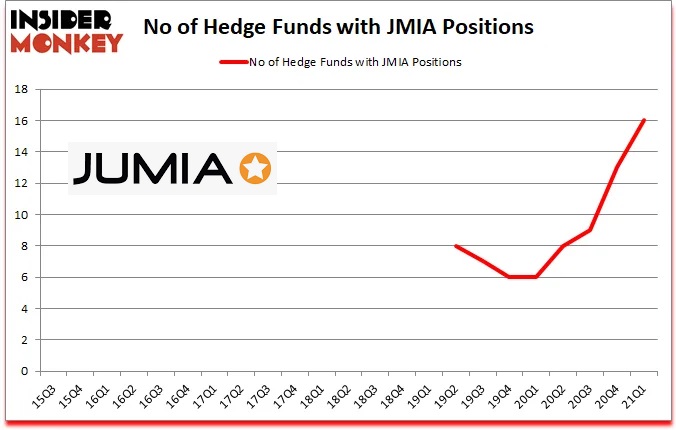
The hedge funds think this company can outperform. I do believe it since Jumia added JumiaPay. But it needs to allow that piece to fly. And if it does, Jumia will have a great party. No one has made money directly on ecommerce in the emerging world; you always use it to capture value via other verticals.
Jumia should be worth at least $7 billion in America!
Comment #1: Although Jumia has the core advantage of the eCommerce platform to draw traffic to its payment application, the truth is that the space JumiaPay operates in is one of the most competitive in the Nigerian fintech space – a space where most big players primarily have strong customer acquisition points, but rarely a distinctive unique value proposition.
Customer Apathy is a real thing, and while JumiaPay may look promising, there’s nothing that guarantees that people who download the app for eCommerce purposes will use it for payments also, considering they already have what they originally use and eCommerce is really not something you do everyday.
In the long run, I see Jumia’s logistics business as it’s core advantage, with a good network and a couple of partnerships here and there, Jumia could position itself as the logistics operating system for all things eCommerce in Nigeria, and probably Africa.
The logistics space is Lagos is saturated, however, most players can’t properly connect Nigeria and this is where Jumia can position itself. Gokada is probably one of the smartest players in the Lagos logistics space; real time tracking, strong B2B model etc. Jumia can borrow some leaves from their booklet and connect nationally.
My Response: Get a microfinance license, send N500 awuuf for anyone to click a button to have a Jumia bank account, tomorrow report that your digital bank has 10 million users. Offer 10% discount for paying with a Jumia Bank account instead of Visa/Mastercard cards. Save those fees. That loop will feed food delivery which happens often, logistics, etc. Thenopen it for other players. If they use, their users save 5% via in-merchant fees. This is fintechnolization: JumiaPay will have the largest customers in Africa and will become the category-king on day one. It has brand recognition already.
Comment #2: Great point, but incomplete picture?
Jumia’s brand assets are built on customer relationship, and Jumia has a very low brand score on this.
Jumia borrowed Amazon’s playbook to play locally, but Jumia missed what made Amazon Amazon – CUSTOMER FIRST. Ask the so-called “online Nigerian buyer” to choose between between “faraway Amazon” and “backyard Jumia”, and they will choose Amazon without blinking an eye.
Jumia is a great company, but I think they missed out Amazon’s page on “customer first.” For reasons unknown, Jumia has allowed “bad sellers” to corrupt its “customer relationship engine.”
Customers are still complaining bitterly on how they bought a particular product spec, colour and size on Jumia, only to receive something totally different from what they ordered.
To make Jumia Jumia, Jumia should:
1) Take out the bad apples by creating some sort of quality assurance/ customer service feedback program.
2) Apologize to the millions of customers they’ve hurt or allowed to be cheated by these bad sellers.
3) Get customers to verify this – thanks to cheap social media.
Until they do this, Jumia will only be casting a long shadow…
One that might come back to haunt it.
Like Beowulf’s monster…
Response: “Jumia borrowed Amazon’s playbook to play locally, but Jumia missed what made Amazon Amazon – CUSTOMER FIRST.” – that may not be fair. Unlike Amazon, Jumia runs its own postal service, security, waterboard, etc and does not get free cash via Amazon Prime. Jumia is doing well; try to run a business in Nigeria where some of these delays can be caused by Lagos 5-hour traffic for a trip planned for 25 minutes. While Jumia has to improve but I tell you one thing: running a delivery business in Nigeria without a postal service cannot be like America with a working postal service.