DD
MM
YYYY

PAGES

DD
MM
YYYY

spot_img

PAGES

Home Blog Page 5627

China’s Stake in ByteDance May Brew Fresh Trouble for TikTok

0
The brand is growing

The Chinese government has taken a stake and a board seat in TikTok owner ByteDance’s key Chinese entity, Beijing ByteDance Technology, The Information reported on Monday, citing corporate records and people with knowledge of the matter.

Beijing ByteDance Technology sold a 1% stake in an April 30 deal to WangTouZhongWen (Beijing) Technology, which is owned by three state entities, the media outlet said, citing Tianyancha, an online database of China’s corporate records.

The deal also allowed the Chinese government to appoint a board director at Beijing ByteDance, it added, attributing it to two people with knowledge of the arrangement.

The deal does not give the Chinese government any stake in the firm’s hit short video app TikTok because of ByteDance’s complex corporate structure, The Information said.

ByteDance told Reuters the Chinese subsidiary referenced in the report only related to some of its China market video and information platforms, and held some of the licences they require to operate under local law.

What it mat mean for TikTok

TikTok’s US operation has been under scrutiny over concern of Beijing’s involvement with its business, and the possibility that the short video app could be forced by the Chinese to hand over users’ private data when needed.

Former US president Donald Trump had hung on the risks such development may pose to US national security and signed executive orders targeting TikTok’s business in America. The orders which included attempt to force TikTok to sell its US operations to American companies have been rescinded by current president, Joe Biden, but Washington is still wary of the danger unchecked relationship between ByteDance, TikTok’s parent company, with Beijing could pose to the United States.

The news that the Chinese government has taken a stake and a board seat in ByteDance may trigger a new wave of scrutiny for TikTok that has been basking on its newly found freedom. With millions of people around the world embracing the video app, it has beaten all growth expectation. Early this month, TikTok overtook Facebook, WhatsApp, Instagram and Facebook Messenger — all of which are Facebook owned as the most downloaded app, even in the U.S.

While Biden reversed Trump’s executive orders targeting TikTok, he introduced new executive orders requiring the Commerce Department to review apps with ties to “jurisdiction of foreign adversaries” that may pose national security risks.

In evaluating the risks of a connected software application, several factors should be considered.  Consistent with the criteria established in Executive Order 13873, and in addition to the criteria set forth in implementing regulations, potential indicators of risk relating to connected software applications include:  ownership, control, or management by persons that support a foreign adversary’s military, intelligence, or proliferation activities; use of the connected software application to conduct surveillance that enables espionage, including through a foreign adversary’s access to sensitive or confidential government or business information, or sensitive personal data; ownership, control, or management of connected software applications by persons subject to coercion or cooption by a foreign adversary; ownership, control, or management of connected software applications by persons involved in malicious cyber activities; a lack of thorough and reliable third-party auditing of connected software applications; the scope and sensitivity of the data collected; the number and sensitivity of the users of the connected software application; and the extent to which identified risks have been or can be addressed by independently verifiable measures.

Under this new rules, Beijing’s involvement with ByteDance may revitalize the scrutiny which have been relaxed over the last six months. Although ByteDance has repeatedly said that TikTok operates independently, and it’s not under the influence of Beijing’s operations, US lawmakers have found it hard to believe.

The lawmakers have warned those in government, including service men to stay away from TikTok to avoid the risk of exposing classified data to a hostile nation.
Zambian President Edgar Lungu’s Surprising Concession

0

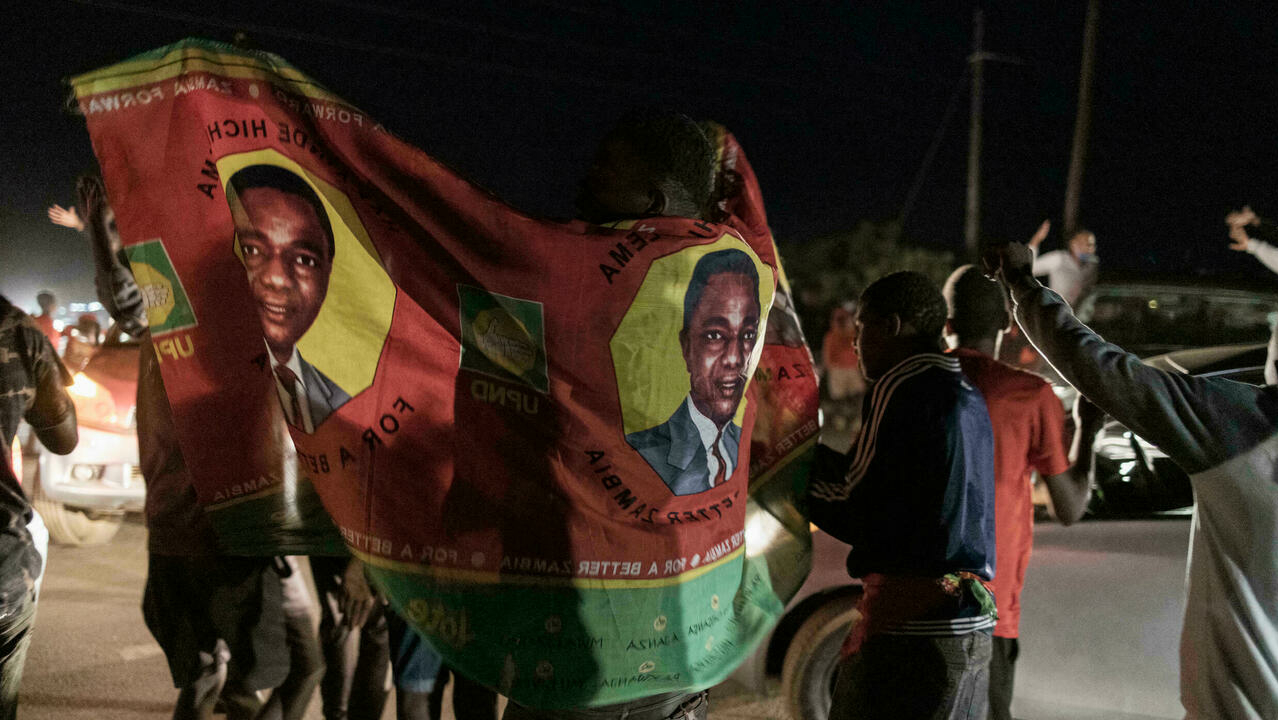
On Monday, Zambian President Edgar Lungu officially conceded to opposition leader Hakainde Hichilema, after losing the presidential election.

His decision to concede has been widely praised as exemplary precedent for other African countries.

Lungu had initially indicated he may challenge the result, but turned around to accept the outcome of the election.

“Based on the revelations issued at final results, I will comply with the constitutional provisions for a peaceful transition of power.

“I would therefore like to congratulate my brother, the president-elect, His Excellency Mr Hakainde Hichilema, for becoming the seventh Republican President.”

The electoral commission said Hichilema got 2,810,777 votes against Lungu’s 1,814,201, with all but one of the 156 constituencies counted.

Lungu thanked the people of Zambia for giving him the “opportunity to be your president”.

“I will forever cherish and appreciate that authority you’ve invested in me. Countrymen, women in and the youth, all I ever wanted to do was to serve my country to the best of my abilities.

“Of course, there were challenges on the way. But what I appreciated most, with your support during the tough times.

“Lastly, I’d like to thank all those who voted for my party, the Patriotic Front, and myself. To you, I say your vote was not in vain. Please continue supporting us.”

Zambia was notorious of controversial leadership for 19 years when it functioned as a one-party state, from 1972 to 1990 when multi-party democracy was reintroduced and election was held in the subsequent year. Lungu’s concession marks the third time that power has shifted peacefully from a ruling party to the opposition since the southern African country’s independence from Britain in 1964, though there have been several elections, eight of which were held between 1991 and now.

Lungu was largely accused of dictatorship, especially by young people who found many of his decisions oppressive. In July 2017, Lungu got the Zambian parliament to approve a 90-day state of emergency, riling up concern that the country was headed to full dictatorship.

Supported by 85 lawmakers from his Patriotic Front (PF) party, the emergency powers gave the police more powers to arrest and detain anyone, especially members of the opposition United Party for National Development (UPND) party, who the president had accused of masterminding arson attacks in the country.

The emergency powers would also give Lungu’s government the right to suspend civil rights, prompting a global condemnation of the move. Critics said it’s just a sign that Lungu was trying to establish a dictatorship to quell growing dissent to his rule among Zambians.

Other incidents such as the suspension of national newspaper The Post, which was notably critical of Lungu’s government, and arbitrary arrests of some members of the opposition, confirmed the fear of Lungu’s dictatorial tendencies and heightened concern over his willingness to concede defeat in the presidential election.

The election was graced by a huge turnout of mostly young people, some who came dressed in their academic robes to protest lack of employment post graduation.

Joseph Kalimbwe, a youth representative of Hichilema’s UPND party told CNN.

“Young people gave us the vote. Four million young people between the ages of 18 to 24 registered to vote. It was a huge turnout and it was very personal to them. They want to ensure the mistakes of their parents were corrected. They have voted for our leader on basis he has better policies and ideas and can strengthen our state institutions.”

Lungu had shut down the internet during the election as votes were being counted and deployed more soldiers on the allegation that the election was being rigged against him. The president’s concession was thus a surprising turnaround that even his critics have praised as sign of progressive democracy in Zambia.

Zambia election recorded more than 7 million voters which made up to 85% of the country’s electorates. The Africa’s second biggest copper miner will now face a future riddled with economic challenges under the leadership of Hichilema.

The Biggest Mistake In Nigeria’s Leaked New NITDA Bill

2

The leaked National Information Technology Development Agency (NITDA) draft bill should be updated before they pass it in the parliament. It is severely deficient. Largely, everyone agrees that NITDA needs a new operating protocol as the one passed in 2007 is no more adequate. Nonetheless, we do hope that the parliament does the right thing by making sure that we do not stifle innovation in the process.

This bill as drafted is totally inadequate as it missed the most consequential challenge facing the technology sector in Nigeria: re-domiciliation of Nigerian tech startups out of Nigeria to the United States and UK. I understand the inclusion of the big fines of N3 million for individuals, and N30 million for corporations, for breaking the protocol, but on things which matter, this bill lacks value.

“Any person or body corporate who operates an information technology or digital economy service, product, or platform contrary to the provisions of this Act, commits an offense,” the agency said in the statement.

Individuals found guilty by the agency will be fined not less than N3 million (~$6,000) or placed into custody for a year or more. The bill states NITDA can also decide to charge such a person both the fine and imprisonment.

On the other hand, a fine of not less than N30 million (~$60,000) will be charged against corporate bodies. The ‘principal officers’ of the companies may also serve a prison sentence for two years or more.

The wealth of the future through digital technology companies are not being domiciled in Nigeria even though the operating entities and the domains of operations are Nigerians and Nigeria respectively. A NITDA bill that does not address that paralysis is deficient.

When these startups are about to raise capital, most times, they re-domicile out of Nigeria, partly to protect their intellectual properties because they cannot have confidence that Nigeria will protect them. Nigeria needs to work on that urgently and give the startups what will make them comfortable to remain fully Nigerians.

Yes, despite the current effervescence of entrepreneurial capitalism in Lagos, the fact remains that most of the wealth being built is not Nigerian. If GTBank, Zenith and Access Bank were not Nigerian in the early 1990s, our current stock exchange would have lost the banking leaders of today. So, it is critical that Nigeria focuses on what matters: how to make sure the wealth which technology is opening up in Nigeria remains Nigerian! Not addressing that is a big mistake in the draft bill.

The leaked bill seems new but critically it is an expired document: unborn tomorrow, but died yesterday. They need to rewrite it.

Understand the Mechanics of Innovation At Tekedia Mini-MBA

0
innovation

What is innovation? At Tekedia Mini-MBA, we have a simple definition: Innovation = Invention + Commercialization. Yes, until markets have validated the hypothesis of that idea through commercial success, you cannot call it “innovative”. In our program, we have three phases to make that translation, and they are the innovation phase, business growth phase, and operational execution phase.

By the time we are done, you will master the innovation mechanics (yes, the physics of innovation which takes us to the natural philosophy of innovation). Fixing market frictions, capturing value and advancing the prosperity of nations, even as you accelerate human welfare.

Advance your career with Tekedia Mini-MBA (Sept 13 – Dec 6, 2021): 140 global faculty, online, self-paced, $140 (or N50,000 naira). Click and register here.

Welcome Wellahealth Team to Tekedia Mini-MBA

0

Tekedia Institute welcomes the team from Wellahealth to Tekedia Mini-MBA which begins Sept 13 to end Dec 6, 2021. Wellahealth partners with insurance companies to offer micro health insurance for high occurrence disease in Africa starting with malaria in Nigeria.

At Tekedia Mini-MBA, we co-learn the mechanics of business systems, mastering innovation, understanding how to accelerate business growth, and becoming agents for advancing communities.

Registration continues here