DD
MM
YYYY

PAGES

DD
MM
YYYY

spot_img

PAGES

Home Blog Page 5630

Tekedia Live: Funding Hacks & Raising Capital – Nathan Beckord, CFA; CEO Foundersuite, Aug 10

0

This is a reminder to members that Tekedia Mini-MBA Live today will be anchored by  Nathan Beckord, CFA; CEO of Foundersuite . He will be speaking on funding, financial modelling and tools to make raising capital less challenging. A Chartered Financial Analyst (CFA), Nathan’s Foundersuite has facilitated and enabled innovators and startups to raise excess of $700 million since 2016. 

He will show us how because we want capital!

  • Tue, Aug 10 | Funding Hacks & Raising Capital – Nathan Beckord, CFA; CEO of Foundersuite 

Zoom link in the Board. 

Register for the next edition of Tekedia Mini-MBA here.

We’re Building “Paystack, Flutterwave, Kudabank of Nigeria’s insurance”; A New Gen Insurer

1

 Tekedia Capital is working to build the “Paystack, Flutterwave, Kudabank of Nigeria’s insurance”.  The goal is to capture massive value via New Generation Insurers in  Nigeria just as the New Generation Banks did in the 1990s. But for this new generation of insurance firms, we also want to overlay what modern fintechs are doing in banking. So, at the end, we will have new generation insurers. In our upcoming dealflow, our Syndicate members will get to see our vision through what  we are putting together on this. I do believe that insurance remains a latent opportunity but we need to open Nigeria’s playbook, bring solid behavioural economics, baked in software, to redesign the sector. We think that this is MASSIVE. 

We are already working and I am extremely confident that we can write micro-policies and use behavioural economics to change the ordinance of the business. We will move first and scale first, hold the advantages and capture the opportunities.

If you are interested in this, I invite you to check Tekedia Capital. We will create a new generation insurer and I am expecting it to be big.  I have two entities working on this. One team has a brilliant young man who created and sold a company to Wakanow and later another to Jobberman. I have so much confidence that both firms will outperform. He has shown that exits can happen fast and quick in Nigeria. He has INSIGHTS about Nigeria and battle-tested.

At Tekedia Capital, we want to build the Next Africa via category-leading empires of the future. Go here and see what Tekedia Capital Syndicate does.

We believe that it is not Nigerians that should change to love insurance products. We believe that insurance products must evolve to be relevant in the lives of Nigerians and their companies. Before the 1990s, people hated banks until banks evolved their products. We think it is time for the insurance sector to be redesigned.

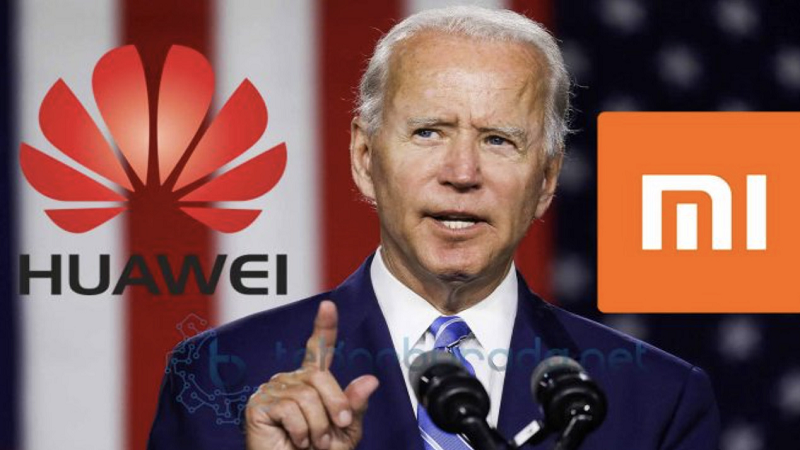
Trump’s Huawei Era, Now Biden’s Xiaomi Time

1

In the last ten centuries, the Chinese economy was the world’s largest in at least six. The 21st century is expected to flip from the United States to China, breaking a run which the US started around 1894 when it overtook the British economy. Building on knowledge through discoveries in transistors, microprocessors, Internet, and others, the 20th century was an American century.

But China began to rise with pragmatism through an entirely new economic playbook which took the world by storm. As I wrote in the Harvard Business Review, “China designed and executed a policy that shrank the industrialization process in a mere 25 years — something that many economies took at least a century to do.” I have followed up on that thesis in many briefs for investment banks, postulating that China has already won the future!

Sure, ex-president Donald Trump came and put some pedals. But unfortunately, like the Igbo proverb will say, when you see the Aneke the bird dancing by the roadside, check well as something is beating the music it is dancing to. Yes, China’s competitive advantage is that it is the manufacturing capital of the world – and its advantages are accelerating and compounding daily. You can buy an “iPhone case” and get it shipped from China to New York for $2.87 at eBay. Try to ship a package of the same weight from Atlanta to New York and the United Postal Service will put you behind by at least $7 excluding the content.

So, how is that cheap logistics possible? That is China’s double play. Make logistics so low and outcompete all SMEs and small manufacturers anywhere in the world. And use that playbook to ramp up development. There is a reason why shipping from China to Lagos is cheaper than transporting from Lagos to Sokoto!

Huawei rose and the US had issues with it, cutting it off from the sources of integrated circuits and processors.

But instead of making space for another nation, the news today is that Xiaomi is now the world’s largest phone maker: “Not long after it displaces Apple to clinch the No. 2 spot for Q2 2021, Xiaomi has taken the first spot as the world’s biggest smartphone vendor for the first time. That’s according to July’s numbers from Counterpoint Research, which has Xiaomi in first with 17.1 percent of the global market, Samsung in second with 15.7 percent, and Apple in third with 14.3 percent.” Xiaomi is a Chinese brand.

Now, Joe Biden, would you cut-off Xiaomi? That would be a waste of time as another Chinese brand will emerge. This is a network effect kind of phenomenon. Yes, when you cut them, the fittest will grow and become dominant because the energy from China is so asymmetric for any other player in the world to have a chance.

Who is playing for Aneke the bird: Huawei gone, Xiaomi come….and we are documenting the ascension of China.

Xiaomi Topples Samsung, Becomes the Biggest Smartphone Maker

Xiaomi Topples Samsung, Becomes the Biggest Smartphone Maker

0

Not long after it displaces Apple to clinch the No. 2 spot for Q2 2021, Xiaomi has taken the first spot as the world’s biggest smartphone vendor for the first time. That’s according to July’s numbers from Counterpoint Research, which has Xiaomi in first with 17.1 percent of the global market, Samsung in second with 15.7 percent, and Apple in third with 14.3 percent.

Counterpoint says Xiaomi’s market share grew 26 percent month over month. The growth is attributed to market recovery among other factors as covid restrictions get lifted around the world.

“Ever since the decline of Huawei commenced, Xiaomi has been making consistent and aggressive efforts to fill the gap created by this decline. The OEM has been expanding in Huawei’s and HONOR’s legacy markets like China, Europe, Middle East, and Africa. In June, Xiaomi was further helped by China, Europe, and India’s recovery and Samsung’s decline due to supply constraints,” Counterpoint director Tarun Pathak said.

Huawei has been plummeting in the market share charts as the effects of the multi-year US export ban caught up with the company. Huawei keeps making paper announcements, but with the main brand lacking chips and software, plus the sale of sub-brand Honor, there’s not much left of Huawei in the current smartphone market.

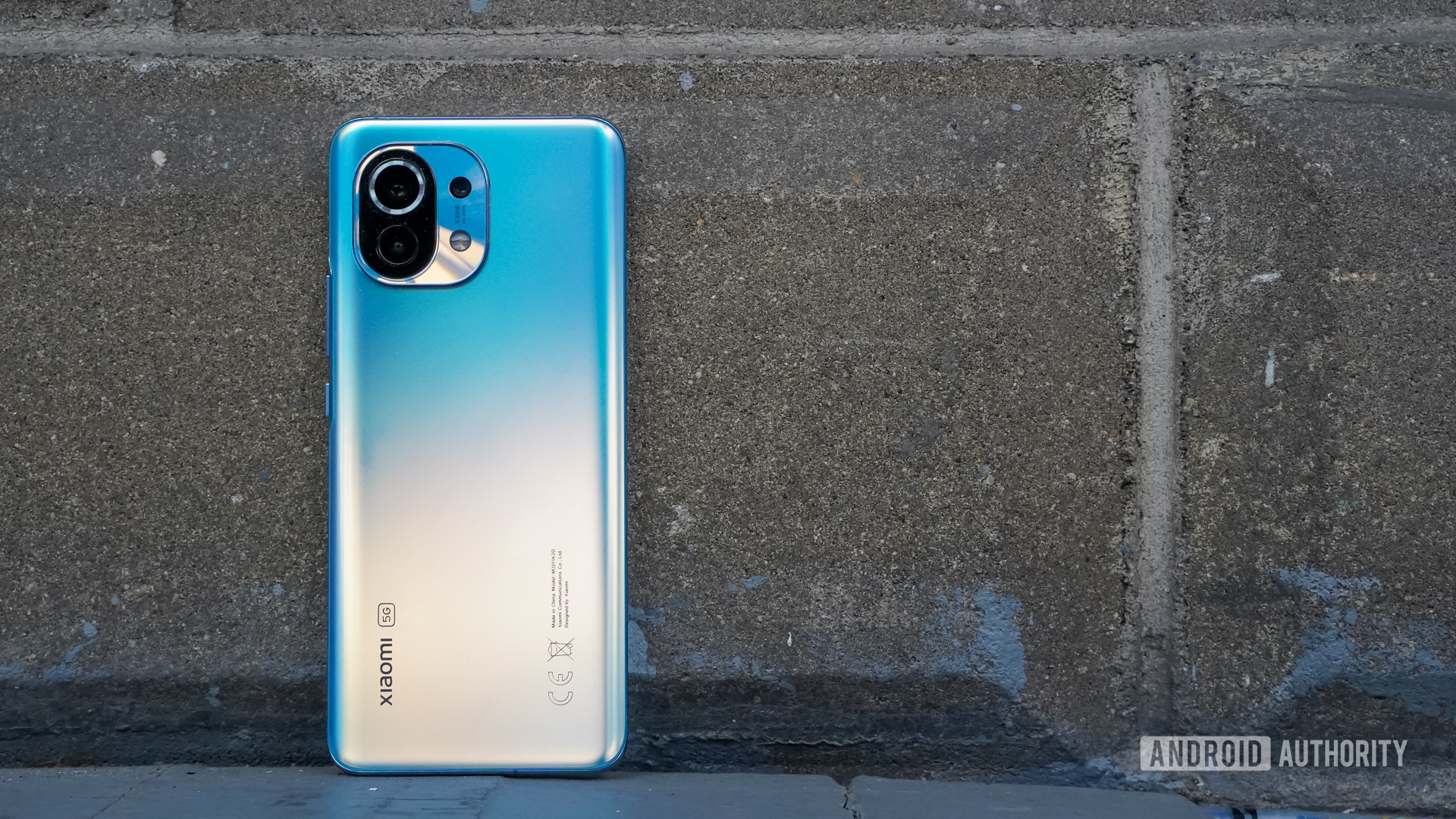
Xiaomi covers every possible market segment, with 58 smartphone models currently listed on its global website. Its products include phones as cheap as $100, state-of-the-art foldables like the Mi Mix Fold, and flagship phones like the Mi 11 Ultra, which has a second rear screen in the camera bump and a massive 50 MP, 1/1.12-inch sensor. Xiaomi is aggressive in its home market of China—the world’s biggest smartphone market—and is a major player in India, the second-largest market in the world. The company doesn’t do smartphone business in the US.

As for Samsung, which Xiaomi toppled to become No. 1, Counterpoint says the company is facing temporary problems due to the resurgence of COVID-19 in Vietnam. Samsung has major phone manufacturing facilities in Vietnam, in addition to China and the company’s home country of South Korea.

According to Counterpoint Senior Analyst Varun Mishra, “Samsung’s production was disrupted in June, which resulted in the brand’s devices facing shortages across channels. Xiaomi, with its strong mid-range portfolio and wide market coverage, was the biggest beneficiary from the short-term gap left by Samsung’s A series.”

But Counterpoint said once Samsung recovers, the ranks are likely to shuffle again.

However, despite Counterpoint’s claims that Samsung’s problems are temporary, Samsung doesn’t seem happy with its second-place spot in the market. According to a report from South Korean site The Elec, Samsung Electronics is “extending its management review” of the mobile business, a move The Elec says Samsung does “when the top leadership considers there is a problem with a particular business unit.”

The report says that “Samsung is highly likely to miss its sales target for Galaxy S21,” which so far has sold 13.5 million units during the first half of the year. Over the same period, the previous model, the S20, sold in the mid-20-millions, while older Galaxy S models sold around 30 million. You could argue that customers are keeping smartphones for longer, but Xiaomi doesn’t seem to be facing those problems.

Samsung is in a holding pattern since the leader of the company, Lee Jae-yong (aka Jay Y. Lee), is still in jail on bribery charges. This month, Lee has a parole hearing that could lead to his release, and some people in South Korea are even lobbying for Lee to be pardoned, given how big of a role Samsung plays in South Korea’s economy (the company represents about 15 percent of South Korea’s GDP).

The Elec speculates that with Samsung’s leader likely getting out of jail soon, a review of key company divisions might already be underway so that Lee can quickly make decisions upon his release.

The Lesson from TikTok on Facebook, And Mr Macaroni (Daddy Wa) On Nigeria’s Nollywood

9

Quibi lost to TikTok because humans really like videos.Quibi picked dozens of creators, hoping it could get a hit within them. TikTok does that differently: millions of people post short videos and AI parses them and quickly finds one that is viral. It then promotes it and quickly everyone is entertained. Statistically, you have a higher chance of finding more viral videos in millions of amateurs content than in dozens created by experts.

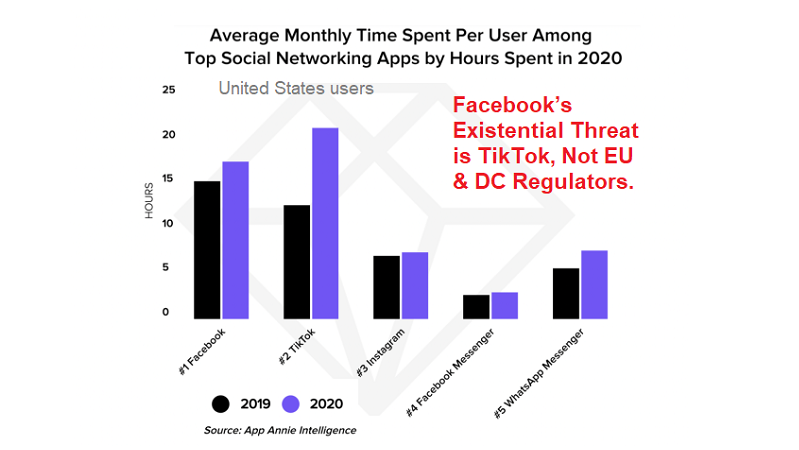
Now, the TikTok algorithm has overtaken Facebook. A few days ago, I wrote that TikTok would emerge as Facebook’s existential threat. The future is short videos because people are distracted on mobile: “The total viewing time for TikTok in the U.S. and U.K. is longer than that for YouTube, and short videos will continue to attract attention,” App Annie, an app market intelligence company.

Today, the best Nollywood producer in Nigeria is Mr Macaroni (yes, Daddy Wa) who creates short videos of 2-4 minutes at least one every 3 days. He is pulling more influence than any Nollywood studio because fewer people have time for 90-minute videos. His clip on Obi Cubana with Don Jazzy was legendary (video below). That man is a genius because he writes, produces, edits, etc in 3 days with his team!

People, short videos are for the mobile. If you plan to build for that channel, you need to think short videos.

If Africa is mobile-first, those launching streaming video on demand (SVOD) companies must think again if their main channel for distribution is mobile internet! Otherwise, it is a hopeless venture with no chance for future value capture, unless there is a double play strategy which can capture the value via another means (e.g. MTN making money via data plan for selling you SVOD). If that double play is not there, run away, fast.

The Facebook’s Existential Threat …TikTok

TikTok Tops Facebook, Becomes the Most Downloaded App