DD
MM
YYYY

PAGES

DD
MM
YYYY

spot_img

PAGES

Home Blog Page 5636

Poly Network’s $600m Crypto Heist and the Questions of Crypto Exchanges’ Security

0
Bitcoin is soaring

In another breach of a cryptocurrency platform, more than $600 million in digital tokens has been stolen by hackers on Wednesday, adding to the culminating cyberheist stories gracing the digital asset market, which raises questions about the security of crypto exchanges.

The platform, Poly Network, which facilitates peer-to-peer transactions announced the heist Wednesday on Twitter and posted details of digital wallets to which it said the money was transferred, urging people to blacklist tokens from those addresses.

Crypto trade publication The Block, said the value of the tokens in the wallets cited by the platform was just over $600 million at the time of the announcement.

Since 2011, hackers have stolen more than $8 billion worth of cryptocurrencies. According to a report from Amsterdam-based blockchain analytics firm Crystal Blockchain, over $2.8 billion was stolen through exchange security breaches that totaled 113 as of last year, and has increased following a number of heists in 2021.

In 2014, the Mt. Gox exchange based in Tokyo, collapsed after losing half a billion dollars in bitcoin. The Coincheck breach of 2018, which saw hackers made away with $535 million worth of NEM coins, was top of it until Wednesday’s Poly Network’s $600 million heist.

The platform, with the warning that it planned to take legal action, urged the hackers to return the stolen funds to several of its digital addresses.

The warning seems to be yielding results, with around $4.8 million in stolen tokens returned by Wednesday afternoon, according to public blockchain records and crypto tracking firm Elliptic. Analysts have attributed the move to the hurdles involved in moving such a huge amount of stolen crypto as it may give the hackers away.

In June, the Federal Bureau of Investigation (FBI) pulled off a first-of-its-kind operation to recover the $4.4 million paid in ransom through cryptocurrency to a criminal gang responsible for a ransomware attack on a US oil company, Colonial Pipeline. The operation sends a clear message that blockchain’s DeFi (decentralized finance) is no longer a guarantee that its transactions cannot be traced or reversed especially when it involves huge sums.

“There’s so much public attention on this, and exchanges will be on the lookout for customer deposits linked to this theft,” Tom Robinson, Elliptic co-founder said. “This demonstrates that even if you can steal crypto assets, laundering them and cashing out is extremely difficult, due to the transparency of the blockchain and the broad use of blockchain analytics by financial institutions.”

However, the FBI’s breakthrough doesn’t answer the worrisome question about hacks and breaches of crypto exchanges, which is among the reasons for increased calls for regulation of crypto operations.

DeFi platforms allow financial transactions, usually in cryptocurrency, without traditional gatekeepers such as banks or exchanges. The sector has boomed over the last year, with platforms now handling more than $80 billion worth of digital coins. The increasing volume of transactions on DeFi system exposes technical flaws and weaknesses in the code many platforms use, leaving it vulnerable to hacks and heists.

But the security lapses boil down to many other factors that border also on the lack of regulations and guidelines for exchanges.

“Their security policies are neglected because these new services cannot (financially) afford to pay as much attention to such security issues, whereas well-established entities are in a better position to ensure and prioritize security,” Said Kyrylo Chykhradze, a product director of Crystal Blockchain  in an email to Coindesk. “This results in newer services becoming cherry-picking opportunities for bad actors who can spot those vulnerabilities.”

The chief technology officer of Tether, a stablecoin or type of cryptocurrency usually backed by real-world world assets, said on Twitter the company had frozen $33 million connected with the hack, and top management at large crypto exchanges responded to Poly on Twitter saying they would try to help. But it’s all reactive and doesn’t proffer a proactive solution to the problem that has got a lot of investors worried.

“It is a massive hack … as large as Mt. Gox,” said Bobby Ong, co-founder of crypto analytics website CoinGecko, although he noted the fallout had not yet hurt major crypto prices. “This project is finished in my opinion. (It is) going to take a lot to regain confidence.”

While it’s difficult for hackers to launder stolen crypto worth millions of dollars, it will barely get noticed when the sum is in thousands, and that leaves many investors vulnerable.
Welcome Toll Gates On Nigeria’s Federal Roads

2

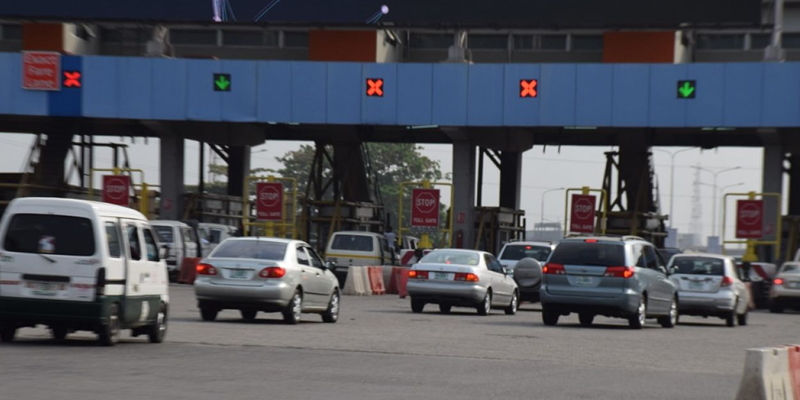
Finally, it has happened: toll gates are coming back on federal roads in Nigeria: “The federal government of Nigeria has approved reintroduction of toll gates on federal highways across the country. The approval was made during the Federal Executive Council (FEC) meeting held on Wednesday.” That is checked as expected. The next one to watch is the privatization of most federal universities. I have written that by 2029, the Nigerian government will put most on sale. While many general hospitals have been abandoned across local government areas, they will not abandon universities as there are great paying customers. Simply, they will flip and exit!

The plan to reintroduce tolling on federal highways in Nigeria was conceived in 2019, as the effects of dwindling oil revenue hit home.

“One of the highlights of today’s Federal Executive Council (FEC) Meeting (Wednesday, August 11, 2021) is the APPROVAL of a Federal Roads and Bridges Tolling Policy and Regulations.

The biggest shame remains the abandonment of Isuikwuato General Hospital, a premier hospital, many years ago. IGH served Ovim, Eluama, Isuochi, Uturu and many communities in Abia state. Check the GH in your state, it is possibly gone unless you were born in Lagos, Abuja or PHC. Systematically, Nigeria dismantled and abandoned one of the most critical national infrastructures: relative quality healthcare in rural communities.

People, things used to work. As a kid in Ovim, we used to mock those working in Ovim Veterinary Clinic, opposite the police station. Yes, no one understood why they needed a clinic for cats and dogs. That thing has since gone – everything is going, and gone.

The biggest illusion in Nigeria is the thinking that Nigeria is rich. Because of that, no one is doing what is necessary. A great leader in Nigeria is one who will recalibrate that thinking. This is the fact: South Africa’s health budget alone will be more than Nigeria’s total annual budget. Yet, South Africa is less than 60 million people when we are excess of 210 million. Did I write that South African citizens are not even happy with what they get because they want more?

Welcome toll gates: hope they will fund the roads.

Reading Is Fundamental for Success

1

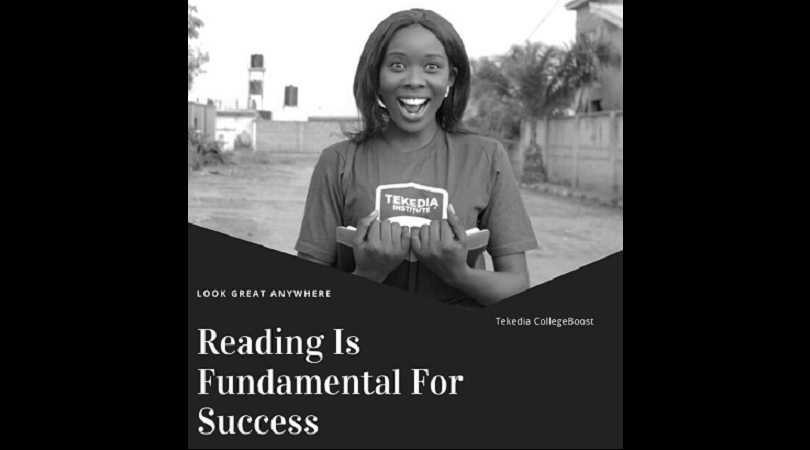
Reading is fundamental: students should read well beyond what was assigned at school, it pays.

Personally, I observed something very common among my colleagues in school. Many seem not to enjoy reading outside what was assigned at school. They don’t want to read and process nor do they want to follow and analyse situations as they unfold. All they wanted is to read academic textbooks and pour back to the lecturer for grades.

Reading, today, has become a difficult task and boring exercise that many of my friends (mostly students) avoid. Many of my colleagues in school during leisure prefer to play games, watch movies, follow TV shows and party to reading books on personal development and gain little extra knowledge that will liberate their entire life. Students of this generation are losing track of this vital value that is fundamental to intellectual development.

When I think back, neither of my parents read but are very influential in my love for reading(though my parents are driven by excellent academic performance only). My love of reading beyond what was assigned at school came from a church brother (Tobi Odelabi) who at some point started a small book selling business. It appears that I am very lucky to have (or for me to find) someone who will allow me to buy books on credit. Also, part of his job after buying on credit is to encourage me to read and grow in personal knowledge (little did I know those exercises were cumulative).

What most students fail to understand is that nobody will beg you to be disciplined, intentional, consistent and excellent. Only by reading good books can you develop those qualities.

For the longest time, I have always had a dogged attitude and mindset about reading and it came one day when I heard Bishop David Oyedepo say the following:

– Reading Is Understanding The Promises Of Life.

– Reading Is Escaping The Traps Of Average Living.

– Reading Is Refusing Existence But Embracing Living Life.

– Reading Is The Process Of Planting The Seed Of Life Into Your Good Heart On Purpose. You Nourish The Seed By More Reading, More Reading For Watering, More Reading For Cultivating And More Reading For Harvesting.

Every time I think about this, I say to myself that, “Eyitayo, never be lazy to read, it’s an easy way to help yourself.”

This statement is weighty and can be a scary one to say to yourself, but it changes everything.

The day you deeply understand that one of the easiest ways to help yourself is to read, then your actions, choices, and decisions will change.

You will stop giving up easily because of petty reasons and you will stop leaving your personal development in the hands of school or blaming people for the challenges in your life. You will have a stronger resolve to win more than the excuses that come with playing small and swimming in mediocrity. But all of these can only come when you read and process. Read and analyse. Read and project.

A Promising Future As Data Science Nigeria Unveils AI Hub In Lagos

1

Good People, a really major event took place in Nigeria last month. Data Science Nigeria opened Nigeria’s first AI dedicated hub. As I wrote in Harvard Business Review a few months ago, Africa’s industrialization, banked on outsourcing from America and West Europe, cannot happen by merely disintermediating China with cheaper labour, because most of the things China does today would be done by robots and AI. In other words, Americans and Europeans will not even outsource those activities because they would be done in their lands by robots/AI.

So, for Africa to industrialize, it has to compete on building the infrastructures of the future. Part of that is developing capabilities in AI and robotics. The AI Hub by DSN under the leadership of a man I have called Africa’s First Apostle of AI – Bayo (Olubayo) Adekanmbi – presents an ecosystem for our young people to participate in the creative level of this redesign.

This Hub located at 33 Queens Street, Yaba, Lagos, is a first-of-its-kind effort to support innovation development, supported by advanced AI working tools, daily academic classes, expert mentors, access to funds, and industry partnership. I will be expecting to write cheques to young people coming out of this Hub. My hobby these days is to write cheques to young innovators. Tekedia Capital makes friends with innovators.

The centre will focus on cutting edge applications of Artificial Intelligence and Digital technologies in EdTech, FinTech, AgriTech and MedTech.  The center is supported with research robots, donated by the University College, London, United Kingdom. It has a 100-seat class for free daily AI classes, a well-stocked library of recent AI books and a dedicated workspace for 50 professionals/researchers.  

I want to wish Bayo, the DSN team and volunteers an amazing future on this mission. Africa appreciates the efforts by DSN to get this to the nation.

Robinhood Buys Say Technologies in A $140 Million Cash Deal

0

Robinhood, a US consumer investing and trading service, announced Tuesday, the acquisition of Say Technologies in a $140 million cash deal.

Say Technologies is a venture-backed startup that makes it easier for investors to exercise their ownership rights. Per Crunchbase data, the company had raised $8 million in 2018. PitchBook data indicates that the company was worth $28 million on a post-money basis following the investment, implying that the company’s backers managed a roughly 5x return on their investment.

“We founded Say to give investors a better way to engage with companies they own, and to give companies tools to better understand and access their investors. As part of the Robinhood family, we’ll be able to further our goal of creating a new ecosystem of ownership and engagement to benefit all investors and companies,” Alex Lebow, cofounder and CEO of Say said.

Say was backed by Point72 Ventures, among other investors.

Per TechCrunch, the deal is notable because it is Robinhood’s first major purchase since going public in late July, and because it illustrates where Robinhood may look to invest some of its newly liquid equity wealth; when a company goes public, it can more easily purchase other companies thanks to recharged cash balances and a floating stock.

In a blog post, Robinhood wrote that “Say was built on the belief that everyone should have the same access to the financial markets as Wall Street insiders.” It means in practice that Say has built a communications platform that allows even smaller shareholders to pose questions to the companies in which they invest. Sure, some companies are including retail questions in their earnings calls, but what Say has in mind is broader.

“We share a common goal of eliminating the barriers that keep people from participating in our financial system,” the company said.

Say and Robinhood share common goals that will make the acquisition profitable. Per TechCrunch, Robinhood has a huge user pool of retail investors who like to trade and invest. Say has the technology to connect retail investors to the companies that they own. With Robinhood’s database of which retail investor owns what, and Say’s communications tech, the trading platform may be able to offer a better shareholder experience than what rival platforms can offer.

By offering to its user base a service like what Say has built, Robinhood can offer a unique twist on retail investing. This feels somewhat analogous to Spotify spending heavily to procure exclusive rights to certain podcasts; such efforts differentiate Spotify from rivals despite having a commoditized core offering. Trading is now free in many places, so Robinhood layering specialized services on top of its investing service makes good sense, perhaps helping drive user loyalty and net new-user adds.

Shares of Robinhood are off around 1.2% today, despite generally higher markets.

Say said it will keep offering its proxy voting services and Q&A platform to existing customers as part of Robinhood family.

“And together, we’ll find new ways to expand what it means to be an investor through new products and experiences that democratize shareholder access,” the company said.