DD
MM
YYYY

PAGES

DD
MM
YYYY

spot_img

PAGES

Home Blog Page 5660

When Pioneering Entrepreneurs Rise In Nations

0

Nations rise when pioneering entrepreneurs emerge. Without those pioneers, the capacity to combine factors of production to redesign economic structures and fix market frictions stall. As America begins to debate the SPACE Tax Act structured to make sure billionaires and millionaires who sojourn to space pay taxes for the experiences, it becomes evident that America has created another sector. 

Before the American steel industry, Carnegie had to emerge. Before the US energy sector, Rockefeller existed. From JP Morgan to BY Mellon, men were ahead of the government in setting the ordinance of  US banking.  And in this era, Jeff Bezos, Elon Musk and Richard Branson are unlocking the broad space tourism.

Space tourism, which in recent months has witnessed a frenzy as billionaire-enthusiasts take turns to fly miles above the earth’s surface, has unveiled a multi-billion dollar economy. From SpaceX to Blue Origin to Virgin Galactic, the space transport companies have seen burgeoning demands for their high cost seats by wannabe astronauts in what has been described as “billionaires’ luxury trips.”

But as budding space tourism takes shape, and more people show interest in experiencing the full force of gravity through orbital and suborbital space flights, the United States Congress is seeing an opportunity to make more revenue for the government.

U.S. Rep. Earl Blumenauer (D-Oregon) plans to introduce legislation called the Securing Protections Against Carbon Emissions (SPACE) Tax Act, which would impose new excise taxes on space tourism trips. The exercise is targeted on commercial space flights carrying human passengers for purposes other than scientific research.

There is a lesson here:  Nigeria cannot have it the other way around: the government has never led anything and we cannot expect everything to be anchored by bureaucrats.

Like Nollywood, Nigeria’s movie industry, which emerged without any memo to the government, our pioneering innovators must do the same in other sectors. Sure, when you do it, they will come with a tax bill. And that is the beauty of it. By 2040, space tourism is projected to be a $1.1 trillion business. Yes, more tax revenue for America!

Africa needs PIONEERING entrepreneurs – they are the high priests to shared prosperity and future abundance in nations. They redesign economies and unlock latent opportunities, driving optimist exuberance for national political leaders because they expand economies and tax dollars.


As Space Tourism Takes Shape, US Congressman Proposes ‘Space Tourism Tax’

0

Space tourism, which in recent months has witnessed a frenzy as billionaire-enthusiasts take turns to fly miles above the earth’s surface, has unveiled a multi-billion dollar economy. From SpaceX to Blue Origin to Virgin Galactic, the space transport companies have seen burgeoning demands for their high cost seats by wannabe astronauts in what has been described as “billionaires’ luxury trips.”

But as budding space tourism takes shape, and more people show interest in experiencing the full force of gravity through orbital and suborbital space flights, the United States Congress is seeing an opportunity to make more revenue for the government.

U.S. Rep. Earl Blumenauer (D-Oregon) plans to introduce legislation called the Securing Protections Against Carbon Emissions (SPACE) Tax Act, which would impose new excise taxes on space tourism trips. The exercise is targeted on commercial space flights carrying human passengers for purposes other than scientific research.

“Space exploration isn’t a tax-free holiday for the wealthy. Just as normal Americans pay taxes when they buy airline tickets, billionaires who fly into space to produce nothing of scientific value should do the same, and then some,” Blumenauer said in a statement issued by his office.

“I’m not opposed to this type of space innovation,” added Blumenauer, a senior member of the House of Representatives’ Ways and Means Committee. “However, things that are done purely for tourism or entertainment, and that don’t have a scientific purpose, should in turn support the public good.”

Following a breakthrough in commercial space trips that was spearheaded by Elon Musk’s founded SpaceX last year, Virgin Galactic owned by British billionaire Sir Richard Branson and Blue Origin, owned by Amazon founder Jeff Bezos, have all registered successful flights carrying non-scientific travelers.

Last year, SpaceX successfully launched the Crew Dragon mission to mark a new era of commercial space transportation.

Over a year later, on July 20, Blue Origin launched its first crewed spaceflight, which coincided with Blumenauer’s unveiling of the SPACE Tax Act. Bezos’ Blue Origin’s New Shepard vehicle carried Bezos, his brother Mark, aviation pioneer Wally Funk and Dutch physics student Oliver Daemen to a suborbital space mission and back.

SpaceX offers orbital space flights while Virgin Galactic and Blue Origin do suborbital.

Branson had beaten Bezos to the space adventure following a surprise announcement about the first fully crewed spaceflight of Virgin Galactic’s VSS Unity suborbital spaceliner mission. It was scheduled nine days earlier than Bezos’.

But the spaceflight companies are all offering commercial services that are already attracting huge interest.

Blue Origin has already begun commercial operations that had passengers like Daemen – he was a paying customer. And Virgin Galactic aims to do so early next year, after performing a few more test flights this fall.

Virgin Galactic’s said its ticket sells for $250,000 for now. Blue Origin is yet to name its price although analysts expect it to be around $500,000. The company’s online auction ended on $28 million for a New Shepard seat last month. The anonymous auction winner, who was reportedly so busy to fly the mission with Bezos, was replaced by Daemen. SpaceX charges as much as $55 million for orbital flights. 

In his statement, Blumenauer said the tax proposal is borne out of concern about the environmental impact of sending humans into space, especially when there is no scientific value associated with the launch. The number of trips to space are expected to increase, with Virgin Galactic planning to eventually launch a shuttle of passengers into space, on average, 32 hours, the statement said.

“While proponents of suborbital space flights point to transatlantic flights as having similar carbon footprints, these flights carry significantly more passengers and travel much farther. The result is space launches accounting for an estimated 60-times greater emissions than transatlantic flights on a per-passenger basis, enough to drive a car around the earth and more than twice the carbon budget recommended in the Paris Climate Agreement,” the statement added.

It explains that exemptions would be made available for NASA spaceflights for scientific research purposes, and in the case of flights where some passengers are working on behalf of NASA for scientific research purposes and others are not, the launch excise tax shall be the pro rata share of the non-NASA researchers.

There would be two taxation tiers, one for suborbital flights and another for missions that reach orbit. The statement did not reveal how much the tax would be in either case but said orbital flights will have more to pay in taxes.

Space tourism is expected to yield a $1.1 trillion economy in 2040, and by the SPACE Tax Act, the US government is already taking a position for its tax value.

Beyond Core Competency – Build The Foundational Stack Now

1
Paystack founders

They taught us in the economics class that companies have to specialize and build core competencies.  They need to do things really well and be the best possible in their chosen domains. But today, especially in native tech companies, we think that does not overly make sense as technology has changed the cost of entering into new domains.

For technology companies, everyone is doing everything, even at top-level. Alphabet, Google parent company, is a car company, a search company, a medical company, an advertising juggernaut, fintech, etc. Amazon.com is an e-commerce firm, a publisher, a movie producer, a drone maker, and pharmacy chain.

Today, what do you think IBM does? Practically everything when you know that Watson has more than 100 flavors focusing on health, finance, real estate, etc. So as frenemies era hits up, the entrenched mantra of core competency must be examined. 

The Eastman Kodak Company was an iconic industry leader. For decades, it was synonymous with photography. But it got stuck in its core competence of traditional film products and missed the rise of digital photography and printing. Uber got the message and has acquired Dallas-based Transplace from TPG Capital, the private-equity arm of investment firm TPG for $2.25 billion.  

People, build a technology stack and expand the stack into anything you want in future. Once the foundational stack is there, adding new things on top of it becomes easier and cost-efficient. That is what they are doing in Tencent, Alibaba, Alphabet, Facebook, etc and that seems to be the path into the future. 

In Africa, the banks, insurers, etc of the future will be technology companies which offer those services. They are the ones which will capture most value from the edges of the smiling curve. It could become easier now that the Central Bank of Nigeria is digitizing the Naira.

According to private sources, the pilot scheme will be launched on October 1st, 2021…The project name is tagged Project GIANT and it will use the Hyperledger Fabric Blockchain.

Nigeria’s central bank further revealed that the importance of eNaira includes Macro management and growth, cross border trade facilitation, financial inclusion, monetary policy effectiveness, improved payment efficiency, revenue tax collection, remittance improvement, and targeted social intervention.

The Nigerian Apex Bank also underlined the benefits for the fintech ecosystem that include enhanced operational efficiency, opportunities for fintech start-ups in building services/products like financial inclusion that will contribute to the economic growth, and the creation of a new system complimenting the traditional payment system.

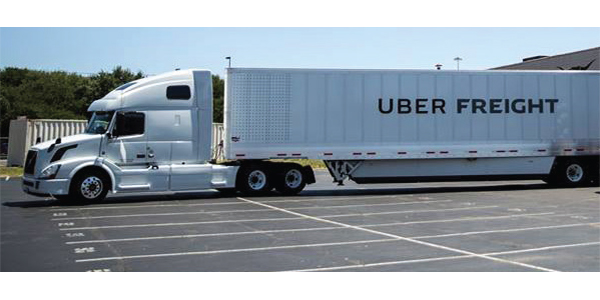
Uber Freight Acquires Transplace in A $2.25 Billion Deal to Expand Logistics Business

0

In a push to expand its logistics business, ride-hailing giant Uber has announced a new acquisition by its truck subsidiary, Uber Freight.

Uber reached an agreement to acquire Dallas-based Transplace from TPG Capital, the private-equity arm of investment firm TPG for $2.25 billion. Under the agreement, Uber will pay up to $750 million in common stock of Uber Freight’s parent company and the rest in cash to TPG Capital, according to regulatory filing.

Uber Freight is pushing a tech-enabled method of booking for truck owners, drivers and cargo owners. The digital booking has been successfully implemented by Nigerian-based startups, Kobo360 and Zido Logistics that offer trucking services around Africa. Uber hopes the acquisition will help it reach into the U.S., Canadian and Mexican domestic shipping sectors, its existing markets.

Uber Freight also sees the acquisition as a means to accelerate the company’s path to profitability and help the segment to break even on an Adjusted EBITDA basis by the end of 2022, according to the company.

The union will fold one of the largest managed transportation and logistics networks into Uber Freight’s platform, which connects truck drivers with shippers that need cargo delivered. Uber Freight’s brokerage will continue to operate independently from Transplace’s services, the company said.

Transplace CEO Frank McGuigan said as a result, the combined company expects shippers will see greater efficiency and transparency. “All in all, we expect to significantly reduce shipper and carrier empty miles to the benefit of highway and road infrastructures and the environment,” he said.

Uber Freight launched in 2017. In August 2018, it was spun off into a separate business unit, a move that simultaneously allowed it to gain momentum and burn more cash. After spinning off of Uber, the freight company underwent an expansion. Uber Freight redesigned its app, an improvement that included adding new navigation features to make searching for and filtering loads easier to customize.

The company expanded to Canada and Europe. Uber Freight also established a headquarters in Chicago as part of its parent company’s broader plan to invest more than $200 million annually in the region, including hiring hundreds of workers. Uber said in September 2019 it would hire 2,000 new employees in the region over the next three years; most would be dedicated to Uber Freight.

Freight provided $302 million in gross bookings of Uber’s overall revenue of $19.5 billion in gross bookings in the three months ending March 31.

Uber sold a stake in the freight business last year when an investor group led by New York-based investment firm Greenbriar Equity Group committed to invest $500 million in a Series A preferred stock financing for the business. The deal valued the unit at $3.3 billion on a post-money basis.

Uber maintained majority ownership in Uber Freight and used the funds gained from Greenbriar to continue to scale its logistics platform, which helps truck drivers connect with shipping companies.

Uber services came under the weight of pandemic-induced restrictions that paralyzed movement, plummeting its revenue.

The San-Francisco-based ridesharing company hopes the new acquisition will accelerate its push for expansion to new territories. But it faces strong competition from traditional middlemen that match freight loads to available trucks and from a lineup of tech-focused startups including Convoy and Transfix Inc.

Uber Freight head Lior Ron said in a statement the combination with Transplace would yield operational excellence.

“This is a significant step forward, not just for Uber Freight but for the entire logistics ecosystem. This is an opportunity to bring together complementary best-in-class technology solutions and operational excellence from two premier companies to create an industry-first shipper-to-carrier platform that will transform shippers’ entire supply chains, delivering operational resilience and reducing costs at a time when it matters most.”

Do not be too hard on yourself – you are making progress!

1

The world seems like it is falling apart and nothing seems to work. The job has not come. I read lines like “my career is in a mess” from members these days. I have these words today for you: do not be too hard on yourself. BELIEVE does not end when things are not working. The last I checked, PATIENCE has not been removed from the dictionary. Sure, things are hard in Nigeria.

And if you look deeper, you are making progress. To get to that next level you are dreaming, you must use the progress you have made ALREADY. Most times, our success was past tense and always forgotten because the next level has not come! Here in the Church in America, they do hold special events for secondary school graduates, congratulating them. I did not see any in Nigeria. Yes, finishing from secondary school is not a big deal, in Nigeria!

How would you move to the next level when the already achieved progress has been discarded? She made Second Class Lower (2.2) in college, and the god is now 2.2. For her, she has not achieved anything. Every move in her career is dictated by that 2.2. Unless you see that 2.2 as progress, that next level would not come. 

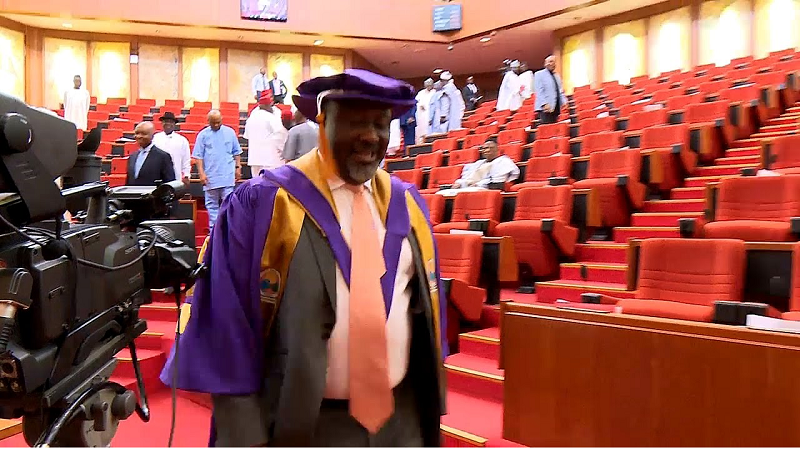
Not a big fan of Dino Melaye (ex-Kogi Senator) but I was impressed by his attitude the day ABU Zaria confirmed he made a 3rd class. The next day, he wore an academic gown to the Senate floor. I was happy because for Dino, that 3rd class was progress. Call him names, he built on that and he has a life today. Do not be too hard on yourself – you are making progress! But keep pushing!