
DD
MM
YYYY

PAGES

DD
MM
YYYY

spot_img

PAGES

Home Blog Page 5661

Tekedia Institute Welcomes London-Based Proten Int’l As A Channel Partner On Mini MBA Program

0

Foremost business education organization, Tekedia Institute has announced a partnership with Proten International, a leading human capacity development organization in Africa on its channel partnership initiative to advance its Mini MBA program. Through this, Proten International can bundle participants into Tekedia Mini-MBA. Proten operates in many countries in Africa.

Proten International is a leading international Human Resource and Management Consulting firm which provides a range of Advisory and Transformation solutions. Our focus is to align every organisation’s activities relating to People, Process and Technology closely with its business strategy and vision.

Founded in 2010 in the United Kingdom, we have since expanded across Europe and Africa, serving clients across the public and private sectors and various industries including Banking, Oil and Gas, Insurance, Information Technology, Real Estate, Energy, FMCG, Manufacturing and many more.

The partnership aims to leverage the community network of both renowned organizations in empowering future-driven individuals to access quality business education and achieve their learning and career goals through Tekedia’s mini MBA program.

The sixth edition of Tekedia’s mini-MBA commences on September 13, 2021 and as usual, the institute will be engaging global business leaders and professionals from top companies around the world, led by the Lead Faculty and prominent Nigerian inventor, engineer, author, and entrepreneur, Professor Ndubuisi Ekekwe to deliver practical and immersive business lessons and mechanics.

Commenting on the partnership, Mr. Solomon Johnson, Business Development Manager for Proten International said; “we believe this partnership will be mutually beneficial to both Tekedia Institute and Proten International. We hope to leverage our network and customer base across multi-sectors in Nigeria, Ghana, UK  and beyond to promote Tekedia’s industry-based and hands-on learning programs.”

Opportunity and Access

According to the Princeton Review, “an MBA can accelerate your career prospects, whatever the industry, and can set you apart from other job seekers”.

For both Proten International and Tekedia Institute, human capacity development is at the forefront of what we do. We are driven by the common goal to create, nurture and provide opportunities that advance innovation, progress and change for individuals and humanity at large, and as such, this partnership will enable both organizations to march stronger towards this goal.

We, therefore, use this medium to call on future-driven individuals and organizations to join us on this new journey.

To learn more about Tekedia’s mini MBA program, visit here and for more information about Proten International and its premium HR consulting and human capacity development services and projects, visit here.

For enquiries about the partnership, contact s.johnson@protenintl.com or tekedia@fasmicro.com.
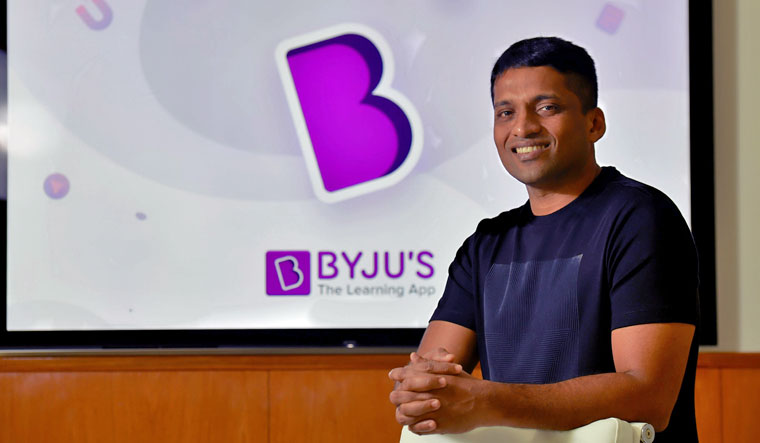
India’s Edtech Startup Byju’s Acquires Epic in A $500 Million Deal

0

After a slowdown in the frenzy that greeted edtech following the outbreak of covid, a major acquisition has put the sector back on the news.

India’s most valuable startup Byju said on Wednesday it has acquired California-headquartered reading platform Epic for $500 million. TechCrunch has the story. It is the latest addition to Byju’s collections, and the startup said it hopes to acquire more American companies in the future.

The deal involves both cash and stock, and Epic founders Kevin Donahue and Suren Markosian will continue to run the business, they said in an interview with TechCrunch.

Epic operates an eponymous digital reading platform for kids aged 12 or younger. The platform, which has a presence across 90% of elementary schools in the U.S., has amassed more than 2 million teachers and 50 million kids (up from 20 million last year).

Epic, which counts Evolution Media as an early backer, collects and analyzes real-time anonymized and aggregated data on how many children read a book, how deeply they engage with it and where their interest starts to wane. In a Netflix-esque move, the firm has also started to release several print versions of its own original titles.

TechCrunch reported in March that Byju’s was in talks to acquire Epic. Donahue and Markosian are no strangers to Byju’s. They first met with Byju Raveendran, co-founder and chief executive of the eponymous Indian startup, four or five years ago, but conversations about an acquisition only began this year, they said.

Raveendran said in an interview that his son uses the app, which gave him the conviction to explore any opportunity with the startup more seriously.

“We started Epic about eight years ago with the goal of bringing books to every child. We thought through technology we can get kids excited about reading and we can remove any barrier between the child and book. We are now in almost every school in the U.S., reaching over 50 million kids and a billion books read,” said Markosian.

“It has been our personal passion to build this platform because we wanted our kids to read more, too. So when we got to this point, it really made sense for us to look at scaling globally and internationally. When we started to talk to Byju, we realized that we share a common passion for education and belief in technology helping solve this opportunity. Together with Byju, we can take Epic to the next level,” he said.

For Byju’s, the new product expands its current portfolio and brings expertise about a demographic of the U.S. that the startup has been looking for, said Raveendran. The addition of Epic to Byju’s offerings is “complementary from a product standpoint, as reading is a very powerful format for students to learn,” he said.

“The distribution they have will also help us offer more options to students in the U.S. and reach a demographic that we have also been working to serve. They understand this demographic very well,” he said.

Earlier this year, Byju’s rebranded its international business as Byju’s Future School, as part of which it is offering coding and math in synchronous and asynchronous formats to students, and plans to add music, English, fine arts and science to the catalog. Raveendran said he hasn’t decided whether Epic will be rebranded, acknowledging that the California-headquartered startup has a strong brand awareness in the U.S.

Byju’s, which launched a learning app featuring Disney characters in the U.S. earlier this month, now has three large offerings in the U.S. that Raveendran expects will generate $100 million each in revenue this year alone. “Our ambition is to make a global impact,” he said.

The startup plans to invest $1 billion in its North America business, he said. Byju’s also plans to bring Epic’s offering to India and other markets, he added.

In the past two years, the startup has acquired U.S.-based kids-focused “phygital” startup Osmo (for $120 million), online coding platform WhiteHat Jr. (for $300 million), coaching centre chain Aakash (for nearly $1 billion) and Indian edtech startups Toppr* and Gradeup*. (*Yet to be officially confirmed.)

“We have not done acquisitions for the sake of doing it,” said Raveendran, who himself is a teacher, pointing to the growth and success of firms he has acquired post-acquisition and how these firms have been led by their original founding teams. “Our aspiration is very long-term. We work with the founders to help them turbo-charge their growth,” he said, adding that the startup is open to exploring more M&A opportunities.

Byju’s, which has raised about $1.5 billion since the pandemic broke last year and has attracted several high-profile investors, including Blackstone, said the fundraise in recent years has helped the startup to acquire younger firms. He said the startup currently doesn’t plan to raise more external capital, but he didn’t rule out more fundraises in the next few months.

These Men Are Not Dropouts!

2
Great founders - Mark Zuckerberg (Facebook) and Bill Gates (Microsoft)

Nigerian students, do not drop out of school citing Bill Gates and Mark Zuckerberg. Bill and Mark did not drop out, they merely dropped in.  In a way, they replaced mass-training professors at Harvard University with private Harvard-quality professors called venture capitalists (VCs).

Magically, they have “special professors” who actually pay them! Which one is better: a Harvard professor that asks you to pay school fees or the VC that writes you $millions and still coaches you because he wants to ensure his $millions are safe?

I am a TED Fellow, a World Economic Forum Young Global Leader, etc, the kind of immersive experiences in some ecosystems is a testament that using “dropout” does not do justice to what happens to these technical “dropouts”. In TED, I met a guy who did not finish secondary school but MIT admitted him.

Do not fall into the illusion: stay in school and work hard. Startups and opportunities to create new ones will always be here. The best businesses have not been started. You will have time to do just that, post-graduation. That university education is an internship for something big – make the best out of it.

And I will add, education is not just for making money or for finding jobs. Education liberates your mind.  These guys are brilliant and do not be fooled into thinking that their Vice Presidents and Directors run them.  The “dropouts” are insanely in charge and brilliant because they are well coached, “educated”, mentored and ventured.

Just recently, Facebook used a single word to practically de-weaponize the highly heralded EU GDPR privacy law. The law has required “consent” to track users, but if you have a “contract” to fulfil, that is not needed. So, technically, Facebook upgraded its terms that once you visit its site, you have established a contract for it to track you. And with that, the law is largely muted. One word and that is it: it requires a huge elevation in thinking, and the process to get that is not in the streets. #SchoolWorks

“Before the GDPR was introduced in 2018, Facebook said its users were “consenting” to having their data used for personalized ad-targeting. But the new law introduced stricter standards for what “consent” means and implies—people can withdraw their consent at any time—so Facebook switched to saying the consent clauses in its user agreements are instead contracts in which its users order personalized advertising.

Under the GDPR, personal data can be processed if doing so is necessary for fulfilling a contract. However, the conditions for using this reason are pretty narrow. The EU’s privacy regulators have advised that the “contractual” basis for processing is fair enough if, for example, an online retailer needs to process billing addresses for payment purposes—but not if they want to profile their users’ tastes, because that isn’t strictly necessary for executing the sale.”

EU Proposes A New Law to Make Cryptocurrency Transactions Traceable As Bitcoin Bounces Back Above $30k

0

The anonymity of cryptocurrency transactions is about to take a hit in Europe as European Commission has proposed a new money laundering law that will require keeping every crypto transaction details.

On Tuesday, the Commission proposed changes to EU law that would force companies that transfer Bitcoin or other crypto-assets to collect details on the recipient and sender.

EU’s existing anti-money laundering and counter-terrorism financing laws did not give consideration to innovative cross-border financial transactions such as cryptocurrency.

The proposal thus, is designed to take into account new and emerging challenges linked to technological innovation.

“These include virtual currencies, more integrated financial flows in the Single Market and the global nature of terrorists’ organizations. These proposals will help to create a much more consistent framework to ease compliance for operators … especially for those active cross-border,” the Commission said.

The proposals would make crypto-assets more traceable and would also prohibit providing anonymous crypto-asset wallets, the EU Commission said.

The Commission argued that crypto-asset transfers should be subject to the same anti-money-laundering rules as wire transfers.

“Given that virtual assets transfers are subject to similar money-laundering and terrorist-financing risks as wire funds transfers… it therefore appears logical to use the same legislative instrument to address these common issues,” the Commission wrote.

While some crypto-asset service providers are already covered by anti-money-laundering rules, the new proposals would “extend these rules to the entire crypto-sector, obliging all service providers to conduct due diligence on their customers,” the Commission explained.

Under the proposals, a company transferring crypto-assets for a customer would be obliged to include their name, address, date of birth and account number, and the name of the recipient.

David Gerard, author of Attack of the 50 Foot Blockchain, told the BBC: “This is just applying existing rules to crypto. This has been coming since 2019.”

He said that although these were European proposals their impact would reach much further.

“If you want to make real money, you have to follow the rules of real money,” he said.

The proposals could take two years to become law if EU member states and the European Parliament agree.

However, the proposal, if it becomes law, will leave the cryptocurrency market in a conflicting situation. Many have embraced the blockchain technology because it offers them the opportunity to carryout transactions anonymously. Therefore, the EU proposal may spook a horde of crypto investors who fall in this category. On the other hand, the proposal may give credibility to cryptocurrency as having the much demanded government regulation. And that may entice another group of people who have shunned cryptocurrencies due to its cryptic transaction method and lack of government’s regulation.

Meanwhile, bitcoin has bounced back to $30,000 after falling below the strong support on Tuesday. The cryptocurrency traded around $32,000 on Wednesday, about 7% higher. Other coins, ether and XRP also recorded a rebound, trading around 9% and 6% up respectively.

The cryptocurrency market plunged on Tuesday after a massive selloff, forcing bitcoin to drop below $30,000 for the first since June 22. The market has been under intense regulatory pressure as governments intensify efforts to curb its influence and protect traditional financial institutions. Concern over the impact of mining on environment has also added to the market’s pressure.

Vijay Ayyar, head of Asia-pacific at cryptocurrency exchange Luno told CNBC that further downside should be expected, describing Wednesday’s rebound as “dead cat bounce,” which means, the recovery is brief and it’s expected to slide again.

“We saw broad market rallies across the board last night as well, and I think crypto is just playing off of that,” he said. “In general, there are lot of macro factors weighing down on risk-on assets at the moment – inflation worries, Covid, and with crypto we’ve got more specific worries such as much more regulatory oversight.”

“How To Launch” – Ndubuisi Ekekwe – Tekedia Live, July 24th

0

How do you launch a new product? How do you launch a new business unit? How do you launch a new subsidiary? Yes, how do you launch a new company? And how do you launch a New Vision?

Sat, Jul 24 | 7pm-8.30pm WAT |  How To Launch (Business, Career, Things) – Ndubuisi Ekekwe

This Saturday at 7pm WAT, at Tekedia Mini-MBA, our topic is “How To Launch”. Let us have a conversation to co-learn and co-share, and advance the wealth in nations. I will be anchoring the session. The goal would be to master the mechanics on How To Launch as we begin to move to  the Execution phase of the current Tekedia Mini-MBA edition. Yes, it is getting to the action time – let the boss know that you know!

Meanwhile, tomorrow, the team from Mecho Autotech will be at Tekedia Live to discuss how to scale a business in Africa. Zoom links are already in the Board.

Thur, July 22 | 7pm-8pm WAT | Scaling A Startup and Getting into YCombinator – Olusegun Owoade, CEO Mecho Autotech (2021 Y Combinator) 

Registration for the next edition of Tekedia Mini-MBA is ongoing – register here