I cancelled last time due to Covid-19 and they have re-invited. Yes, I have accepted the invitation of the Committee of Smart Devices Symposium 2022(SDS2022) to speak in their conference which comes up in Osaka Japan, May 18-20, 2022. The theme of the conference is “Intelligent Devices, Intelligent Materials and Intelligent World”. My presentation will be on “Blitzscaling Civilization with Natural Computing” – and I will lay out how everything will end where it began: nature.
The presentation will draw from one of our startups in Silicon Valley where I serve as a Technical Design Mentor. Covid-19 needs to go so that we can have our lives back.
People, let’s do what engineers do: build and discuss great designs.
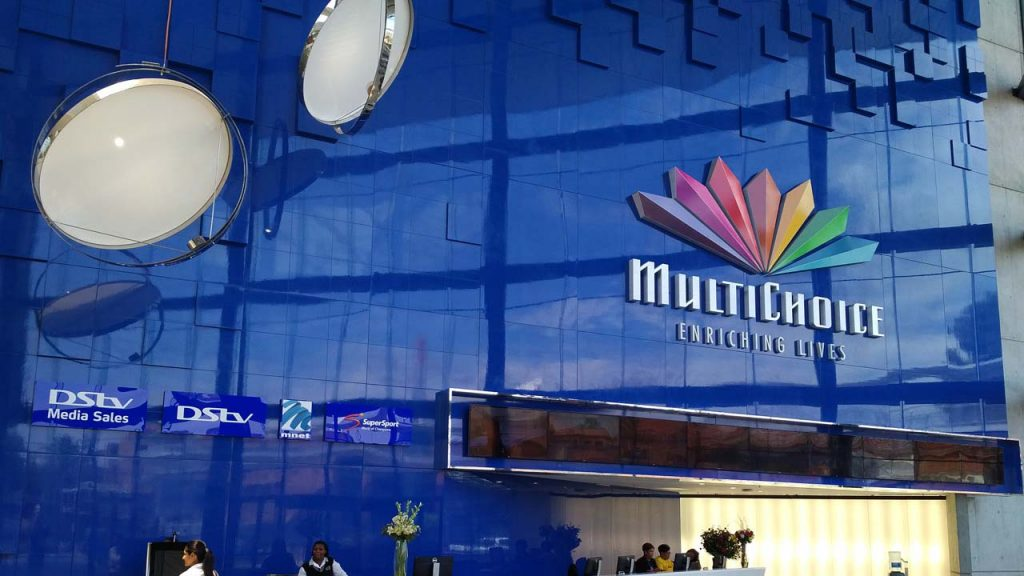
MutiChoice Nigeria and MultiChoice Africa are under severe paralysis right now: Nigeria’s tax agency, FIRS, has asked commercial banks to freeze and recover N1.8 trillion ($4.5 billion) from the accounts of these firms. According to the government, the companies have refused to open their books, servers, etc for independent audit, and the necessary high voltage searchlighting: “The companies would not promptly respond to correspondences, they lacked data integrity and are not transparent as they continually deny FIRS access to their records. Particularly, MCN has avoided giving the FIRS accurate information on the number of its subscribers and income. The companies are involved in the under-remittance of taxes which necessitated a critical review of the tax-compliance level of the company.”
Executive Chairman, FIRS, Mr Muhammad Nami, stated: “Information currently at the disposal of FIRS has revealed a tax liability for relevant years of assessment for ?1.8 trillion and $342.5 million.
FIRS is powered in Section 49 of the Companies Income Tax Act Cap C21 LFN 2004 as amended, Section 41 of the Value Added Tax Act Cap V1 LFN 2004 as amended and Section 31 of the FIRS (Establishment) Act No. 13 of 2007.
With these relevant sections, all bankers to MCA and MCN in Nigeria are therefore appointed as Collecting Agents for the full recovery of the aforesaid tax debt.
In this regard, the affected banks are required to sweep balances in each of the above-mentioned entities’ accounts and pay the same in full or part settlement of the companies’ respective tax debts until full recovery.
This should be done before the execution of any transaction involving the companies or any of their subsidiaries. It is further requested that the FIRS be informed of any transactions before execution on the account, especially transfers of funds to any of their subsidiaries.
It is important that Nigeria puts a stop to all tax frauds that had been going on for too long and all companies must be held accountable and made to pay their fair share of relevant taxes including back duty taxes owed especially VAT.”
Nigeria’s main grudge is that despite the success of MultiChoice in the land, the nation is not seeing the impact on the tax collected: according to the government, MultiChoice is alleged to have paid zero VAT in Nigeria since inception. Is that really possible? Should that be the case, EFCC should open files for all auditors, tax officers and former FIRS etc who ratified the books of the companies. Bear with me, I am finding it hard to believe that one, but who knows – this is Nigeria.
Nollywood, you have a script here: how to make $billions and pay zero VAT in Nigeria. Sure, DStv and Gotv may not come along!
“The issue with Tax collection in Nigeria, especially from foreign-based Companies conducting businesses in Nigeria and making massive profits is frustrating and infuriating to the FIRS.
Regrettably, Companies come into Nigeria just to infringe on our tax laws by indulging in tax evasion. There is no doubt that broadcasting, telecommunications and the cable-satellite industries have changed the face of communication in Nigeria.
However, when it comes to tax compliance, some companies are found wanting. They do with impunity in Nigeria what they dare not try in their countries of origin,”
MutiChoice denies the accusation via a statement: “MultiChoice Nigeria respects and is comfortable that it complies with the tax laws of Nigeria. We have been and are currently in discussion with FIRS regarding their concerns and believe that we will be able to resolve the matter amicably.”
Yet, if this comes out in “affirmative”, using marine radio slang, MutiChoice will have limited choices in Nigeria.
Join me to congratulate Felix Rwang-Dung. CISA, a Tekedia Mini-MBA alum and member (I think he has prepaid for next year!), for his appointment as Director General Plateau State Infrastructure And Development Commission by the Executive Governor of Plateau State Barrister Simon Lalong. Felix, we wish you great success as you serve your state and nation.
Nigerians have been doing business in Ghana for years. It was perfectly legal, and an absolute entitlement under the Economic Community of West African States (ECOWAS) Protocol.
Excerpts from the protocol affording rights to member citizens:
Article 3d) of the protocol: the establishment of a common market through: i) the liberalization of trade by the abolition, among Member States, of customs duties levied on imports and exports, and the abolition among Member States, of non-tariff barriers in order to establish a free trade area at the Community level; ii) the adoption of a common external tariff and a common trade policy vis-à-vis third countries; iii) the removal, between Member States, of obstacles to the free movement of persons, goods, service and capital, and to the right of residence and establishment; e) the establishment of an economic union through the adoption of common policies in the economic, financial social and cultural sectors, and the creation of a monetary union…. and …
3i) the harmonization of national investment codes leading to the adoption of a single Community investment code;
So what went wrong?
Well, it all started with an organization called ‘The Ghana Union of Traders Association (GUTA)’ , looking to leverage a Ghanaian law brought out in 2013 called the Ghana Investment Promotion Centre Act (GIPC) 2013 (Act 865)
Subsection (2) of this law states:
‘A person who is not a citizen may engage in a trading enterprise if that person invests in the enterprise, not less than one million United States dollars in cash or goods and services relevant to the investments.
An enterprise referred to in subsection (2) shall employ at least twenty skilled Ghanaians’
The problem is, that the law was never intended to target individuals or companies from the ECOWAS community and was conceived to protect the Ghana local market, and its businesspeople, from exploitation by distant nations, particularly non-African.
However the wording of the Act was not sufficiently well defined, and this notionally criminalizes any non-Ghanaian, even ECOWAS citizens such as Nigerians, from operating in Ghana without bringing in the required capital, and/or failing to employ the required minimum of locals.
Initially, Ghanaian authorities more or less ignored the law when they saw the obvious disconnect, in respect to ECOWAS citizens in Ghana.
It is a global phenomenon that Police and other agencies with enforcement powers, are not obliged to prosecute each and every infringement they discover. They are entrusted by the nation they serve with the entitlement to exercise discretion.
There is a law in many countries called ‘jaywalking’, which is crossing a road on foot, without due care and attention, and in a manner that puts both oneself and other road users at risk. However, while road-crossing in an unsafe manner is quite common, it rarely gets prosecuted.
It is required of Police and Enforcement Agencies to use their experience and specialist skills with public engagement to understand infringement context, recognize mitigating circumstances and see gaps between what is on statute and what works on ground.
This is critical in their shepherding of the public in the adherence to laws.
However, as Nigerian small-medium businesses in Ghana began to give indigenes competition, conflicts began to appear. This was mostly in traditional market environments with businesses operating from converted container freight units, kiosks, and small ‘lock-up’ shops.
Then GUTA began supporting its members to drive Nigerians out of their businesses quoting the law.
In August of last year, The General Secretary of the All Nigerian Community, Mr Isaac Osahon Ekhator, said some members of the association were contemplating leaving behind their goods and move back to Nigeria because of the difficulties they were facing following the closure of their shops.
He expressed surprise that their government did not seem concerned about their plight in Ghana and pointed out that if it were to be in another country, their government would come to their aid.
“On behalf of citizens of Nigeria in Ghana, we appeal to the Federal Republic of Nigeria to urgently consider this burning issue and promptly intervene to bring hope and lessen the plight of her citizens,” Mr Ekhator stated.
Nigeria responded by closing borders.
Parallel to this however, we have had the ongoing progress of AfCFTA taking various twists and turns.
In March 2018, President Muhammadu Buhari requested a committee to review the AfCFTA’s text, saying ‘continental aspirations must complement Nigeria’s national interests’ and this especially means not permitting Nigeria to become ‘a dumping ground for finished goods’.
This followed on Nigeria’s refusal to sign the ECOWAS-EU Economic Partnership Agreement, and opposing Morocco’s ascension to the union at the end of 2017.
This is Nigeria’s current playbook – to consolidate its economic power in West Africa through domestic market protectionism.
However, the second biggest market on the Continent, South Africa, has also backpedalled somewhat on AfCFTA.
My own concerns on AfCFTA are well noted, not on the principle which I broadly support, but on confines and boundaries being properly set up, so that it results in benefiting the member nations as intended, rather than loosening control measures regulating non-member actors to member markets.
I have been particularly vocal on the automotive sector.
‘GHANA – THE NEW BACKDOOR INTO NIGERIA FOR FOREIGN VEHICLE MANUFACTURERS’
Fast forward to the present, and a new report a few days ago by BALARABE ALKASSIM for News Express
‘The Ghanaian Speaker, Alban Kingsford Sumana, says his country has raised a seven-man committee as its delegation to the Joint Committee of Eminent Persons of Legislature between it and Nigeria to end trade disputes and other issues’
They will interact with their Nigerian counterparts towards passing the “Ghana-Nigeria Friendship Act”, which is intended to be a bi-national trade agreement. The Act will then pass into both Ghanaian and Nigerian Law.
The act is also offering to mitigate Nigerians against the requirements of GIPC Act 2013 (Act 865)
This happened speaking to House of Rep. in Abuja just Wednesday.
But you have to ask the obvious question…
If the #2 powerhouse in ECOWAS has to approach the #1 ECOWAS (and African) powerhouse for a bi-national trade agreement…
Doesn’t this leave AfCFTA looking rather toothless?
References and Acknowledgements (Not in main body text):
For a baby, for an adult; for a company, for a nation; the most difficult step to take is the FIRST STEP. But if you summon the courage to do it, it is a magical feeling. You are more likely to move forward than fall backward. And just like that, you are out of the bounds of inaction. Take your FIRST STEP on something productive. This is a weekend to plan #Action.
It may not be perfect on day one but nothing great has ever been achieved until someone takes action. Take action and #build.