DD
MM
YYYY

PAGES

DD
MM
YYYY

spot_img

PAGES

Home Blog Page 5680

Jacob Zuma, Former South African President, Sentenced to Prison

0

South Africa’s highest court has found former President Jacob Zuma guilty of contempt of court and sentenced him to 15 months in prison on Tuesday, for failing to appear to a panel of inquiry probing corruption allegations against him.

Zuma has been at the center of a judicial probe in South Africa for allegations of corruption perpetrated during his time in power between 2009 and 2018.

The Constitutional Court of South Africa ordered that Zuma present himself at a police station in his home town of Nkandla or Johannesburg within five days.

In a scathing judgment, Justice Sisi Khampepe ruled: “There can be no doubt that Mr Zuma is in contempt of court.”

Zuma had denied any wrongdoing, dubbing the corruption inquiry a ‘political witch hunt.’

Judge Khampepe said that Zuma attempted to corrode the legitimacy of the Constitutional Court by conducting a “politically motivated smear campaign” against it, the commission and the judiciary.

“He (Mr. Zuma) elected instead to make provocative, unmeritorious and vituperative statements that constituted a calculated effort to impugn the integrity of the judiciary.

“I am left with no option but to commit Mr. Zuma to imprisonment, with the hope that doing so sends an unequivocal message… the rule of law and the administration of justice prevails.”

She said the court needs to make a bold statement to deter future occurrence of Mr. Zuma’s behavior.

“No person is above the law … whatever his rank or condition,” she said, continuing: “An act of defiance in respect of a direct judicial order has the potential to precipitate a constitutional crisis.

“If with impunity litigants are allowed to decide which orders they wish to obey, and which they wish to ignore, then our Constitution is not worth the paper on which it is written.”

Mr. Zuma was ousted in 2018 following internal discord among the ruling African National Congress (ANC), against a backdrop of public outrage over alleged corruption and mismanagement of state resources.

Following his ouster, Deputy Chief Justice Raymond Zondo, set up judicial inquiry after an ombudsman report called for an investigation into possible improper contact between senior members of Zuma’s former administration and three wealthy businessmen — the Gupta brothers — all of whom have denied wrongdoing. The Guptas fled South Africa upon Zuma’s ousting.

His successor, President Cyril Ramaphosa, who has vowed and made a concerted effort to rid the corruption within the government and his own ANC party, faces a giant hurdle of a rift between his supporters and a core of Zuma loyalists.

South Africa is riddled with an economic crisis that has been largely attributed to corruption. Economists broadly agree that the pilfering of state resources in recent decades has had a negative impact on the nation’s economy, state-owned enterprises and public services.

The ruling is expected to have an impact within the governing ANC that has been divided between supporters of Mr. Zuma and President Ramaphosa. For president Ramaphosa, it will be a source of vigor to reinforce his fight against “state capture” corruption within the party and the country as whole, while for those with Zuma, it will mean a deadly blow as he is the figurehead of their camp.

Meanwhile, Mr. Zuma’s sentence puts a soul-searching challenge to other African countries. The continent is engulfed by graft epidemic that is buoyed by lax anti-graft laws and lack of political will by state actors to prosecute perpetrators. Hardly do African leaders involved in corruption get prosecuted, and when they do, they are easily exonerated.

Nigeria, Africa’s largest economy is also bedridden with graft. Nearly all of its leaders have been fingered in corruption scandals, but only a few, excluding presidents, have been convicted for corruption due to political, tribal and personal interests. It is hoped that president Ramaphosa’s political will to fight corruption within his own party and government, will send a wake up message to the rest of the continent.

Why You Should Nurture Your Business Like A Human Child

1

Nobody enjoys investing his hard-earned money on businesses that crumble shortly after it kicks off. It hurts when you give someone money to start a business because you believe in helping others to grow only for the person to call you a few months later to say he has lost interest in that business and wants to go into another one. This is something many of us have witnessed.

A lot of people have lost credibility before their sponsors and investors because they couldn’t sustain their businesses. Some jump from one business venture to another without giving the previous one a chance to grow before closing it down. The reason behind this migration, most times, borders around seeking ventures that yield a lot of profits, especially the ones that require little effort. But what these business migrants fail to realise is that businesses, like babies, are meant to be nurtured until they grow.

When a woman becomes pregnant, she starts getting things ready for the baby’s arrival. She registers for antenatal, begins to take her routine drugs, and does everything the doctor and the midwife tell her. She drops her habits that might hurt the foetus and becomes careful not to do things that might jeopardize her own life. She looks out for herself and her unborn child.

This is also what happens when people incubate plans to establish businesses. Like the woman that put things in place to prepare for the baby’s arrival, business owners prepare for the setoff of their businesses. However, many of them fail to drop their bad habits that will harm their businesses and they do not take routine drugs (such as training) that will help the businesses to kick off on a good start. By the end of the day, their businesses start poorly like the malnourished babies from careless mothers. Businesses like this, just like those babies, can easily die on arrival.

When women give birth, whether to healthy or unhealthy babies, they begin another round of nurturing. Today, mothers practice exclusive breastfeeding because they want their babies to have a high IQ, develop strong immunity, have less contact with germs, and grow properly while meeting all their milestones at the right time. Some add good baby formula to the diet to ensure that their babies do not starve. Babies are taken to health centres for immunizations to prevent childhood killer diseases. As they grow into infants and toddlers, they are monitored closely because they can easily harm themselves or have accidents. Even as all these were going on, the children’s behaviours are modified to align with the values of their parents and society as well. A lot of works take place in the life of a child from the time he was born to when he turns five. Coincidentally, many businesses become stable at the fifth year of conception.

From the moment a business venture is established, as far as I am concerned, the owner has given birth to an individual. If you look at it, you will see that the same way a birth certificate is created at the birth of a human child is the way a certificate of business registration is given to an individual when he registers his business. As a child is a legal being, so also is a registered business a legal entity. But many people want their businesses to start running the day it was born, forgetting that it took a baby an average of two years to start learning how to run. This is the mistake of many business owners; they expect magic from the moment they start their business.

What am I trying to say here?

The same way we have patience with raising our children from birth is how we should be patient with growing our businesses. The same way we passed through sleepless nights while our babies kept us awake, is how we should endure sleepless nights as we figure out how to take our businesses to the next level. The same way our babies go to sleep healthy and wake up with fever is how our businesses can make a profit today and huge loss tomorrow. And the same way we take our children to hospitals, change their diets if it doesn’t stay well with them, keep them warm and cool, and monitor their abilities to reach the next milestone at the right time is also how we should monitor, evaluate, insure, invest, and seek help when necessary to make our businesses grow.

There is no magic in building a thriving business; you must work for it. Even if you move from one business to another till thy kingdom comes, if you don’t settle down and nurture one of them, you will remain a rolling stone until you burn out. Be patient and grow your business.

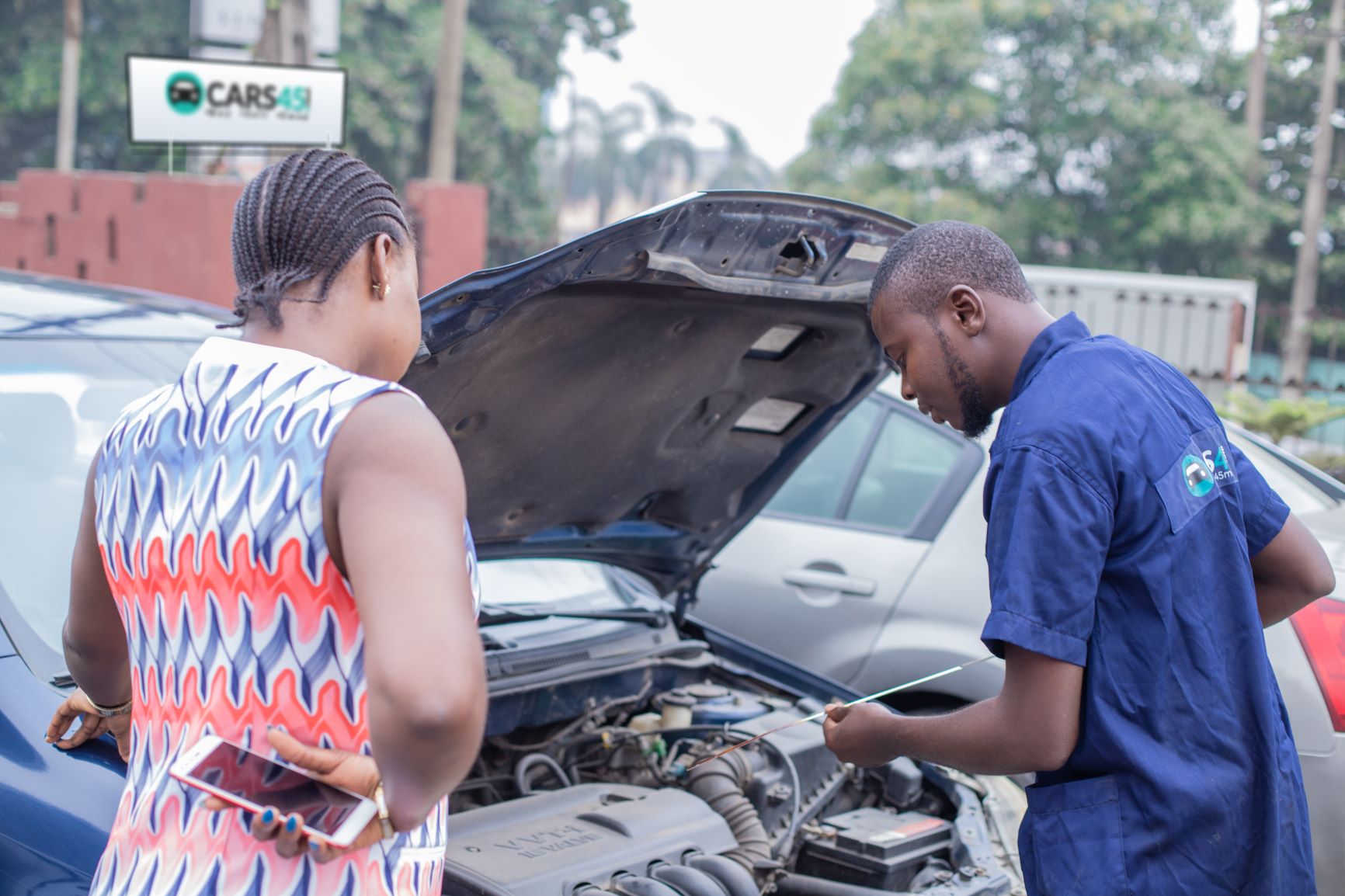
Jiji Acquires Cars45

0

Barely two years after its acquisition of its rival company OLX, Jiji is the news again for another acquisition, this time, outside its traditional business.

The classified online market on Monday, announced the acquisition of transactional car marketplace Cars45. The amount was not disclosed. It is an unpopular business move though OLX has done a similar deal in the past.

In 2019, OLX invested $400 million in Frontier Car Group (FCG), a Berlin-based company that builds used-car marketplaces focusing on emerging markets. The investment gave the classified online market place a controlling stake in FGC. In 2020, OLX Group, via its OLX Autos brand, acquired Cars45 from FCG. The deal, coupled with the growth in the used car sales on its platform, is believed to have spurred the interest of Jiji to acquire Cars45.

Per Tech Crunch, the plan is to merge Cars45 operations in Nigeria (primary market), Ghana and Kenya with Jiji as the classifieds marketplace wants to consolidate its position in the space. In addition, the acquisition of Cars45 will help mitigate problematic trust and safety concerns that have sometimes plagued Jiji and offer a different car buying and selling experience via its transactional marketplace model. In turn, Cars45 users will benefit from Jiji’s dominance in online classifieds. The acquisition is expected to see Cars45 grow the vehicles category.

“We will integrate this into one company because this acquisition has a lot of benefits for both. It’s a very common practice when marketplace and transactional business models work together as one project,” co-founder and CEO Anton Volyansky said regarding the integration of both platforms. “For instance, a seller of a car, it’s convenient to sell both ways via a marketplace or auction model. So, it would be like a seamless process for selling the car.”

Jiji said sales of used cars have upped in its classified market place, buoying the decision to acquire Cars45, but the acquisition will set the company on a new path of practice that requires more vehicle inspection than it is done with cars on Jiji market place. Jiji’s CFO David Ojo, said Cars45’s key value is its network of inspection centres where cars are inspected by more than 200 parameters.

But unlike the classified marketplace where it has dominated for long in Africa, and only recently has Facebook Marketplace to compete with, Jiji will have to face a big rivalry in the car business. Swiss-owned ROAM, Jumia Deals, and Autochek, are other players Jiji will have to compete with.

Volyansky believes bringing the classified marketplace experience into Cars45 will spur growth, setting the company apart from other players, as it will have the advantage of being the first classified marketplace to venture fully into traditional car dealership.

“In terms of classifieds, we’re looking at opportunities, but we are already a leader in Africa, so I think there’s very limited space for whom to acquire. However, we’re primarily interested in deals like Cars45, where we bring our leadership positions from classifieds and acquire very close business models that give us exposure to the transactional marketplace. So for us, a major interest will be to acquire adjacent business models,” he explained.

Besides leveraging on existing markets, Jiji is also planning to explore new markets using combined resources from the two companies.

“We are proud to have built a trusted buying and selling experience in autos. It makes sense to combine online and offline expertise. Merging with Jiji is aimed at creating a new kind of automotive retail experience for users in Africa. We are confident of jointly building an African Champion in the O2O Automotive Sector. Together we look forward to making transactions transparent and convenient for our customers, dealers and franchisees across all our current and future markets,” Soumobroto Ganguly, CEO of Cars45, said.

Cars45’s Brake Pad Was Indeed Burnt After the Exit; Jiji Acquires It

3

Cars45 has been acquired by Jiji. But that is not the main story of this piece. The key thing is this: an extremely vibrant innovator with first mover advantage scored a massive own-goal. Yes, Cars45 came into the Nigerian scene with something amazing: buy or sell your car within 45 minutes. I wrote about this business and even visited the team during a trip to Nigeria

As we celebrated it and as it raised tons of money, the ascension rose higher. But then, something bad began to happen: Cars45 CEO and about 11 employees  left the company; South Africa’s giant, Naspers, had just invested $400 million in the European parent firm.

In 2017, Cars45 raised $5 million from Frontier Car Group (FCG), the Berlin-based company that builds used-car marketplaces focusing on emerging markets. This made FCG the largest shareholder and parent company in the Nigerian car business. Two years later, FCG received $400 million from OLX Group (a division of Prosus, the Netherlands-based separate tech holdings of South African tech giant Naspers). The investment valued FCG at $700 million, with OLX Group taking a controlling stake. In 2020, OLX Group, via its OLX Autos brand, acquired Cars45 from FCG.

[…]

Therefore, the acquisition will see Cars45 grow the vehicles category. Furthermore, Cars45 will merge its operations in Nigeria (primary market), Ghana and Kenya with Jiji as the classifieds marketplace wants to consolidate its position in the space. In addition, the acquisition of Cars45 will help mitigate problematic trust and safety concerns that have sometimes plagued Jiji and offer a different car-buying and selling experience via its transactional marketplace model. In turn, Cars45 users will benefit from Jiji’s dominance in online classifieds.

I summarized the paralysis thus: “This is hard braking for Cars45; we hope the pad is not burnt.” With the Jiji acquisition, I am extrapolating that the pad was indeed burnt. I do not think this acquisition was done on the position of strength for Cars45 considering that the guy who made it amazing has started a competing company, and raised tons of money.

Ladies and Gentlemen, while your economics textbook might not have included knowledge as a factor of production, do not play with it. Nothing matters in business than knowledge. Sure, everyone talks about capital but what really runs the world is knowledge. With the visionary gone, Cars45 became a shop!

For Jiji, it just added a great new category – cars – after real estate which continues to drive the classified-marketplace.

Comment from LinkedIn Feed

Comment #1: This statement “With the visionary gone, Cars45 became a shop” got me thinking. This implies that Cars45 was person-Centric other than system-centric. My question is, how can we avoid the pitfall of making an individual or group of individuals live-wire of an organization ?

Response: “My question is, how can we avoid the pitfall of making an individual or group of individuals live-wire of an organization ?” – not sure your comparison is fair. When you have a CEO and about 11 employees at leadership positions leave a startup at the same time, your connotation may not be right. Go to GTBank (or Apple, Dangote Cement) and ask the CEO and 11 management staff to leave and still come and claim if it was built around one person. And add the shock for a startup, then your argument may not be balanced. Cars45 was even GREAT to have not folded a week after that exit; so, we need to celebrate it to have survived that!

Comment #2: Sir, book shouldn’t be judged by it cover. Saying Cars45 became a shop is quite harmful to jiji as a business person I believe you know better what that means. Moreso time will tell if Cars45 would do better than the yet unknown (to be found company by the ex-CEO) or not.

Response: “Saying Cars45 became a shop is quite harmful to jiji as a business person I believe you know better what that means.” – it depends on what you understand to be a shop. You need to visit Onitsha or Aba. A “shop” is a business available to be sold. Today, Cars45 has sold itself. Jiji has bought a “market” because that “market” is a good product.

Jiji Acquires Cars45

Facebook Joins The $Trillion Club – And Becomes Most Impactful Company in Africa

2

The Americans continue the ascension, and the world is doing nothing but watching. While China is giving them a real fight, other global citizens are simply recording America just as I am doing. Yes, Facebook is now a trillion dollar company. It joins Apple, Amazon, Google, and Microsoft to hit that mountaintop which Saudi Aramco also boasts of; PetroChina had an effervescence therein a few years ago. Of course, you can get two $trillions in both Apple and Microsoft since they have also recently hit $2 trillions.

Facebook has joined the ranks of companies valued over a trillion dollars as of today’s market close. The company’s market cap is sitting at $1.008 trillion according to Yahoo Finance, putting it over the mark for the first time in its history.

Some of the most notable of Facebook’s divisions are the Facebook site itself, along with Messenger, as well as Instagram, WhatsApp, and Oculus. On the list of US tech companies that have passed the $1 trillion valuation mark, Facebook is the only one founded in the 2000s, making it the newest — as long as you’re counting from the date that Google was started (which was in 1998), instead of Alphabet (which was created 2015).

The news comes alongside the dismissal of the FTC’s case to unwind Facebook’s Instagram and WhatsApp acquisitions, after a federal judge stated that the FTC did not offer enough evidence that the company is a monopoly.

In Nigeria, specifically, the most important Facebook Inc product is WhatsApp. That is followed by Facebook and when you look at all of them, you will see that Nigeria is a Facebook Inc nation with Instagram, WhatsApp and Facebook under the command of one company.

As you look at the impact of Facebook Inc in Nigeria, one thing is evident: Twitter might have annoyed the government, but Facebook is eating many piles in markets. I was discussing with a company Board yesterday on the difficulties they were having in their merchant tool, and quickly reminded them that everything began to slow down immediately WhatsApp arrived at scale. In other words, WhatsApp is disintermediating many solutions at scale and today, it is the most important digital product in Africa. Many run schools on WhatsApp! Who cares for a customer support tool when there is WhatsApp? Indeed, can you imagine a sales system without WhatsApp in Africa? If they add payment to WhatsApp, a new dimension of asymmetric competitive force will evolve.

And in politics, the most divisive tool today in Nigeria is WhatsApp: those groups are mean. If they remember you, you are a toast. Arewa, Igbo, Yoruba, etc are congregating on WhatsApp and group-herding hatred at scale. Look at the plot below – 93% of Internet uses in Nigeria use WhatsApp! That tells you how valuable the solution has become. 

Now, add Instagram which is the largest showroom in Africa, muting many ecommerce players and you will see why Facebook ascension to $2 trillion is just a matter of time. Today, there is no person with broadband Internet access in Africa who does not use a Facebook Inc product at least once a week. That makes it the most impactful company in Africa in the emerging digital world!