DD
MM
YYYY

PAGES

DD
MM
YYYY

spot_img

PAGES

Home Blog Page 5688

The Negative Impacts of Social Media

1

There is an adage in Igbo culture that says “ife na-ato uto na-egbu egbu”, literally meaning that sweet things can kill. But figuratively, the adage is implying that too much of everything is bad. The adage is used to call on people to apply caution while consuming things that give them pleasure. It calls for moderation, regulation, and restrictions. It also reminds us that everything that has an advantage also has a disadvantage. Though that saying is ancient, it can still be applied to today’s world.

If you check the perspective of this adage, you will agree that there is truly a bad side to everything. For instance, we are warned daily to consume less sugar because it can harm us. People are also advised to be moderate with their alcohol consumption because taking too much of the substance can damage some vital organs. We have been advised to balance our social and career lives because, if the scale tilts to one corner, we will not have a happy life. We should also show moderation and restraint with the food we consume, how we dress, the length of time we sit before television, and so many other things. We should be moderate with everything we do because, even if we enjoy they are the things we value, too much of them can affect us negatively. This is also the same thing with how we use social media.

One thing many people have not realized is that social media, like alcohol and tobacco, can be addictive. You can spend hours before your phone, jumping from one social media platform to another, doing all sorts of things. Some people spend these hours scouting for customers while others use it to collect data for their research works. There are those that search for employers through social media as well as those that use it to search for employees. Some people use social media to build relationships while many others destroy theirs through the same medium. Knowledge can also be acquired from social media because there are many people that use the medium to coach others. You can sharpen your skills, especially argumentative and story-telling skills, build your career, and develop a sense of belonging through social media. However, despite all the good sides of social media, the bad effects of social media cannot be ignored.

When social media was developed, it was meant for the good alone. It turned the world into one global village because, through it, people from different parts of the world come together to interact with one another. However, this technology has been turned into a monster that is capable of causing conflicts between individuals, groups, and nations. Somehow, social media has been turned from being the perfect hub for connections to that of disconnection. It has moved from building relationships to destroying them. It has turned into a place for spewing and propagating hatred, disunity, distrust, intolerance, lies, and half-truths. Like someone rightly said, if another war should start in countries such as Nigeria, it will be caused by whatever was cooked and served through social media. Today, social media has taken the status of the sweet thing that can kill its user.

Like the Igbo adage that calls for moderation in everything a person does, this essay is calling for moderation in the use of social media. You don’t need to let your blood pressure shoot up because you use social media. You don’t have to entertain people that want to destroy your happiness and peace of mind through social media, irrespective of who they are. You don’t need to allow rumour mongers and fake news peddlers to destabilize you because they utilize social media to market their wares and “recruit” the services of ignorant persons.

Learn to build a life outside social media. Maintain good offline relationships with your friends, neighbours, and relatives. Utilise social media as a tool and nothing more. Decide what that tool is and ensure that you don’t get distracted. Remember, before social media you were. Don’t let it destroy what you cherish.

Russia Votes to Force Twitter to Open Local Office, Increasing Global Attack on the Microblogging App

0

About a week after the Nigerian government banned Twitter, Russia has taken legislative steps aimed to control US tech companies.

On Thursday, Russian lawmakers passed legislation that would oblige U.S. tech giants to open offices in Russia by January 2022 or face punitive measures.

The move is Part of Russia’s bid to beef up what it calls internet “sovereignty”, towing a path similar to China. The goal is tied to the state’s push to control social media posts among other internet activities and limit the influence of US-powered freedom of expression buoyed by its tech companies in Russia.

Russia has cracked down on U.S. internet companies in recent months and slowed down Twitter’s internet traffic since March to punish it for not deleting what Moscow says is banned content.

Reuters reported that the new legislation, which passed its third and final reading in the lower house of parliament, requires foreign sites with more than half a million daily users in Russia to set up a local branch or Russian legal entity.

It is part of the new requirements offered by the Nigerian government to lift Twitter ban. The West African country said the requirement will help the government to collect taxes from the social media platform.

The lack of such a requirement currently allows foreign sites to formally remain outside of Russia’s jurisdiction, the bill’s authors said.

Websites that do not comply would be marked as being non-compliant on search engines, they could be excluded from search engine results, and banned from advertising in Russia and for Russians, the parliament said on its website.

The bill needs to be approved by the upper house of parliament and signed by President Vladimir Putin before it becomes law. That is widely expected to happen.

However, this move has increased governmental attacks on Twitter, a development seen as attempt by governments to curtail the role of the microblogging app in promoting free speech in countries where the authorities want it in check.

Last week, the Indian government said that Twitter could lose its “safe harbor” protections — the rules that designate it an intermediary, rather than a publisher — and make it responsible for all of the content that appears on the platform if it doesn’t comply with new rules governing social media in the country.

In February, the Indian government introduced new rules governing social media platforms, requiring them to appoint an India-based grievance officer, who would be responsible for acknowledging the complaints or requests from the government, or from ordinary users, within 24 hours. Failing to comply could result in criminal prosecution.

The new rules came after government forces raided Twitter’s office in May, opening the window for a possible legally-backed prosecution of Twitter when a user uses the platform to promote something the government does not like.

The government has frequently demanded the platform remove tweets critical of the regime, requests that Twitter has sometimes resisted. In May, the platform marked some political figures’ tweets as “manipulated media,” spurring the government’s push to curb the social media’s powers.

Nevertheless, Nigeria is the first country among the trio that have been infuriated by Twitter, to ban the platform without legal bases.

What Nigeria Must Learn From America’s Tax Playbook

2

It is what America does best: use tax incentives to seed innovation and create new industries. As a student member of the United States National Science Foundation CISST committee, I saw first hand how a great nation predicts its future by creating it. America ushered the ecommerce sector through a single line in a legislation in Congress: thou shall not be required to collect sales tax when selling things online!

Magically, that line pushed many people to begin to buy things online because buying online saves you 8-12% of sales tax. Why go to a physical store to pay tax when buying the same thing online will save you that money? Of course, you are expected to self-report that sales tax when filing your tax, but no one does and America was fine with it. So, a new sector emerged because America intentionally created it. Of course, Amazon is now collecting taxes for states: “If you’ve been enjoying sales tax-free purchases online, get ready for a major change. Amazon will begin collecting sales taxes from all states with a sales tax as of April 1, 2017. “

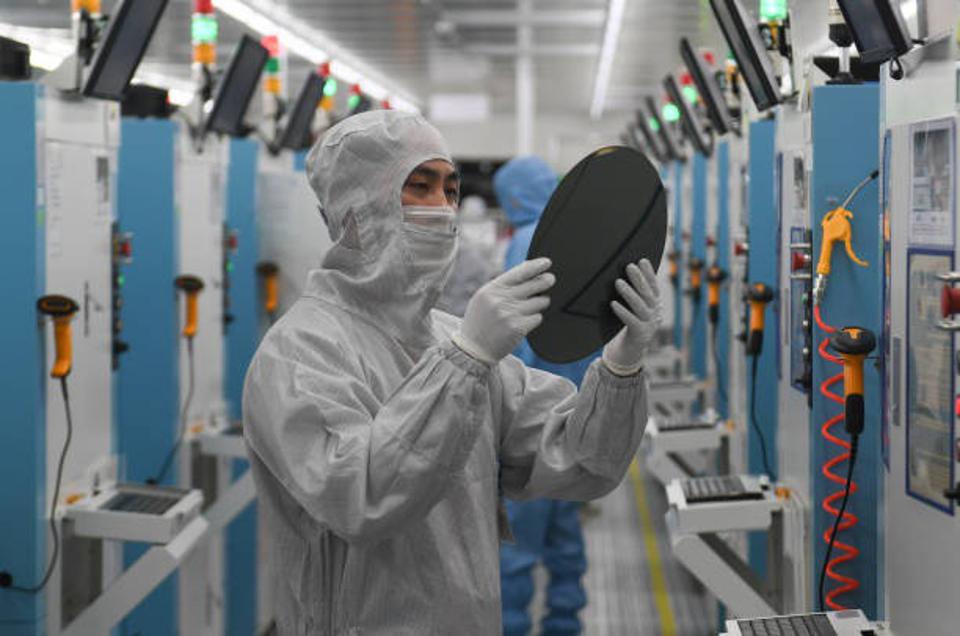
They did the same with electric vehicles when they pumped credits upon credits making it possible for companies like Tesla to rise. Today, they see friction to fix as they combat  the paralysis in the semiconductor  industry by providing a 25% tax credit for semiconductor manufacturing. Just watch how companies will respond in coming months.

Global chip shortage has added to the existing need for the United States to up its semiconductor production. China has become a chipmaking rivalry in recent years, which the US has tried to contain through trade agreements with China, designed among other things, to protect its intellectual properties.

COVID-19 outbreak ushered in a new normal that revved up chip demand, as the whole world relied more on technology and artificial intelligence to carry out tasks. Against this backdrop, from smartphone to auto production has been seriously impacted, and the US government knows it needs to do more to ameliorate the growing chip scarcity.

Thus, a bipartisan group of U.S. senators on Thursday proposed a 25% tax credit for investments in semiconductor manufacturing as Congress works to increase U.S. chip production. Reuters has the report.

Smart policies continue to shape industries in America. And I am hoping that Nigeria will begin to pioneer the use of its tax policies to improve the allocation of factors or production. The challenge in the power sector is something a brilliant policy would have stimulated resources to fix at scale. Indeed, our tax policies are largely for revenue collection. We need to get them to be used as growth drivers for industries of the future. Tax Policy for Industrial Growth is a line I approve.

US Senate Proposes 25% Tax Credit for Semiconductor Manufacturing

US Senate Proposes 25% Tax Credit for Semiconductor Manufacturing

0

Global chip shortage has added to the existing need for the United States to up its semiconductor production. China has become a chipmaking rivalry in recent years, which the US has tried to contain through trade agreements with China, designed among other things, to protect its intellectual properties.

COVID-19 outbreak ushered in a new normal that revved up chip demand, as the whole world relied more on technology and artificial intelligence to carry out tasks. Against this backdrop, from smartphone to auto production has been seriously impacted, and the US government knows it needs to do more to ameliorate the growing chip scarcity.

Thus, a bipartisan group of U.S. senators on Thursday proposed a 25% tax credit for investments in semiconductor manufacturing as Congress works to increase U.S. chip production. Reuters has the report.

The proposal sponsored by Senate Finance Committee Chairman Ron Wyden and the top Republican on the panel, Senator Mike Crapo, along with Senators Mark Warner, Debbie Stabenow, John Cornyn and Steve Daines, would provide “reasonable, targeted incentives for domestic semiconductor manufacturing,” they said in a statement.

The group did not immediately provide a cost estimate for the measure, which is on top of recent proposed semiconductor funding. Last week, the Senate approved $52 billion for production and research on semiconductors and telecommunications equipment. That included $2 billion dedicated to chips used by automakers, which have seen massive shortages and made significant production cuts. The House of Representatives must still act on the measure.

Supporters of funding note the U.S. share of semiconductors and microelectronics production has fallen to 12% from 37% in 1990.

The senators said up to 70% of the cost difference for producing semiconductors overseas results from foreign subsidies.

“The United States can’t allow foreign governments to continue to lure companies’ manufacturing overseas, increasing risks to our economy and costing American workers good-paying jobs,” Wyden said.

U.S. Commerce Secretary Gina Raimondo said last month the funding could result in seven to 10 new U.S. semiconductor plants.

Raimondo anticipates government funding would generate “$150 billion-plus” in investment in chip production and research – including contributions from state and federal governments and private-sector firms.

The tax credit could benefit Taiwan Semiconductor Manufacturing Co (TSMC) 2330.TW, which is building a $12 billion semiconductor factory in Arizona, and Dutch chipmaker NXP Semiconductors NV as well as U.S. firms such as Intel Corp and Micron Technology Inc.

The Semiconductor Industry Association praised the proposal, saying it would “strengthen domestic chip production and research, which are critical to U.S. job creation, national defense, infrastructure, and semiconductor supply chains.”

There have been moves by semiconductor manufacturers to increase production by building new factories in the US. Intel announced plan in March to build $20 billion factories in Arizona, a project that will see the US increase its volume of chip production significantly. That would be an immense addition to TSMC’s proposed $12 billion chip plant in Arizona. But it falls short of the growing demand that has seen auto companies shutting down production.

China is yet to announce a new plan to counter the global chip shortage. This means, if the US implements the 25% tax credit proposal for investments in semiconductor manufacturing, it will help it close the 25% production gap that started after 1990.

IMF Expresses “concerns with the resurgence of fuel subsidies” in Nigeria

0

A microchip is a composite of transistors which are biased at different regions using current. In analog circuits, you need to calculate the amount of current to pass through the transistors so that they will run within the operating regions of interest. To determine that current, you solve some calculus which provides you the length, width, etc of the transistors. But no matter what you have done, you will always optimize things when simulations show variations from design and operations. Those variations come from many factors, including the process you have designed for. This is what I do for a living!

Interestingly, the processes involved in many circuits are also what great nations use to run policies. You commit to a policy, you try things and over time, you look at data. Depending on what you have seen, you recalibrate. For example, President Biden is learning many things on the correlation between social support and looking for jobs.

That brings me to a new IMF call on Nigeria: the resurgence of fuel subsidies: “The mission expressed its concern with the resurgence of fuel subsidies. It reiterated the importance of introducing market-based fuel pricing mechanism and the need to deploy well-targeted social support to cushion any impact on the poor.” 

“The mission expressed its concern with the resurgence of fuel subsidies. It reiterated the importance of introducing market-based fuel pricing mechanism and the need to deploy well-targeted social support to cushion any impact on the poor. The mission recommended stepping up efforts to strengthen tax administration to mobilize additional revenues and help address priority spending pressures.

“The Nigerian economy has started to gradually recover from the negative effects of the COVID-19 global pandemic. Following sharp output contractions in the second and third quarters, GDP growth turned positive in Q4 2020 and growth reached 0.5 percent (y/y) in Q1 2021, supported by agriculture and services sectors.

“Nevertheless, the employment level continues to fall dramatically and, together with other socio-economic indicators, is far below pre-pandemic levels. Inflation slightly decelerated in May but remained elevated at 17.9 percent, owing to high food price inflation.

“With the recovery in oil prices and remittance flows, the strong pressures on the balance of payments have somewhat abated, although imports are rebounding faster than exports and foreign investor appetite remains subdued resulting in continued FX shortage.”

It added that the IMF mission appreciated the authorities and other counterparts for the open and thoughtful discussions and excellent cooperation.

My question is this: Why are we going back to this? What is the justification after we swore that it was all over?

My understanding was that Nigeria was phasing this out. Now that it is coming back – why, and what have we learnt for it to be back. I understand that the government does not want the burden of fuel cost on the poor. But that is why we need to get the National Identity Management Commission working so that we can deliver support to the needy in a more targeted ways via the National Identity Numbers.