DD
MM
YYYY

PAGES

DD
MM
YYYY

spot_img

PAGES

Home Blog Page 5689

Building Great Companies and Brands – Tekedia Live Today

0

At Tekedia Live, the live session of Tekedia Mini-MBA, I will discuss “Building Great Companies and Brands”. My cases will be Indomie Noodles and Apple corporation.  I will explain four characteristics I have seen in great brands and companies, connecting them to the Grand Playbook of Business lecture. 

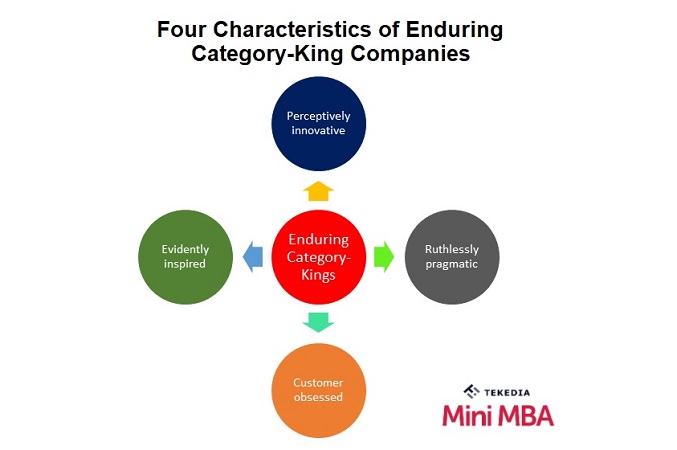
To become an enduring category-king in your business sector, you must possess these characteristics. With them, the firms build moats to protect their castles.

  • Perceptively innovative: you are always innovating. You never rest, always pushing for better products, services and experiences. You outperform competitors with new solutions for unmet needs.
  • Evidently inspired: you inspire your users. You are modern, trustworthy and inspirational, you have a larger purpose, helping people live out their own values and beliefs.
  • Ruthlessly pragmatic: your customers depend on you and you have their backs, making life easier by delivering consistent experiences. You make good on your promises.
  • Customer obsessed: customers cannot imagine living without you. You know what matters to customers, finding new ways to meet their most important. needs.

Time is 7pm WAT; Zoom link in the Board.

Y Combinator in Africa – And Why It’s The Category-King In The World

1

Good People, its economic anointing is something else: the most catalytic and impactful company in the world right now, when it comes to building digital technology companies, is an American company named Y Combinator. I have never seen anything like that. A startup looks for $200k on Monday but on Tuesday, YC accepts it, and magically, everyone wants to give it money to the extent that the problem becomes how to politely decline these investors.

A pure inverse system: the investors you have been writing with no-show and interest now become the ones asking for your bank accounts. Yes, they begin to beg you. Why? Some men in America have chosen to give you $125k in return for 7% of your company!

My question today is this: how can someone create something as powerful as YC for Africa? I am not talking of cloning YC website or its business model; I am talking of asymmetric impacts when someone endorses a startup. 

And if you look at the whole thing: the easiest way to become a paper $millionaire in Africa is to be accepted into YC. Of course, after the acceptance, you still have to compete and win in markets. But one thing is evident – there is a massive herding in the world of startups, and America has created a supreme club, and the impacts are everywhere from Nairobi to Lagos and beyond.

Some of the great technology companies in Nigeria like Flutterwave and Paystack graduated from YC. So, the results speak for this company.

Ndubuisi Ekekwe To Speak In AXA Mansard’s Out of the Box 2021 event

1

So excited to share that I will be speaking in AXA Mansard’s Out of the Box 2021 event. It comes up next month, and it would be an amazing one for the category-king  in Nigeria’s insurance sector. Thank you for extending the invitation and thank you for the partnership and the support you have given us in Tekedia Institute Mini-MBA.  We appreciate Axa Mansard – you will find new markets and win more territories.

How Developers Are Incentivising Prospective Homeowners, Investors in Ibadan Real Estate Market

0

Advertising and marketing are part of the key elements of getting leads and converting them into sales which would lead to immeasurable revenue. Like other real estate markets in Nigeria, our analysis has shown that developers in the Ibadan real estate market are not leaving any stone unturned towards lead acquisition and eventual revenue generation. Our analysis indicates that the developers are employing incentive marketing strategy to woo prospective homeowners and investors, with interest in having land for home and office construction, and buying completed houses. The developers are also targeting those who have substantial finance to buy completed houses in areas like Challenge, Bodija, Mokola among others.

Incentive marketing is not a new practice according to a number of experts and academic scholars, our analyst spoke with. They agreed that over the years, it has been the tradition of businesses to add one or two materials which would motivate prospective buyers to initiate first stage of the purchasing process. In some cases, the approach is being effective because of the people’s love of worldly possessions. In other words, “people behave in a way they believe will result in a reward and avoid actions that may entail punishment.”

Exhibit 1: Use of Incentive Categories by Location of Real Estate Products [Land and House]

Source: Real Estate Companies’ Marketing Materials, 2019-2021; Infoprations Analysis, 2021

Our check reveals that discounts, free product and services are the most effective types of incentive. The argument has also been that incentives are being used to eliminate barriers to communicate with consumers. For instance, incentives such as good roads, stable electricity, recreational centres and other facilities, which are non-materials, are used by the developers to market lands or completed houses our experts say prospective homeowners’ and investors’ lack of information in the locations of the lands or completed houses is being filled.

Exhibit 2: Use of Incentive Categories by Products

Source: Real Estate Companies’ Marketing Materials, 2019-2021; Infoprations Analysis, 2021

However, when incentives such as buy a plot and get a ram, a bag of rice and a keg of vegetable oil are being employed the developers are only appealing to the motivational void and exploiting socioeconomic status of the prospective homeowners and investors. Our analyst examined these insights further with the analysis of 46 real estate marketing materials, focusing on land and house products in the Ibadan real estate market. Analysis shows that between 2019 and 2021, material and non-material incentives were used to market lands more than completed houses.

Exhibit 3: Use of Incentive Categories by Price

Source: Real Estate Companies’ Marketing Materials, 2019-2021; Infoprations Analysis, 2021

Our expectation is that the use of the incentive material types will manifest at the scale of 2 in the marketing materials of the developers. With this, we only found that non-material incentives are being used to market lands and houses in Ido, Ona-Ara and locations that were not specified. Analysis also reveals that the type is being appropriated for marketing of the products in Oluyole local government area, one of the choice locations of prospective homeowners and real estate investors. From our analysis, there are a number of surprising insights. For instance, we discovered that using material incentives significantly connected with the socioeconomic status of prospective homeowners and investors [see Exhibit 3 and Exhibit 4].

Exhibit 4: Use of Incentive Categories by Completed House and Land Size

Source: Real Estate Companies’ Marketing Materials, 2019-2021; Infoprations Analysis, 2021


Additional reports by Mubaarak Abdulhameed [a Builder and Quality Engineer] and Mariam Akanni [a Real Estate Marketer]

Unit Raises $51m in Series B Round to Promote Easier Fintech Business

0

The fintech boom has been accelerating innovation for payments and cross-border transactions. Banks and non-banking firms alike are adding a touch of fintech to their services. To this end, Unit, a fintech startup that creates enabling tools for companies to create fintech services, has gained more funding to expand its mission.

Unit announced it has raised $51 million in Series B round led by Accel. Existing investors Better Tomorrow Ventures, Aleph, Flourish Ventures, and TLV Partners also joined the round.

The company was designed to be the simple and robust platform to empower the next generation of fintech builders, and has grown fast since launching out of stealth last year. This means, companies can build banking products in minutes using Unit tools.

Having raised $18 million in December, the Series B round brought Unit’s total fund to nearly $70 million.

“The new round will help us expand into more financial products, more integrations and a richer feature set, including SDKs and front-end components. All of our initiatives, from new product features to content, are designed to make it even easier for companies to launch new banking products,” the company said in a statement.

To that end, Unit announced the launch of Unit Go, the first-in-market solution that will allow companies to create live bank accounts and issue physical and virtual cards in minutes. Founders and developers will now have the ability to sign up for a free account, build in Unit’s live environment, and instantly test their products using real funds. Unit Go is currently in beta and will be publicly available in the fall of 2021.

The company said it has seen deposit volume grow by over 300%, and banked end-customers by 600% in the last three months. The goal is to capitalize on this progress and expand its services to a wider pool of users, even amidst competition with other players, like Railbank, Treasury Prime and Stripe, in the booming fintech field.

“We continue to be inspired by what both young and established companies have built on Unit, and we plan to continue sharing their stories with the world,” it said.

Unit said its interaction with hundreds of builders has cemented its belief that the next decade in fintech will be defined by tech companies using their unfair advantage — the flywheel of distribution, trust, software, and data — to launch massively successful fintech products in their verticals. That thus sets the company on a mission to help these companies bring those products to life, unlock value, and expand financial access for all.

Unit was founded by Itai Damti and Doron Somech, who are using their tech development ideas from the previous startup they founded, to accelerate Unit’s growth. The duo previously co-founded — and bootstrapped — Leverate, a Tel Aviv-based B2B trading tech provider. Unit has dual headquarters in Tel Aviv and New York City.

For now, only about 20% of Unit’s customers are what might be considered true fintechs. The remaining 80% are companies that are not but rather want to embed banking as a service into their offering, Damti said.

He added that the company takes what was once “a very expensive and complex process of 18 months” that includes finding and managing a bank relationship, building a compliance team and building a tech stack “that gets you to a competitive banking offering, and turns it into one API and one dashboard that helps companies launch accounts cards, payments and lending within five weeks.”

“We are acting as a company that connects banks to the tech ecosystem and banks are critical vendors and partners to us, but we see them as a built-in element within Unit, because we believe that the most excellent experience in this ecosystem can only come from software companies,” Damti told TechCrunch.

He explained that Unit is technically distinct in that it is actually building a ledger, which he describes as “the most critical and sensitive part of the ecosystem.”

By owning the ledger and not delegating, he said, Unit is “able to offer a radically better experience.”

“As far as the transaction environment, the cleanliness of the data that we provide and the fees that our customers are able to control and tweak, owning that ledger piece is super critical for the experience,” Damti said.

With Unit rolling out the tools, making financial services easier, many companies are expected to get into the fintech business before 2022.