Despite what we have in the books now, it seems the Central Bank of Nigeria has found another point for the Naira: “The Governor of the Central Bank of Nigeria, Godwin Emefiele advised investors in the U.K that he expects the true value of the naira to be between N430-440 to the dollar. Mr. Emefiele made this comment in a Webinar organized by the Standard Bank of Africa (parent company of Stanbic IBTC Nigeria). According to sources who attended the event on Monday, Mr Emefiele told participants that the current exchange rate at the parallel market was between N430-440/$1 and not the black-market rate which closed at about N500/$1.”
In an apparent attempt to woo foreign investments, the CBN Governor also encouraged foreign investors to reconsider their waning interest in Nigerian Equities suggesting that some of the stocks were undervalued. Nigeria’s capital importation data into equities was just $755 million in the whole of 2020 compared to $1.8 billion in 2019.
Nigeria needs the foreign investors desperately into the economy as whenever they show interest in our stock market, numbers move. Yet, it is really challenging for the investors since if the Naira continues to move negatively in the forex market, taking mid to long term positions will become harder. This is compounded by the foreign reserves which have gone down to a four year low. If that trajectory does not change, another currency devaluation would be on the way.
Tough decisions coming early in Q3 2021 for the nation and it would be really challenging. Sure, crude oil price is showing positive signs and if happens at high volume, we could buy a few more months.
Meanwhile, the Nigerian government has inaugurated the National Steering Committee (NSC) of the National Poverty Reduction with Growth Strategy (NPRGS), with the aim to lift 100 million Nigerians out of poverty. The Chairman of the committee is the Vice President. This committee will establish a private equity fund, the Nigeria Investment and Growth Fund (NIG-Fund), to lead resource mobilisation drive and manage its resources. Besides this playbook, Nigeria needs to work to stabilize the Naira. If we keep the Naira fairly stable, investment capital will arrive, and government will not even need to expand bureaucracy.
STATE HOUSE PRESS RELEASE
PRESIDENT BUHARI INAUGURATES STEERING COMMITTEE ON POVERTY REDUCTION, ESTABLISHES PRIVATE EQUITY FUND
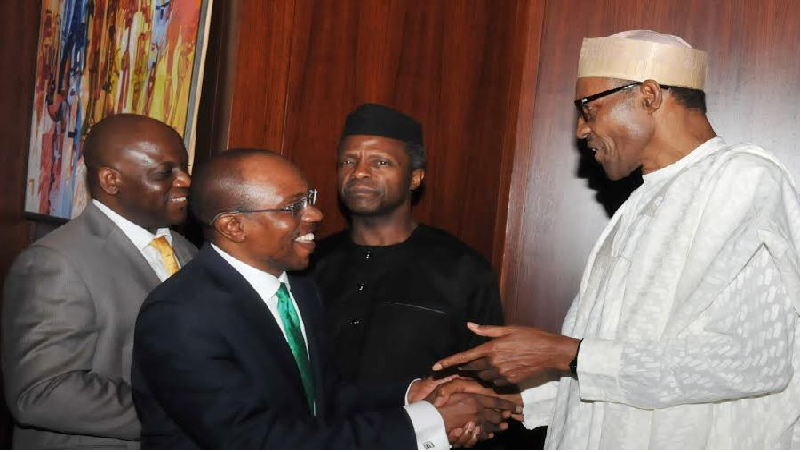
President Muhammadu Buhari Tuesday in Abuja inaugurated National Steering Committee (NSC) of the National Poverty Reduction with Growth Strategy (NPRGS) to be chaired by Vice President Yemi Osinbajo, reiterating his commitment to lifting 100 million Nigerians out of poverty in ten years, with a well-researched framework for implementation and funding.
Speaking at the ceremony attended by the Vice President, Secretary to the Government of the Federation, Boss Mustapha, some governors and top government officials, President Buhari noted that the NPRGS had already proposed the establishment of a private equity fund, the Nigeria Investment and Growth Fund (NIG-Fund), to lead resource mobilization drive and also manage the resources in a sustainable manner.
“This journey began in January, 2021 when I directed the Chairman of the Presidential Economic Advisory Council and Secretary to the Government of the Federation to collaboratively work together to articulate what that will lift 100 million Nigerians out of poverty in ten (10) years.
“I am happy to note that the process of designing this inclusive poverty reduction strategy recognized and addressed past mistakes as well as laying the foundation for a sustainable poverty reduction through the wide range consultations held at all levels of government, development partners, the private sector as well as the civil society,’’ he said.
The President added that the National Poverty Reduction with Growth Strategy would address the underlying causes of poverty on the basis of which it developed programmes that would deal with the multi-dimensional nature of poverty within the practical context of comparative advantage of human and natural resources in the various geo-political zones.
“The major challenge before this National Steering Committee is to translate our good intention into positive impact of the average Nigerian so that we create an appreciative impact on the poverty situation in our country.
“If India can lift 271million people out of poverty between 2006 and 2016, Nigeria can surely lift 100million out of poverty in 10 years. Fortunately, we have already started but we need to unlock the challenges of slow implementation, inappropriate targeting and absence of adequate resources.’’
President Buhari listed the responsibilities of the steering committee to include: anchor collaborative efforts; provide oversight for the implementation of the strategy; provide guidance to Technical Working Group and Federal Ministries, Extra Ministerial Departments and Agencies, subnational governments and other stakeholders on meeting the objectives of the programme as well as monitoring progress and any other effort that would enhance attainment of the objective of lifting 100 million people out of poverty in 10 years.
According to the President: “The performance of our economy despite COVID-19 gives me comfort that we can achieve our goal but we need to seriously scale up and work more with state and local governments.
“This call becomes more pertinent in the face of recent forecasts by the International Monetary Fund, the World Bank and our own Nigerian Economic Summit Group which all agreed that Nigeria needs to frontally tackle her poverty situation if our economic gains are to be sustained.’’
President Buhari said the National Steering Committee of Nigeria’s National Poverty Reduction with Growth Strategy also include Secretary to the Government of the Federation, Chief of Staff to Mr. President, Governor of Ekiti State (South West), Governor of Delta State (South South), Governor of Sokoto State (North West), Governor of Borno State (North East), Governor of Nasarawa State (North Central) and Governor of Ebonyi State (South East).
Other members of the committee are: Minister of Finance, Budget and National Planning, Minister of State for Budget and National Planning, Minister of Humanitarian Affairs, Disaster Management and Social Development, Minister of Agriculture and Rural Development, Minister of Industry, Trade and Investments, Minister of Labour and Employment, Minister of Education and Minister of Health.
President Buhari charged the committee to commence work immediately so that the Technical Working Group would also begin putting the nuts and bolts together.
“You may, therefore, wish to consider providing immediate guidance to the TWG on the following, establishment of the NIG-Fund leveraging on the Development Finance Assessment Report, public and private sector funding; harmonise existing human capital development; scale up existing Poverty Reduction Initiatives such as the Social Investment Programmes, various agricultural support initiatives as well as support to Micro-Small and Medium Enterprises; and leverage on existing development partner support programmes and projects with potentials for quick-wins e.g the Nigeria COVID-19 Action Recovery and Economic Stimulus.’’
The President said the responsibilities were onerous, but expressed confidence that the committee will be able to lay the foundation and demonstrate, within the next two years, the practicality of lifting 100 million Nigerians out of poverty in or under 10 years.
“As you all know funding will always be a challenge especially in these times when resources are limited. The NPRGS has, thus, proposed the establishment of a private equity fund, the Nigeria Investment and Growth Fund (NIG-Fund), to lead our resource mobilization drive and also manage the resources in a sustainable manner,’’ he added.
In his remarks, the Chairman of the committee, Vice President Osinbajo said the National Poverty Reduction with Growth Strategy would consolidate other efforts of the government to reduce poverty which include N-Power, school feeding and conditional cash transfer.
The Vice President noted that the President’s position that local governments, states and the federal government should work jointly to alleviate poverty in the country will be properly reflected in the framework and implementation, stressing the need for access and inclusivity.
The SGF said the poverty situation in the country assumed an enormous proportion, with an increasing population, adding that the situation was compounded by the COVID-19 pandemic.
He said the administration responded to the COVID-19 poverty fallout swiftly and was able to ameliorate the situation, and also ensured a quick exit from recession.
Femi Adesina
Special Adviser to the President
(Media & Publicity)
June 22, 2021
Like this:
Like Loading...