DD
MM
YYYY

PAGES

DD
MM
YYYY

spot_img

PAGES

Home Blog Page 5697

The Microsoft’s Rise to $2 Trillion Valuation

0

Apple now has another Silicon Valley company to contend with in its rank as the world’s most valuable firm, valued at more than $2 trillion. Microsoft is now worth more than $2 trillion. CNBC has the story.

The software maker first hit that level just after 3 p.m. ET on Tuesday, June 22, but dipped below that mark again before ending Thursday’s trading session at $266.69 per share. The milestone follows the company’s unveiling of Windows 11, its first new version of the flagship operating system in more than five years, on Thursday morning.

Microsoft’s value has doubled in two years’ time, bolstered by demand for products such as the Teams chat app that kept organizations functioning during the coronavirus pandemic. The growth in a dramatic way, overshadowed its 33-years swings around $1 trillion.

The appreciation of the company’s stock price reflects a rejuvenated company, one that has looked beyond its dominant Windows operating system and found growth in cloud computing and acquisitions.

Microsoft stock has grown more than 600% since Satya Nadella replaced Steve Ballmer as the company’s CEO in 2014. (During Ballmer’s 14-year tenure as CEO, the company’s stock fell 32%.) One of Nadella’s first moves was to reveal that Office applications like Word and Excel were coming to Apple’s iOS and Google’s Android, rather than restricting those apps to smartphones that ran Windows. A year later, when Windows 10 came out, it was a free update, unlike Windows 7 and Windows 8.

Nadella had run the division that includes Microsoft’s Azure public cloud immediately before taking the CEO job, and it shows. In his years as CEO he has made public appearances to talk about uses of Azure at prominent customers such as the National Basketball Association, Volkswagen and Walgreens. Azure is on track to become Microsoft’s largest business.

Microsoft under Nadella has become gentler and more open to working with rivals where it makes sense. It improved relations with rivals such as Red Hat and Salesforce, and it has added the open-source Linux operating system, once seen as a threat to Windows, directly into Windows. On Thursday, the company announced Windows 11 will support apps that run Google’s Android operating system, and Nadella spent the end of the company’s presentation portraying Microsoft as a friendlier option for software developers than Apple.

These days, venture investor Ben Horowitz has said, Microsoft is a great company for start-ups to partner with, rather than an entity to be feared.

Nadella’s Microsoft has managed to largely avoid antitrust scrutiny despite its past, which includes a landmark antitrust case brought by the U.S. Justice Department in 1998. Meanwhile, Amazon, Apple, Facebook and Google have all faced pressure from regulators during the Nadella years. However, team communication app maker Slack did file an antitrust complaint in Europe last year after Microsoft introduced Teams and released it to clients that subscribe to the Office 365 bundle.

More recently, the top Republican on the House Judiciary Committee, Ohio’s Jim Jordan, sent a letter to Microsoft President Brad Smith suggesting that it might be covered by parts of five proposed antitrust bills making their way through committee.

Microsoft has spent more than $45 billion acquiring companies on Nadella’s watch, including business social network LinkedIn, video game developers Mojang and Zenimax, and the code-storage service GitHub. Microsoft has largely left them to operate independently and grow. In April the company said it had agreed to acquire speech-recognition company Nuance for $19.7 billion, inclusive of equity and debt.

Nadella’s deal track record has been more successful than that of his predecessor, whose aQuantive and Nokia acquisitions resulted in write-downs. Mojang’s Minecraft game, by contrast, has become the best-selling game in history, and LinkedIn’s quarterly revenue has nearly tripled.

Microsoft was among the first companies to exceed a $1 trillion valuation when it hit that milestone in April 2019. Not long before that, Microsoft had reclaimed the title of most valuable public company, although today it’s held by Apple.

Amazon and Google’s parent company, Alphabet, are both worth more than $1 trillion, as is oil company Saudi Aramco.

Banking of the Future

0

The greatest banking institutions of the future would be technology companies which offer banking services and not banks which use technology. Yes, institutions which are TRANSFORMED by technology, and not just run with technology – Tekedia Institute


TRANSFORM digitally, not just Run digitally


Beat Tekedia Mini-MBA Early Registration Deadline And Join Tekedia Special Weeks Free

0

Our two special weeks have been announced. Tekedia Career Week and Tekedia Innovation Week are exclusive to members who have attended Tekedia programs in 2021. We have started registration for a new edition of Tekedia Mini-MBA (Sept 13 – Dec 6, 2021); beat the early bird registration deadline to attend these two events at no additional cost. Begin here.

Changing Strategies for Financial Inclusion Drive in Nigeria

0

Financial inclusion drive is a process of bringing people under the financial net or scope in order to ensure access to affordable and timely financial products and services is achieved.

When it is achieved to a large extent, it usually helps in financial planning and budgeting for the citizenry. Nigeria, a country with over 80 million people living in poverty and about 38 million people financially excluded, has taken up this drive passionately, but unfortunately not much has been achieved.

There are some facts that we need to accept in our financial inclusion drive as a country. These are:

  • The financial inclusion drive must be led by Government Policies before it can have a noticeable impact. What this means is that only the government will keep the eyes on financial inclusion goals; other organizations or firms will give priorities to the business aspect of financial inclusion.
  • Financial inclusion drive is a continuous activity. We can only reduce the rate of exclusion when we have the pointers such as population growth, rates of illiteracy, poverty rates, and age gap under control.

We have seen a yearly increase in the volume of financial transactions with no noticeable reduction in financial exclusion rates. It means that a high volume of transactions is not directly proportional to financial inclusion rates.

So many Fintechs companies had sprung up in the last four years to join the banks in this drive with the expectation that it will have a direct impact on financial inclusion rates but to no avail.

This does not mean that these financial inclusion drivers have failed, rather it further points to us that there are lots of businesses and individuals that are not under the financial network which may depict that our financial exclusion rate is far more than the records we have.

We must quit the speculative approach to adopt a deliberate approach to financial inclusion drive. We cannot continue to expect that banks and Fintechs alone will do the needful with regards to financial inclusion without first considering its profitability.

I have said on different occasions that the financial inclusion drive is more lucrative than it presently portrays. No one wants to take the risk to unlock the treasury but everyone is waiting to see who goes first. This is understandable as no bank/Fintech can force a customer to remain a customer even if it opens the first account/wallet for such a customer.

This is where the government’s policy is expected to lead the way and unlock this treasury for financial inclusion drivers.

The Government must be deliberate enough to put up the following policies in line with financial inclusion drives to ensure that all the above-mentioned pointers are under control:

  • Child Registration Smart Card, tied to a bank account/wallet with initial balance as incentives and with annual incentive until the child becomes 15 – 18 years. At that time the Card will be transferred to the child and biometrics of the child will be taken to update the records. The registration centers should be placed in all our Health facilities, Primary and Secondary schools. No one would abandon such an Account/wallet especially when it has regular incentives from the government. The policy should also state that every death whether infant or adult must be reported to an appropriate authority for proper identification.
  • Cashless payments to the vulnerable Policy. We had the opportunities to bring so many people under the financial net at the peak of the Covid-19 pandemic in the year 2020 when several palliatives were been shared to the vulnerable (IDPs, Physically challenged, Old people and e.t.c) but I doubt we utilized them appropriately as cash payments were seen being made.

All Government Agencies, NGOs, and Politicians should also be made to comply with such policy. All payments should go through an account/wallet created for such people.

With the above mentioned policies in place, banks and fintechs will daily bring genuine numbers of the potential excluded and already-excluded population under the financial net while they continue in the business-focused financial inclusion drives.

If we are deliberate and consistent in this path, in the next few years we would see a significant decrease in the numbers of the financially excluded population.

Nigeria’s Black Swan on Debt Servicing And Post-Border Closure Paralysis

1

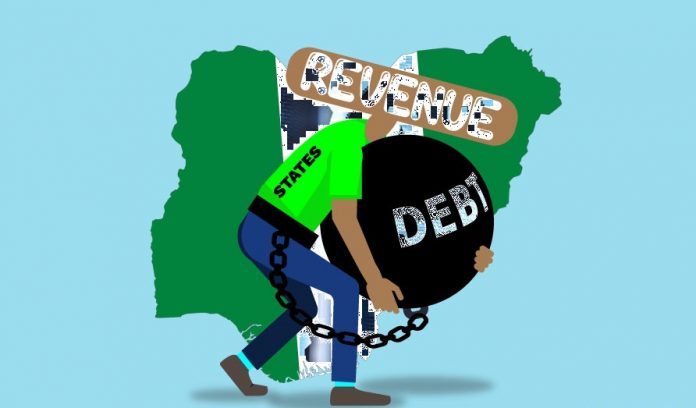
Nigeria’s total debt rose to N33.1 trillion at the end of Q1 2021, from N32.9 trillion recorded as of the end of Q4 2020. Data from Debt Management Office (DMO) states that the federal government spent N1.02 trillion on debt serving in Q1 2021, a 36% year-on-year jump on the Q1 2020 number. As things stand, Nigeria’s debt servicing is growing faster than its revenue, creating a major paralysis.

  • A sum of N537.78 billion was used to service FGN Bonds in the review period. This represents a 124.6% increase compared to N239.46 billion recorded in Q1 2020.

    Nigeria repaid a sum of N31.44 billion as principal repayment, while N35 billion was used to service Nigerian Treasury Bills.

    In terms of external debt, $134.04 million was used to service multilateral loans, which includes $104.4 million to International Development Association, $16.21 million to AFDB, and $9.5 million to African Development Fund.

  • Also, $106.3 million was used to service bilateral loan agreements, while $763 million was spent on Euro bonds.

But besides these numbers, looking at Nigeria before and after the big border closures, one can see severe cracks. Though I am still expecting economists to do a deep dive, the borders could have possibly wounded Nigeria’s economy when you look at food inflation, acceleration of criminality due to food scarcity, etc.

Economically, in the last 6 years, you can divide the economy before and after the border closures.

Looking at some data from some light manufacturers who export to Cameroon, Benin Republic, etc, there is clear evidence that during the closure, most found alternatives – and Morocco captured most of the opportunities. Post-closure, most have not been unbundled.

Possibly, Nigeria is a net gainer in the region and border closure was an own-goal. If that is the case, we must not repeat the same again. That is critical as we cannot afford to budget N13.6 trillion and waste N4 trillion on just servicing debts as we continue to look for money to hold the economy together.