DD
MM
YYYY

PAGES

DD
MM
YYYY

spot_img

PAGES

Home Blog Page 57

MKBHD’s Panels App Will Shut Down Amid Criticisms Citing Data Leak and High Pricing

0

Tech YouTuber Marques Brownlee (MKBHD) announced that his wallpaper app, Panels, will shut down on December 31, 2025—about 15 months after its September 2024 launch.

In an unlisted YouTube video and a notice on the app’s website, Brownlee cited challenges in sustaining the project, including a changing development team and difficulty finding collaborators who shared his vision for a “vibrant ecosystem” supporting artists and high-quality wallpapers.

The Rocky Launch and Monetization Backlash

Panels debuted as a marketplace for exclusive, artist-partnered wallpapers inspired by Brownlee’s own device reviews fans often asked about his stunning lock screens. But it hit immediate turbulence, $11.99/month or $49.99/year for full-resolution downloads with artists getting a cut. Free users could only access 1080p versions after watching ads.

The app requested location data, cross-app tracking, and other permissions that felt overly intrusive for a wallpaper tool. Critics called it “DOA” (dead on arrival), arguing why pay for digital images when free options abound (e.g., Google Photos, Reddit, or personal shots).

It topped download charts briefly but saw low conversion to paid users—despite 2 million wallpaper downloads overall. Brownlee responded by slashing prices to $2/month, improving the free tier, and tweaking privacy features. However, as he noted, “we made mistakes in making our first app, and ultimately, we weren’t able to turn it into the vision I had.”

The niche market for paid wallpapers proved too small to sustain growth. All downloaded or purchased ones are yours forever—no rescinding. Full access until Dec 31; automatic pro-rated refunds for active annual subs post-shutdown. Early refunds available via the site.

It’ll vanish from App Store and Google Play soon. All user data deleted after closure. In January 2026, the code drops on GitHub under Apache 2.0 license—free for anyone to fork and build a spiritual successor. Brownlee called it a “rollercoaster ride” with some wins, like artist partnerships, but ultimately a learning experience in app development.

The launch of Panels in September 2024 was a masterclass in how not to debut a product, especially from a creator like Marques Brownlee, who’s built a reputation for razor-sharp critiques of tech giants.

The app, meant to curate high-quality wallpapers from artists inspired by fan queries about his review setups, instead became a lightning rod for backlash.

The main criticisms, drawn from user reactions, reviews, and media coverage. At $11.99/month or $49.99/year for full-res downloads with ads for 1080p free tier, it screamed “subscription fatigue.” Users mocked it as absurd—why pay premium for pixels when free alternatives like Unsplash, Reddit, or your camera roll exist?

Brownlee admitted the pricing was a “mistake,” slashing it to $2/month post-launch, but the damage stuck. As one X user put it, it felt like a “quick cash grab” from a guy who calls out corporate greed. Revenue data later revealed a stark reality: ~900,000 downloads but only ~$95,000 in purchases across platforms.

The free tier forced 30-second unskippable ads per download, making it feel punitive. Early users called the interface “clunky” and ad-riddled, with one X post uninstalling after 10 seconds and questioning if anyone on the team had the guts to flag it.

It launched during Brownlee’s iPhone 16 review video his biggest of the year, turning comments into a hate-fest and tanking engagement. Requesting location, cross-app tracking, and usage data for a wallpaper app? That sparked “creepy” accusations, eroding trust in Brownlee’s privacy-conscious brand. Fixes came later, but not before App Store reviews piled on.

MKBHD, who “canceled” startups like Humane and Fisker with scathing reviews, faced the same scrutiny: “You gotta be ready to take what you dish out.” X threads roasted it as out-of-touch, damaging his “quality advocate” image—especially since wallpapers aren’t a “must-have” justifying subs.

Panels’ shutdown on Dec 31, 2025—just 15 months in—ripples beyond one app. It’s a sobering case study for creators dipping into product waters, with broader takeaways. This is a gut-check on monetizing “side hustles.” Brownlee’s 20M+ subs didn’t translate to sustainable revenue in a saturated, low-barrier niche like wallpapers.

It highlights the subscription economy’s pitfalls: Users are weary of $X/month for non-essentials, and one misstep can torch credibility. As app expert Sarah Chen noted, “Even the most trusted voices can’t force consumers to accept pricing they perceive as unreasonable.”

Expect more cautious pivots—maybe merch or tools with clearer value—over apps that feel like grifts. It also flips the script: Brownlee’s review power blamed for company downfalls now invites “what about your failures?” blowback.

Data deletion post-shutdown sets a privacy-positive precedent, potentially inspiring ethical exits. Artists lose a revenue stream but gain exposure via the code drop. It empowers users: Vote with wallets, and even icons fold.

In the end, Panels was an ambitious swing that whiffed, but Brownlee’s transparency salvages some goodwill. It’s a reminder: Tech’s easy to critique, hard to build. Will this dent MKBHD long-term? But it’ll make future ventures sharper.


Trump Administration Pushes to Accelerate U.S. Robotics Development

0

Reports emerged confirming that the Trump administration is pivoting from its earlier AI initiatives to prioritize robotics as a key pillar of U.S. industrial policy.

This move aims to bolster domestic manufacturing, enhance national security, and counter China’s lead in robotics deployment—where the U.S. currently lags with roughly 450,000 industrial robots installed compared to China’s 1.8 million.

The strategy aligns with President Trump’s “America First” agenda, emphasizing reshoring production through advanced automation while integrating AI advancements from prior efforts like the July 2025.”

Commerce Secretary Howard Lutnick has been actively engaging with CEOs from the robotics sector, signaling strong administration support for rapid industry growth. Sources describe Lutnick as “all in” on acceleration, with discussions focusing on policy incentives like tax breaks, streamlined regulations, and increased federal funding.

The White House is evaluating an executive order on robotics for issuance in 2026, which could formalize national goals for development, deployment, and ethical use. This would mirror the AI executive order from November 2025, dubbed the “Genesis Mission,” which mobilized federal resources for AI-driven scientific breakthroughs, including robotic labs.

The Department of Transportation is forming a federal robotics working group to integrate automation into infrastructure and logistics. On Capitol Hill, Republicans are advancing legislative proposals after a failed amendment to the National Defense Authorization Act that would have created a national robotics commission.

New bills could provide dedicated funding and R&D support. U.S. robotics funding is projected to reach $2.3 billion in 2025—double 2024 levels—driven by private-sector interest. Goldman Sachs forecasts the global humanoid robotics market hitting $38 billion by 2035, with U.S. leadership seen as critical to economic competitiveness.

The Commerce Department emphasized: “We are committed to robotics and advanced manufacturing because they are central to bringing critical production back to the United States.”

The announcement sparked immediate enthusiasm in robotics-related stocks:Tesla (TSLA): Shares rose 1%, buoyed by its Optimus humanoid robot program and Elon Musk’s close ties to Trump.

Serve Robotics (SERV): Surged 8% on its autonomous delivery tech.

Richtech Robotics (RR): Jumped 11%, reflecting gains for smaller automation players.

Teradyne (TER): Up 1%, as a key supplier of testing equipment for robotics.

Analysts view this as a “supercharge” for sectors like defense like drones and surveillance bots, healthcare surgical assistants, and logistics warehouse automation.

Industry groups, including the Secure Cloud and Supply Chain Policy (SCSP), have urged a national strategy to foster U.S. leadership through government-industry-academia collaboration.

This robotics focus builds on Trump’s AI “Genesis Mission,” which integrated supercomputing and federal datasets to automate experiments in areas like advanced manufacturing.

It positions robotics as the next “front” in the U.S.-China tech race, where countries like Japan, Germany, and Singapore already have dedicated national plans. Proponents argue it could drive 4-5% annual GDP growth via productivity gains, but critics highlight risks.

AI-powered robots may displace manufacturing jobs, potentially undermining Trump’s promises to revive blue-collar work. Reskilling programs and ethical guidelines will be essential to mitigate workforce impacts.

Overall, this signals a proactive industrial policy shift, with robotics poised to redefine U.S. manufacturing resilience. Watch for the 2026 executive order as a potential catalyst for further investments and partnerships.

Polymarket is Officially Rolling Out to U.S. Users

0

The Polymarket app is officially rolling out in the US as of December 3, 2025, following CFTC approval after a 2022 regulatory ban that forced the platform to exit the market.

The rollout began yesterday for users on a waitlist which has over 200,000 sign-ups and is starting with sports markets, with broader categories like politics, crypto, and culture to follow soon.

Polymarket settled a $1.4 million fine with the CFTC in 2022 for operating an unregistered derivatives exchange. To relaunch compliantly, it acquired the registered entity QCEX for $112 million in July 2025, securing an “Amended Order of Designation” in November that allows it to operate under federal rules as an intermediated trading platform.

It’s a gradual beta via the iOS app already live globally with 4.9-star ratings. US users download the app, join the waitlist at Polymarket.us, and get notified via text for access. Early testers like UFC CEO Dana White have had beta access, and it quickly hit #1 in the Apple Store’s sports category.

Sports betting contracts (e.g., NFL, NBA outcomes) launch first, capitalizing on the $16+ billion in annual US sports wagering volume. This mirrors competitors like Kalshi, which also exploded during football season.

Full “markets on everything” (e.g., election odds, gold prices, celeb news) will expand later. Even without US users, Polymarket hit all-time highs in November 2025: $3.73 billion in monthly volume and 494,690 active traders globally. It handled $18.5 billion in total volume over the past year, outpacing Kalshi’s $16.4 billion.

The relaunch comes amid buzz, including a potential $2 billion investment from Intercontinental Exchange valuing it at $8–10 billion. This marks Polymarket’s regulated return after nearly four years, positioning it as a “truth machine” for crowd-sourced predictions on blockchain—faster and more efficient than traditional polling or analyst reports.

It’s already proven accurate (e.g., nailing the 2024 election), and US access could supercharge liquidity, tighter spreads, and adoption by institutions like hedge funds for macro signals.

Rivals like Kalshi which just partnered with CNN and tokenized on Solana are heating up the space, but Polymarket’s crypto roots give it an edge for on-chain trading.If you’re on the waitlist, check your notifications—access is going live now.

Polymarket is a decentralized prediction market platform where users buy and sell shares in event outcomes (e.g., “Will Trump win the 2024 election?”) using USDC stablecoin on the Polygon blockchain.

Share prices fluctuate between $0 and $1 based on perceived probability—e.g., a $0.75 “Yes” share implies a 75% chance of the event happening. When the event resolves, “Yes” shares pay $1 if true, or $0 if false.

This creates a self-correcting “wisdom of the crowd” mechanism: Traders have skin in the game, so incentives align toward accurate forecasts, unlike polls where responses are costless and prone to bias.

Percentage of markets where the leading outcome (e.g., >50% probability) correctly matched reality. Brier Score: A probabilistic metric (0 = perfect, 1 = worst) that penalizes overconfidence. Lower scores indicate better calibration—e.g., if a market predicts 80% “Yes” and it happens 80% of the time across similar events, it’s well-calibrated.

Polymarket publishes its own accuracy dashboard, tracking resolved markets across categories like politics, sports, and crypto. Independent analyses via Dune dashboards confirm high performance, often outperforming polls by aggregating real-time, incentivized data from global users.

Research by data scientist Alex McCullough via Dune Analytics analyzed thousands of resolved Polymarket markets, excluding extremes probabilities <10% or >90% to focus on uncertain ones. Results show accuracy improving as events near resolution, reflecting incoming information.

Overall, Polymarket hits 90-95% binary accuracy across 10,000+ resolved markets since 2020, per platform data and third-party reviews. Brier scores average 0.10-0.15, better than traditional forecasts.

Polymarket nailed Trump’s win with 95% accuracy in swing states (e.g., Pennsylvania at 55% Trump odds days before polls called it a toss-up). It outperformed FiveThirtyEight’s aggregates by 10-15% in final-week calibration, per Vanderbilt University research.

Total volume: $3.6B, with odds shifting decisively in October while pundits hedged. 2022 U.S. Midterms: Predicted Republican House control earlier than most polls, capturing GOP enthusiasm missed by low-response surveys.

Sports (2025 Season): 85-90% accuracy on NFL/NBA outcomes, lower than politics due to fewer “long-shots” (e.g., underdogs <5% odds are rare). Handled $4.5B in finals betting, like NBA playoffs. Forecasted Canada’s 2025 Liberal lead wider than polls. But mixed results elsewhere—e.g., overestimated Poland’s Trzaskowski at 80% in the presidential runoff.

In national security, Polymarket’s Russia-Ukraine ceasefire odds peaking at 70% in Dec 2024, dipping to 40% by Feb 2025 provided real-time geopolitical signals, outperforming analyst reports.

Traders risk money, so misinformation gets arbitraged out—unlike polls, where shy voters or biases distort results (e.g., Republicans underreport in surveys). Aggregates diverse views instantly; crypto anonymity draws underrepresented groups (e.g., 17-20% U.S. crypto owners skew toward GOP men).

Despite this, Polymarket’s edge grows with scale—$18B+ lifetime volume in 2025 alone. It’s not infallible but a powerful “truth machine” for crowd wisdom, especially in uncertain times.

Kalshi Founders Become Billionaires, as Connecticut Issues Cease-and-Desist Orders to Kalshi, Robinhood, Over licensing

0

Kalshi, the CFTC-regulated prediction market platform that lets users trade on real-world event outcomes like elections, sports, weather, and more, just closed a massive $1 billion funding round at an $11 billion valuation—its third raise in 2025 alone.

This skyrockets the company’s value from $2 billion in June to $5 billion in October, and now double that, fueled by explosive growth: November trading volume hit a record $5.8 billion, up 32% from the prior month, with sports bets especially parlays driving over 90% of recent activity.

The windfall catapults co-founders Luana Lopes Lara and Tarek Mansour—both 29 and MIT computer science grads—into billionaire territory. Each holds an estimated 20-25% stake, translating to a paper net worth of about $1.3 billion per person though some reports peg it closer to 12% based on dilution.

For Lopes Lara, a Brazilian-born former professional ballerina who danced in “Swan Lake” productions in Austria before pivoting to fintech with summer stints at Bridgewater and Citadel, this crowns her the world’s youngest self-made woman billionaire at 29—edging out Scale AI’s Lucy Guo (31) and pop icon Taylor Swift previously the benchmark at around $1.6 billion.

The round was led by crypto powerhouse Paradigm, with heavy hitters like Sequoia Capital, Andreessen Horowitz, ARK Invest, CapitalG (Alphabet’s growth arm), Meritech, IVP, Anthos, and Y Combinator piling in.

Proceeds will fuel brokerage integrations it’s already live on Robinhood and Webull, global expansions, content partnerships a CNN tie-up is reportedly in the works, and crypto pushes via Solana for tokenized event contracts.

Liquidity comes from pros like Susquehanna International Group, and partnerships span the NHL to StockX. It’s the only fully regulated U.S. player in a sector exploding post-2024 election where it nailed Trump’s win weeks early on $500M+ in bets, outpacing Polymarket’s $3.6B unregulated volume.

A fresh class-action lawsuit in New York accuses it of unlicensed sports betting and misleading users on peer-to-house dynamics, plus state-level scrutiny on contracts. Investors shrug it off—Y Combinator’s Michael Seibel calls it a “company with as much potential impact on the world” as any he’s seen.

The news is lighting up X, with Forbes’ post racking up buzz and users hailing Lopes Lara’s “brutal ballet to billionaire” arc as inspirational. In a prediction market twist, odds are high this is just the warmup for Kalshi’s global dominance.

Prediction markets are online platforms where people buy and sell contracts that pay out based on the outcome of future real-world events. They work like a stock market, but instead of trading shares in companies, you trade the probability of something happening—like “Will Donald Trump win the 2026 midterms?” or “Will Bitcoin hit $200k by December 31, 2026?”

“Will the Federal Reserve cut interest rates in March 2026?” Two types of contracts are created: Yes contract and No contract. Each contract costs between $0.00 and $1.00.If the contract is trading at $0.65 ? the market thinks there’s a 65% chance the event happens.

If you buy 100 “Yes” contracts at $0.65 and the Fed does cut rates ? each Yes contract pays $1.00 ? you make $100 ? $65 = $35 profit. If the Fed does NOT cut rates ? Yes contracts become worthless ? you lose your $65.

This is why prediction market prices are interpreted as crowd-sourced probabilities. Money where your mouth is. People who know the most or research the hardest can profit, so the incentives push prices toward the true probability.

24/7 real-time probabilities. Unlike polls that update weekly, prediction markets update instantly as news breaks. Cover almost anything. Elections, sports outcomes, economic data, Oscars, weather, wars, celebrity breakups, scientific discoveries, etc.

Used by hedge funds, journalists, and governments as leading indicators. Create liquidity for “information” itself. Can feel like gambling some states still ban or restrict them. Assassination markets or morally questionable events sometimes pop up on unregulated platforms.

Prediction markets turn “What do you think will happen?” into “How much are you willing to bet will happen?”—and the collective answer has proven remarkably accurate.

Connecticut Issues Cease-and-Desist Orders to Kalshi, Robinhood, and Crypto.com Over Unlicensed Sports Wagering

Connecticut’s Department of Consumer Protection (DCP) Gaming Division sent cease-and-desist letters to KalshiEX LLC, Robinhood Derivatives LLC, and Crypto.com, accusing them of operating unlicensed online gambling—specifically sports wagering—through “sports event contracts” on their prediction market platforms.

These contracts allow users to bet on outcomes of real-world events like sports games, which the state views as illegal gambling under its laws, rather than federally regulated financial derivatives.

The platforms must stop all advertising, promotion, offering, or availability of these contracts or any other unlicensed gambling products to Connecticut residents right away. They are also required to allow affected users to withdraw any funds held in their accounts.

Only state-licensed entities can offer sports wagering in Connecticut. The DCP argues that these prediction markets lack such licenses and expose users to risks like underage betting (under 21) and lack of protections against insider trading or irregular wagering patterns—standards enforced in licensed sportsbooks.

Commissioner Bryan T. Cafferelli emphasized that non-compliance could lead to civil penalties and potential criminal charges under state gaming laws. This action highlights growing tensions between state gambling regulators and federal oversight.

The platforms claim their products are CFTC-regulated “event contracts” or swaps under the Commodity Exchange Act, exempt from state gambling rules.

However, states like Connecticut, New York, and Nevada have pushed back, with courts (e.g., a recent Nevada ruling) siding against broad federal preemption of sports betting.

Kalshi alone has faced similar orders in at least eight other states this year, including Arizona, Illinois, and Ohio. The platform, where ~74% of bets involve sports markets, called the orders misguided and filed a federal lawsuit in Connecticut’s District Court seeking an injunction to block enforcement.

Spokesperson Jack Such stated: “Kalshi is a regulated, nationwide exchange for real-world events, and it is subject to exclusive federal jurisdiction. It’s very different from what state-regulated sportsbooks and casinos offer.”

Robinhood: A spokesperson defended their offerings as “federally regulated by the CFTC and offered through Robinhood Derivatives, LLC, a CFTC-registered entity, allowing retail customers to access prediction markets in a safe, compliant, and regulated manner.”

Crypto.com: No immediate public response as of December 4, 2025, though the company has been drawn into the prediction markets debate alongside its crypto services.

This crackdown could signal more state-level scrutiny on prediction markets, potentially affecting user access in Connecticut and influencing ongoing federal-state jurisdictional battles.

For Connecticut residents with open positions, the DCP advises monitoring accounts for withdrawal options and seeking help for gambling concerns via the state’s 24/7 helpline.

The situation remains fluid, with Kalshi’s lawsuit likely to test whether these platforms can continue operating nationwide under CFTC rules. Recent X discussions echo the regulatory divide, with users noting it as a “setback for prediction markets” and potential “massive implications for DeFi compliance.”

Connecticut residents must be allowed to withdraw funds from these platforms, but open positions may be frozen or settled under duress. This could lead to financial losses if markets are abruptly halted, especially for high-volume sports bets ~74% of Kalshi’s activity is sports-related.

The DCP highlights risks like underage access and lack of geofencing, potentially exposing users to scams or data breaches without state-mandated safeguards. Kalshi, Robinhood Derivatives, and Crypto.com must geo-block Connecticut IP addresses and halt all marketing there, reducing their U.S. user base by ~1-2% per platform.

Non-compliance risks civil fines up to $5,000 per violation and criminal charges under Conn. Gen. Stat. § 53-278e. Crypto.com, already pausing operations in Nevada, faces compounded costs for compliance tech upgrades.

This is the 11th state action against prediction markets in 2025 joining Arizona, Illinois, Maryland, Massachusetts, Michigan, Montana, Nevada, New Jersey, New York, Ohio, and Pennsylvania.

A win for states could prompt copycat orders nationwide, fragmenting national platforms into a patchwork of compliant markets—similar to how sports betting legalization varies post-2018 PASPA repeal.

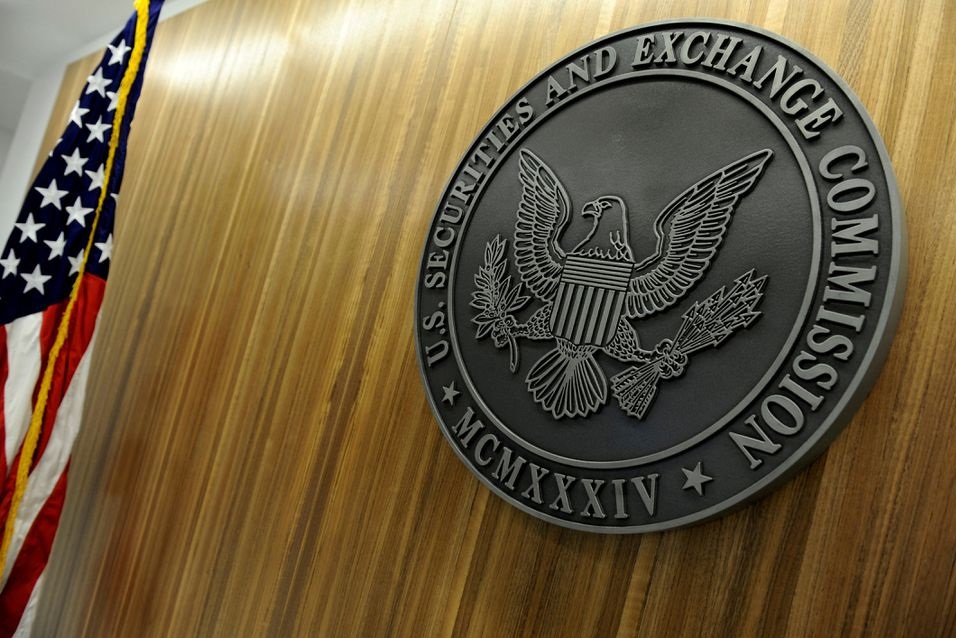
SEC Chair Paul Atkins Calls for Regulatory “Reset,” Urges Disclosure Reform and Relief for Small Businesses

0

The U.S. Securities and Exchange Commission (SEC) must undertake a major regulatory overhaul, according to SEC Chair Paul Atkins, who used a major address at the New York Stock Exchange on Tuesday to call for a sweeping “reset” of disclosure requirements and a reduction of legal burdens faced by smaller companies.

Atkins’s vision, which seeks to “tilt the balance of power from investors back toward companies,” directly challenges the efficacy and necessity of numerous investor protection rules established after the 2008 financial crisis.

Atkins emphasized that the concept of financial materiality should be the “north star” of the SEC’s disclosure framework, arguing that too much mandated information is “unmoored from materiality” and only serves to confuse investors.

“When the SEC’s disclosure regime has been hijacked to require information unmoored from materiality, investors do not benefit,” Atkins stated in his prepared remarks, signaling the agency’s shift toward a deregulatory policy agenda.

Targeting the “Frankenstein Patchwork” of Executive Pay Rules

At the heart of Atkins’s reform target are the rules surrounding executive compensation, which he and other Commissioners have characterized as a “Frankenstein patchwork”—an overly complex and expensive regime that obscures rather than illuminates pay decisions. Atkins and fellow Republicans are explicitly aiming at several key provisions mandated by the Dodd-Frank Act of 2010

The most highly publicized target is the requirement for companies to disclose the ratio of CEO compensation to the median pay of all other employees. Critics, including Atkins, argue this figure is arbitrary and misleading because it varies wildly based on factors unrelated to management performance, such as whether a company employs more part-time, seasonal, or international workers. For instance, the average CEO-to-worker pay ratio at S&P 500 companies stood at 285 to 1 last year, a number Atkins and corporate leaders argue has created “envy, not moderation,” citing Warren Buffett, who noted the rules helped drive up CEO pay by allowing them to benchmark themselves against disclosed figures.

This rule mandates that companies clearly describe the relationship between executive compensation “actually paid” and the company’s financial performance. Many believe that the complexity of the required formula often results in a metric that is disjointed from the total compensation reported in other tables, imposing high compliance costs without providing clear, decision-useful information to shareholders.

Atkins is also pushing to revise the detailed compensation tables, including potentially eliminating the complex Option Exercise and Stock Vested Table and increasing the disclosure thresholds for executive perquisites (perks). Some critics lament that the detailed disclosure of perks—like security expenses or corporate jet usage—is “salacious” and detracts from the material financial picture.

Easing the Regulatory Burden on Small Business

A second major pillar of the SEC Chair’s reform agenda is providing relief to smaller companies, arguing that the current compliance burdens act as a barrier to capital formation and growth.

“The last comprehensive reform to these thresholds took place in 2005,” Atkins said, denouncing this as a “dereliction of regulatory upkeep.”

Under the current system, a company with a public float as low as $250 million is subjected to the same exhaustive disclosure requirements as a company 100 times its size. Atkins indicated the SEC would look to “right-size” disclosure obligations, making them scale with a company’s size and maturity, and potentially expanding the grace periods available to newly public companies to incentivize more Initial Public Offerings (IPOs).

However, critics, particularly Democrats, warn that this deregulatory agenda risks dismantling essential investor protections put in place following the 2008 financial meltdown, when executive compensation practices encouraged excessive risk-taking. Concerns remain that Atkins’s approach—combined with a declining SEC workforce—will weaken the agency’s ability to police financial markets, potentially allowing risk and misconduct to build up in the system.

The stage is now set for a major political and legal confrontation as the SEC begins to formally revise rules rooted in one of the most significant pieces of financial legislation in modern history.