DD
MM
YYYY

PAGES

DD
MM
YYYY

spot_img

PAGES

Home Blog Page 5704

EU Adds US to Its Safe Travel List, Opening Door for Wider Economic Activities

0

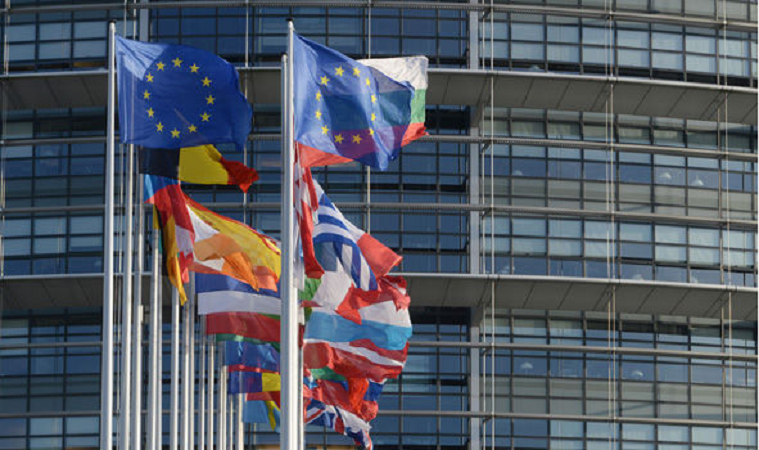
The European Union decided Wednesday to add the United States to its safe travel list, meaning it will be easier for American citizens to take a vacation in one of the 27 member states, two EU sources have confirmed to CNBC.

The decision signals optimism for free movement and economic growth in 2021, changing the travel restriction trajectory that has dealt the hospitality industry a plunging blow.

Nonessential travel from the United States and from other places had been banned in the EU in the wake of the coronavirus pandemic to avoid further contagion. However, as vaccinations gather pace, the 27 EU ambassadors based in Brussels recommended on Wednesday that the region allow nonessential travelers from eight new countries and territories.

These are the U.S., Albania, North Macedonia, Serbia, Lebanon, Taiwan, Macau and Hong Kong.

In an interview with The New York Times in April, European Commission President Ursula von der Leyen said that fully vaccinated American tourists would be allowed to visit the bloc this summer.

But this new EU recommendation could go one step further in allowing U.S. tourists to visit with only a negative test and avoid the need for a period of quarantine. It is now up to the individual EU countries to decide how they will implement the guidelines and allow tourists to enter. Travelers should confirm the rules on their intended destination before flying.

Individual EU nations have taken their own measures to open up travel to international visitors, including from the United States.

Several EU member countries have already opened their doors, including Greece, Italy and Spain, to U.S. visitors with proof of a vaccine, proof of a recent, negative Covid-19 test, or a combination of both. The U.S. still bars most non-citizens who have recently been in the EU from visiting the U.S., however.

Airlines on both sides of the Atlantic have urged governments to open trans-Atlantic travel up for the key summer season and have added service whenever a country reopens its borders.

Wednesday’s recommendation at the EU level aims to coordinate the travel rules across the bloc and should be finalized in coming days, following the national decisions from each member state.

UK omitted

One notable absence from the exemption list is the United Kingdom, where almost half of the population is currently fully vaccinated against the coronavirus.

One EU official, who did not want to be named due to the sensitivity of the subject, said nonessential travel from the U.K. remains banned “due to the delta variant.”

The U.K. government earlier this week delayed a plan to lift all coronavirus restrictions this month due to rising infections. A recent surge in the number of Covid cases is linked to the delta variant first discovered in India, which is believed to be around 60% more infectious than previous variants of the virus.

The U.K. is now hoping that more vaccinations in the next four weeks will allow it to end all coronavirus measures on July 19.

The U.S. meanwhile continues to block entry from most non-U.S.-citizens who have been in Britain in the last two weeks. The White House last week said it is setting up a working group with Canada, Mexico, the U.K. and Europe to figure out how to reopen travel.
India Moves to Control Twitter

0

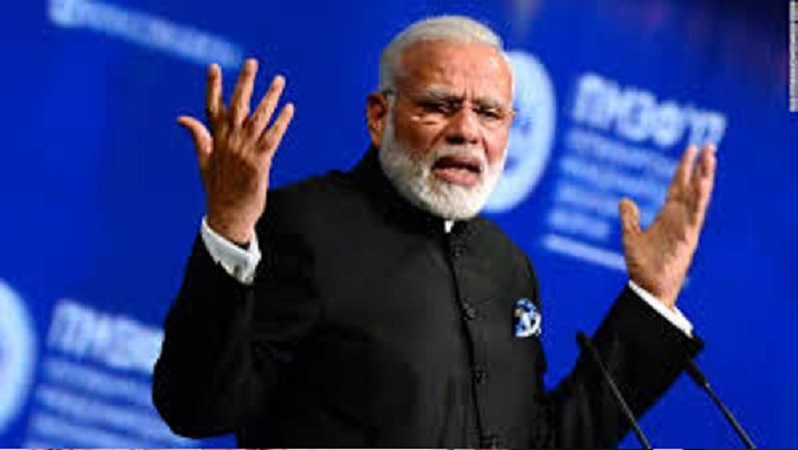
The Indian government has said that Twitter could lose its “safe harbor” protections — the rules that designate it an intermediary, rather than a publisher — and make it responsible for all of the content that appears on the platform. Rest of World has the story.

Writing on Twitter, Ravi Shankar Prasad, the minister of communications, electronics and information technology, accused the company of “deliberately [choosing] the path of noncompliance” with new rules governing social media in the country.

The move is the latest in a series of attacks on Twitter by the government of Narendra Modi, culminating in a widely covered police raid on the company’s offices in May. However, legal experts told Rest of World that the latest threat is essentially hollow, and that it is the courts, not the government, that have the power to decide whether or not Twitter should keep its safe harbor provisions.

“I would like to clearly state: the IT Act, IT Rules do not contain any power for the process for grant[ing] or revocation of an ‘intermediary status’,” said Apar Gupta, executive director of the Internet Freedom Foundation. “When companies like Twitter are prosecuted, they will seek protection before courts. Hence, at that time, courts will decide, not the government if it is an intermediary.”

Narendra Modi’s Bharatiya Janata Party has used Twitter extensively for political communications over the years, and the prime minister has 69 million followers on the platform. However, the relationship between Twitter and the government has deteriorated dramatically over the past year and a half. The government has frequently demanded the platform remove tweets critical of the regime, requests that Twitter has sometimes resisted. In May, the platform marked some political figures’ tweets as “manipulated media.”

In February, the government introduced new rules governing social media platforms, requiring them to appoint an India-based grievance officer, who would be responsible for acknowledging the complaints or requests from the government, or from ordinary users, within 24 hours. Failing to comply could result in criminal prosecution.

Digital rights groups and social media companies oppose the regulations, versions of which have been implemented around the world, and which have been dubbed “hostage-taking laws” by critics. Cases have been filed in multiple courts challenging the constitutionality of the rules, while WhatsApp is suing the government over a provision that would require them to trace the originators of messages on their platform.

The three-month deadline to comply with these rules lapsed on May 26. Google, Facebook, and Indian Twitter-clone Koo have all appointed local grievance officers (Koo was the only platform to appoint a grievance officer before the deadline passed), but Twitter hasn’t. The government’s argument is that this means the platform has failed to meet the requirements, and hence has forfeited its status as an intermediary. That would mean it would be treated as a digital publisher, and held responsible for all of the comments posted on the site.

Legal experts told Rest of World that this isn’t something the government can unilaterally declare, and would need to go through the courts. Instead, it’s an attempt to bully the company into compliance.

“It’s basically a political pressure tactic,” said Divij Joshi, a lawyer and researcher studying technology regulation in India. “Twitter is in a situation right now where it has to balance its human rights considerations with the political environment in India. And the government is trying to do its best to make sure the balance falls in its favor.”

In a statement, a Twitter spokesperson said the company is keeping the IT ministry “apprised of the progress” in the process.” The spokesperson also added that an interim chief compliance officer had just been retained and Twitter continues to make every effort to comply with the new guidelines.

Joshi said that although the government could do something unconstitutional to clip Twitter’s wings — they have previously shut down the internet for large sections of the population multiple times, and last June banned hundreds of Chinese apps, including TikTok — they still depend on the platform for their political reach. An outright ban would be too politically damaging, so the government is likely to keep trying to “nudge Twitter’s behavior to be more favorable towards [them].”

“I personally think the government for its own good will not ban Twitter, because Twitter is a source of legitimacy. It’s kind of a symbiotic relationship,” he said. “It depends on it for electoral victory, it depends on it for its own political messaging.”

The microblogging app has been at the center of attempts by governments to gauge what its users post, and it’s been fighting to stand its ground. On June 4, the Nigerian government suspended the operation of Twitter, aligning with other countries that have found the activities of the social media platform unacceptable, as it promotes free speech beyond what the government can accept.

While the enormity of economic and political consequences holds back Indian government from taking arbitrary decision on Twitter, the Nigerian government is suggesting by its decision to ban the app that it has nothing to lose.

Waymo, Google’s Self-driving Vehicle Unit, Raises $2.5bn in Second External Funding Round

0

Waymo, Google’s former self-driving project that is now a business unit under Alphabet, said Wednesday it raised $2.5 billion in its second outside funding round. The company said in a blog post it will use the funds to continue growing Waymo Driver, its autonomous driving platform, and growing its team.

The round saw participation from existing investors Alphabet, Andreessen Horowitz, AutoNation, Canada Pension Plan Investment Board, Fidelity Management & Research Company, Magna International, Mubadala Investment Company, Perry Creek Capital, Silver Lake, funds and accounts advised by T. Rowe Price Associates, Inc., Temasek and additional investor Tiger Global.

The news comes only a few months after former CEO John Krafcik announced in April that he was stepping down from leading the company after five years in the position. The CEO position is now being held jointly by Tekedra Mawakana, former COO, and Dmitri Dolgov, who joined the original self-driving project at Google and was CTO.

Krafcik led the company through its first external $2.25 billion investment round in March 2020. That round was later expanded by $700 million a few months later. But Krafcik could be a polarizing figure in the company.

“Experience has taught us so much, and we agree with those experts who say there’s no greater challenge in artificial intelligence than building and deploying fully autonomous technology at scale,” Dolgov and Mawakana said in a statement. “But we love a challenge and – thanks to the unmatched talent of our team – the Waymo Driver is already serving thousands of Waymo One riders as they get to work, shop for groceries, bring their kids to school, or just experience the joy of a ride with no human behind the wheel.”

In addition to its Waymo One commercial ride-hailing service, which operates in the Metro Phoenix, Arizona area, the company has continued to build out its Waymo Via trucking and cargo transportation service. Earlier this month Waymo announced it was entering a “test run” with J.B. Hunt for transportation services between Houston and Fort Worth.

Waymo started in 2009, and has since grown beyond expectation as a fully autonomous vehicle company, operating public ride-hailing service mainly in San Francisco. Now the company wishes to expand to other cities through partnership with firms and organizations.

“Through our delivery business unit, Waymo Via, we’re working with freight partners, including J.B. Hunt, to efficiently move freight cross-country with our growing fleet of Class 8 trucks,” the company said in a statement.

For Kids, Khan Academy Is The Best Game In The World Right Now

0

For kids, the best game in the world right now is Khan Academy. We play it at home. Points accumulated from “playing” Khan Academy qualify to visit Dave & Buster’s, a video arcade. Dave & Buster’s is my preference because it offers immersion on 3D, VR, AR and emerging technology. Largely, it is a video game of practical science where you can spend mere $10 to experience some of the things not available in the iPhone!

You can decide to exchange the Khan Academy points for Disney if you prefer that.

I have modeled the exchange thus – 500 points earned on Khan Academy qualify for $10 redeemable at Dave & Buster’s. Khan Academy has levels which as you “play” you rack up points. More so, they have a well designed programing course.

Try it on your child, you will be surprised that solving mathematics or learning sciences becomes like gaming. How do I battle to reach level 12? The battle here is mastering algebra or understanding photosynthesis, and because they have used the same motivation typical in video games, the child will not even know he or she is learning addition and multiplication.

“In this program, if you make the stars fall, you get $20 for Dave & Buster’s”. Inspire them. Motivate them. And make science, technology and mathematics a way of life.

Build A Strong Moat, Adapt Indomie Noodles Playbook, And Defend Your Castle

1
Indomie Noodle

In this piece, I explain how the makers of Indomie noodles used the same strategy Dangote Group had deployed across industrial sectors to defeat Dangote Noodles. The  accumulation of capability which Dangote Group uses to crush competitors did not work because Dufil Prima Foods (makers of Indomie) did the same thing from electricity generation to production, for its noodles business. With their vertically integrated business, there was no left inefficiency which Dangote could exploit to improve quality and reduce price.

In the end, an established brand won and Dangote Noodles could not dislodge them. Dangote Group later sold its noodle business to Dufil Prima Foods. There is a big lesson here: if you build a strong moat, you can protect your castle. Indomie noodles built a moat and was able to defend itself from Dangote Noodles.

As you utilize, combine and recombine factors of production to create products and services to fix market frictions, you must acquire, develop and deploy upstream capabilities, to remain  competitive in markets. Those capabilities must compound over time and must cushion strategic positioning.

How are you defending your business castle? Are you vulnerable to new entrants? What is your playbook? Are the capabilities compounding?


The Accumulation of Capability Construct – How Business Empires Are Built (Video)