DD
MM
YYYY

PAGES

DD
MM
YYYY

spot_img

PAGES

Home Blog Page 5727

Facebook Rules: Donald Trump Suspended for Two Years

0

Facebook has ruled on the “case” of former US President Donald Trump. The verdict has a mixed feeling: Donald Trump is suspended for two years from the platforms of the social media giant. With this, the case comes to a conclusion! That is how powerful Mark Zuckerberg has become. The Nigerian president experienced the same power when its post, threatening with civil war playbooks, was deleted.

Facebook said it would extend its ban of former President Donald Trump to two years, retroactive to Jan. 7, following his incendiary comments during the Capitol insurrection. Trump would be eligible for reinstatement in January 2023, but the social-media giant said he would only be reinstated if the risk to public safety was deemed to have receded. Going forward, suspensions of public figures in times of unrest would be time-bound, the company announced. Facebook also said it would hold politicians accountable to its hate speech rules.

As I have written here many times, the empires of the future would be run by those who control demand, not supply. Trump saw that in action when it gave up on its own social media platform. The greatest feature in Facebook is this: it has many people there. Forget the technology; anyone can build those features and clone Facebook 100% but without the users, you have no chance.

What will Trump do? Unfortunately,  he has limited options from his base. If you check the ranking of American universities, in the top 20, liberal states host more than 80% of them. If you look at the largest cities and per capita income, liberal states run the list. If you look at the formation of great companies, liberal states win. So, if you are hoping for a major conservative social media  platform that can give Trump space in the next two years, forget it.

But do not worry: If Nigeria has its ways, you will not miss this suspension since possibly Nigeria will add Facebook on its suspension list, after Twitter!

Forty Goal Setting Quotes to Inspire You to Success

0
Source: Titanium Success

More than 52 years after American activist Martin Luther King Jr. was assassinated, his quotes have continued to inspire lovers of justice globally. His famous 1963 “I have a dream” speech created goal setting quotes for racial justice that echoed through the minds and hearts of people, who thus are inspired to fight the cause of justice for themselves and others. It is believed to have birthed movements like Black Lives Matter (BLM), an organization founded in 2013 to fight racial injustice.

In May 2020, George Floyd, a Black American man was murdered by the police, opening an old wound from the racial injustice that took the life of King Jr. Floyd’s death spurred an unprecedented global quest for justice which about a year later, paid off when the killer-cop was convicted. It thus marks a significant shift in the status quo that has characterized life in the United States even years after King Jr.’s death.

In the wake of the Black Lives Matter demonstrations following Floyd’s death, a 1967 speech by King Jr. at Stanford University became increasingly resonant. “A riot is the language of the unheard.” He had said that to point out that “as long as America postpones justice,” there will be “recurrences of violence and riots over and over again.”

On Monday June 1, 2021, the US President Joe Biden became the first sitting president to visit Tulsa, Oklahoma, a Black race town known as Black Wall Street that was destroyed by a racist mob on May 31 and June 1, 1921. Biden’s visit was to mark the 100th anniversary of the Tulsa Race Massacre, a part of efforts to address systemic racism. Biden made racial justice a pillar of his presidential campaign, a message he intensified after the killing of George Floyd. But it all started with the goal setting quotes made by King Jr. over 50 years ago.

Nevertheless, racial justice is not the only area King Jr.’s goal setting quotes have caused a change, they have been practical in many other areas of human endeavors – leadership, sports, business, financial planning etc.

“If you can’t fly then run, if you can’t run then walk, if you can’t walk then crawl, but whatever you do you have to keep moving forward.” It is one of King Jr.’s quotes that have inspired businesses.

But he is not the only one who has inspirational quotes. Men and women from all works of life, who have, in the course of their various activities accumulated experiences, have also shared motivational quotes about goals which have inspired people to success.

“You are old enough to get a job. That’s where money comes from.” That’s the goal setting response that inspired Dave Ramsey to become an entrepreneur. His father had told him that when he was 12, and had asked for money to buy popsicle, and it spurred him to action. At early stage of his life, Ramsey delved into many business ventures and became a millionaire at 26. Although there were mistakes, he learned valuable money lessons from each one of them. Today, Ramsey has an empire of businesses including financial planning services.

What is goal setting?

Goal setting is the process of identifying something that you want to accomplish and establishing measurable goals and timeframes to achieve it, according to YourDictionary.

This definition denotes determination to achieve ones aim, developing the needed discipline to repudiate procrastination, and developing the mettle to face potential challenges.

Why do you need quotes about goal setting?

Goals drive people to accomplish extraordinary tasks and setting them requires motivation. Usually, goal setting quotes come from accomplished individuals who speak through their personal experience. For instance, King Jr. didn’t sit at home telling people about his dream of “a day when Black people will not be judged by the color of their skin.” He was in the streets where he eventually paid the ultimate price, setting the goal for such a day. It has been one of the main reasons people find motivation in his quotes; he walked the talk.

Goal setting quotes come from practical engagements that have yielded results. Thus, they inspire aspiring individuals to action. Thinking about one or two quotes daily can improve the ability to scale goal-hindering hurdles.

“Obstacles are those frightening things that become visible when we take our eyes off our goals,” said Henry Ford

The above quote beams with an example of the sort of encouragement people can derive from goal setting quotes, to push through the challenges they may encounter on their way to achieve their goals.

Entrepreneur and business developer, Dr. Vijay Soni made ‘quotes’ number 5 in his piece: 10 Things Successful People do for Motivation. He said: “Whatever motivational quote you decide on, print it out and tape it to your mirror. Or if you want to get fancy with it, take a marker and write it on the mirror!

“That’ll get you going in the morning!”

As the world develops, technological and scientific advancement is creating opportunities for new business ideas to be developed. Developing such ideas into successful inventions, businesses and requires planning, setting goals, and goal setting quotes for motivation.

Here are forty goal setting quotes that can motivate anyone to climb the hills of success.

  1. “Setting goals is the first step in turning the invisible into the visible.” Tony Robbins
  2. “No desired achievement is gained without any goal setting.” Wayne Chirisa
  3. “You need a plan to build a house. To build a life, it is even more important to have a plan or goal.” Zig Ziglar
  4. “If you want to be happy, set a goal that commands your thoughts, liberates your energy and inspires your hopes.” Andrew Carnegie
  5. “A goal is a dream with a deadline.” Napoleon Hill
  6. “All who have accomplished great things have had a great aim, have fixed their gaze on a goal which was high, one which sometimes seemed impossible.” Orison Swett Marden
  7. “Without dreams and goals there is no living, only merely existing, and that is not why we are here.” Mark Twain
  8. “You have to set goals that are almost out of reach. If you set a goal that is attainable without much work or thought, you are stuck with something below your true talent and potential.” Steve Garvey
  9. “No desired achievement is gained without any goal setting.” Wayne Chirisa
  10. “If you want to reach your goals and dreams, you cannot do it without discipline.” Lee Kuan Yew
  11. “Review your goals twice every day in order to be focused on achieving them.” Les Brown
  12. “Cut your excuses in half and double your actions around your goals.” Robin S. Sharma
  13. “The first step to achieving your goal, is to take a moment to respect your goal. Know what it means to you to achieve it.” Dwayne Johnson
  14. “Without a plan, even the most brilliant business can get lost. You need to have goals, create milestones and have a strategy in place to set yourself up for success.” Yogi Berra
  15. “A person should set his goals as early as he can and devote all his energy and talent to getting there.” Walt Disney
  16. “I’m a firm believer in goal setting. Step by step. I can’t see any other way of accomplishing anything.” Michael Jordan
  17. “Achieve self-mastery over your thoughts, and constantly direct them toward your goals and objectives. Learn to focus your attention on the goals that you want to achieve and on finding ways to achieve those goals.” Napoleon Hill
  18. “Goals give you more than a reason to get up in the morning; they are an incentive to keep you going all day.” Harvey MacKay
  19. “Setting goals helps bring your future into your present and the present is the only time we can take action.” Zig Ziglar
  20. “When a goal matters enough to a person, that person will find a way to accomplish what at first seemed impossible.” Nido R. Qubein
  21. “My dreams are worthless, my plans are dust, my goals are impossible. All are of no value unless they are followed by action.” Og Mandino
  22. “Lacking an external focus, the mind turns inward on itself and creates problems to solve, even if the problems are undefined or unimportant. If you find a focus, an ambitious goal that seems impossible and forces you to grow, these doubts disappear.” Tim Ferriss
  23. “Our goal is to find an outstanding business at a sensible price, not a mediocre business at a bargain price.” Warren Buffett
  24. “I don’t focus on what I’m up against. I focus on my goals and I try to ignore the rest.” Venus Williams
  25. “People with goals succeed because they know where they’re going.” Earl Nightingale
  26. “It must be borne in mind that the tragedy of life doesn’t lie in not reaching your goal. The tragedy lies in having no goals to reach.” Benjamin E. Mays
  27. “One way to keep momentum going is to have constantly greater goals.” Michael Korda
  28. “The trouble with not having a goal is that you can spend your life running up and down the field and never score.” – Bill Copeland
  29. “Goals. There is no telling what you can do when you get inspired by them. There is no telling what you can do when you believe in them. And there’s no telling what will happen when you act upon them.” – Jim Rohn
  30. “All who have accomplished great things have had a great aim, have fixed their gaze on a goal which was high, one which sometimes seemed impossible.” – Orison Swett Marden
  31. “Life is short, fragile and does not wait for anyone. There will NEVER be a perfect time to pursue your dreams and goals. ” – Unknown
  32. “My philosophy of life is that if we make up our mind what we are going to make of our lives, then work hard toward that goal, we never lose – somehow we always win out.” – Ronald Reagan
  33. “Aim at the sun, and you may not reach it; but your arrow will fly far higher than if aimed at an object on a level with yourself.” – J. Howes
  34. “Most “impossible” goals can be met simply by breaking them down into bite size chunks, writing them down, believing them, and then going full speed ahead as if they were routine.” – Don Lancaster
  35. “Our goals can only be reached through a vehicle of a plan, in which we must fervently believe, and upon which we must vigorously act. There is no other route to success.” Pablo Picasso
  36. “Our plans miscarry because they have no aim. When a man does not know what harbor he is making for, no wind is the right wind.” Seneca
  37. “It is not enough to take steps which may someday lead to a goal; each step must be itself a goal and a step likewise.” Johann Wolfgang von Goethe
  38. “We should set our goals; then learn to control our appetites. Otherwise, we will lose ourselves in the confusion of the world.” Hark Herald Sarmiento
  39. “On the way to your goal, you can always stop, rest, go the opposite way for a while; but after a reasonable time you must set off again towards your goal!”? Mehmet Murat ildan
  40. “Writing and achieving your goals is not failure, not having a goal to write in the first place is the start of failure.” – Onyi Anyado

For decades, quotes have been documented to motivate and inspire people to achieve their goals. Goals touch all aspects of life and setting them requires motivation. The best type of motivation comes from those who have walked their talk, making their words an accelerator of action for people who want to tow the path of success.

Many successful people have been inspired by goal setting quotes, and many who have dreams are still going to be inspired. Goals are co-travelers in the journey to success and everyone wishing to be successful needs to set a goal. The above listed goal setting quotes were put together to motivate people who have dreams and visions, and to inspire them on their way to success.

How Nigerians Embraced Unity Discourse and Dissociated from Name Change

0

Since independence, Nigeria has witnessed and still experiencing a mix of positive and negative growth in socioeconomic and political indicators. On several occasions, people and organisations have reiterated the need to address some of the challenges in the country through collective and sustainable approaches. However, the inability of the political leaders to address the challenges such as insecurity, growing unemployment rate, corruption among others have been used and still being considered by citizens to say that “this is not the best time to be Nigerians.”

The returned to democratic governance is over 20 years. Throughout the years, restructuring, resource control, state police, adjustment to revenue sharing and secession dominated socioeconomic and political discourse space. National conferences have been held with a view of finding lasting solutions to the problems.  Various plans, programmes and initiatives have been drawn and executed towards accelerated economic growth and sustainable political institutions.

Still, to citizens, social critics and political analysts, the outcomes are not enough to ensure peace and unity across the country. To them, social, economic and political injustice remain high.

Like the previous national political dialogue meetings, the current National Assembly called for the review of the 1999 Constitution, which has been described as the enabler of various socioeconomic and political crises since 1999. This has largely been linked to the hurried production of the instrument by the then Military Government to return the country to democratic governance as promised in 1998.

At one of the constitutional review sittings across the six geo-political zones, Adeleye Jokotoye, a tax consultant, submitted a proposal with the argument that the current name [Nigeria] was an imposition of its past colonial masters and should be changed. He believes that changing Nigeria to the United African Republic would physically and psychologically reflect a new beginning. His proposal was blown by the news media and vehemently discussed on social networking sites as at the time of writing this piece. One of the foreign news media reported that If Nigeria becomes the United African Republic, it means the country will join some African countries that changed their names after independence.

As people and organisations debate the name change, Jude Abaga, a popular entertainer tweeted that “The narrative that ‘Nigeria hates Igbo people’ is an outdated context that will leave with the old and bitter generation. Today let us stand with our Igbo family and say #IAmIgboToo,” declaring his solidarity for people from the South-Eastern region of Nigeria known as ‘Igbos’. The news media also reported this and passionately being debated on social media platforms.

Reporting and discussing issues of national importance, as noted earlier, are not new in Nigeria. Meanwhile, it has always been a herculean task for the concerned stakeholders to make smart and sustainable decisions from the insights that emanated from the media coverage and discussions held on various platforms. In this regard, our analyst examines the national issues with a view of adding to existing insights from digital community, which has been described by a number of academic scholars and professionals in industries as a place where political leaders need to watch for information and knowledge that would help them advance socioeconomic and political institutions.

Public Curiosity About the Two Issues

Analysis of 24 hours of seeking information about the name change and #IamIgboToo indicates that Nigerians and other nationals developed interest in the name change more than the unity campaign. United African Republic Nigeria, Nigeria, UAR, UAR Nigeria and United African Republic were the phrases deployed for understanding meaning of the new name, the person who proposed it and why is it necessary to change from Nigeria to the United African Republic. Interest was huge in Oyo, Ogun, Rivers and Lagos states, and the Federal Capital Territory during the search period.

While people used these phrases, they equally sought information about Africa, Republic as a form of government, United States of America, United Arab Republic and Central African Republic. Our analyst notes that seeking information about other countries which have ‘United’ as part of their name is an indication that Nigerians and other nationals in the country want to understand how US, UAE and CAR evolved and benefits being accrued to all stakeholders.

Actions and Shots on Twitter

The issues of renaming various policies, programmes and facilities without sustainable performance dominated UAR space, while social, economic and political injustice are vehemently tweeted on IAIT space. To further understand the curiosity, our analyst examines actions and shots of 4,160 Twitter Users regarding the two issues.

The earliest year of creating the handles is 2009 and the latest is 2021. The 2,080 users analysed for the name change have over 5.4 million followers with an average of 2,642 followers per user. Analysis also establishes that 5 million tweets have been tweeted throughout the Twitter Use Life Cycle [from the account creation date till 2021].

The average tweets per user during the TULC is 28, 264 while the maximum is over 806,000. A total of 931 hashtags was used by the users. The highest was 7 in a tweet, while 2 hashtags were more used in the tweets. Over 77% tweets do not have hashtags. Our analyst also discovered that 49% of the tweets could not be classified by the Twitter. Over 42%, 3.7% and 5% were categorised as retweet, reply and tweet respectively. Text [56.7%], photo [37%] and video [6%] were predominantly used for disseminating messages. Surprisingly, all the users are not verified by the Twitter.

The same number of users was analysed for #IamIgboToo. Analysis reveals that the users have over 4 million followers. On average, 2,025 followers are following a user. Over 57 million tweets have been tweeted since the day of creating their handles. The average tweets within the TULC of the accounts is 27, 453, while the maximum is over 15 million. A total of 3,555 hashtags was used. The highest was 15 in a tweet. Over 58% of the tweets contained one hashtag followed by 443 tweets which have 2 hashtags.

Retweeting messages regarding the campaign was more prominent [88.2%] than creating personal messages [9.5%]. Contrary to our expectation, only 2.3% of the tweets received replies. Like the United African Republic, our analysis indicates that the users employed text format [58.9%] more than photo [29.3%] and video [11.7%] for expressing their feelings. Only two accounts [0.1%] were verified.

Further analysis of the two issues reveals that the followers of the UAR and IAIT are connected by 6.9%. Despite this, our analysis establishes that the more users who tweeted about IAIT used hashtags the less those who discussed UAR employed it. According to our analyst, this suggests that users who developed interest in expressing their feelings about the need to unite have the capacity to influence others, articulating and disseminating their thoughts to appropriate publics than those who tweeted about UAR.

The insights from the current analysis aligns with the outcomes of a study conducted by our analyst in collaboration with a University Don. The study was carried out with the intention of understanding how Nigerians used the comment sections of selected Nigerian online newspapers to interact and discuss issues of agitation for secession and farmers-herders crises with a view to determining how the issues got the citizens to speak up or to stay silent. While the readers were more hostile in their engagement of the issues of agitation for secession, which had ethnic-inclination, the current insights largely indicated that Nigerians are ready to speak against statements that could lead to disunity despite sociocultural and political differences.

Exhibit 1: Average Tweets in the Life Cycle versus Number of Hashtags Used

Source: Nigerian Twitter Community, 2021; Infoprations Analysis, 2021

Can Huawei’s HarmonyOS Break up Android and iOS Duopoly? What You Need to Know

0
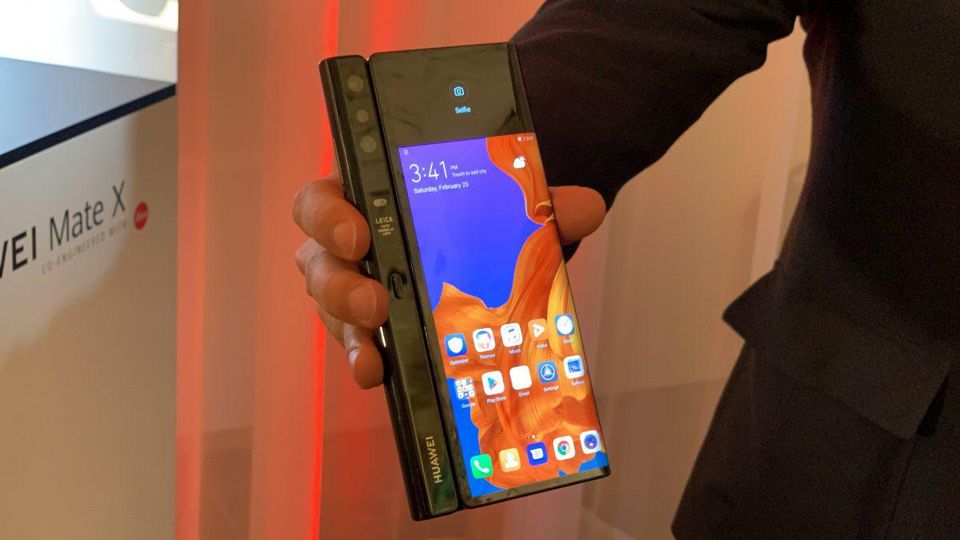
Huawei Mate X

Over two years after it was cut off from Google’s future app updates, Huawei Technologies Co has launched its own app store, HarmonyOS 2. This means that Huawei smartphones, tablets, smartwatches and even home appliances will now be able to use the app store.

It has been a tedious journey for the Chinese company, trying to create its own path in the wake of US sanctions that nearly crippled its telecom business.

Last year, Huawei began transitioning to HarmonyOS, its own in-house operating system for Internet-of-Things (IoT) devices.

With numerous partners including home appliances giant Midea, drone maker SZ DJI Technology, and Swiss watchmakers Tissot and Swatch, the Harmony OS appears ready to take Huawei back to business.

However, questions abound about what exactly HarmonyOS is and whether it can compete with the Android/iOS smartphone duopoly. SCMP delves deeper to answer these questions.

What is HarmonyOS?

Harmony (known as Hongmeng in Chinese) is an operating system that Huawei said it has been working on since 2012, when a small group of its top executives headed by founder Ren Zhengfei held a closed-door meeting to brainstorm ideas on how to reduce its dependency on Android.

Eventually, Huawei was left without a choice: The company was blacklisted by the US in May 2019, resulting in the loss of access to Google services. While the Android Open Source Project (AOSP) is still free for anyone to use, Google’s proprietary services are considered a must-have for Android devices outside China, where Huawei’s sales have floundered since the ban.

Is Harmony just another version of Android?

HarmonyOS runs on Huawei’s own proprietary architecture, according to the company. However, it has admitted to using AOSP code and a Linux kernel in smartphones, raising questions about whether it is just another version of Android

Huawei originally said HarmonyOS would run on what is called a microkernel, ideal for less sophisticated IoT devices. This appears to still be the case, but it depends on what device the OS is running.

A kernel is the foundation of every OS, enabling software to interact with hardware. Most operating systems run on monolithic kernels, containing everything needed to run the system.

Microkernels are more modular, kind of like Lego bricks: the system can be broken down into smaller components and pieced back together to support future devices and enable specific features, Huawei product marketing senior manager James Lu told the Philippines-based tech site Revu in 2019.

This means microkernels are light and flexible. By running only basic operations, they can leave everything else to other parts of the system, making them better suited for IoT devices.

Monolithic kernels, on the other hand, may need to be adapted to specific devices, as is the case with Android.

HarmonyOS documentation now says the system “uses a multi-kernel design”, which includes the Linux kernel and the HarmonyOS microkernel built from Huawei’s LiteOS. This means the HarmonyOS showing up on many IoT devices is really based on LiteOS while the version on smartphones and tablets is more similar to Android. But while Huawei previously promised to make Harmony open source, it has yet to release the source code.

Then there are the apps.

Huawei originally said Android apps could be ported to HarmonyOS using its Ark Compiler with little effort. When the compiler was initially released, though, developers complained about the buggy experience, with some calling it a publicity stunt.

“Apps are the challenge for this new OS,” Bryan Ma, vice-president for client devices research at IDC, told the South China Morning Post in 2019. “Even if they are trying to make it easy for Android developers to port their apps over, it still requires an effort to recompile and test their apps. Also, Google is unlikely to port its first-party apps over, so it’s still a thorn in Huawei’s side for their overseas phones.”

Under the new multi-kernel design, HarmonyOS 2 using the Linux kernel appears to have apps that share many similarities with those on Android, only with different file extensions, technology news site Ars Technica reported.

The multi-kernel design makes HarmonyOS more like two different operating systems, similar to how Google and Apple develop different systems for different classes of devices. But Huawei’s vision is still to bridge the gap between devices.

“It is very complicated,” Yu said at the HarmonyOS launch in 2019. “The future development direction of the operating system is microkernel: we need to provide a future OS for the intelligent era [covering] all scenarios.”

What devices are getting HarmonyOS 2?

By June next year, HarmonyOS 2 will be available to nearly 100 of the company’s devices, Huawei said. Most Huawei smartphones will be able to upgrade to HarmonyOS from EMUI, including the Mate 40 and P40 series phones.

The MatePad Pro series of tablets are also eligible for an upgrade, and the latest version of the tablet ships with HarmonyOS 2 installed.

HarmonyOS does not stop here, though. The company unveiled plans to put it in more TVs, cars and various IoT devices. Yu said the company has partnered with more than 1,000 hardware makers, 500,000 app developers and more than 300 service providers, enabling the company’s mobile operating system to run on more smart devices than those on Android.

The reality is likely more complicated. It will take time for other hardware makers to integrate a new operating system. There is also another challenge: none of the company’s smartphone rivals have signed on to ditch Android for Harmony.

Can HarmonyOS break up the Android and iOS duopoly?

Android and iOS have a stranglehold on smartphone operating systems, accounting for more than 99 percent of mobile devices in May, according to StatCounter.

Operating systems tend to be a winner-take-all market, benefiting from network effects as developers and users coalesce around one or two popular systems. This has been alleviated somewhat in recent years in desktop environments owing to the increasing popularity of cross-platform web applications. The gulf between the native app and web app experience is greater on mobile, though, so consumers and developers prefer apps made for a specific OS.

The problem of attracting developers could be what sent Huawei back to the Linux kernel for smartphones and tablets. Past attempts to create Android alternatives have failed to overcome this problem.

Microsoft struggled to get app developers for its Windows Phone OS, which was discontinued in 2017, despite trying “very hard” to incentivize them – including paying them to write apps – according to Microsoft executive Joe Belfiore. At some point, the American software giant tried to add a layer to Windows that could run Android apps, but it could not get all apps to run smoothly.

Samsung Electronics also tried to replace Android on smartphones with its Tizen OS, but it was eventually relegated to smartwatches and televisions. Now it is giving up on watches, too, in a team-up with Google that will see Samsung port Tizen features to a new version of Wear OS, Google’s Android-based system for wearables.

Huawei is not even the first Chinese company to try to mount a challenge against Android. Alibaba Group Holding – the e-commerce giant that owns the Post – has AliOS, a Linux distribution that once ran on smartphones under the name YunOS and is now limited to other IoT devices.

Even if it were not burdened by US sanctions, Huawei would still face significant challenges in making its new OS a success. Borrowing from AOSP could help with the transition, giving users compatible apps right off the bat while Huawei slowly develops HarmonyOS away from the shared codebase.

However, without access to Google, YouTube, Facebook and many other popular apps and services, the OS is unlikely to take off outside China. Many of these popular global services are already blocked in the country, though, so it could fare better there.

The Chinese government’s technological self-reliance drive could also help HarmonyOS at home in the long run if the US-China tech war persists.

For now, though, most Chinese smartphone makers continue to use their own flavors of Android at home and abroad.

Nigeria Suspends Twitter, Indefinitely!

0

Wow – this is a Nollywood movie except that it is a real act.  Yes, the Federal Government of Nigeria has suspended Twitter in Nigeria, indefinitely: “The Federal Government has suspended, indefinitely, the operations of the microblogging and social networking service, Twitter, in Nigeria. ….The Minister said the Federal Government has also directed the National Broadcasting Commission (NBC) to immediately commence the process of licensing all OTT and social media operations in Nigeria.”

This is coming after the microblogging company removed a tweet by the Nigerian leader where he threatened fire on his fellow citizens. Now you see why Twitter chose Ghana for its headquarters.  Many of us expect Twitter to relocate its West African headquarters to Lagos, from 2024, as most of its West African operations are in Nigeria.

I hope Nigeria understands the perils of fighting Twitter: Twitter has nothing to lose but the government’s global standing and possibility of trial in Hague are things to consider. Osisi anayi anwu mgbe egbujiri ya [ tree does not show dead leaves immediately it is cut down] Yes, the actions of men live long!

Let us wait to know if the Central Bank of Nigeria will block all transactions from Nigeria to Twitter for adverts and promotions. Nigerian democracy!

The press release

The Federal Government has suspended, indefinitely, the operations of the microblogging and social networking service, Twitter, in Nigeria.

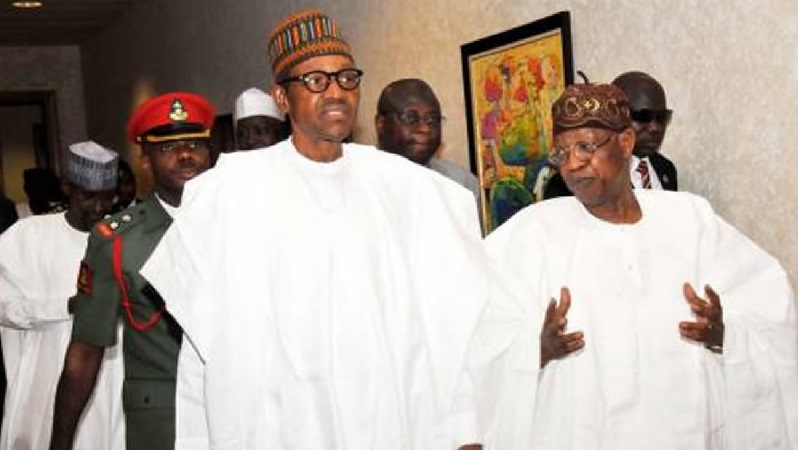
The Minister of Information and Culture, Alhaji Lai Mohammed, announced the suspension in a statement issued in Abuja on Friday, citing the persistent use of the platform for activities that are capable of undermining Nigeria’s corporate existence.

The Minister said the Federal Government has also directed the National Broadcasting Commission (NBC) to immediately commence the process of licensing all OTT and social media operations in Nigeria.

Segun Adeyemi
Special Assistant To The President (Media)
Office of the Minister of Information and Culture
Abuja
4 June 2021