DD
MM
YYYY

PAGES

DD
MM
YYYY

spot_img

PAGES

Home Blog Page 5736

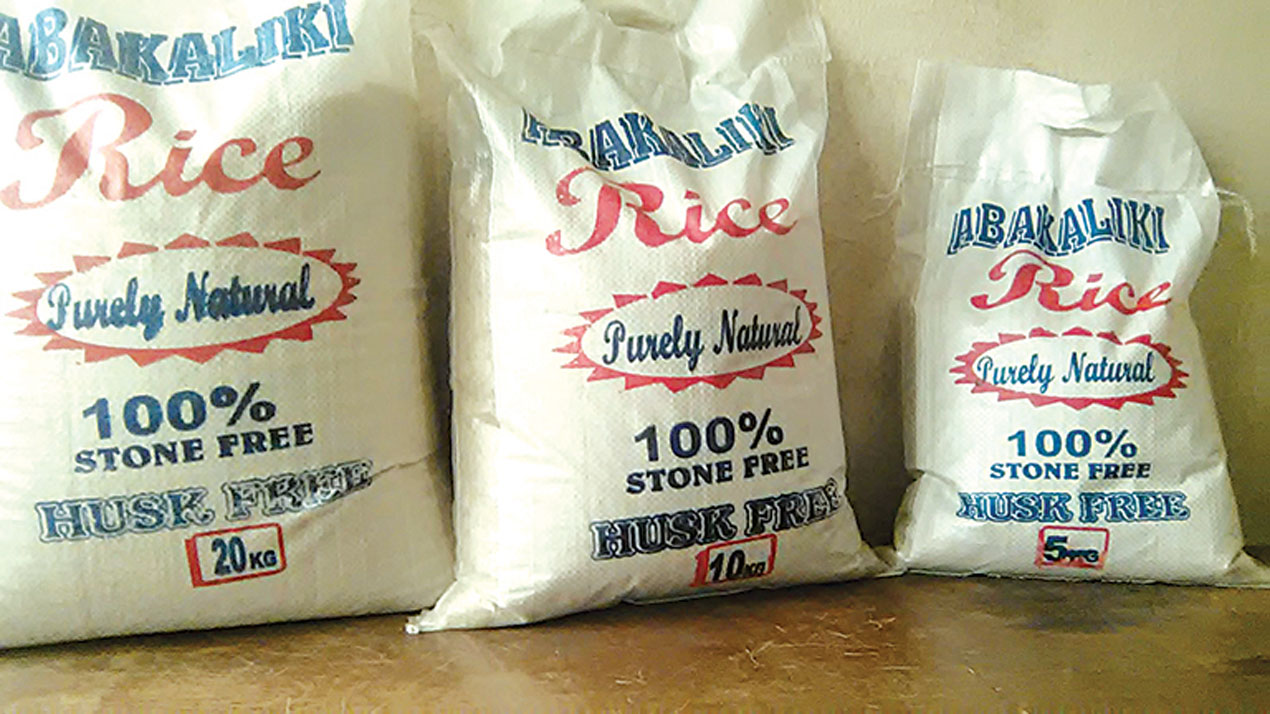
Hope as Nigeria Local Rice Production Increases

0

The saying that nothing good comes easy is true. But it is uneasy to wait for that good to occur. The pains, stress, and tribulations you pass through as you work and wait for things to turn out well can make you the essence of the efforts. However, in the end, like the patient dog that eats the fattest bone, you will smile home, bearing your bountiful harvest. This is exactly what is unfolding in Nigeria, regarding the rice importation restriction.

In August 2019, the Nigerian Government stopped granting foreign exchange requests by rice importers. As far as we were concerned, foreign rice was banned in the country. This did not go down well with many of us because we saw a gloomy future with that single policy. Many believed the federal government was out to cause more hardships for the citizens because rice, one of Nigerians’ staple foods, besides cassava and maize, will be placed out of the reach of a poor man. Did we call the President and the CBN Governor names? Oh yes, we insulted life out of them. But, from what is happening now, it is obvious that the decision to restrict the importation of rice will favour us in the long run.

The major reason Nigerians were uncomfortable with the ban on rice importation was that local rice production could not sustain the country’s heavy demands for the food grain. Many of us believed that rice scarcity was imminent because local rice farmers cannot feed the more than 200 million Nigerians. But from what we can see, rice has never been scarce in our markets even though the increase in demand for our local rice has led to its price increase.

Judging from what is happening right now, it is obvious that our local farmers can feed the nation if they are given a little push in the right direction. The truth is that, initially, many Nigerians preferred imported rice to the local ones, thereby discouraging farmers from cultivating more rice. Add this to the high level of insecurities and destruction of crops through open grazing, you will understand why local rice was scarce before. Apart from these, local farmers lost most of their grains to improper storage and wrong processing. Rice mills were not much so that a lot of paddies got spoiled before they were milled. Since their rice farming was not considered profitable then, people did not bother investing much in it. But all these are gradually changing.

The quantity of rice consumed in Nigeria is estimated at 7million tonnes in 2019 but only 4.3 million tonnes were produced by local farmers that year. This may sound like a failure but when compared to the 3.7 million tonnes produced in 2017, you will notice that the efforts are paying off. This year alone, the FG has launched three rice pyramids in Gombe State (North-East), Kebbi State (North-West), and Ekiti State (South-West). It has also promised more intervention programmes for rice farmers, which will improve yields and encourage more individuals and organisations to invest in rice farming. National and international organizations, including USAID, have partnered with rice farmers because they saw prospects in the business. More grants, soft loans, and other forms of funding and incentives have also been made available for rice farmers. Considering how things are going now, Nigeria may produce more than enough rice for its citizens in no distant time. However, a lot more has to be done to encourage that.

One of the challenges Nigerian farmers face today is non-mechanized farming. The land may be there for cultivation but it will be too expensive for farmers to do so without machines. As a result, machines should be made available and kept in good conditions for farmers to rent. Government and private individuals can partner to make this possible.

The high rate of insecurities in the rural areas is also affecting farming. Though the government is doing its best to battle this, more efforts should be made, especially by state governments, to provide security for citizens. When farms become safe for farmers, food will be available to all. But all in all, there is hope for Nigeria because we can produce the foods we eat. However, more people should endeavour to invest in agriculture because that is the next major source of revenue and foreign exchange for the country.
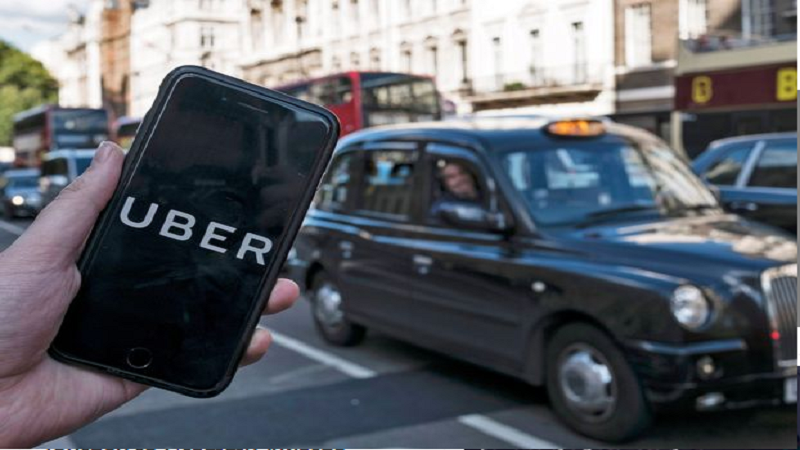

Uber Agreeing to Drivers Union Sets its Gig Business Model Up for A change

0

For the first time in its ride-hailing history, Uber is recognizing a trade union. Following a landmark ruling in London in February, classifying its drivers as employees, the California-based taxi app has been forced to grant employment status to its drivers.

This means about 70,000 of its ride-hailing drivers will for the first time, be accorded minimum wage earnings, pensions, other work benefits and their health and wellbeing.

UK’s workers union, GMB is negotiating on behalf of the drivers and Uber said the development shows it is committed to the workers’ welfare.

“While Uber and GMB may not seem like obvious allies, we’ve always agreed that drivers must come first, and today we have struck this important deal to improve workers’ protections,” said Jamie Heywood, regional general manager for Northern and Eastern Europe.

Uber faced the heated challenge to declassify its drivers as private contractors for years. With lawsuits spanning across London and California, its biggest markets. The ride-hailing giant eventually lost the fight in the UK.

Now the development leaves it open to further court rulings and changes that may go in favor of the drivers who want out of the “independent contractor” status.

In the United States, Massachusetts is the second state to sue Uber and Lyft over the misclassification of drivers. In May 2020, California Attorney General Xavier Becerra, along with city attorneys of Los Angeles, San Francisco, and San Diego, sued the companies, arguing that their drivers were misclassified as independent contractors when they should be employees under the state’s AB5 law that went into effect on January 1st.

While Uber has maintained that the gig economy business model grants drivers the flexibility they need, and it’s their wish to keep it that way, labor unions and governments are seeing the practice as unfair treatment of workers.

“The bottom line is Uber and Lyft have gotten a free ride for far too long,” Maura Healey, Massachusetts’ Attorney General said last year. “For years these companies have systematically denied their drivers basic workplace protections and benefits, and profited greatly from it. This business is unfair and it’s also illegal under Massachusetts law.”

Uber survived the California legal battle by invoking the prop. 22 ballot provision that allows the people to decide what they want through votes. The company had argued that classifying drivers as employees would mean a hike in ride-hailing fares, inciting the people to vote yes to the gig business model. However, the war seems far from over.

In the wake of the lawsuits in California and London, Uber drivers in unexpected places in Africa, like Johannesburg and Lagos, caught wind and moved to seek improved welfare and workers’ benefits.

The trajectory set by the development in London will likely spur further action in more cities especially in the US. Uber had frowned at unionism, but by recognizing GMB, the ride-hailing giant has opened doors for it, giving a union the right to negotiate on behalf of drivers for the first time.

The UK is the only country in which Uber has recognized a union, but it seems to be the beginning.

GMB has urged other operators to fight to be recognized as employees, saying the deal offered a golden opportunity to improve workers’ rights.

“This agreement shows gig economy companies don’t have to be a Wild West on the untamed frontier of employment rights,” said Mr. Rix.

Uber and GMB will have to negotiate work benefits on behalf of the drivers. Under the agreement, GMB and Uber will discuss topics such as Uber’s National Living Wage guarantee, pensions and holiday pay. Drivers won’t automatically become members, and to be represented by the union, they will have to sign up.

Congrats Chelsea, Congrats Mendy for Winning UEFA Champions League

2

The humans and cows celebrate as Chelsea rises to the top of Europe. I congratulate Mendy. Today, I think he is among the top 3 shot stoppers in the world. His agility, ahead-thinking, and leadership on the bars should inspire other African goalkeepers. The legendary Oliver de Coque will sing “egwu oma si na chukwu” [Good music comes from God]; I think good football comes from packaging. Europe is peerless on making shows out of round leathers. Congratulations Mendy, Chelsea, etc.

Three more years and you may begin to think of joining the greats of Chelsea from Africa: Didier Drogba, Salomon Kalou, Mikel John Obi, and Michael Essien. Yet, my all-time best goalkeeper remains Ghana’s Edward Ansah of Iwuanyanwu Nationale. Even when the Nationale lost those days, he would not fail to catch a ball thrown by kids, as they returned from Dan Anyiam Stadium to Ikenegbu Layout Extension in Owerri.

Make sports better, Africa.

Find Ways To Make Your Consumers Become Customers, And Then FANS

2
Customers

In a well-received Harvard Business Review article – Can African Tech Startups Succeed in a World Dominated by Facebook and Google? – I provided ways startups could compete in the age of Google and Facebook. The fact is this: every business is local even in the age of the internet. Yes, I do take time to thank companies which join our Tekedia Mini-MBA, and many appreciate that. 

Typically, many founders and CEOs will write “Thanks for the mention”. For us, you can automate delivery of business education from Silicon Valley but we are confident that you may not even know the companies to thank them at Tekedia.com and LinkedIn. Because we do that, we think we are adding a marginal appreciation besides the value in the “classroom”.

Find ways to make your consumers become customers, and then FANS.

WhatsApp May Drop its New Privacy Policy in Many Countries As Backlash Intensifies

0

WhatsApp has backtracked on its decision to withhold some features of the messaging app for users who refused to accept its controversial updated privacy policy.

The parent company, Facebook, now says that the plan has changed, and users who don’t accept the updated policy actually won’t see limited functionality for now. The decision was made after the social media company spoke with governments and privacy advocates.

“Given recent discussions with various authorities and privacy experts, we want to make clear that we currently have no plans to limit the functionality of how WhatsApp works for those who have not yet accepted the update. Instead, we will continue to remind users from time to time about the update as well as when people choose to use relevant optional features, like communicating with a business that is receiving support from Facebook,” the company said in a statement.

The new WhatsApp privacy policy has generated a flurry of backlash by governments and privacy advocacy groups since it was announced late last year.

India, Facebook’s largest market, where WhatsApp has more than 400 million people in its user-base, kicked seriously against the update. Last week, the government asked Facebook to withdraw the new policy roll out. The Ministry of Electronics and Information Technology (MEITY) said the new policy violates several laws and rules, and gave Facebook seven days to respond. The regulator said that if the response from the Facebook-owned company is not satisfactory, the government can take lawful actions against the social networking giant.

Although the Indian government is following a different approach, the decision comes a week after Germany banned the new WhatsApp privacy policy.

The Nigerian government has also issued warning to its citizens about accepting the new privacy policy as it violates National Information Technology Development Agency (NITDA) privacy rules.

“Nigerians may wish to know that there are other available platforms with similar functionalities they may wish to explore. Choice of platform should consider other practices, privacy, ease of use, among other things,” NITDA said.

The watchdog further warned Nigerians to “limit the sharing of sensitive personal information and private messaging on social media platforms as the initial promise of privacy and security is now being overridden on the basis of business exigency.”

Last week, Nigeria’s Ministry of Communication and Digital Economy said its working to ensure that WhatsApp’s new privacy policy does not breach the privacy rights of Nigerian WhatsApp users.

“The Federal Government released the Nigeria Data Protection Regulations (NDPR) in 2019 and is committed to upholding the data privacy of Nigerians. We are also aware that the European region is exempt from the provisions of the updated Policy and it is also being challenged in a number of countries.

“The Honourable Minister has therefore directed the National Information Technology Development Agency (NITDA), as the Regulator of the Information Technology sector, to engage vigorously with Facebook to understand the processes, level of security, etc of the data of Nigerian users in order to ensure that Policies proposed for Nigeria strictly adhere to the provisions of NDPR,” the Ministry said.

With the intense pressure coming from many countries of its operation, especially its huge markets, Facebook is beginning to change tone, signaling that it may totally quash the new privacy policy in some countries. Although the social media giant said it doesn’t misuse people’s private information, and that many WhatsApp users have voluntarily accepted the new policy, governments are still strongly opposed to it.

User information collected by WhatsApp are as follows:

  • account information;
    messages (including undelivered messages, media forwarding);
    connections;
    status information;
    transactions and payments data;
    usage and log information;
    device and connection information;
    location information;
    cookies etc.
    Other information collected by WhatsApp include:
    battery level;
    signal strength;
    app version;
    browser information;
    mobile network;
    connection information (including phone number, mobile operator or ISP), language and time zone;
    Internet Protocol address;
    device operations information;
    social media identifiers.