DD
MM
YYYY

PAGES

DD
MM
YYYY

spot_img

PAGES

Home Blog Page 5743

Due Diligence and Business Intelligence  – The Art and Strategy for Deal Success

0

I am happy to announce that Tekedia Mini-MBA has introduced a new course – “Due Diligence and Business Intelligence  – The Art and Strategy for Deal Success”. Barrister Chike Obimma, a Partner at NICCOM LLP (Commercial Law Firm), has developed the course. He led a Tekedia Live in Edition 4, and after the session, our internal tracking data showed massive interests on understanding and mastering business deals and transactions.

Tekedia Mini-MBA edition 5 (June 7 – Sept 1, 2021) curriculum has been updated accordingly. Check the updated curriculum here.

Tekedia Institute offers an innovation management 12-week program, optimized for business execution and growth, with digital operational overlay. It runs 100% online. The theme is Innovation, Growth & Digital Execution – Techniques for Building Category-King Companies. All contents are self-paced, recorded and archived which means participants do not have to be at any scheduled time to consume contents.

It is a sector- and firm-agnostic management program comprising videos, flash cases, challenge assignments, labs, written materials, webinars, etc by a global faculty coordinated by Prof Ndubuisi Ekekwe.

SpaceX Launches 52 More Satellites to Orbit As Interest in Starlink Increases

0

SpaceX successfully launched another 52 Starlink internet broadband satellites into orbit on Saturday, less than one week after it sent up the last batch, TechCrunch reported.

A small satellite from startup Capella Space and a Tyvak observation satellite also hitched a ride on the launch, which took off from Kennedy Space Center in Florida on Saturday evening.

The launch used a veteran Falcon 9 booster that’s seen seven previous launches and landings, including during three Starlink missions. It departed from its launch pad at 6:56 PM ET (3:56 PM PT) and returned to Earth approximately nine minutes later. The rocket landed vertically on SpaceX’s autonomous drone ship “Of Course I Still Love You” in the Atlantic Ocean.

The launch company has now sent more than 530 Starlink satellites to space since March, and all of them on reused rockets. Reusability is a key factor toward making the launches as cost-effective as possible, a factor that is especially important as SpaceX is both the launch provider and customer of the Starlink service.

As a consequence, SpaceX has been able to rapidly accelerate its Starlink launch program, with 28 launches under its belt so far. At least one additional launch is likely in the works for later this month.

The company said earlier this month that it had received “over half a million” pre-order reservations for Starlink broadband service so far. Starlink is available in beta to customers in six countries: Australia, New Zealand, the U.S., the United Kingdom, Mexico and Canada. SpaceX CEO Elon Musk has said the company aims to have its low Earth orbit broadband internet network operational across nearly the entire globe as early as the end of 2021.

SpaceX has started reaching out governments and regulators for approval to beam down Starlink services. Last week, there was a report that the satellite company has been in discussion with Nigerian Communication Commission (NCC) virtually over the past several months to begin the process of pursuing all necessary licenses to bring Starlink services to Nigeria.

With the number of countries showing interest in Starlink internet increasing, SpaceX is shooting up more satellites to accommodate a potential boom.

With 500,000 preorders, Musk said he anticipates no technical problems meeting the demand. But he added that it could be “more of a challenge when we get into the several million user range.” He explained that the “only limitation is high density of users in urban areas.” To date, SpaceX has close to 10K users using its Starlink satellite service, which it started in February.

The preorders required a $99 deposit which does not guarantee the service, and the slots are limited in various geographic regions due to capacity limits. Despite limitations, SpaceX has been laying the groundwork to serve up to 5 million subscribers in the US eventually.

SpaceX plans to eventually deploy 12,000 satellites in total and has said the Starlink constellation will cost it roughly $10 billion.

The U.S. Federal Communications Commission (FCC) last month approved the company’s plan to deploy some Starlink satellites at a lower earth orbit than planned.

Three Factors Driving Dangote Group Success: Cost Leadership, Differentiation and Focus

0

By Oluwole Dada.

Tonight, I saw on Twitter the usual argument that Dangote is not a successful businessman as he thrives only on government’s connection and as usual I laughed. Let me respond as a marketing professional. There are three major ways by which you gain competitive advantage.

These strategies were defined by Michael Porter. The three strategies are:

  1. Cost Leadership
  2. Differentiation
  3. Focus.

Follow me as you will find this thread useful either for your organization or your personal business enterprise.

Cost Leadership is the reduction of your cost of production better than your competitors such that you will be able to sell lower than them and still be able to make more margin than they do. This can be achieved through economies of scale with larger, better and faster equipment.

The use of cost leadership is prevalent when you are selling commodities. A commodity is something that can’t be differentiated with a specific feature. Examples of commodities are water, steel, wood, cement, oil, cotton, food stuff, sugar, salt, wheat, etc.
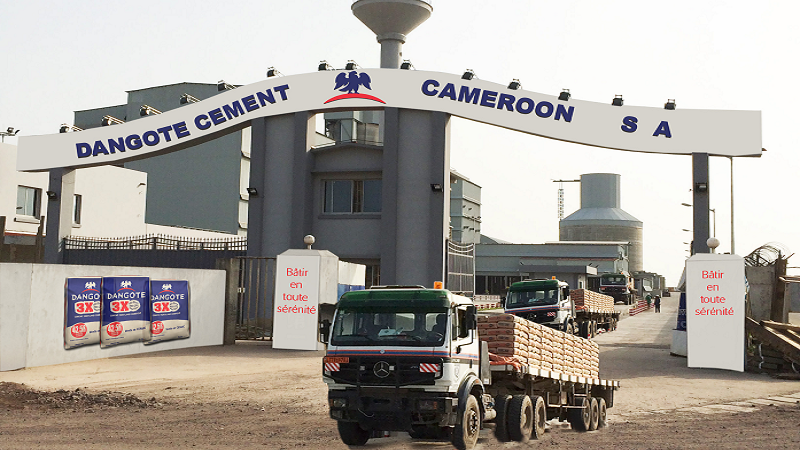
With the list of commodities listed above, you will realize that Dangote specializes in commodities. His terrain of strength is in that sector and he understands that a cost leadership strategy is the most striking strategy to win in such a sector. He’s found a way to reduce cost.

Today, Dangote Cement is the cheapest in the market. He is playing in the same market with international players such as Lafarge Holcim who were the market leaders at a time but Dangote came in with his cost leadership strategy and out witted them. Today, they’re market followers.

BUA Cement is another player in the cement industry and I wonder why people will say Dangote is playing in a monopolistic market. When I asked Lafarge workers why Dangote Cement is cheaper than theirs, their response has always been Dangote’s machines are the most recent.

He has found a way to get cheaper power in his industrial estates through an arrangement he made with General Electric. Power is one of the major cost inputs in the production of cement and he found a way to get cheaper power supply for his cement factory.

When Dangote stepped into the building of a refinery, there was nothing stopping other people from doing so but he took a bold step. Some got licenses but didn’t make any move to start operations. Is that government connection? For the records, the refinery was to be at Olokola.

Olokola is in Ondo state. The same government that people claim supports him did not provide a good environment for him which made him to move to Lagos state. As much as he is the only one in that area now, BUA is building his own refinery in Akwa-Ibom and it will aid competition.

When that time comes, I know Dangote will embark on his cost leadership strategy and find a way to reduce his cost of production and he will likely begin to sell lower than his competitors which will be for the benefit of Nigerians. This is how the cost leadership strategy works.

On return to the competitive advantage strategy, the second way to gain advantage is differentiation. This is used when you sell a product whose feature can be used to differentiate it from another product of the competitors. Examples of these are electronics such as TV, computers, phones, ACs, etc. A phone can be differentiated from another through the memory size, sleekness, speed, RAM, etc. Another thing that can be used to differentiate is a brand name. An example of this is iPhone. iPhone differentiates itself with the brand name.

iPhone uses the sleekness of its product to differentiate itself. You’ll realize that phones are more expensive than one another based on the factors I have listed above which are the features that helps differentiates one from another. Similar things happen to other electronics.

These features can help a company sell a product at a premium. Watch out for products that you buy at more expensive prices than its competitors and you will realize that it is because something has been used to differentiate one from the other.

Lastly, the one other strategy is focus. Focus is a strategy where you take a segment of the market & focus on it for sales. You create a product specifically for that segment of the market. There’s what is called market segmentation. You can segment your market in different ways

Market can be segmented demographically, geographically, psychographically and behaviorally.

Details of this will be discussed on another day. With this which you have read, whenever you are asked a question about Dangote’s success, you will be able to explain it better…

source: Twitter

Innovate And Find Ways To Create A New Basis Of Business Competition

1

How are you running your business playbook? Is the business model static in such a way that competitors can easily benchmark you? Do what Elon Musk does by continually making Tesla “uncatchable” through the perception he has put in the electric vehicle (EV) business.

 Others are building EVs to meet market needs, Elon keeps changing the goalpost by making it clear that Tesla software can change daily, and you know what, he never finishes building a Tesla. Why? If you buy Tesla today, in three years, that same car can begin to do things it cannot do today. So, how do you benchmark unborn tomorrow but established yesterday? Not possible!

Invest in Customer Perceptions, and Change Basis of Market Competition

Walmart sells African toothbrushes as “organic toothbrushes” in America. Intel added a sticker – “Intel Inside” – to separate it from others. 

Good People, look for little things which can shape your customer Perception. Find your “organic” word. Find your “inside” word. Yes, find ways to create a new basis of competition in your business through perception.


Asisat Oshoala: Uncommon Football Story From Ikorodu to Barcelona

1

On Sunday, Barcelona’s female football team (Barca Femenino) won the UEFA Women Champions League for the first time, thrashing Chelsea’s female team 4-0. The team has been exceptional since the beginning of the season in both domestic league and other competitions.

The win cut the streak for Olympic Lyon that has won the prestigious price five times in a row. It also added more to the successful season of Barcelona Feminino, who already have the domestic league (Primera Iberdrola) and other titles in their custody.

One outstanding character in Barcelona Femenino’s team is Asisat Oshoala, a Nigerian import who broke into the beam of football’s history through thick and thin.

It started in her childhood days in Ikorodu, a Lagos suburb. Asisat would wait behind after class to play football for fun with her school mates, and on other occasions, she would sneak out at the cost of getting punished by her parents. She only had her late grand mother on her side. And in an environment where it’s not common for girls to engage in sports activities such as football, her chance of being a professional footballer was slim and up against mammoth parental opposition.

“When I was growing up, my parents didn’t support me obviously. The only person I had who was supportive was my grand mother … she was the only person in family. Even when I go out (to play football) and my mother wanted to beat me or my daddy wanted to beat me, or say we are not going to give you food today because you left what you were supposed to do and went out to play, she (my grandma) was the only person who would feed me,” Asisat said in an interview with BBC.

The turning point in her parents’ opposition came when she finished from school. She said: “When I finished from my tertiary institution, I had like months doing nothing. So I just spoke to my parents maybe they can allow me play just for fun.”

With her prayer granted, Asisat used her new found freedom to develop her football skills and passion for a football career. Her break came when she was spotted by a scout while playing a tournament for an unknown team. Asisat then started what appeared like a professional football career with FC Robo, a Lagos-based club.

She went on to play for Rivers Angels in Nigeria before she got her big break by signing for Liverpool Ladies. What started as fun was gradually materializing into a professional career that would later put her on world’s stage.

“As time goes on, growing from the team I played for in Lagos, FC Robo, I started picking more interest, I started becoming more passionate, I started seeing football as my job, as my profession. And when I moved to Liverpool I said; ‘this is my job now’,” she told BBC.

Asisat explained that she finally got her parent’s approval when she won the Golden Ball and Golden Boot of the 2014 FIFA U20’s Women’s World Cup. She has since then done the round leather business in many countries, including China. Asisat scored the lone goal for Barcelona in their 4-1 Champions League defeat to Lyon back in 2019 that took the French side’s tally to seven.

She has been on the record for laurels stemming from clubs and national team.

Asisat won the BBC Women’s Footballer of the Year (2015) and has four African Women’s Player of the Year awards to her name.

She won the Women’s FA Cup at Wembley in May 2016 with the English side Arsenal Ladies. She finished as the Chinese Women’s Super League top scorer with Dalian Quanjian FC in 2017, with 12 goals to help her club to the title same year.

Although her last-gasp goal was ruled out for offside, so she didn’t score in the Champions League final, her 20 goals record have helped Barcelona to win the Primera Iberdrola back-to-back.

With these titles to her name, what started as fun has turned Asisat Oshoala to the most decorated female footballer in Africa.

“I can only thank God who has made everything possible through sheer hard work, by playing alongside this incredibly talented group that creates a lovely family atmosphere.

“It’s is a great feeling and I can’t really put my emotions into words because it has been a tough journey to get here.

“I hope this will continue to inspire other young girls in Africa and motivate everyone around the world that you can achieve whatever you put your mind to and work hard for it,” she said.