DD
MM
YYYY

PAGES

DD
MM
YYYY

spot_img

PAGES

Home Blog Page 5743

JUSUN Calls Off Strike, Opening Opportunity for Courts to Address Nigeria’s Twitter Ban.

0

The Judiciary Staff Union of Nigeria, JUSUN, has suspended its strike action that has paralyzed judicial activities across the federation for over two months.

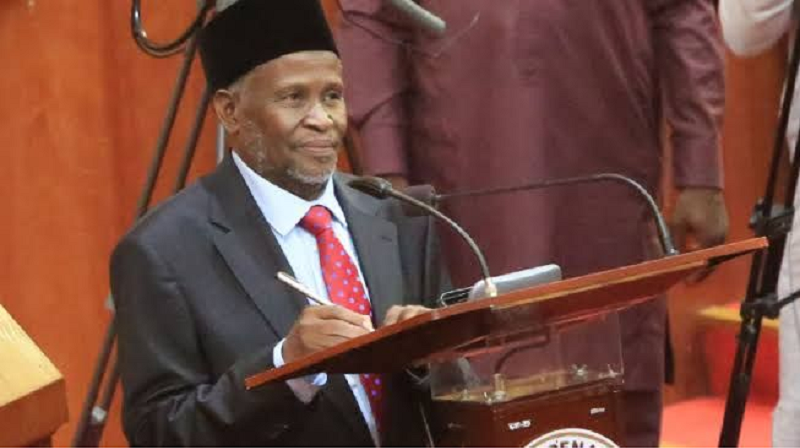
The strike was called off after a meeting between JUSUN executives and the National Judicial Council (NJC) led by the Chief Justice of Nigeria (CJN), Justice Ibrahim Muhammad.

JUSUN embarked on strike on April 6, ordering its members across the federation to shut all courts in the country to press home its demand for implementation of financial autonomy for the judiciary.

Ever since then, court activities have been paralyzed even as cases requiring judicial attention increased.

President Muhammadu Buhari had on May 22, 2020, signed into law, an Executive Order that granted financial autonomy to the legislature and the judiciary across the 36 states of the federation.

Although the order mandated the Accountant-General of the Federation to deduct from source, any amount due to state legislatures and judiciaries from the monthly allocation to each state, for states that refuse to comply with the Executive Order, many governors have refused to implement the order in their various states, denying JUSUN the financial autonomy they seek.

Now, the suspension of the strike which comes at the heels of Nigerian government’s ban on Twitter, opens opportunity for the courts to entertain the case.

Socio-Economic Rights and Accountability Project, SERAP, and 176 concerned Nigerians had on Tuesday, filed a lawsuit against President Muhammadu Buhari-led -administration over what it called, “the unlawful suspension of Twitter in Nigeria, criminalization of Nigerians and other people using Twitter.

The suit was filed at ECOWAS because of the JUSUN strike. Counsel to the group, Femi Falana, SAN, said the matter needs to be urgently treated to stop the Nigerian government from threatening media houses and Nigerians for using Twitter.

“If this application is not urgently granted, the Federal Government will continue to arbitrarily suspend Twitter and threaten to impose criminal and other sanctions on Nigerians, telecommunication companies, media houses, broadcast stations and other people using Twitter in Nigeria, the perpetual order sought in this suit might be rendered nugatory,” he said.

The Nigerian government had on Friday, announced the indefinite suspension of Twitter, after the microblogging app removed a civil war-referenced tweet by president Muhammadu Buhari, which violated its policy as it was considered genocidal.

With the courts on strike, it’s difficult for right activists to challenge the Twitter suspension which violates the constitution of Nigerians to freedom of expression.

For about 40 million Nigerian Twitter users, many of whom make a living on Twitter, JUSUN’s strike suspension beckons hope that the court will grant their prayer, which has been backed by the international community, and lift the suspension.

Cryptocurrency Market on the Path to Recovery As El Salvador Approves Bitcoin As Legal Tender

0
Bitcoin is soaring

El Salvador on Wednesday, became the first nation to approve bitcoin as a legal tender, shooting the embattled cryptocurrency up more than 10% from its two-week low.

El Salvador’s president, Nayib Bukele had proposed the bill last week amidst the country’s inflation crisis. Congress passed the “Bitcoin Law” with 62 votes, 19 opposed and three abstentions, according to a tweet sent by Bukele. The new law thus makes cryptocurrency a legal means to pay in the small Central American country.

Bitcoin picked up at the news, trading above $36, 000. Ether recorded nearly 8% increase, trading above $2,500, while XRP, Cardano and Dogecoin recorded 9.84%, 11.86% and 6.37% growth respectively as of press time. Last week Tuesday, bitcoin was as low as $31,000, its lowest level since May 23, according to data from CoinDesk. The decline of the world leading cryptocurrency, which plunged further following Elon Musk announcement that Tesla will quit accepting bitcoin, was compounded by China’s clampdown on miners and financial institutions dealing on cryptocurrencies.

Investors seemed deterred by the development, as upsurge in selloff indicates. In May, the cryptocurrency was hit with a massive selloff during which its market capitalization dropped below $1 trillion. $141 million was pulled from bitcoin products by institutional investors in the week ended June 7, according to digital asset investing firm Coinshares. Trading volume in bitcoin digital asset investment products also slumped, by 62% compared with last month.

El Salvador’s approval of bitcoin as a legal tender has become the only credence the cryptocurrency has received in weeks, putting it in the mood of recovery.

As part of efforts to boost bitcoin acceptance in the country, Bukele said in Twitter Space conversation that the country is designing a new law that would grant permanent residency to any individual who invests three BTC into El Salvador’s economy.

He also announced plans to help businesses to cope with the new law. The bill that was just passed will mandate all businesses to accept bitcoin for goods or services, but the government will act as a backstop for entities that aren’t willing to take on the risk of a volatile cryptocurrency, the president said.

“If there’s an ice cream parlor, he doesn’t really want to take the risk, he has to accept bitcoin because it’s a mandated currency, but he doesn’t want to take the risk of convertibility, so he wants dollars deposited in his banking account, when he sells the ice cream, he can ask the government to exchange his bitcoin to dollars,” Bukele said. “Of course, he can do that in the markets also, but he can ask the government to do it immediately.”

The Development Bank’s trust fund would sell some of the bitcoin it receives for dollars to replenish the fund.

Government officials from El Salvador will meet with the International Monetary Fund in the coming days to discuss the plan.

Bukele also indicated that the government may promote bitcoin mining. El Salvador had already been hoping to draw businesses with excess geothermal energy, and while the government isn’t specifically looking to the bitcoin mining industry to fill that need, it is one such sector that could benefit, he said.

He sees the move as a way of encouraging foreign investment in El Salvador, saying at the time that if just 1% of the world’s Bitcoin were to be invested in the country, “that would increase our GDP by 25%.”

El Salvador is a low-income country that relies on remittances from nationals abroad. It is hoped that the adoption of the blockchain currency will ease and reduce the costs of those transfers. The country uses United States dollars as its official currency.

The rollout would be handled by the mobile payments app Strike, which recently debuted in El Salvador.

Bukele said that the majority in the country do not have traditional bank accounts, and that the new law will enable people to create online digital wallets with just a smartphone.

The adoption puts El Salvador on the spotlight as many other countries will look up to its success to determine whether to approve bitcoin as a legal tender or not.

However, concern of volatility remains. A significant drop in the price of bitcoin will mean most holders losing value for their money, and that will discourage wider acceptance.

Beyond The Distractions, Stay Focused On That Platform Taxation

1

Fellow Citizens, we need to ensure that we are objective on things. The sound of our tribal names in Nigeria should not be used to assess the quality of our thinking. If we follow that path, the nation is lost. As I read through comments on my commendation on Lai Mohammed’s new playbook in which he posited that Netflix and Twitter should pay some taxes in Nigeria, many cannot come to terms that we are praising the government. As a nation, we need to be objective to commend the government when we see positive moves, and challenge we see something bad.

LinkedIn, which is owned by Microsoft, pays taxes in Nigeria. Facebook pays taxes in Nigeria because it runs operations in Nigeria. Google also does. Are they paying enough? That is open for a debate since most of us do not work in the tax office. But at least, they are paying something.

Nigeria is Africa’s largest economy. Nigeria is Africa’s most populous nation. Nigeria is Africa’s digital square. If we see ourselves as being so small to ask Twitter, Netflix, etc to do the needful, we are making a real mistake. Who will do it for Africa? Gambia, Cape Verde or Gabon?

Sure, Twitter’s tax will not fix Nigeria. But also, that small money will not make Twitter go bankrupt. So, we need it. 

The current protocol on taxation for digital platforms is broken. A new one is urgently needed. The more ad-naira goes to Twitter, the less Lagos ad agencies will earn to pay local taxes. While we agree that the government has seen the mistake in the President’s post, and is now changing the topic, so be it. 

That Lai Mohammed proposed it MUST not mask that he has a message: Africa needs a playbook on the future of global taxation, and Nigeria is a key nation in Africa that can get that going. While suspending Twitter is not the path for that, but that conversation is important. My suggestion is this: unsuspend Twitter and begin to hammer a plan for Nigeria while also bringing African Union on that table.

Suspending Twitter is a distraction but asking Twitter, Netflix, etc to pay taxes must not be diminished!

This suspension of Twitter is a moving target, now that ex-President Trump is commending Buhari for the ban. But that is also a distraction. We do not need to ban Twitter to harmonize our economic positioning when it comes to taxation.

“Congratulations to the country of Nigeria, who just banned Twitter because they banned their president,” he said in a statement released on Tuesday.

He suggested that he should have banned Facebook while he was in office, but said the company’s boss Mark Zuckerberg “kept calling me and coming to the White House for dinner telling me how great I was”.

Mr Trump also backed unnamed rival social media platforms, saying they “will emerge and take hold”.

The 45th US president has struggled for attention since his access to Twitter and Facebook was blocked. A website he launched last month to get his word out was closed because of poor traffic.

But yet, taxes will not save Nigeria if we do not begin to run the nation responsibly. The news is that Niger, Togo, Benin and Burkina Faso plan to buy idle electricity from Nigeria even when Nigerian citizens and companies have no electricity!

Niger, Togo, Benin and Burkina Faso are collaborating to buy the unutilised power produced in Nigeria, the Chairman of the Executive Board of the West African Power Pool, Sule Abdulaziz, said on Wednesday.

Abdulaziz, who is also the acting Managing Director of the Transmission Company of Nigeria, said the four countries were collaborating to make the power purchase from Nigeria through the Northcore Power Transmission Line currently being built.

Update: Twitter is engaging with Nigeria

https://mobile.twitter.com/Policy/status/1403370025088651272

Lai Mohammed’s Brilliant NEW Case Against Twitter, Netflix, etc for Nigeria

Advance Your Career and Business with Tekedia Mini-MBA

0

Invent, innovate and drive organizational transformation, performance, and growth. Capture emerging opportunities in changing markets while optimizing innovation and profitability. Digitally evolve your business or functional area, turning digital disruption into a competitive capability and advantage. Master the concepts of building category-king companies, and thrive. Join Tekedia Mini-MBA and advance your career/business.

We began the current edition on Monday and registration continues.  Go here and register 

Great Thoughts on Digital Freedom of Expression, Criminalization of Hate Speech and Fake News in the Face of Nigeria’s Twitter Ban

0
Social media

The day Adam and Eve formed a union. It was the day the world has been created with the various strategies and tactics for initiating, building and maintaining relationships. In the times of Adam and Eve, sophisticated strategies and tactics were not in existence like what the world is witnessing today through technological evolution and revolution.

From the global north to the global south, emerging technologies in the context of social relationships have changed the ways people think, act and react to issues of personal and national importance. The love and hate messages that were spread through indigenous communication channels, with the limited reach and effects, are now being disseminated within seconds and with the high impacts on people, businesses and countries.

In the last decade, Nigeria and other countries in the world have been in dilemma of using and controlling emerging social networking sites, especially those that have been perceived as inimical to peace and unity.

ESP Gains

Nigerians and businesses have deployed and still using SNSs such as Facebook, Twitter, LinkedIn, WhatsApp among others. Economically, these sites are assisting businesses and individuals to navigate transaction terrain which was difficult before the creation of the sites. Buying and selling was not easy to do before the 20th century.

Making love and maintaining relationships with family members, relatives and colleagues at workplaces and social gatherings in different locations across the world was the exclusive right of those who can afford to travel to the locations using air, rail and road transport services. The political issues and needs which were basically discussed at town hall or community meetings in the past can now be trashed out within minutes and hours using social media platforms.

On these platforms, people can easily congregate, raise points, discuss them and accept or reject points that are inimical to the growth of everyone. Indeed, social media are giving voice to many irrespective of their age, gender, income and educational status. In the past, traditional media held the power of who should be giving space to express himself. When the power is given, the speaker still doesn’t have exclusive right of making everything he said count because the media still have framing, priming and agenda setting power.

Exhibit 1: Economic Impact of Shutting Down Social Media in a Day [US Dollars]

Source: Netblocks, 2021; Infoprations Analysis, 2021

ESP Losses

Some of the possible losses have been discussed indirectly under the ESP gains. As much as Nigerians want their economic, social and political ecosystems to be simpler and more beneficial using the SNS, they must be ready to accept and form alliances towards eliminating issues with the tendency of destroying personal and national life. From the economic perspective, over the years we have seen how some people and groups deployed the sites to defraud people and businesses.

We have also been awash with information that some people initiated and sustained fake relationships on the platforms, which led to the death of female partners in most cases. We do not also need to be in the United Kingdom, the United States of America or hiring astronomers to know that some people are using the sites to create fake job opportunities, attracting unsuspected job seekers to their den and eventually terminated their life.

As argued earlier, social networking sites, especially Twitter and Facebook have democratized the ways we express our feelings about government activities and political leaders. They have indeed given us the space which was exclusively owned by the traditional media before 2003, 2007, 2011, 2015 and 2019 general elections.

In spite of this, the platforms themselves are neither inherently democratic nor nondemocratic, but represent a tool political actors can use for a variety of goals, including, paradoxically, illiberal goals. From the politicians to their social media induced followers, the principles of majoritarian democracy and protection of minority rights are not being followed strictly.

For instance, President Muhammadu Buhari’s tweet on the level of insecurity in the country with the specific reference to how some people and groups are destroying facilities and killing Nigerians in the south-eastern region was deleted by Twitter, citing violation of its policy. The Presidency reacted by banning the operation of the microblogging site in the country.

Freedom of Expression, Criminalization of Hate Speech and Fake News

Instead of seeking information about how the site is aiding fake news and hate speech spread, Nigerians and other nationals have been on why the Nigerian government banned the site. This clearly shows that the World and Nigeria want freedom of expression in the digital space and not really ready for the criminalization of hate speech and fake news on the platform.

“…to defend the territorial integrity of the nation in the meatspace, the cyberspace must be a fair game. it must be seen as a threat, depending on the veracity of the misinformation. It has to be dealt with and managed,” Professor Ndubuisi Ekekwe said in one of his pieces on regulating cyberspace in Nigeria.

From the academic perspective, the argument has been that “state regulation of hate speech presents an opportunity for fostering order, advancing national cohesion, reducing hate speech and promoting inclusive governance for all, irrespective of age, sex, disability, race, ethnicity, origin, religion and economic status.”