DD
MM
YYYY

PAGES

DD
MM
YYYY

spot_img

PAGES

Home Blog Page 5753

Engineer Perception Demand And Make Customers FANS

1

Steve Jobs, an Apple founder, was legendary for stimulating demand. He worked without surveys or focus groups. He was a genius, peerless in his generation. He saw an unborn future many years ago. He was an icon, who changed his world. He developed a good design paradigm of working at the perception of customers, beyond their needs and expectations. He found glory and Apple triumphed with iPod, iPhone, iPad and more.

The Perception Demand Construct is a product evolution construct where you work on things which are not really evident to be in demand. Yet you go ahead to create that product. The demand may not be existing but you are confident you can stimulate it. Yes, you do believe that your product can elicit demand and grow the sector when launched. This is different from existing demand which could be met via starting a web hosting company or selling light bulbs where you know people actually need those services.

Here, you create a New World. As I always explain in Tekedia Mini-MBA, you transition from being a Scalar quantity (you have magnitude – market share – but no direction because you are ordinary) to becoming a Vector quantity (you have magnitude and a direction). That direction is pioneering a new market through eliciting a new basis of competition, and bringing fandom out of customers. Blessed is that company whose customers are fans!

Steve Jobs’ Perception Demand Construct, for Africa

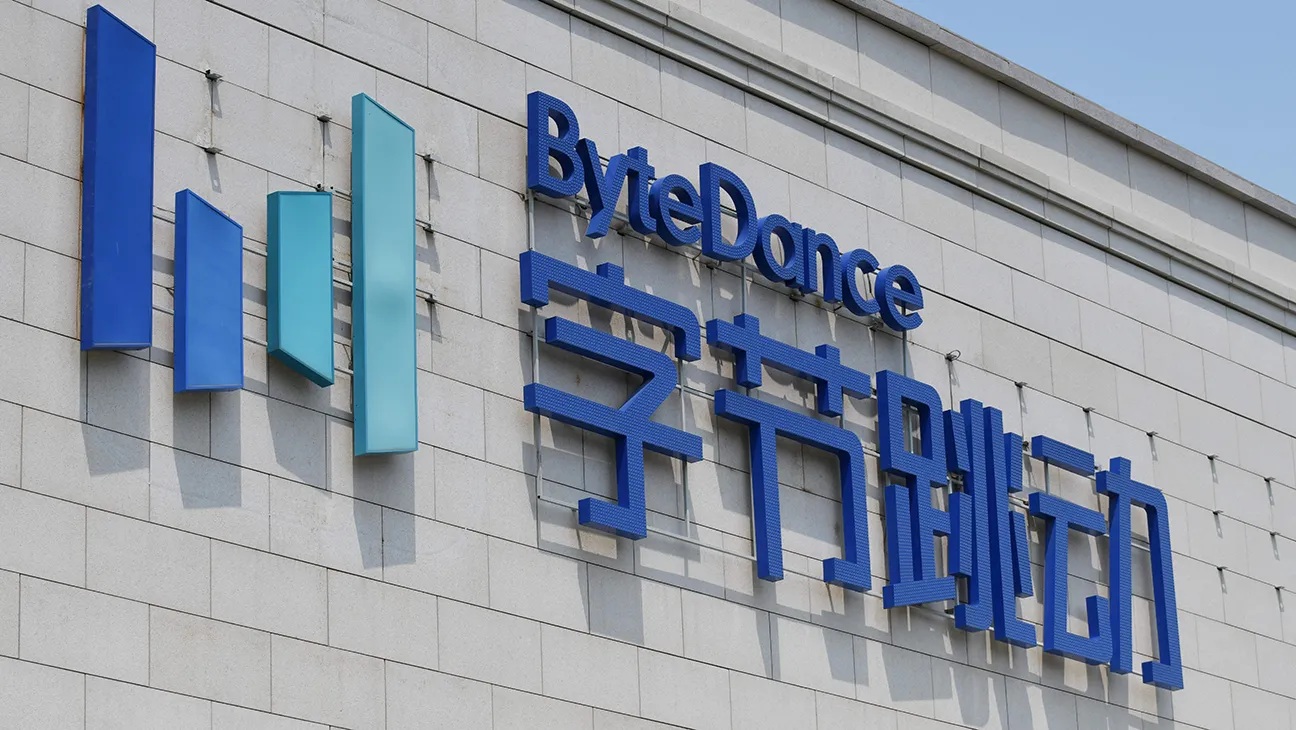
ByteDance CEO Zhang Yiming Steps Down

0

ByteDance’s CEO and cofounder, Zhang Yiming, has announced he’s stepping down from his role leading the company. Zhang will move to another position in the company, allowing co-founder Liang Rubo, who currently runs HR in ByteDance, to become the new CEO.

Under Zhang’s leadership, ByteDance’s kid company, TikTok grew to become the most valuable startup in the world. But the prodigy thinks his time at the helm is up as he’s no longer developing new ideas to keep the company at the top of innovation.

“Yet I worry that I am still relying too much on the ideas I had before starting the company, and haven’t challenged myself by updating those concepts. As an example, before 2017, I spent a lot of time keeping track of developments in machine learning. However, since then, while I do my best to bookmark technical articles online, I haven’t had the time to make much progress digging into the area. During technology meetings, this sometimes means I actually struggle to keep up with the discussion,” Yiming said.

He explained that his decision was masterminded by the urge to avoid the trap of the CEO becoming overly central — listening to presentations, handling approvals, and making decisions reactively, that companies often fall into when they mature and expand. This leads to an over-reliance on existing ideas already in the company, and results in knowledge structures being slow to iterate.

“In order to avoid this trap, I gradually came to a decision over the last six months to take on a new role at ByteDance. I believe I can best challenge the limits of what the company can achieve over the next decade, and drive innovation, by drawing on my strengths of highly-focused learning, systematic thought, and a willingness to attempt new things,” he said.

Yiming led ByteDance through its toughest period, characterized by former US President Donald Trump’s executive order aimed to end TikTok’s operations in the United States. TikTok scaled the challenge, recording unprecedented growth.

ByteDance has a range of social media platforms including Douyin, China’s version of TikTok that powers creation of short-form mobile videos. There is also Toutiao, one of the most popular content discovery platforms in China that offers users a unique, personalized and comprehensive content experience, enabling them to discover and explore topics of interest, ranging from sports and entertainment to agriculture and history.

Others are Xigua Video, Helo, Lark, the Indonesian news content app – Babe and research and data analytics tools Byteplus.

Yiming said Rubo, given his versatility, and leveraging his strengths in management, organization, and social engagement, will be able to lead ByteDance in many fronts.

“There are still many things that we need to improve, and I think someone else can better drive progress through areas like improved daily management. The truth is, I lack some of the skills that make an ideal manager.

“I’m more interested in analyzing organizational and market principles, and leveraging these theories to further reduce management work, rather than actually managing people. Similarly, I’m not very social, preferring solitary activities like being online, reading, listening to music, and daydreaming about what may be possible,” he said.

Reinventing Citizen Journalism Practice in Nigeria: Egbemode and Our Analyst’s Propositions

0

Over the years, the argument has been that citizen journalism broadens participatory democracy, enables strict adherence to accountability and transparency principles by the political and business leaders. As good as the genre of journalism is, there are concerns that it drives social and political disturbances. Some countries have experienced and still experiencing these.

In Nigeria, a navigational search on the Internet will give one a number of citizen journalists who are using varied blog platforms for dissemination of what they consider newsworthy and need to be reported to the public. However, Mrs Egbemode Funke, the Commissioner of Information and Civic Orientation in Osun State, is another contributor to the ongoing conversation on the negativity of the journalism practice. According to her, citizen journalists are bastardizing the present-day journalism. Her hypothesis is that if there are no citizen doctors, there can’t be citizen journalists.

Examining Egbemode’s position, our analyst notes that the current crop of citizen journalists pay attention to monetary value more than societal value, which can only be created when they understand the nitty-gritty of generating, analysing and writing newsworthy events or happenings. Our analyst further states that majority of citizen journalists and bloggers started not because they have specific value to add to the journalism profession in Nigeria, but they want to earn money like renowned bloggers at the expense of writing and reporting news as a product.

Exhibit 1: Estimated Revenue [US$] of Select Blogs in Oyo, Osun, Edo and Lagos States

Source: Worth of Web, 2021; Infoprations Analysis, 2021

Journalism Not Only About Speaking Grammar

“It’s either you’re a journalist or not. We have rules and regulations guiding every profession and if these rules are not being followed, we will get into trouble.

“Some people woke up one day because they speak English and have phones, then called themselves citizen journalists. We woke up one day and found people who are angry, just typing breaking. Because they are angry with somebody, they think that’s enough reason to start a blog and you call a blogger a journalist.

“If there are no citizen doctors, there can’t be citizen journalists. It’s the fault of all of us recognising those who were not trained for the job, who do not have passion for the profession, who see it as a tool of attack and think being a journalist gives them some kind of weapon to fight their enemies. It’s fine to be an activist but being an activist is different from being a journalist.”

Mentorship and Training Issue

“People are not willing to be mentored, they want to be CEOs on the day they graduate, they want to be called editors two years down the road but it doesn’t work like that.

“We went to journalism school apart from going to the university. You find out that what we were taught in school is not what you find in the news. You learn on the job how to ask questions, conduct interviews, how to soften the personality you’re interviewing, how to even stalk them and balance your stories. But that’s not what we are doing these days. Someone finds a story, doesn’t confirm it yet spreads it.”

What to Do?

From the insights provided by Mrs Egbemode and our analyst, it is clear that citizen journalists, especially bloggers need to stop being unprofessional. As noted, they need to learn, unlearn and relearn from journalism school and professionals in the mainstream media.  These are not enough. Having a sustainable business model, which entails value creation, delivery and capturing processes will go in a long way of averting identified unprofessional conducts. In this regard, anyone who considers the journalism genre as imperative for sustainable building of democratic and industrial institutions should seek and apply emerging knowledge.

A New Course: Stakeholder Capitalism: Umunneoma Economics & Igbo Apprenticeship System

2

Today, Tekedia Institute is very happy to announce that a new course is coming titled “Stakeholder Capitalism: Umunneoma Economics & Igbo Apprenticeship System”. After my BBC World Service interview and the Harvard Business Review article, both ran this week, many people from the around have asked me questions.

As a school of the future, Tekedia will work with the custodian of this business framework, Ohaneze Ndi Igbo, to develop a course on Umunneoma Economics & Igbo Apprenticeship System within the framework of global stakeholder capitalism.

We expect this course to be completed later in the year. But any member, past, present and future, will have access to it.

Corporate Training – Tekedia Wants To Speak With You!

0

There is no other way to write it: we want to have a conversation with you before you conclude that corporate training plan. Your workers are great in what they do. We know they are ready to execute the playbook. Yes, we understand that. 

Yet, we have got things which can make them better. We use the word “co-learners” because there is no “student” in our program; everyone is learning. But the learning is a journey – a real knowledge festival unbounded and unconstrained in many ways, liberating minds, and showcasing the physics of building category-king companies.  Someone has called it an “academic netflix show”.

Contact our team; we want to explain how we are translating ideas into innovation, and innovation into business growth, and growth into value creation for all.

We make stars out of employees. We want to speak with you at Tekedia Institute! The next class begins June 7.

To register, click here.