DD
MM
YYYY

PAGES

DD
MM
YYYY

spot_img

PAGES

Home Blog Page 5757

Nigeria Opens A Major Playbook – Review of 1999 Constitution

2

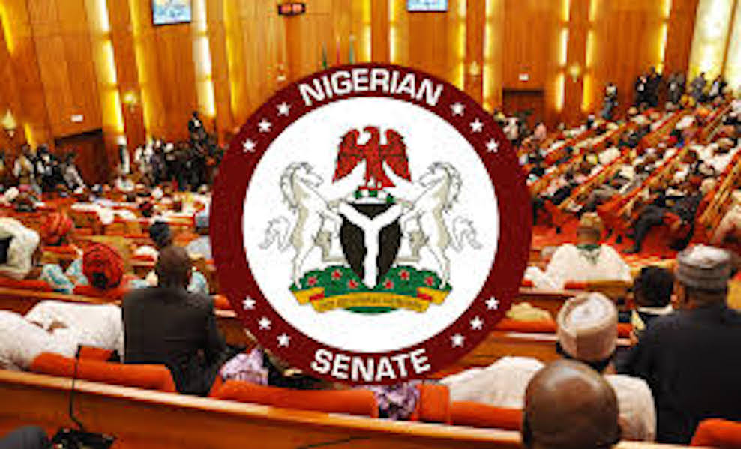
The ant-hills are not built by the elephants but by the collective efforts of little ants. As the Nigerian Senate begins public hearing towards fixing the badly written military-era Nigerian Constitution, I call on everyone to pay attention. When they wrote the last one, no one added anything. In short, the minister of information who presented it to the nation was not allowed to see a copy of it! Yes, that was how bad it was  – they never allowed him to see a copy of it.

Most of Nigeria’s problems today could be traced to that Constitution. The bravado of the old where Kaduna ruled as the industrial capital of northern Nigeria has been reshaped. In the east, the inventive sagacity of Enyimba city is badly broken. The brilliance of Ibadan muted. From north to south, east to west, and beyond, everyone is a victim. So now, there is an opportunity; Nigerians need to make inputs.

The biggest problem with the 1999 Constitution is that it is dumb with no awareness. When the National Bureau of Statistics (NBS) reported that Yobe state had a literacy rate of 7.3% with Imo state at 96.43%, you would have expected changes in the funding of basic education, boosting underperforming states etc from UBE and other sources. But nothing like that: no local innovation because all powers are concentrated at Abuja.

So, to fix these issues, let us participate in this Constitutional review. The schedules are below (sure, they omitted Ekiti but we have it in our hearts).


The Central Bank of Nigeria’s US Dollar Battle – And New $5,000 Intra-Deposit Limit

1
Nigeria Naira US Dollar

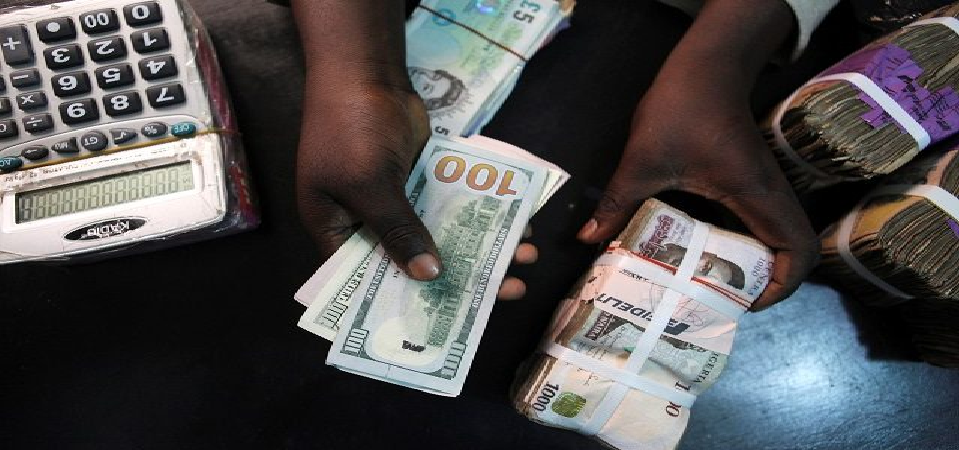
Nigeria is not healthy. And the Central Bank of Nigeria (CBN) is applying panadol even when it knows that panadol has no chance of providing any cure. A few weeks ago, we got the news that commercial banks would only allow a maximum of $10,000 monthly (cash) deposit within Nigeria. Today, the latest is that the apex bank has adjusted that to $5,000.

Left and right, the apex bank is trying to wean Nigerians of US dollars. There are many consequences already, as most of the fintech trading foreign apps have been wounded, since their customers cannot fund dorm accounts for the transactions. A peer to peer is never efficient when you want to do fairly big deals.

“There is a $5,000 monthly cash deposit limit. We encourage you to make more deposits via electronic transfers. Cash funded transfers to beneficiaries with accounts in other banks in Nigeria are no longer allowed. There will be no restriction to the frequency or value of transactions for accounts funded through inflows but supporting documents are required before payments are processed. Cash deposits are no longer allowed for Wealth Management Investments.”

So, if you want to deposit cash into your dorm account in Nigeria, the maximum now is $5,000. But if you want to do electronic transactions, you can but of course the rates are always above the roof. Besides, when you do these deals, you have to provide documents that they are legitimate transactions.
The apex bank is trying many things. But I am not sure it has a chance: fixing Naira will come via factories and warehouses and not any financial engineering at CBN headquarters and commercial bank branches! Those factories and warehouses can include new digital products created by innovators.

We’ve Invested In Four Startups in Q2 2021 Already

0

Tekedia Capital has taken small positions in four startups already in Q2 2021. We like them and depending on the data we continue to gather, we will present them (alongside others) before our investors in the next investment round. Typically, we do not present any business we are not invested in, and typically we invest first, risking our capital and using that to have better insights on startups before we move to the big board.

 They are in automotive plus*, financial API, credit with new basis and security systems. I will share about them after  our members have invested in the next round, as I want them to get in, at good valuations. Members, feel free to reach out; we will be happy to share as you plan. Nonetheless, you will get a note on May 24 as scheduled.

Tekedia Capital offers a specialty investment vehicle (or investment syndicate) which makes it possible for citizens, groups and organizations to co-invest in innovative startups and young companies in Africa. To invest and help build the Next Africa, learn more here.

A Charter for the Igbo Apprenticeship System (IAS)

0

Two countries have called, a World Bank funded project has called, and many universities are asking questions. Nigeria’s Igbo Apprenticeship System (IAS) can even yield forex if we do it well. Like the Confucius of China, Kaizen of Japan, Six Sigma of the United States, Nigeria has a chance to propel IAS at the heart of the new global stakeholder capitalism.

I have defined the IAS thus: “The Igbo Apprenticeship System is a business philosophy of shared prosperity where participants co-opetitively participate to attain organic economic equilibrium where accumulated market leverageable factors are constantly weighted and calibrated out, via dilution and surrendering of market share, enabling social resilience and formation of livable clusters, engineered by major participants funding their competitors, with success measured on quantifiable support to stakeholders, and not by absolute market dominance.”

Comment on LinkedIn Feed

Comment: I am aware there is an apprenticeship system among every ethnic group in Nigeria, Ndubuisi. Each one nearly similar to the Igbo apprenticeship system, some even better. Yorubas, Hausas, Fulanis, Idomas, and others have it.

Historically, it appears to have been the primitive learning institution for almost every race. I do not think any single tribe or race in the world can claim any form of ownership on this principle.

Rather than attributing ownership of this principle to any ethnic group, I feel it would be best to focus on developing the general principle as it exists.

Response: a.H, the difference with the Igbo Apprenticeship System and why the world is paying attention is that it has real data to justify that it works. In 1970, every Igbo began with 20 pounds. Within 40 years and using the IAS, they have acquired 70% of all real estate in Abuja. No other ethnic apprenticeship in Africa has created that level of wealth. More so, South East Nigeria has the highest literacy rate in Nigeria, on average. Imo tops at 96.43% (out of every 100 people above 15 years, 96 can read/write)

Yet, that was a place that began from zero, after war, with 20 pounds even if that person had one million, So, while every tribe has apprenticeship, none has delivered market results that IAS has offered and that is what is unique. The Igbos are supposed to be the poorest today in Nigeria. Yet, UN ranked them highest. Sorry, I have to bring this which usually divide but I need to respond with data.

I will not be spending time if there is no value in it. I hope you open your mind and let us advance Nigeria instead of the usual tribal arrows.

Welcome Veterinary Business Management Association, ABU Zaria

0

Join me to welcome students and members of Veterinary Business Management Association at Ahmadu Bello University, Zaria, Nigeria to Tekedia Institute, as they begin a two-phase work via Tekedia CollegeBoost. Tekedia CollegeBoost is an Advanced Diploma in Business Administration designed for students in colleges. It involves an 8-week program which could be broken into two semesters or taken in one semester, depending on the arrangement with the school or group of students. For more on CollegeBoost, click here.