DD
MM
YYYY

PAGES

DD
MM
YYYY

spot_img

PAGES

Home Blog Page 5757

Is Nigeria’s Department of Petroleum Resources (DPR) for Investors or Against Them?

0

Nigeria’s oil and gas industry is plagued by various challenges, ranging from insecurity to the cost of production, policies, and regulatory issues. But among all the challenges confronting the industry, the inability of the Department of Petroleum Resources (DPR) to regulate it in line with global best practices is the biggest of all.


By the law that established it, DPR  is the regulator of  Nigeria’s oil and gas industry. The Department has a vision “To be a leading regulator in oil and gas sector” and a mission “to ensure the sustainable development of Nigeria’s oil and gas resources across the value chain for our stakeholders through effective regulation while entrenching world-class professionalism, accountability, and transparency.”

Effective regulation of any industry does not only build the confidence of investors, it engenders growth. Crude oil accounts for about 90 percent of Nigeria’s foreign exchange earnings and 70 percent of its revenue. This shows how important the sustainability of the industry is to the country. But with what transpired in the industry in recent months, many investors must be asking if the DPR is for or against them.

In what many see as a lack of commitment to the rule of law, fairness, and nonchalant attitude towards a stable business climate for investment, the DPR revoked four oil mining licences of Addax Petroleum in April, citing the inability of the company to develop the assets.

After the revocation of the licences, the  DPR  inaugurated a team of experts to assess the revoked licences from Addax Petroleum to a new operator – Kaztech/Slavic Consortium. It, however, took the intervention of President Muhammadu Buhari, who doubles as the Minister of Petroleum Resources, for the licences to be restored to Addax.

“President Muhammadu Buhari has approved the restoration of the leases on OMLs 123, 124, 126, and 137 to the Nigeria National Petroleum Corporation, NNPC which is in production sharing contract with Addax Petroleum, a company wholly owned by Government of the People’s Republic of China on the blocks. The leases belonging to the Federation were revoked on March 30, 2021.

“This development reaffirms the commitment of President Buhari to the rule of law and sanctity of contracts.

“While directing the Department of Petroleum Resources, DPR to retract the letter of revocation of the leases, the President also directed NNPC to utilize contractual provisions to resolve issues in line with the extant provisions of the Production Sharing Contract arrangement between NNPC and Addax.

“The restoration of the blocks to NNPC will boost the organisation’s portfolio, thereby making the Corporation to, in the long run, boost its crude oil production and in turn increase the revenue it generates to the Federation Account,” a statement issued by the Senior Special Assistant to the President (Media & Publicity, Garba Shehu, on April 23, 2021, read partly.

Similarly, the Department on April 6, 2021, also issued letters revoking 11 Marginal Oil Fields licences. According to the operators of the assets in a Letter to Buhari, they have invested over $400 million in these assets.
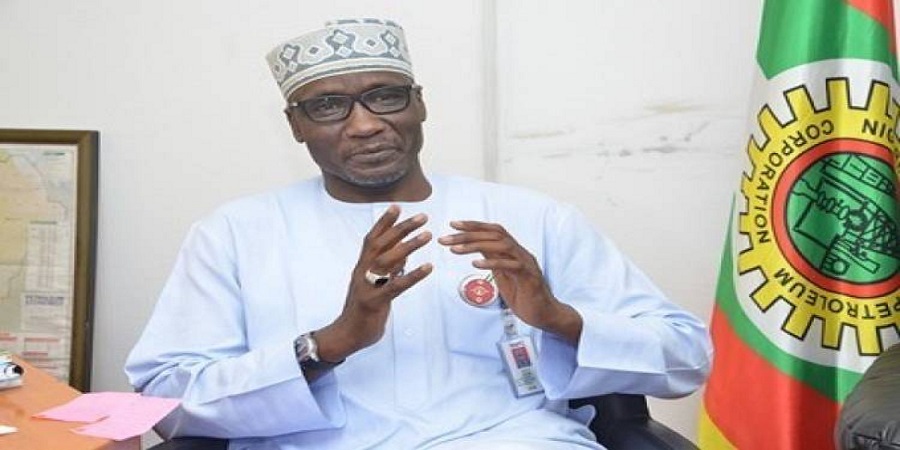
GMD Kyari mele nnpc

They explained that they were not contacted by the DPR or, giving any opportunity to make representation before the regulator issued the letters revoking their licences.

The operators noted that the revocation puts the investment of several State Governments, Nigerian entrepreneurs, and their foreign technical partners in jeopardy, and will add to the problem of  Non-Performing Loans (NPLs)  for the local banks. As of last year, the oil and gas industry accounted for about $8 billion in debt owed to Nigerian banks.

“Not only are the actions of the DPR at complete variance with the Marginal Field bid guidelines and the duly executed Farm-out Agreements, we are extremely concerned that the DPR has chosen to pursue such a course of action in the midst of a global economic crisis with its resultant impact on the Nigerian economy at large, and in particular the primary economic contributor thereto, being the oil and gas sector.

“The revocation of the licenses will certainly lead to litigation against the Marginal Field Operators by foreign partners and banks who have financed the development of the Marginal Fields, in addition to sending the wrong signal to both Foreign and local investors” the operators stated.

“We have conservatively invested over US$ 400 million in developing the affected fields, with a number of them in production, whilst others are in various advanced stages of development including testing of oil wells, drilling of new wells, construction of production facilities, etc.

“These investments were made despite low crude oil prices, militancy, and insecurity in the Niger Delta region, resulting in frequent shut down/ vandalization of crude export pipelines,” they added.

The Marginal Fields affected and their operators include Atala operated by Bayelsa Oil/CEPL; Dawes Island operated by Eurafric; Ofa operated by Independent Energy; Ke operated by Del-Sigma/Xenoil; Ororo operated by Guarantee/Owena; and Ekeh operated by Movido.

Others are Akjepo operated by Sogenal;, Tsekelewu operated by Sahara/Africa Oil; Tom Shot Bank operated by Associated/Dansaki; Oriri operated by Goland, and Ogedeh operated by Bicta.

In June 2019, DPR also revoked the licences of Pan Ocean Oil Corporation (OML 98); Allied Energy Resources Nigeria, (OML 120 and 121); Express Petroleum and Gas Company (OML 108); Cavendish Petroleum Nigeria (OML 110), and Summit Oil International (OPL 206), for non-payment of royalties.

Oil and gas is the mainstay of Nigeria’s economy, and for that reason, the Federal Government, and the DPR in particular, must ensure that the regulation of the industry is in line with the global best practices. Before licences are revoked, the DPR should ensure that affected companies are contacted and given a fair hearing. Also, the oil and gas industry is a peculiar industry, which means that revocation of licence should not be the immediate punishment for non-payment of royalties, or inability to develop assets.

Revocation of licences does not only lead to loss of jobs, but it also makes investment unattractive. Marginal Fields are exclusively allocated to Nigerian exploration and production companies, and the fact that these companies are indigenous should be enough reason for the DPR not to revoke their licences without giving room for dialogue, to understand their predicament or why they are unable to develop their assets or pay royalties.

Investment in the oil and gas industry is dollar-driven, and access to credit facilities in dollars is usually a big challenge for indigenous oil and gas companies. This is the reason why the DPR needs to be more judicious in carrying out its regulatory roles. The Department needs to work on how it can carry out both administrative penalties and criminal penalties without undermining investors’ confidence. This will be critical in deepening local content in the country as the world pushes towards energy transition.

The recent actions of the DPR do not give investors confidence and show a harsh business environment, which does not speak well on the ease of doing business in the country, especially in the oil and gas industry.

As we look forward to the response of Buhari to the letter written to him by the affected 11 Marginal Field operators, I hope he will do the right thing by directing the DPR to restore the licences to these companies, to save hundreds of jobs that will be lost as a result, and spare the country of facing litigation both home and abroad.
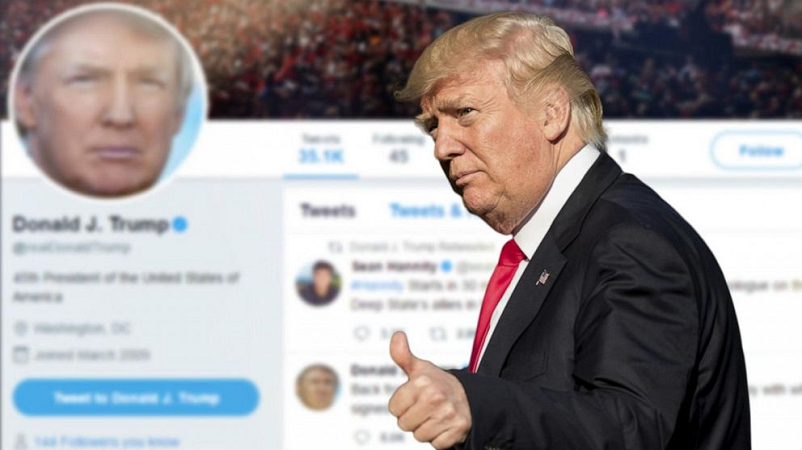
Trump’s 2024 Presidential Ambition and the Burden of His Social Media Ban

0

Five months after Donald Trump’s ouster from social media, following the January 6 deadly Capitol insurrection attributed to his false election claims, he is yet to find a viable means to reach his millions of followers even though he is nursing 2024 presidential ambition.

Twitter, one of the social media platforms used by Trump said in January that his ban is permanent and could not be reversed. Twitter founder and CEO Jack Dorsey said the ban was the right decision as Trump’s tweets point to the failure of Twitter to promote healthy conversation.

Trump has been reeling at the mercy of the social media platforms since then, as they had served as his megaphone. His helpless situation has been amplified by his dispute with the mainstream media. However, Facebook offered some hope to his return to social media with the promise of reviewing his ban, but the promise took long and unfortunately didn’t yield the result the former president expected.

On Wednesday, Facebook independent Oversight Board upheld the decision to keep Trump away from social media, at least for now.

“The Board has upheld Facebook’s decision on January 7 to suspend then-President Trump from Facebook and Instagram. Trump’s posts during the Capitol riot severely violated Facebook’s rules and encouraged and legitimized violence,” the Oversight Board said in a tweet. But it added that it was “not appropriate” for the company to “impose the indeterminate and standardless penalty of indefinite suspension.”

“Facebook’s normal penalties include removing the violating content, imposing a time-bound period of suspension, or permanently disabling the page and account,” the board said, adding that it “insists Facebook review this matter to determine and justify a proportionate response that is consistent with the rules that are applied to other users of its platform.”

Although the board, dubbed “Supreme Court” said Facebook must complete its review of this matter within six months of the date of its decision, it only heightens Trump’s predicament.

Getting worn off by his lingering inability to communicate like before, which has limited his ability to challenge the present administration and curse his enemies at will, Trump’s attempts to get around the ban has only backfired.

Although Trump claims he doesn’t miss Twitter, describing the social media app as “very boring”, he was caught on Wednesday trying to bypass his ban by creating a new account. The bio of the new account said: “Posts copied from Save America on behalf of the 45th POTUS; Originally composed via https://DonaldJTrump.com/Desk. *Note: Not Donald J. Trump Tweeting.”

Twitter immediately shut the new account down as it goes against its policy. The social media’s spokesperson said in response to Trump’s attempt to create a new account: “As stated in our ban evasion policy, we’ll take enforcement action on accounts whose apparent intent is to replace or promote content affiliated with a suspended account.”

In the wake of his ban from social media, Trump had hinted on starting his own social media platform, an idea which seems viable given that he has over 70 million supporters who wouldn’t hesitate to sign up if there is a social media to Trump’s name. On Tuesday, Trump did launch a website, From the Desk of Donald J. Trump, but it’s everything short of a social media platform. It’s just a blog where his followers can share his tweetlike statements on social media.

Since his social media ban in early January, Trump has resorted to mailing press statements to a few media outlets he doesn’t consider as “fake news” as a way of getting his voice heard, but it has sounded far below the range of his social media megaphone.

Losing the presidential election and the events that came with it were realities Trump has struggled to shrug off. But he has defiantly moved on with sight on 2024, when he hopes to have another chance to work from the Oval Office. He has the crowd, a mammoth throng of disciples loyally following his lead no matter where he is heading. His problem is how to tell them where he is going now that he is partially muzzled.

An anonymous source close to Trump told Axios that getting this account back is not only essential for his future political viability, “it would also be an undoing of an unjust act by a social-media company that made an ad hoc ruling to deplatform a sitting president.”

With all other platforms including YouTube and Instagram firm in their decision to part ways with the controversial ex president, Trump’s 2024 presidential ambition depends pretty much on what Facebook decides to do to his account in six months.

Elon Musk’s SpaceX Starlink Arrives Nigeria, Meets NCC for Permit

10

I have called it an asymmetric disruption when Elon Musk’s SpaceX decides to arrive Nigeria with its Starlink: “SpaceX has been in discussion with Nigerian Communications Commission (NCC) virtually over the past several months to begin the process of pursuing all necessary licenses to bring Starlink, its satellite-based broadband services to Nigeria. Having made substantial progress in the discussion, the Commission granted SpaceX’s request for a face-to-face discussion to gain better insights on the prospects of their proposal. … the company provided an overview of its plans, expectations, licensing requests and deployment phases during the meeting.”

Yes, MTN, Glo and Airtel may have to watch if what they did to CDMA could happen to them via satellite-based broadband. I have a couple of friends who have migrated to Starlink in the United States, and they are just happy with it. If that becomes available, it simply means that the telcos have lost most parts or rural Nigeria.

I expect SpaceX to offer a new level of competition against terrestrial players like MTN, Glo and Airtel in Nigeria.  Satellite-based broadband is a product displacement threat and companies like MTN would see massive threats in coming years from satellite providers. But one thing is certain: customers will rejoice because quality will improve and cost will drop.

As that happens,  we will see how the telco industry body lobbies: expect a new dimension of bank-led and telco-led mobile money debate to resurface, but now GSM-led and satellite-led broadband connectivity in Nigeria. Yes, would telcos expect SpaceX Starlink to come into the open party just as they have expected the Central Bank of Nigeria (CBN) to allow them to join the mobile money redesign in Nigeria. The argument was that telcos would improve the mobile money customer experience better than banks due to their better distribution outlets. 

But here, since Starlink is coming from satellite, I do think it has a huge chance to also improve the experiences of customers on broadband connectivity, unbounded and unconstrained by the usual terrestrial challenges.

People, everything will be tested and it all depends on what the regulator does with SpaceX, because if you allow Starlink carelessly, these telcos will fade. The telcos which have made a case for mobile money, that the government should allow the best to win, have an opportunity to tell Nigerians if it truly believes in a totally free market system in our telecommunication sector.

But this is what I expect to happen as the debate begins: the Nigerian telecom sector should be GSM-led, and not Satellite-led, and by that, even if SpaceX Starlink comes, it must be mandated to pipe its data through partnerships with GSM-based broadband providers. The telco lobby will argue for protecting jobs and investments. It would be a fierce one.

Elon Musk’s Starlink satellite internet service has been approved by the UK regulator Ofcom.
Starlink, from Musk’s aerospace company, SpaceX, will compete with the likes of BT Group and OneWeb to provide internet to people across the UK.

People in the UK have already started receiving the Starlink kit.

One user told Insider that he received his Starlink equipment on New Year’s Eve and that his download speed jumped from 0.5 megabits per second to 85 Mbps.

The Full Press Release

The Nigerian Communications Commission (NCC) has emphasised that in light of disruption in the technology world, it is keen on balancing healthy competition with entry of disruptive technologies to ensure sustainable telecoms industry growth and development in Nigeria.

The Executive Vice Chairman (EVC) of NCC, Umar Danbatta, stated this during a presentation to the commission by a delegation from SpaceX, an American aerospace manufacturer and space transportations services company, in Abuja on Thursday, May 6, 2021.

SpaceX is in the process of launching a low-earth orbiting (LOE) constellation of satellites to provide low latency, high bandwidths Internet to all corners of the globe and has identified Nigeria as a critical market.

SpaceX has been in discussion with NCC virtually over the past several months to begin the process of pursuing all necessary licenses to bring Starlink, its satellite-based broadband services to Nigeria.

Having made substantial progress in the discussion, the Commission granted SpaceX’s request for a face-to-face discussion to gain better insights on the prospects of their proposal.

Led by SpaceX’s Starlink Market Access Director for Africa, Ryan Goodnight and supported by the company’s consultant, Levin Born, the company provided an overview of its plans, expectations, licensing requests and deployment phases during the meeting.

After the presentation by SpaceX team, the Executive Commissioner, Technical Services, NCC, Ubale Maska, who stood in for the EVC, said NCC will work on necessary modalities to ensure that it balances the need for healthy competition vis-a-vis the entry of new technologies, in order to protect all industry stakeholders.

“As the regulator of a highly dynamic sector in Nigeria, the Commission is conscious of the need to ensure that our regulatory actions are anchored on national interest. We have listened to your presentation and we will review it vis-à-vis our regulatory direction of ensuring effective and a sustainable telecoms ecosystem where a licensee’s operational model does not dampen healthy competition among other licensees,” Mr Maska told the SpaceX delegation.

SpaceX team in Nigeria

Mr Maska further stated that the commission is interested in making necessary regulatory efforts to drive the coverage of rural, unserved and underserved areas of the country through the accomplishments of the lofty targets contained in the Nigerian National Broadband Plan (NNBP), 2020-2025. He noted that the plan’s target of 70 per cent broadband penetration target, covering 90 per cent of the population by 2025, is also in line with government expectations in the National Digital Economy Policy and Strategy (NDEPS), 2010-2030.

Other senior management staff of the commission at the briefing include the Executive Commissioner, Stakeholder Management, Adeleke Adewolu; Director, Licensing and Authorisation, Mohammed Babajika; Director, Technical Standards and Network Integrity, Bako Wakil; Director, New Media and Information Security, Haru Alhassan and Director, Spectrum Administration, Oluwatoyin Asaju, among others.

Section 70 (2) of the Nigerian Communications Act (NCA), 2003, empowers the Commission to regulate the provision and use of all satellite communications services and networks, in whole or in part within Nigeria or on a ship or aircraft registered in Nigeria.

This is for the purpose of ensuring a well-developed and organised satellite communications market with appropriate legal framework that meets international best practices, encourages innovation, promotes competition and guarantees public safety in the rendering of commercial satellite services.

NCC signs MOU with NigComSat on 5G Spectrum

Meanwhile, the Nigerian Communications Commission (NCC) and the Nigerian Communications Satellite (NigComSat) have signed a Memorandum of Understanding (MoU) that will facilitate the release of contiguous bandwidth in one of the most suitable frequency spectrum bands for early deployment of fifth Generation (5G) Network services in Nigeria.

The MoU signing ceremony was the high point of discussions by the two organisations on how to relocate the NG-1R satellite of NigComSat to the standard C-band 300MHz (3.9GHz – 4.2GHz) portion of the band, which is considered more suitable in terms of satellite service offering because of the advantage of cheaper terminal devices for end-users.

Accordingly, such relocation will leave the non-standard C-band 400MHz (3.5GHz – 3.9GHz) portion of the band for 5G use while the cost of relocating the NG-1R is expected to be offset from the proceeds of the auction of the 5G spectrum.

Building A Greater Industrial Nation – Activating Fiscal Federalism in Nigeria

1

There used to be a time when Nigerian leaders made things happen. This is Michael Okpara’s three year report. Look at the number of industries ( yes, industries, not companies) he opened in one year. When Sam Mbakwe was running his show, Imo State had a similar party. Go to the northern part of Nigeria, industries everywhere with Kaduna the industrial capital. Then, Awolowo was always overbooked for commissioning plants in Lagos. Nigeria was at its zenith on industrial development.

But today, where are we? Last year, 26 states did not attract a single FDI. Adamawa state made the list of outperformers because it attracted $20,000 (not a typo). You know what happened and brought this paralysis? The 1999 Nigerian Constitution, in my opinion. That document upended the comparative advantages within states.

It is that bad constitution that has made Sani Abacha a better economic custodian than most current political leaders. Babangida was light years ahead of these politicians when you note that he planned and built Abuja within less than 5 years. Some are ruling for 8 years with nothing to show.

When your strategy is wrong, even a great execution will diminish you. I do hope we revisit the 1999 constitution and bring fiscal federalism back.

Comment on LinkedIn Feed

Comment #1; We are seeing graft, corruption, and gross mismanagement. The constitution does not control or change politicians and people in power.

My Response; You wrote in irony. Without the constitution, corruption would not have scaled as we have now. People do not steal from themselves. If Abia does not get Abia working and at month end, it gets nothing from Abuja, then, you will see a different governor. But because it is sure something is coming at month end, it can relax. That is a grand corruption enabled by a bad constitution!

Comment 1 follow up: Not in irony. I’m sure the constitution does not permit mismanagement or corruption. So, it is redundant to change the constitution. It may seem to enable it but it’s more like post hoc fallacy. The underlining issue is the lack of accountability and enforcement mechanisms and I believe this lies more to culture than legislation.

My further response: This is the fact: Nigeria’s corruption of today is “grand corruption”. That will translate to ALL CORRUPTIONS. IBB spent 8 years in power, and built many things because he kept Nigeria’s money. OBJ spent 8 years using the new constitution, he spent that time sharing Nigeria’s money with states. What did OBJ do that cost money? Put GEJ and of course Buhari. The difference is clear: Abuja cannot plan because Abuja cannot even SAVE because constitution made it illegal: share all at month end is the law.

Comment #2: Whilst agreeing with you that the constitution needs to be re-jigged but the constitution is not all that is wrong with our country. How many of our governors’ have tried working on enabling environment for businesses? How many have gone around to meet with wealthy citizens from their States with a plan for where and what they can invest in. We have an irresponsible set of political leaders period. Let me start with my State Anambra. We have about the richest set of individuals as far as Nigeria is concerned. After Dr Chukwuemeka Ezeife have you heard of any of the recent ones canvassing for think home investment? Which part of the constitution prevents them from establishing industrial estates? Go and ask around, it is mostly Buhari’s mismanagement of our diversity and Nnamdi Kanu’s propaganda that has made some wealthy people to start moving their investment to the South East. I have lived and worked in Warri. It’s proximity to Onitsha makes it the Port of choice for the traders but youth restiveness have made even traders in Warri to start patronizing other Ports’ yet their governor’s have not deemed it fit to read the riot act to the rascals. Again I say it this constitution will not do us any good but the politicians have arguably done their worst not their best. How many are thinking of industries? We have people in diaspora who want to come back and invest, do you know of any State that has an office where such people can go to for guidance. Recent reports show that the industrialized countries have been stock piling metals that they think have low deposits remaining, how many of our governors’know the quantity of minerals in their States and what they can be used for?

My Response: “How many of our governors’ have tried working on enabling environment for businesses?” -there is no incentive for a governor to do that today because the system is designed to make them lazy. Yes – the state gets a huge alert in its bank account at month end whether it works or not. Also, its income is taxed by Abuja and that income is later shared. So, your gains on productivity are marginal and that is why most do not care since at the end, everything is shared together. With fiscal federalism, everyone runs at its own pace, pushing comparative advantages to rule.