FILE PHOTO: A Shell logo is seen at a gas station in Buenos Aires, Argentina, March 12, 2018. REUTERS/Marcos Brindicci
Royal Dutch Shell Plc is on the verge of leaving Nigeria completely after half a century of pumping oil out of Nigerian swamps. The oil company acknowledged that its spill-prone operations in the West African country aren’t compatible with plans to go green, Bloomberg Reported.
The outbreak of COVID-19 which plummeted global oil revenue and sent oil companies reeling from the impact, spurred Shell and others in the industry to hasten their plan of shifting to green energy.
According to Bloomberg, the Anglo-Dutch company has been gradually selling onshore assets in Nigeria for more than a decade, as it sought to put aside chronic problems such as pollution caused by ruptured pipelines and the resulting legal battles with local communities.
Since 2020, Shell has been pushing harder for transition into green energy as environmental concerns gather momentum, forcing companies caught in the web of carbon emission to take more responsibility for their actions. Shell, in line with the 2050 net-zero carbon emission goal, pledged to transform itself into a clean energy giant and gradually wind down its oil and gas business.
“The balance of risks and rewards associated with our onshore portfolio is no longer compatible with our strategic ambitions,” Chief Executive Officer Ben van Beurden told investors at Shell’s annual general meeting on Tuesday. “We cannot solve community problems in the Niger Delta“ and the company has started discussions with the government on how to move forward, he said.
With heightening environmental challenges that have been compounded by COVID-19-induced oil decline, Shell’s oil business days in Nigeria appear to be numbered.
The report said Van Beurden didn’t say explicitly that Shell wants to sell the remainder of its oil assets in the Niger Delta, nor did he provide a timetable. Yet a full retreat would be an obvious end point to years of gradual divestment. Shell has reduced its total number of onshore licenses in Nigeria by half over the past decade.
The company has been exploring ways to reduce spending on oil and gas production by 30% to 40% for its upstream sector, its largest division. For the downstream sector, the company plans to cut 45,000 service stations, the biggest in the world, from its network. Part of the plan was to limit its oil production to a few key places that include Nigeria, Gulf of Mexico and the North Sea.
With the latest move, Shell Nigeria operations appear to be among the first casualties of its divestment plan.
COVID-19 plummeted oil-based economies, spurring a cleaner energy revolution among oil firms. Shell, BP, Eni, Saudi Aramco etc. are all working to transit from fossil fuel to cleaner energy.
BP and Eni are following the steps of Shell, cutting jobs and shutting down operations to build new low-carbon businesses in the next decade in preparation for the era of cleaner energy.
In February,Shell reached an agreement with Amazon to provide renewable power from a subsidy-free offshore wind farm being constructed off the coast of The Netherlands, marking a major step in its quest to go green.
With these major oil companies pointing to the exit door, oil-based economies, including Saudi Arabia, have been increasing their push to diversify from the crude oil economy. However, among them, Nigeria is still mainly dependent on oil, and is showing no sign that it understands what the 2050 net-zero goal will mean for oil-based economies.
Business owners worldwide understand the need for preparation as the pandemic has left a massive hole in the world economy.
The need for constant education, innovative thoughts, and good mental well-being is always present. Business owners, especially small business owners, have the most to gain by staying informed about market trends. You might want to learn more about the NYSE or insidertrades. Either way, learning is power.
With the COVID vaccine offering new hope to residents, business owners wait with great patience as things return to something normal. As old challenges wane, new ones abound just around the corner. It can feel like a vicious circle to the business owner, pushing and pulling until it becomes too thin to survive the economy.
So, to help, here is a list of four reasons why education is paramount for any business owner.
Mental Health
Knowledge is power. Taking care of one’s person is paramount for tackling the world’s messy problems. For business owners, this is probably one of the most underserved portions of their professional life.
Many new business owners work impossibly long hours, sacrifice sleep to make deadlines, all of which can lead to unhealthy lifestyle choices. For example, stress eating or drinking.
Take a few moments to ensure that stress and anxiety are managed well. Sometimes, the presence of anxiety can be useful as it can point out weak areas of knowledge. In other words, if facing anxiety about the business, try to understand what is causing it.
Usually, anxieties can help reveal something that should be known slightly better.
Technology
Be on the lookout for new technologies that may make a current process more efficient. In other words, never get stuck into a mindset that says, “this is the way it’s always been done.”
Fight the urge to believe that everything is the best it will ever be. In fact, any business owner should be aware of the first rule of economics. Any product sold will have another company producing a comparable product for a lower price.
Technological progress is not a good or bad thing. It is a fact. Take advantage of the new tools being created as they were designed to serve specific needs created in the 21st century.
These needs are constantly changing as the landscape of the world changes, both socially and economically.
Innovation
The pandemic has taught one thing, above all else—the need for innovative thinking is paramount. In order to survive the onslaught of unexpected calamity, it is helpful to be a diverse learner.
Sometimes, the answers to problems are simple but often come from places one might consider random. For example, thinking of how a plumber might fix a sink without shutting off water to the entire house may inspire a creative solution for new employee bonus structures.
While this example may be somewhat outlandish, it is not entirely uncommon. Sometimes innovation is nothing more than seeing a problem from a different perspective. Education provides that perspective, so always be ready to learn something new.
Never stop learning, business owners
Growth
Since the market is constantly changing, growth should always be at the forefront of every business owner’s mind. Before starting a business, a plan must be formed. That plan is likely to change, but growth may be harder to obtain if the owner does not change.
For example, a business owner who opened a business using the same technology from the early 2000s to accept card payments may find themselves outpaced by newer, more efficient businesses. At this point, growth is directly dependent on how educated the owner is on new practices.
Think of education as a necessary condition for growing a healthy and successful business.
There is no magic formula for running a business. The solutions that work for one business are likely to not work for another. This means that every business owner must be of sound mind and think all the time critically.
Remember, running a business, whether small or large, is a marathon. Do not expect immediate returns from the hard work provided, but try to see how the entire process of becoming educated works to grow the business.
China has banned financial institutions and payment companies from providing services related to cryptocurrency transactions, and warned investors against speculative crypto trading. The decision further compounds the dwindling of the $2 trillion cryptocurrency market.
The value of the cryptocurrency market has slid by more than 23% in just the last five days, triggered by a sell-off in bitcoin most recently catalyzed by comments made by Tesla CEO Elon Musk.
The ban means that financial institutions, including banks and online payments channels, must not offer clients any service involving cryptocurrency, such as registration, trading, clearing and settlement, three industry bodies said in a joint statement on Tuesday.
“Recently, crypto currency prices have skyrocketed and plummeted, and speculative trading of cryptocurrency has rebounded, seriously infringing on the safety of people’s property and disrupting the normal economic and financial order,” they said in the statement.
The three industry bodies are: the National Internet Finance Association of China, the China Banking Association and the Payment and Clearing Association of China.
The institutions must not provide saving, trust or pledging services of cryptocurrency, nor issue financial products related to cryptocurrency, the statement added.
The statement also highlighted the risks of cryptocurrency trading, saying virtual currencies “are not supported by real value”, their prices are easily manipulated, and trading contracts are not protected by Chinese law.
China has banned crypto exchanges and initial coin offerings but has not barred individuals from holding cryptocurrencies. This latest move adds to other steps that the Chinese authorities have taken to curtail the influence of cryptocurrency in China’s financial industry.
China has been working to develop the digital yuan (e-yuan) as a government-backed alternative to cryptocurrencies. The government has completed thethird phase of e-yuan trial and moved tointernationalize it in partnership with Hong Kong, Thailand and the United Arab Emirates (UAE), along with the Bank of International Settlements.
The decision to ban financial institutions from dealing with cryptocurrencies thus signals that the Chinese government may totally ban cryptocurrency soon, and shift to e-yuan.
Meanwhile, bitcoin has continued at the receiving end of the decisions and utterances of governments and business leaders. The leading coin has plunged to as low as $42,000 since it reached the $64,000 milestone last month. While big bitcoin investors seem unbothered by the decline, negative speculations have continued to swirls around the once darling coin over its mining impact on the environment.
China has been a huge base of bitcoin mining, prompting the authorities to take more interest in mining activities.
In March, China’s Inner Mongolia region said it would shut down cryptocurrency mining operations in the region due to concerns over energy consumption in an attempt to save the city from blackouts. Last month, a coal mine in the Xinjiang region flooded and shut down. This took nearly a quarter of bitcoin’s hash rate — or computing power.
With the cryptocurrency pressure piling up on its financial and energy industries, the Chinese authorities are warily playing safe.
But as bitcoin and ether take the hit, attention has shifted to altcoins, with bitcoin’s former cheerleader, Muskshifting loyalty to Dogecoin. Bitcoin was trading over $43,000 as of Tuesday, but there is still concern about its volatility. Musk, whose announcement todivorce bitcoin contributed to its plunge, said he would only return to the coin when there is sustainable mining energy.
Tomorrow at 11am EST (New York time), the online version of the Igbo Apprenticeship System (IAS) work will go live at Harvard Business Review. I called it the “Nigeria model” and a powerful thesis for the world. If you are writing an Economics textbook for high school (i.e. secondary school) students, please reach out. Simply, I want this model to be part of the new global conversation. #Nigeria2theWorld#TheIAS
Africa is gradually becoming a continent of influence. This time, not by its economic or military strengths, but by its population. This population advantage can help the continent to harness its hydrocarbon resources for its economic growth and development through regional integration. Between now and 2050, more than half of global population growth is expected to occur in Africa. The continent has the highest rate of population growth among major areas. According to the United Nations, the population of sub-Saharan Africa is projected to double by 2050.
“A rapid population increase in Africa is anticipated even if there is a substantial reduction of fertility levels in the near future. Regardless of the uncertainty surrounding future trends in fertility in Africa, the large number of young people currently on the continent, who will reach adulthood in the coming years and have children of their own, ensures that the region will play a central role in shaping the size and distribution of the world’s population over the coming decades,” the UN said.
Africa is the world’s youngest continent with almost 60 percent of its population as of 2019 under the age of 25. The UN’s demographic projections predicted the median age in the continent to be 19.8 in 2020. On the continent, Mauritius was expected to have the highest median age, 37.4, and Niger was expected to have the lowest, 15.1. In 2019, more than 1/3 of the population was aged between 15-34. The UN also projected that by 2100, Africa’s youth population could be equivalent to twice Europe’s entire population.
In the last decade, huge hydrocarbon resources have been discovered in commercial quantity in various parts of the continent, which if properly harnessed will help the continent a great deal towards addressing issues around poverty, poor infrastructure, unemployment, and energy poverty. Africa’s youth population and regional integration will be key in making this a reality.
Need for Regional Integration
African continent possesses 7.5 percent and 7.1 percent of global oil and gas reserves, respectively, according to Deloitte in 2019. The continent accounted for more than 7.9 million barrels per day in 2019, which is about 9.6 percent of world output. This level of production is down somewhat from the heights of 2005 to 2010 when African production was nearly 10 million barrels per day. The major production declines between 2010 and 2015 were mostly due to lower global oil prices. Output stabilized between 2015 and 2019. However, the outbreak of the Covid-19 pandemic and a production dispute between Saudi Arabia and Russia in Q1, 2020, dramatically led to a dip in oil prices. As a result, future levels of oil production in Africa and around the world were highly uncertain as of June 2020. Prices have, however, recovered following a supply cut agreement reached by the Organisation of Petroleum Exporting Countries (OPEC) and its allies in April 2020.
The African Energy Chamber in its 2020 outlook on Africa, stated that the giganticdiscoveries made over the past decade in Mozambique, Tanzania, Senegal,andMauritania have revealed a total of 200 trillion cubic feet (Tcf) of gas reserves, enough to supply two-thirds of current world demand for 20 years.
In 2018, sub-Saharan Africa provided 10 percent of the global production of liquefied natural gas (LNG), equivalent to 28 million tonnes per year (mtpy). Analyst Akap Energy forecasts that by 2025 this African production capacity will have increased by 150 percent to reach 84 mtpy, which is 15 to 20 percent of the world market. Also in2018, Nigeria’sproductionaccountedfor7 percentofgloballytradedLNG and ranks the country among the world’s top five LNG exporters behind Qatar, Australia, Malaysia, and the US.
According to the Oil & Gas Journal (OGJ) estimates, as of January 1, 2020, Angola holds an estimated 13.5 trillion cubic feet (Tcf) of proved natural gas reserves, down from 14.9 Tcf estimated in 2019.
Angola produces small quantities of marketed natural gas, but most of its production is flared as a by-product of oil operations or is reinjected into oil fields to increase oil recovery. Dry natural gas production in Angola was 218 billion cubic feet (Bcf) in 2018.
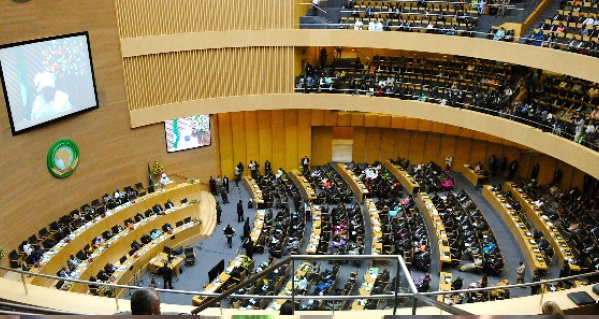
Africa Union AU
In 2019, liquefied natural gas (LNG) exports increased to 204 Bcf, and the East Asia and Pacific region received most of Angola’s exports, according to the United States Energy Information Administration (EIA). India received 131 Bcf, or about 65 percent of Angola’s total exports for that year. Other significant importers of Angola’s LNG in 2019 were Spain (10 Bcf) and France (13 Bcf). The Angola LNG project began operation in 2013, but was taken offline in 2014 as a result of technical difficulties that required extensive repair and did not resume operations until 2016.
Also, as at June 2020, Nigeria’s proven gas reserves stood at 203.16TcF, according to the Director, Department of Petroleum Resources (DPR). This represents a marginal increase of 1.16tcf in proven natural gas reserves representing 0.57 percentage increase from the previous 202tcf recorded on Jan. 1, 2019. The regulatory agency has set new targets of 210tcf by 2025 and 220tcf by 2030.
Similarly, according to the EIA, Equatorial Guinea held 1.3 trillion cubic feet (Tcf) of proved natural gas reserves as of January 2017 and is a net exporter of natural gas. Dry natural gas production has increased rapidly, from 0.7 billion cubic feet (Bcf) in 2001 to 219 Bcf in 2016. Domestic consumption has increased at a much slower pace, from 1 Bcf in 2001 to a peak of 57 Bcf in 2011 before declining to 42 Bcf in 2016.
“In 2016, Equatorial Guinea exported 152 Bcf of LNG, with most going to Asia-Pacific (88 Bcf) and the Middle East (42 Bcf), according to BP’s 2017 Statistical Review of World Energy. India was the primary destination for liquefied natural gas (LNG) from Equatorial Guinea in 2016 and received 49 Bcf,” EIA said.
Despite these huge gas reserves in Sub-Saharan Africa, domestic utilization is not encouraging. Although some oil and gas producing countries in the region are making efforts to increase domestic consumption of gas, like Nigeria, through the National Gas Expansion Program (NGEP), a regional framework is needed to help the region increase both domestic and regional consumption.
Apart from the fact that it will help the region to harness its hydrocarbon resources, it will also create a big market for supply, insulating the region to a large extent, from global volatility in the oil market and reposition it for the energy transition.
For the continent to insulate itself from the current volatility of oil prices and harness its hydrocarbon resources beyond oil, a regional framework has become paramount to promote regional integration.
Experts Support for Regional Integration
Declaring support for regional integration towards harnessing Africa’s hydrocarbon resources, the Director of Monitoring and Evaluation, Nigerian Content Development and Monitoring Board (NCDMB), Mr. Tunde Adelana said during a Webinar hosted by Majorwaves Energy Report, with the theme; “Optimising Local Content through Regional Integration in a post-COVID-19 Africa” in June 2020, that Africa’s oil-producing countries can develop their technological capacities and capabilities by learning from Nigeria if regional integration is embraced as a survival strategy post-COVID-19.
Adelana noted that Africa is a very rich continent and has a lot of mineral resources in every nook and cranny, adding that research should be encouraged in the continent to develop these local resources.
He said, “Africa is a very rich continent and we have a lot of mineral resources everywhere. We need to look back and do some more research into our local resources, to see how they can be utilized to support, not just the oil and gas sector, but the entire economy at large. “Nigeria has abundant skills. We have abundant capabilities and competencies, given the length of time, we have been in this industry (60 years). Our achievements speak for themselves. And for the rest of Africa, there is a lot you can learn from Nigerians.”
Also speaking at the webinar, a legal expert on structuring, local content, documentation, and negotiation of oil, gas and petrochemical transactions, Dr. NJ Ayuk, enjoined Nigerian oil and gas services firms to take advantage of opportunities in Equatorial Guinea, Mozambique, and other Africa countries post COVID-19. Elaborating on the importance of regional integration in post-COVID-19 Africa, he noted that the African Continental Free Trade Agreement (AfCFTA) has a pivotal role to play but bemoaned the difficulty it will face if the local content laws of participating countries were not harmonised. “Nigeria for example has competent oil services firms but finds it difficult operating in fellow African countries because of local content laws,” he said, while urging Nigeria to lead the campaign for a regional content law.
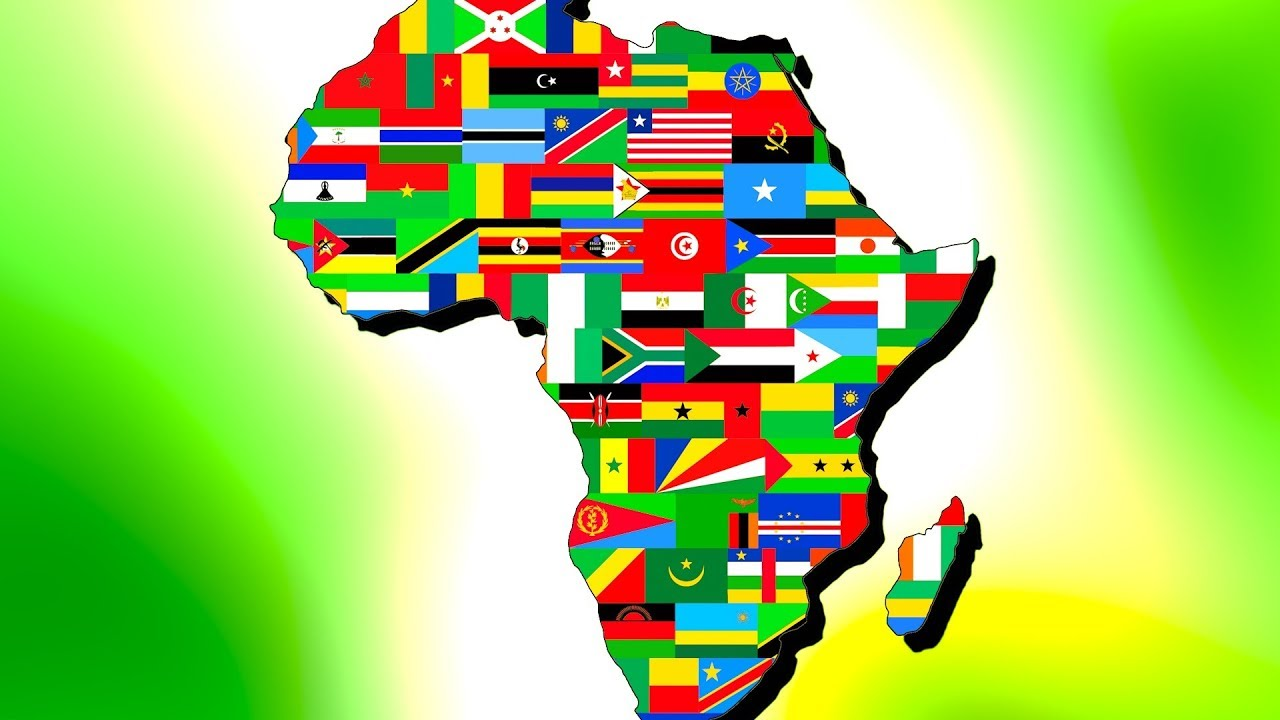
African map
‘’Africans, Stand up! Be conquerors and go to these places where you never thought you will go; set up service companies and compete internationally!” he said.
“We need to get off our high horses as Africans and start competing. Africa, we need to be honest with ourselves: it is a time to go bold!”
He further noted that “there is no reason why we cannot use this Covid-19 moment to leapfrog into the future and break bounds.”
Similarly, the Secretary-General of the African Petroleum Producers Association (APPO), Dr. Omar Farouk Ibrahim, while speaking at the 4th edition of the Sub-Saharan Africa International Petroleum Exhibition and Conference (SAIPEC) last year, regretted that member countries of the Organization for Economic Cooperation and Development (OECD) had begun to initiate discriminatory policies towards hydrocarbons as primary energy sources and discourage research and investment in the sector – actions which would eventually make fossil fuels less accessible and more expensive and position other sources of energy as viable alternatives.
He noted that these developments were taking place at a time that Africa is making more finds in oil and gas, hence making it imperative for African nations to take their destinies into their own hands and pursue the development of local capacities to operate the oil industry successfully and use energy to fuel the national, sub-regional or continental economies.
For the continent to harness its huge hydrocarbon resources, Ibrahim stressed the “need to domesticate the oil and gas technology on our continent. No nation or continent will transfer technology to us. We should encourage local content development in the oil and gas industry on our continent.”
On regional integration, he said: “We also believe that partnership in the development of cross-border energy infrastructure in oil and gas pipelines, electricity, joint refineries, among others are key to the sustainable development of the energy industry in Africa. No one country can do it successfully in isolation.”
Challenges
Despite positive developments in the Sub-Saharan Africa oil & gas industry, especially in the area of discoveries, the industry still faces numerous and persistent challenges around talent shortages, regulatory uncertainty, political instability, corruption and fraud, and a lack of infrastructure.
Currently, intra-African trade stands at 15 percent, which is meager when compared to Asia’s 58 percent and Europe’s 67 percent. High tariffs and colonial-era infrastructure make it easier for African countries to export to Europe or the United States than to one another. In addition, the overlapping membership in Africa’s eight Regional Economic Communities (RECs) hampers trade standardization and enforcement.
Notwithstanding the challenges, Africa does offer plenty of opportunities in the form of unexplored hydrocarbon demand fueled by population growth, urbanisation, and the emergence of a growing middle class.
AfCFTA
The African Continental Free Trade Area (AfCFTA), which its implementation kicked off on January 1, 2021, is a free trade agreement among 54 of the 55 African Union nations. AfCFTA is the largest in the world in terms of participating countries since the formation of the World Trade Organization.
The agreement creates a market of 1.3 billion people across 55 countries with a combined gross domestic product (GDP) valued at US$3.4 trillion. According to the World Bank, “It has the potential to lift 30 million people out of extreme poverty, but achieving its full potential will depend on putting in place significant policy reforms and trade facilitation measures.”
The agreement was brokered by the African Union (AU) and was signed on by 44 of its 55 member states in Kigali, Rwanda on March 21, 2018. The United Nations Economic Commission for Africa (UNECA) estimates that the agreement will boost intra-African trade by 52 percent by 2022.
“Since the conclusion of the AfCFTA Agreement in March 2018, AU member States have continued to show interest in this continental project. To date, the Agreement has been signed by 54 out of 55 member States. The proposal was set to come into force after ratification by 22 of the signatory states,” a statement on AfCFTA website stated.
Under the agreement, participating countries are expected to reduce tariffs by 90 percent. But there are challenges to ensure smooth implementation of this framework. Some of these challenges that need to be addressed revolve around the issue of rules of origin, local content laws of participating countries, and cross-border infrastructure.
However, the African Development Bank (ADB) has created a regional integration strategy for periods up to 2025 to address the infrastructural challenge. The ADB plans to provide funds for the construction of 9000km cross-border transmission lines, the construction or rehabilitation of about 16,400km of cross-border roads, the support of rail lines and transport corridors construction, the increase of transport links wherever possible and use investments in infrastructure as a way of creating market linkages.
Conclusion
In a continent facing massive infrastructure deficits, African countries can thus miss out on opportunities to promote the shared use of infrastructure and to strengthen the linkages between hydrocarbon resources, especially gas, and the broader economy, if regional integration is not embraced.
Gas is the energy of the future. Sub-Saharan Africa and indeed the African continent, have huge gas reserves. Harnessing these huge reserves can help the region to a large extent, in addressing issues around access to energy, poverty eradication, unemployment, and building stronger economies.
Regional integration must be taken seriously by hydrocarbon-rich countries in the region. Regional integration in Sub-Saharan Africa can play a vital role in diversifying economies away from dependence on export to other regions of the world.
Also, regulatory uncertainty continues to be a major barrier to the development of the oil & gas industry in Africa. However, the adoption of AfCFTA by African leaders is a positive development that demonstrates that governments are reacting to the new realities.