DD
MM
YYYY

PAGES

DD
MM
YYYY

spot_img

PAGES

Home Blog Page 5763

Man City Reaches First Champions League Final, Setting Up All English Duel with Chelsea

0

Manchester City on Tuesday broke the UEFA Champions League final jinx, reaching the prestigious league final for the first time in their history. It has been a top priority for City’s Abu Dhabi-based hierarchy, since they doled out millions of pounds to secure the majority ownership of the Manchester club in 2008.

In February 2016, Pep Guardiola was anointed to deliver the Champions League trophy to the Manchester side, but his wand has failed to perform the magic that leads to the final.

Guardiola has come under heavy criticism for his huge spending aimed at getting City on the list of Champions League winners. It was fueled by his five-year heart-breaking failures.

Man City has spent over £500m ($707m) since Pep took over, a sum believed to deserve a double of Champions League honor.

Since 2016, the closest the Pep team has come to the Champions League trophy was quarter finals, making their two-leg win over Paris Saint Germain (PSG) an unforgettable moment for the club, and the fans who have waited so long.

When Man City’s Algerian midfielder Mahrez netted two goals against PSG in Tuesday’s showdown, it sealed the club’s hope of going to Istanbul.

Mahrez scored the opener in the 11th minute from a tight angle in the area following a rebound by PSG’s defense.

Man City, who previously won the first leg 2-1 in Paris, secured the 2-0 victory to make their way to the final in Istanbul.

“To reach the final of this competition is so difficult. It is the toughest one, the quality of the opponent and the composure you have to have to suffer the toughest moments.

“We did it. We made an incredible Champions League season and now deserve to be there in the final,” Guardiola said.

While there is more work to do to don the crown, reaching the final for the first time is a major milestone in City’s pedigree, a club who for many years was considered an underdog.

Meanwhile, City’s English rivals, Chelsea secured a 2.0 win against Spanish giants Real Madrid, to set up an all English final.
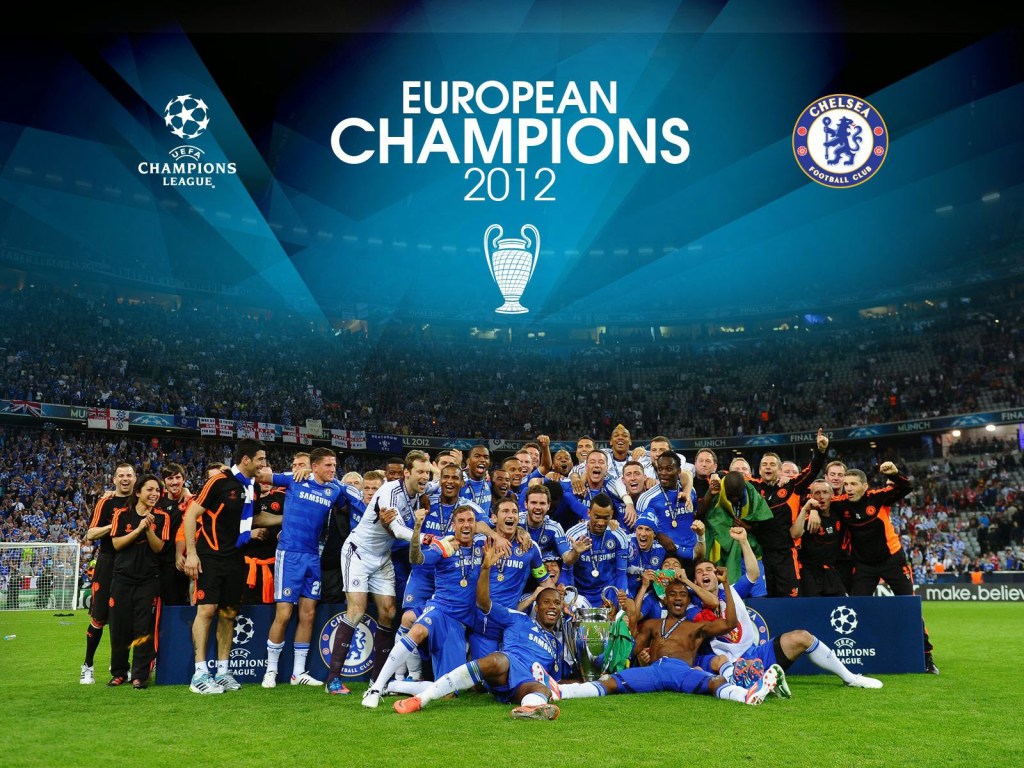
Chelsea won this in the past

The Blues held Los Blancos to a 1-1 draw in Madrid, during the first leg of their encounter to keep the chances for both teams wide open. However, scoring two unreplied goals in England sealed their quest to reach the final.

Qualifying for the final is an incredible feat for Thomas Tuchel, who inherited a poorly-rated Chelsea from former midfielder Frank Lampard, earlier in January.

“I’m very happy we’ve achieved this. I’m very grateful to have the opportunity to live my life in football and this passion as a profession. So grateful to do it on this level and to get to another final, I’m very grateful for that,” Tuchel told BT Sport.

Chelsea having won the elite trophy before casts enormous pressure on City that is yet to touch it, and has been on spending spree to get on the list of winners.

Although the London club is considered the underdog in the duel given Man City’s current form, Tuchel’s incredible back-to-back Champions League final record with two different clubs (PSG 2019/20) and now Chelsea, shows his team cannot be taken for granted.

It will be the third time two English teams will meet in the final. It happened in 2008 (Chelsea v Manchester United) and 2019 (Liverpool v Tottenham). And it’s only the eighth time two teams from the same nation will be contesting the final, with Spanish teams also doing so a joint record three times – 2000 (Real Madrid vs Valencia) and 2014 & 2016 (Real Madrid vs Atletico Madrid).

Chelsea’s female team is also set up for a final against Barcelona’s female team, making it the first time both male and female teams of a club are reaching the final of Champions League in the same season.

Madam Minister, It’s A Great Idea for Nigeria; Make It Happen

1

Nigeria will get better and I am very Bullish on the long-term outlook of the nation. You may say that I am biased. Yes, I am biased because Nigeria has all the critical pieces to outperform. And those pieces will get to work soon. 

In the next few years, I expect the following things to happen, not because our political leaders want to do them, but because they will play hail mary (as in American football) to avert a severe paralysis. Expect the following:

  • Nigeria will have state police because distrust has built into the national police. The interview by the Osun state senator where he noted that Police arrest hunters more than AK-47-carrying herdsmen is a turning point.
  • Fiscal federalism will evolve and states will control their resources and pay taxes to the federal government.
  • With the fiscal federalism done, a new charter will emerge: decentralization of energy generation, transmission and distribution.

Why do I think these changes will happen? Nigeria is opening up to reality now. Yes, according to Nairametrics,  Nigeria “has indicated that it plans to cut down on its personnel costs and merge Ministries, Department and Agencies (MDAs) due to persistent low revenue”. Yes, Nigeria which has avoided that report from Steve Oronsaye Committee is returning back to the basis because there is no money.

She said that current government spending cut has become imperative because, “We still see government expenditure increase to a terrain twice higher than our revenue.

 We need to work together, all agencies of the government to cut down our cost. We need to cut down unnecessary expenditures. Expenditures that we can do without.

Our budgets are filled year in year out with projects that we see over and over again and also projects that are not necessary.

Mr President has directed that the salaries committee that I chair, work together with the Head of Service and other members of the committee to review the government payrolls in terms of stepping down on cost.”

The minister said that government would look to merge 2 agencies with the same mandate.

The Director-General Budget Office, Ben Akabueze, had earlier said that low revenue collection and high recurrent costs have resulted in actual capital expenditure below N2 trillion ($4.88 billion) a year for a decade.

People, it is typical human nature: scarcity has always pushed humans to make hard choices. Nigeria in the next few years will be making hard choices because what made us siddon-looks are falling apart.  From fiscal federalism  which can ignite productivity to state police, unemployment and insecurity will push the federal government to try new things. Of course, we need to pass through the moments. But I tell you that things will be better in the near future.

The minister of Finance was crystal clear on what needs to be done: ‘She said that current government spending cut has become imperative because, “We still see government expenditure increase to a terrain twice higher than our revenue.  We need to work together, all agencies of the government to cut down our cost. We need to cut down unnecessary expenditures.”‘ Can she be bold to make it happen while we wait for the other policy changes?

Facebook Oversight Board Punts On Donald Trump Ruling, Reminding Mark Zuckerberg To Do His Job

1

Poor Mark Zuckerberg! He wanted commoners to make decisions reserved for $billionaires – and expectedly the Facebook Oversight Board did not fall for his antics. As they do in American football, they punted his problem back to him.

Yes, the Facebook Oversight Board which Mark created to oversee the most difficult decisions within the social media network has ruled that it would not help it decide if former US President, Donald Trump, could continue to be part of Facebook planet or not: “Facebook was justified in its decision to suspend then-President Donald Trump after the Jan. 6 insurrection at the U.S. Capitol, the company’s Oversight Board said on Wednesday. That means the company does not have to reinstate Trump’s access to Facebook and Instagram immediately. But the panel said the company was wrong to impose an indefinite ban and said Facebook has six months to either restore Trump’s account, make his suspension permanent, or suspend him for a specific period of time.” Simply, Mark, this is your decision, we cannot make it for you.

The Facebook Oversight Board was designed to make some of Facebook’s most difficult decisions for the company. But on Wednesday the board put one of the biggest dilemmas facing the platform back on Facebook and company CEO Mark Zuckerberg.

The board said Facebook was right to suspend Trump in the immediate aftermath of the January 6th insurrection, but said Facebook couldn’t just make the suspension “indefinite” with no actual rule on its books allowing for that. The board said Facebook must review the decision and figure out if Trump should be banned from the platform forever.

The board could have made that decision itself, but by choosing to hand the decision back to Facebook it once again puts Zuckerberg’s powerful role in overseeing public discourse in the United States in the spotlight, along with the arbitrary nature of how Facebook moderates it platform.

Facebook has six months from today to decide Trump’s fate.

After the ruling, Trump put this statement:

“What Facebook, Twitter, and Google have done is a total disgrace and an embarrassment to our Country,” Trump said in a statement. “Free Speech has been taken away from the President of the United States because the Radical Left Lunatics are afraid of the truth, but the truth will come out anyway, bigger and stronger than ever before,” he continued. “The People of our Country will not stand for it! These corrupt social media companies must pay a political price, and must never again be allowed to destroy and decimate our Electoral Process”, he continued.

Africa, Let Us Look Inwards – We’ve Got Winning Economic Frameworks

2
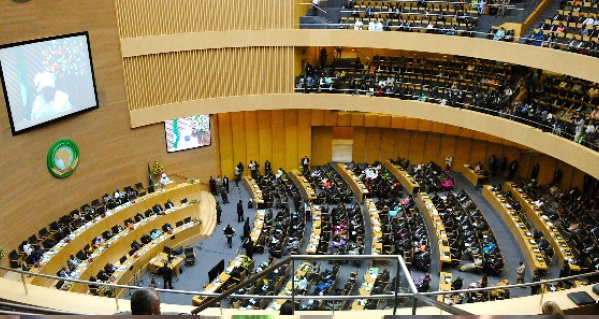
African Union

My piece on the Igbo Apprenticeship System will be published in the Harvard Business Review this month. Oxford University has also reached out that it is looking to do research in this domain. Last month, I spoke with BBC and the Central China TV on the mechanics of IAS. This is the deal: Nigeria has to explore updating our secondary school economics textbooks with some of Africa’s economic frameworks. 

Last month, I spoke before eminent scholars from northern Nigeria. I passed one message: rebuilding the Northeast, post Boko Haram, must not be driven by the constructs postulated by IMF and World Bank. I told them to send experts to rural communities in the Southeast on how, and what they did, to rebuild after the civil war. I provided data to show that whatever they did has worked – and Nigeria can deploy that framework anywhere in the nation.

The Igalas have their playbooks. Yoruba people have. Igbos have. Hausas have….it is time for Nigeria and Africa to look inwards. I am very happy for my small contribution to deepen this conversation on the Igbo Apprenticeship System. Now, the real experts (I mean economists) must improve and deepen the system, and hopefully fintech will invest based on that mechanics. Simply, if you finish from the apprenticeship, we will invest in that new venture, as your master seeds your business.

Africa, let us look inwards. We have got lessons to help us. Yes, as that happens, our economists must spend more time,  and find how we can integrate these frameworks: get the best from Igalas, Hausas, Igbos, etc and combine them to improve our national operating models.

Nigeria Needs To Learn From Its Post-War Communities To Reignite Development

0

I have read nearly all articles written by the New York Times between 1966 and 1970 on Nigeria’s civil war.  Of course, it was not everything that the Times got right, based on stories by actual participants in Nigeria’s lowest point. The Times wrote about ingenuity, uncommon tenacity and brilliance of the Southeast people of Nigeria. But watching some videos on what happened immediately after the war tells me that today’s Nigeria is redeemable. Yes, from all angles, Nigeria does not have a big problem, if we can pick lessons post civil-war. 

Do you know that most community development unions in Southeast Nigeria started after the civil war? Do you know that it was communal? Yes, people came together to build schools, maternity centers, clinics, shops, factories, etc. That is what they teach in business school: attain economies of scale and do great things in markets. Here, community development unions were vehicles for people to pool funds and do big projects.

It does seem that across Nigeria, from north to south, east and west, and beyond, we have tons of knowledge which we do not value. The template deployed across Southeast Nigeria was not developed by IMF, World Bank or African Development Bank, but by the communities. And the thing worked since we have enough time to evaluate.

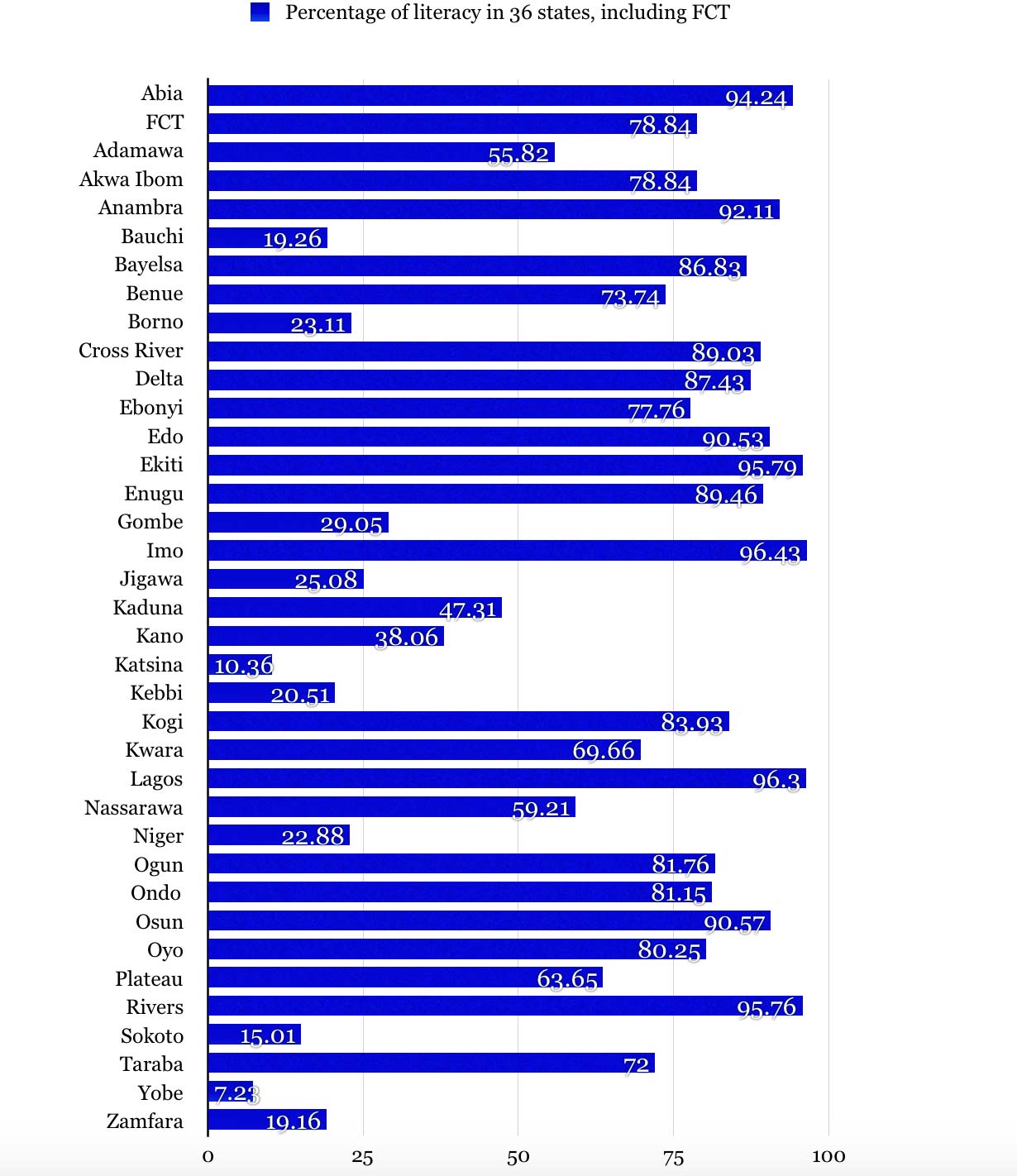
First, they have economically rebuilt the region. On education, Imo State at 96.43% literacy rate leads the nation. Abia and Anambra hover over 90%; Enugu is above 85% but Ebonyi is below 80%. Across most metrics, the outcome would be better than anything the World Bank and IMF could have designed.

literacy rate Nigeria (NBS)

So, the question is this:  why is Nigeria not looking for solutions internally instead of hiring  experts who compound issues due to the lack of the nuances of Nigeria? Time to invest in community-centered development?