DD
MM
YYYY

PAGES

DD
MM
YYYY

spot_img

PAGES

Home Blog Page 5766

Despite Regulatory Clampdown, Ant Group Posted $3.4 Billion Profit

0

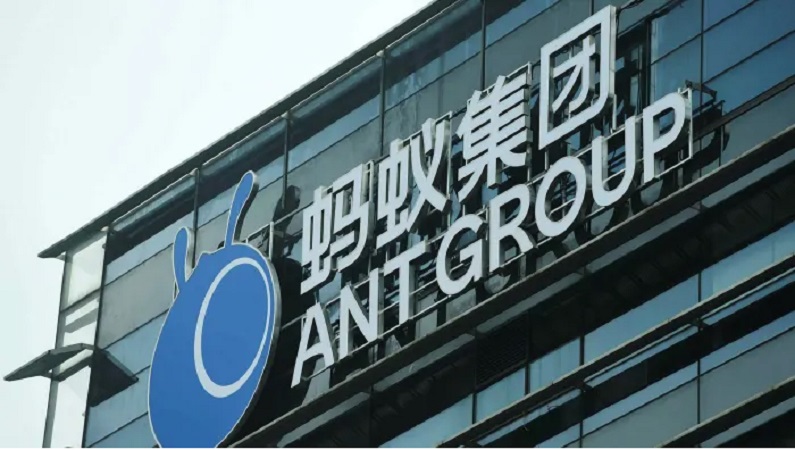
Ant Group Co.’s profit rose to $3.4 billion in the December quarter after Chinese regulators thwarted its record initial public offering and told it to scale back its sprawling business, reported Bloomberg.

Billionaire Jack Ma’s fintech giant contributed nearly 7.2 billion yuan to Alibaba Group Holding Ltd.’s earnings, a company filing showed Thursday. Based on Alibaba’s one-third stake in Ant, that translates to 21.8 billion yuan ($3.4 billion) in profit, up 50% from 14.5 billion yuan in the previous three months. Ant’s earnings lag one quarter behind Alibaba’s.

The tally underscores the earnings powers Ant boasted before authorities demanded China’s largest fintech company fold its financial business into a holding company, curtailing its growth prospects. Regulators have issued a battery of proposals that threaten to curb Ant’s dominance in online payments and scale back its expansion into consumer lending and wealth management.

While Chairman Eric Jing has promised staff that the company will eventually go public, it’s likely to be worth much less than before the crackdown that saw the IPO halted in November. Fidelity Investments halved its valuation estimate for Ant to about $144 billion in February, compared with $295 billion assigned in August.

Ant isn’t alone in facing the clampdown. The government imposed wide-ranging restrictions on the financial divisions of 13 companies including Tencent Holdings Ltd. and ByteDance Ltd. Units of JD.com Inc., Meituan and Didi Chuxing were also among companies summoned to a meeting where regulators handed out stricter compliance requirements in April.

The growth is attributed to Ant Group’s success in the non-money-market mutual funds. Ant Group became China’s largest seller of non-money-market mutual funds in the first quarter, industry data showed, disrupting a market dominated by banks despite a regulatory crackdown.

Part of the authorities demand from Ant and Alibaba is to reduce the size of Yu’ebao, China’s biggest money market fund managed by Ant-controlled mutual fund house Tianhong.
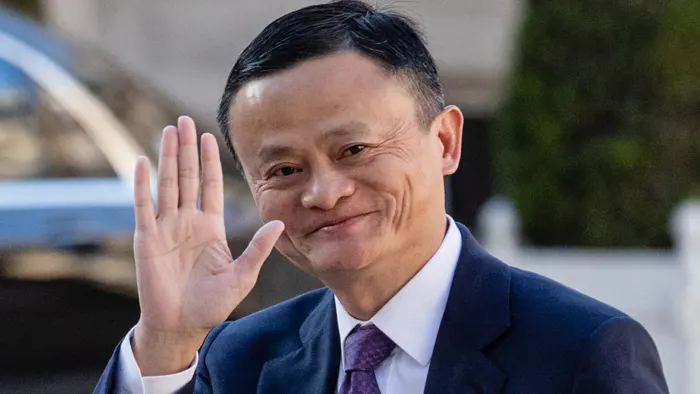
Founder of Alibaba

Reuters reported that outstanding non-money-market mutual funds sold by Ant’s fund sales arm were worth 890.1 billion yuan ($138.23 billion) at the end of the first quarter of 2021, according to data released late Thursday by the Asset Management Association of China (AMAC).

China Merchants Bank (600036.SS) took the second spot at 707.9 billion yuan, followed by Industrial and Commercial Bank of China, the country’s biggest lender.

It was the first such ranking released by AMAC, highlighting the rapidly growing clout of independent fund advisers that sell funds via mobile apps and the internet, by-passing bank outlets.

“It’s.. about the strength of big-tech-company-backed IFAs (independent fund advisers), how far they have reached, how deep their client base is and how adaptive they are to the market trends,” said Ivan Shi, director at Z-Ben Advisors, a consultancy.

“It also speaks to how much service and tool development different tech companies have put into their IFA platforms.”

Ant (Hangzhou) Funds Sales Co’s main distribution channel is Ant’s ubiquitous payment platform Alipay.

Shi said Ant’s top rankings could also reflect lower risk appetite as investors shift away from equities funds to fixed-income products, which are popular on Alipay.

“If you log into the Alipay app, a lot of the products they are promoting are short-term bond funds, fixed income products. That’s a very quick response to market trends, so that’s going to catch a lot of outflows from equity products.”

According to AMAC’s ranking, Shanghai Tiantian Fund Distribution ranked fifth during the first quarter, while other tech-driven sales platforms, including Tencent’s fund sales unit and Baidu’s Du Xiaoman Fund Sales, far lagged Ant.

Revenues at Ant’s fund sales company more than tripled to 6.01 billion yuan in 2020 from a year earlier, public disclosures showed


The Massive Disintermediation of GSM Telcos via Datacenters by Satellite Players (SpaceX Starlink, Amazon Kuiper)

1

This is a massive one: Google Cloud has won a contract to supply computing resources to SpaceX, and help deliver internet service through its Starlink satellites. SpaceX will install ground stations at Google data centers that connect to SpaceX’s Starlink satellites. This has a massive implication for telcos as it could begin a disintermediation if datacenters’ traffic suddenly go satellite, denying them major revenue. The Google team said it clearly: “The real potential of this technology became very obvious. The power of combining cloud with universal secure connectivity, it’s a very powerful combination.”

Simply, there is no need for cell towers: customers’ devices will communicate to satellites, and then the satellites will link up to Google data centers. Microsoft Azure already has a partnership like this with SpaceX.

In SpaceX’s case, there is no need for cell towers. Instead, customers’ devices will communicate to satellites, and then the satellites will link up to Google data centers. Inside those data centers, customers can run applications quickly using Google’s cloud services, or they can send the information on to other companies’ services that are geographically nearby, enabling low latency so there’s minimal lag. Data then comes right back through the Google data centers to satellites, and then down to end users.

In July 2019, I wrote that “Amazon is unveiling a satellite broadband venture. Watch out, very soon, Amazon Prime members may be getting internet services at home from Amazon.” The highly popular Amazon Web Services will be connected to these satellites just as Google and SpaceX Starlink are planning now.

This is a massive one, from the FCC filing: “Amazon sells products and services to hundreds of millions of customers today via physical and online stores, entertainment content streaming, design and manufacturing of consumer electronics devices, and leading public cloud computing web services. Amazon also has global terrestrial networking and compute infrastructure required for the Kuiper System, including intercontinental fiber links, data centers, compute/edge compute capabilities and the tools, techniques, and know-how to securely and efficiently transport data.”

If you look at this critically, the world’s leading cloud computing providers have major satellite plays. And if they execute as they plan, from datacenters to datacenters, GSM providers like MTN, Glo and Airtel  may struggle as I expect them to experiment heavily  in Africa due to our challenging rural connectivity issues. As this happens, for customers, the future looks amazing because quality will improve even as price drops, and it will lead to a new age of connectivity, and advancement in  rural economies.

Google Cloud Wins SpaceX Deal for Starlink Internet Connectivity

Building Modern Investment Portfolios in Africa [Video – Tekedia Live]

0
Naira USD

Recorded April 3, 2021

The webcast below…

Greetings. Due to popular requests in the Tekedia community, we are making today’s Tekedia Mini-MBA Live titled “Building Modern Investment Portfolios in Africa” public.  

  • Date: Sat, April 3 
  • Time:  7 – 8.30pm WAT 
  • Topic: Building Modern Investment Portfolios in Africa
  • Faculty:  Ndubuisi Ekekwe, PhD – Lead Faculty, Tekedia Institute; and Harvard Business Review writer since 2009
  • Webcast Link (for non-current members) –  https://www.tekedia.com/live/ 
  • Current Edition 4 members: Zoom link in the Board.

Tekedia Institute offers an innovation management 12-week program, optimized for business execution and growth, with digital operational overlay. It runs 100% online. The theme is Innovation, Growth & Digital Execution – Techniques for Building Category-King Companies. All contents are self-paced, recorded and archived which means participants do not have to be at any scheduled time to consume contents.

Registration is ongoing for the next edition of Tekedia Mini-MBA  (June 7 – Sept 1, 2021) here https://school.tekedia.com/course/mmba5/


Google Cloud Wins SpaceX Deal for Starlink Internet Connectivity

0

Google announced on Thursday its cloud unit has won a deal to supply computing and networking resources to SpaceX, Elon Musk’s privately held space-development company, to help deliver internet service through its Starlink satellites. CNBC has the story.

SpaceX will install ground stations at Google data centers that connect to SpaceX’s Starlink satellites, with an eye toward providing fast internet service to enterprises in the second half of this year.

The deal represents a victory for Google as it works to take share from Amazon and Microsoft in the fast-growing cloud computing market.

Investors are counting on Google’s nascent cloud business to boost growth in the event that its advertising business slows down. While Google’s cloud business delivered only 7% of parent company Alphabet’s total revenue in the first quarter, it grew almost 46% year over year, compared with growth of 32% for Google’s advertising services.

It’s also an unusual type of deal for Google — or any other cloud provider — as it relies heavily on Google’s internal network that connects data centers, rather than simply outsourcing functions like computing power or data storage to these data centers.

SpaceX team in Nigeria

“This is one of a kind. I don’t believe something like this has been done before,” said Bikash Koley, Google’s head of global networking. “The real potential of this technology became very obvious. The power of combining cloud with universal secure connectivity, it’s a very powerful combination.”

“They chose us because of the quality of our network and the distribution and reach of our network,” said Thomas Kurian, CEO of Google’s cloud group.

Amazon popularized the public cloud business with the launch in 2006 of general-purpose computing and storage tools from its Amazon Web Services division. Google introduced its own computing service in 2012. But over the last two decades, Google has also spent money assembling a private fiber-optic network to connect its data centers, Koley said. While much of Google’s cloud growth has come from taking care of computing and storage needs for clients such as Goldman Sachs and Snap, the SpaceX deal will draw heavily on Google’s networking capabilities.

Cloud providers have increasingly focused on the telecommunications industry, particularly with the ascent of 5G connectivity. Last month, for example, Amazon said Dish would use AWS infrastructure to deliver 5G service to consumers.

In SpaceX’s case, there is no need for cell towers. Instead, customers’ devices will communicate to satellites, and then the satellites will link up to Google data centers. Inside those data centers, customers can run applications quickly using Google’s cloud services, or they can send the information on to other companies’ services that are geographically nearby, enabling low latency so there’s minimal lag. Data then comes right back through the Google data centers to satellites, and then down to end users.

The deal could last seven years, according to a person who declined to be named discussing confidential terms.

Starlink’s service might be valuable for consumers living in places with limited internet access, as well as businesses and government organizations running projects in remote areas, Kurian said. He anticipates that having Starlink draw on Google’s cloud network will lead organizations to deploy applications inside Google’s cloud to take advantage of high speeds.

Google is not the only cloud provider to be working with Starlink.

In October, Microsoft said it was working with SpaceX to bring Starlink internet connectivity to modular Azure cloud data centers that customers can deploy anywhere. SpaceX would still rely on Google data centers in that scenario, a person familiar with the matter said. (Data would travel from the customer’s Azure modular data center through the Starlink satellite to Google’s data center and then out to other cloud services — and return in the opposite direction. “Our current partnership with SpaceX Starlink provides high-speed, low-latency satellite broadband to extend our Azure capabilities with worldwide satellite connectivity and unblock cloud computing in more scenarios,” a Microsoft spokesperson told CNBC in an email. “Efforts are currently underway to expand those scenarios and we will have more to share in the coming months.”)

Initially SpaceX will deploy the ground stations at Google data centers in the U.S., but the company wants to expand internationally, the person said.

SpaceX is one of the world’s most valuable privately held start-ups, having raised money at a $74 billion valuation in February, CNBC reported. Google invested $900 million in SpaceX in 2015. SpaceX has launched over 1,500 Starlink satellites into orbit, and last week the company said more than 500,000 people have ordered or made a deposit for the internet service.

Tesla Divorcing Bitcoin Creates Uncertain Future for the Leading Cryptocurrency

0

Bitcoin has lost one of its biggest fans, Elon Musk. The Tesla CEO, whose announcement of accepting bitcoin for Tesla’s purchase earlier in March, fueled the lead-cryptocurrency’s rally that hit $64,000 in April, made a statement on Wednesday that wiped as much as $365 billion off cryptocurrency market.

In a blow-dealing U-turn, Musk said Wednesday that Tesla will no longer accept bitcoin, citing mining energy concerns: 

“Tesla has suspended vehicle purchases using bitcoin,” a statement shared by Musk on behalf of the electric vehicle company said. “We are concern about rapidly increasing use of fossil fuels for Bitcoin mining and transactions, especially coal, which has the worst emissions of any fuel.”

The decision comes at the heels of another Musk’s announcement, that SpaceX will henceforth accept Dogecoin for space trips in Doge-1 Mission. These two happening at the same time appears like Musk is ditching bitcoin for Dogecoin, the meme cryptocurrency he has been cheerleading.

There is a rising concern over what Musk’s decision to divorce bitcoin will mean for the leading cryptocurrency. Bitcoin plunged close to 15% at the news, trading less than $50,000 as of Thursday.

Environmentalists have been hinting on the impact of cryptocurrency mining on the environment. Tesla, which has become a darling vehicle to many, gaining support from pro-green advocates, including Joe Biden’s administration, was inadvertently caught in the mix of fossil fuel and clean energy through its bitcoin investment. Now the automaker is forced to choose where it stands in the moral question of saving the environment.

“Cryptocurrency is a good idea on many levels and we believe it has a promising future, but this cannot come at great cost to the environment,” Musk said.

In addition to the environmental concerns, the sustainability of bitcoin’s energy consumption has increasingly become worrisome. Experts said it needs to be addressed fast to save the world from looming energy doom. In February, Treasury Secretary Janet Yellen warned that the digital coin is “extremely inefficient” for making transactions and uses a “staggering” amount of power.

As Tesla freezes on BTC, the coin may have a challenge

The bitcoin network is responsible for 55 million metric tons of CO2 annually, which is as much as a nation like Singapore.

In March, China’s Inner Mongolia region said it would shut down cryptocurrency mining operations in the region due to concerns over energy consumption in an attempt to save the city from blackouts.

Last month, a coal mine in the Xinjiang region flooded and shut down. This took nearly a quarter of bitcoin’s hash rate — or computing power — offline, according to CoinDesk.

There have been suggestions to build more energy-efficient blockchains. Green Buzz published four practical ways to save bitcoin from its energy pitfall in 2019: Moving away from the proof-of-work validation method; Using blockchain to spur energy-efficient transportation methods; Building more energy-efficient blockchains, and Focusing on sustainable ways to mine bitcoin.

Musk said Tesla would only resume bitcoin transactions as soon as mining transitions move to more sustainable energy, but energy experts doubt it will ever happen. With the impact of Tesla’s withdrawal so loud, it would not be long before other organizations jump the bandwagon.

“Environmental matters are an incredibly sensitive subject right now, and Tesla’s move might serve as a wake-up call to businesses and consumers using Bitcoin, who hadn’t hitherto considered its carbon footprint,” Laith Khalaf, a financial analyst at investment firm AJ Bell, said in a note Thursday.

Energy transition has thus become an inevitable part of bitcoin’s proposed correction, although such transition will mean a short-term significant plunge for the cryptocurrency.

Musk says Tesla is “looking for cryptocurrencies that use <1% of Bitcoin’s energy/transaction,” but such cryptocurrencies are not popular even among altcoins. Dogecoin, which Musk has chosen for SpaceX’s Doge-1 Mission doesn’t fall in that category, it uses proof-of-work, leaving the chance to a newbie like Chia, which uses Proofs of Space and Time (PoST) instead of Proof-of-Work, to curtail its energy consumption.

It therefore suggests that Musk’s fallout with bitcoin is limited to Tesla only, he may accept the cryptocurrency in his other companies that have no green message in their business.

But Tesla’s decision has placed bitcoin investors in a difficult situation, given its potential to trigger an environmental movement that will constantly attack bitcoin.

“Tesla’s decision certainly puts pressure on other big companies who accept Bitcoin to review their practices, because boardrooms will now be wary about getting it in the ear from ESG investors on the shareholder register,” Khalaf added.